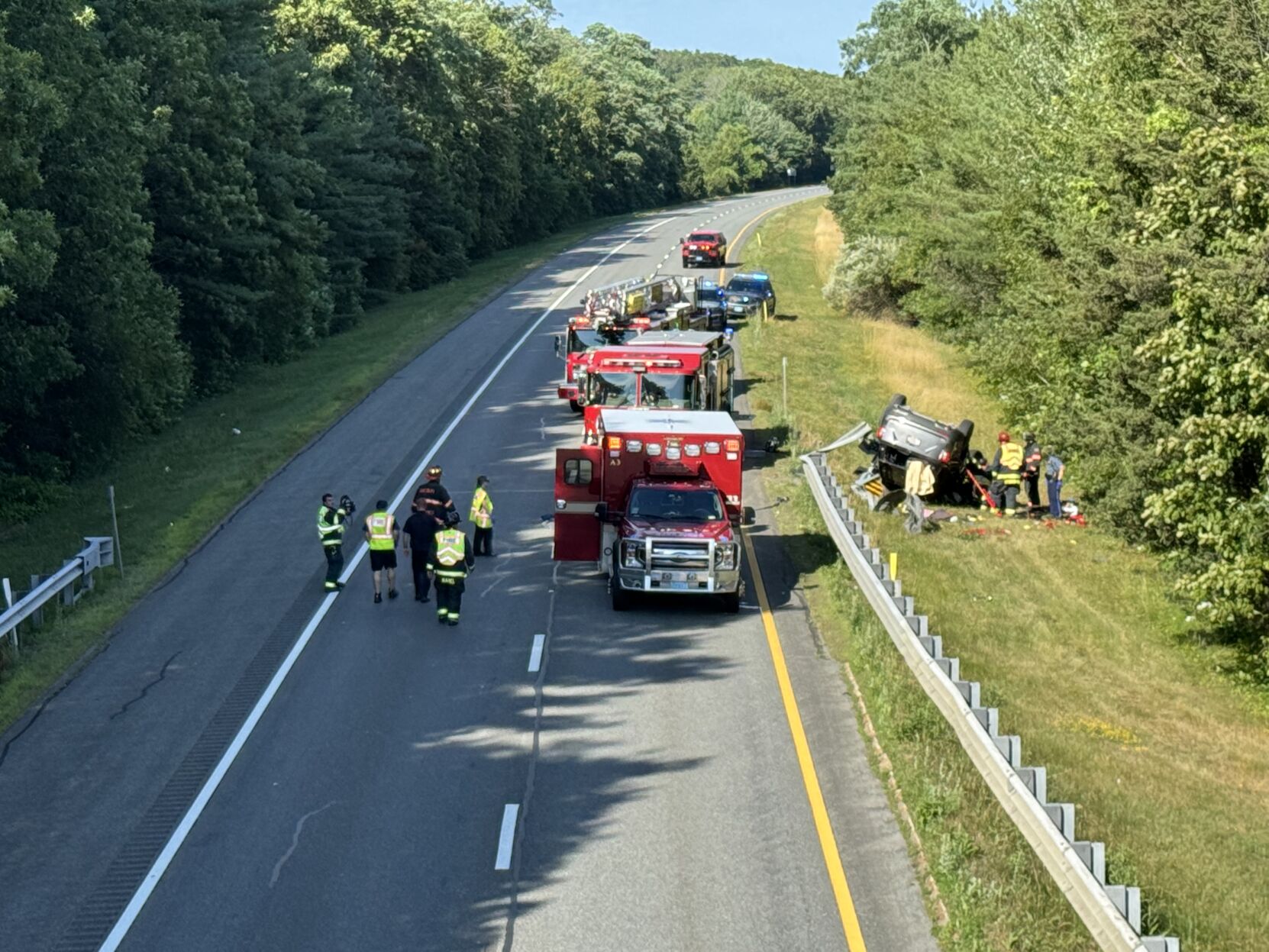
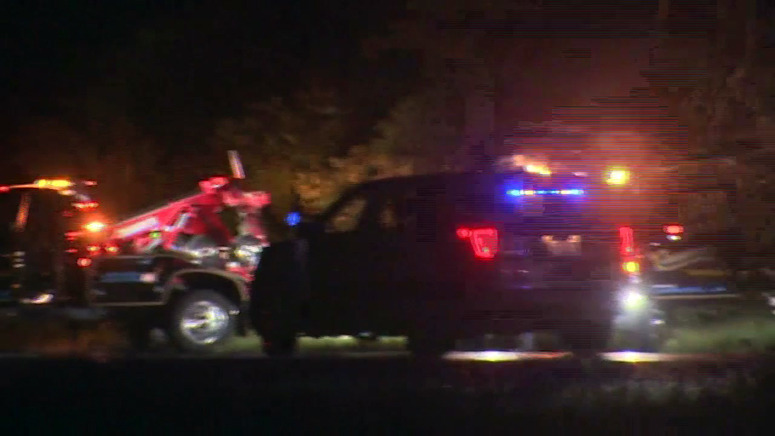
If you are involved in a traffic accident in Amesbury, Massachusetts, your immediate priorities are to ensure safety, seek medical evaluation, and report the crash. Under Massachusetts law, drivers must file an official Motor Vehicle Crash Operator Report within five days if injuries occurred or property damage exceeds $1,000. Reports must be submitted to both the Amesbury Police Department and the Registry of Motor Vehicles.
- Accident Occurs in Amesbury, MA
- Emergency Response:
- Call 911 (Amesbury Dispatch)
- Request medical aid
- Police secure scene & create CAD report
- On-Scene Safety:
- Move to safe shoulder if able
- Turn on hazard lights
- Exchange info (driver/insurance)
- Emergency Response:
- Documentation & Evidence:
- Take photos/video of scene & vehicles
- Note weather, traffic & street names
- Identify neutral eyewitnesses
- MA Mandatory Reporting Rule (M.G.L. c. 90 § 26 — File within 5 Days if >$1k damage/injury):
- Amesbury Police Dept: 19 School Street, Amesbury, MA 01913
- MassDOT / RMV: Crash Records Dept, P.O. Box 55889, Boston, MA
- Insurance & Recovery:
- Claim filed under PIP (Up to $8,000)
- Exceed $2,000 medical threshold for tort claim
- 3-Year Statute of Limitations (M.G.L. c. 260 § 2.5)
Navigating the aftermath of a motor vehicle collision in Essex County requires a clear understanding of local police administrative procedures, state reporting mandates, and Massachusetts statutory insurance rules. Whether a minor fender bender occurred along Route 110 (Macy Street) or a high-speed collision took place at the junction of Interstate 95 and Interstate 495, taking precise legal and procedural steps helps protect your health, property rights, and financial recovery.
Disclaimer: This article provides general public information and procedural guidance regarding motor vehicle accidents in Massachusetts. It does not constitute formal legal or medical advice. For specific legal representation, consult a licensed Massachusetts personal injury attorney.
Immediate Steps to Take Following a Traffic Accident in Amesbury
The moments directly following a car crash are often disorienting, but taking systematic actions on-scene protects both physical safety and potential legal claims. Massachusetts traffic laws and local municipal response protocols establish clear obligations for motor vehicle operators involved in collisions.
Securing the Scene and Contacting Emergency Services
First, check yourself and your passengers for injuries. If anyone requires emergency medical care, call 911 immediately. Emergency calls placed within Amesbury are processed by the Amesbury Police Department Dispatch Center, which coordinates response efforts with the Amesbury Fire Department and local emergency medical services (EMS).
If the vehicles are operable and idling in active travel lanes—such as along heavily congested stretches of Macy Street or main thoroughfares like Elm Street—move them safely to the breakdown lane or an adjacent parking lot to prevent secondary collisions. Turn on hazard lights immediately. If a vehicle cannot be moved, occupants should stay buckled inside if safe, or exit the vehicle and move behind highway guardrails when located on high-speed corridors like I-95 or I-495.
Under Massachusetts General Laws Chapter 90, Section 24, drivers involved in collisions resulting in injury or property damage must stop and identify themselves. Leaving the scene of an accident ("hit-and-run") is a criminal offense carrying driver's license suspension, heavy fines, and potential imprisonment.
Documenting Evidence and Exchanging Details
Once safety is established and emergency services are en route, exchange essential information with all involved drivers. You must obtain and provide:
- Full name, residential address, and contact phone number.
- Driver's license number and state of issuance.
- Motor vehicle registration details (plate number, make, model, and vehicle identification number).
- Auto insurance carrier name and policy number.
Avoid discussing liability, making statements of fault, or offering apologies on-scene. Statements made in the immediate aftermath of a crash can be misinterpreted and used by insurance adjusters to assign fault later. Focus strictly on gathering factual evidence. Capture high-resolution photographs and videos detailing:
- Vehicle positions relative to road markings and traffic control signals.
- Physical damage to all involved vehicles, including paint transfers and structural crumpling.
- Skid marks, broken glass, road debris, and roadway defects.
- Weather conditions, visibility levels, and street lighting.
- Any visible bodily injuries sustained by drivers or passengers.
If neutral witnesses are present, request their full names and contact details. Independent witness statements provide crucial corroboration when insurance carriers dispute how an accident occurred.
Massachusetts Crash Reporting Mandates and Filing Deadlines
Massachusetts maintains strict statutory rules governing when and how motor vehicle crashes must be formally reported to law enforcement and licensing authorities.
The 5-Day Motor Vehicle Crash Operator Report Rule
Pursuant to Massachusetts General Laws Chapter 90, Section 26, any operator involved in a motor vehicle crash within the Commonwealth must file an official written report if:
- Any person was killed in the accident.
- Any person suffered physical injury.
- Total property damage to any single vehicle or surrounding property exceeds $1,000.
This report must be completed and submitted within five calendar days of the incident. Failing to file the required crash report within this strict statutory timeframe can lead to the suspension of your driver's license by the Massachusetts Registry of Motor Vehicles (RMV).
Step-by-Step Instructions for Filing Form CRA-23
The official document used for reporting is the Commonwealth of Massachusetts Motor Vehicle Crash Operator Report (Form CRA-23). Copies of this form can be downloaded directly from the official Mass.gov RMV website or obtained in person at the Amesbury Police Department headquarters.
To complete the filing process correctly, you must prepare three separate copies of the completed form:
- Copy 1 (Amesbury Police Department): Deliver in person or mail via certified mail to the local police department having jurisdiction over the crash location. If the crash occurred on local city streets, send it to:
- Amesbury Police Department
- Attn: Records Division
- 19 School Street, Amesbury, MA 01913
- Copy 2 (Registry of Motor Vehicles): Mail directly to the state registry office at:
- Registry of Motor Vehicles
- Crash Records Department
- P.O. Box 55889, Boston, MA 02205-5889
- Copy 3 (Your Insurance Carrier): Retain one copy for your personal records and submit a copy to your auto insurance claims adjuster.
When filling out Form CRA-23, ensure all fields are accurately completed, including precise street names, local weather conditions, vehicle impact points, owner/operator details, and a clear, factual diagram of the crash event.
How to Obtain an Official Amesbury Police Department Accident Report
When police officers respond to a crash scene in Amesbury, they complete an official police accident report detailing officer observations, physical evidence, driver statements, and preliminary determinations of contributing factors.
Requesting Records Online via Authorized Portals
The Amesbury Police Department partners with authorized electronic crash report management platforms to provide digital copies of police reports to involved parties, insurance companies, and legal representatives.
- Access the Portal: Visit the Commonwealth's or local department's designated third-party report vendor portal (such as BuyCrash or Commonwealth public records management portals linked through the official City of Amesbury municipal portal).
- Input Search Criteria: You will need the state (Massachusetts), jurisdiction (Amesbury Police Department), crash date, and at least one of the following identifiers: report number, driver’s last name, or vehicle registration number.
- Pay Processing Fee: Online portals typically require a small administrative service fee (generally between $5.00 and $20.00) payable by credit or debit card to download the official PDF.
In-Person and Written Requests at Amesbury Police Headquarters
If you prefer to obtain a physical copy of the officer's accident report directly from local law enforcement, contact the Amesbury Police Department Records Division:
- Location: 19 School Street, Amesbury, MA 01913
- Business Hours: Monday through Friday, standard municipal administrative hours (typically 8:00 AM to 4:00 PM).
- Requirements: Bring a valid government-issued photo ID, the date and location of the accident, and the police incident or log number (if provided by the responding officer on scene).
- Public Records Processing: Under the Massachusetts Public Records Law (M.G.L. c. 66 § 10), municipal record custodians must respond to public record requests within 10 business days. Reports involving ongoing criminal investigations, fatal crashes, or sensitive juvenile data may require redacting prior to release.
Understanding Massachusetts Insurance Laws and Claims After a Crash
Massachusetts operates under a modified no-fault auto insurance scheme designed to ensure immediate payment of medical expenses following a collision, regardless of who caused the accident.
- Massachusetts No-Fault PIP Flow:
- Medical Expenses (100%)
- Lost Wages (75% Average)
- Total PIP Cap: Up to $8,000
- Tort Threshold Outcomes:
- No Tort Threshold Met:
- Medical bills <= $2,000
- No severe/permanent injury
- Limited to PIP benefits only
- Tort Threshold Exceeded:
- Medical bills > $2,000 OR
- Fracture, disfigurement, loss of sight/hearing
- Can file third-party lawsuit for pain & suffering
- No Tort Threshold Met:
Personal Injury Protection (PIP) and No-Fault Benefits
Under Massachusetts General Laws Chapter 90, Section 34A, compulsory automobile insurance policies must include a minimum of $8,000 in Personal Injury Protection (PIP) coverage per person. PIP coverage provides benefits for:
- Medical Expenses: Necessary medical, surgical, X-ray, dental, ambulance, hospital, professional nursing, and prosthetic services resulting from the crash.
- Lost Earnings: Up to 75% of an injured party's average weekly wages for actual lost earnings if the injury prevents them from working.
- Replacement Services: Expenses for reasonable payments to non-family members for necessary domestic services the injured person can no longer perform.
PIP coverage pays up to the $8,000 limit regardless of who caused the accident. If an injured individual has private health insurance (such as Blue Cross Blue Shield, Harvard Pilgrim, or Tufts), PIP pays the first $2,000 in medical bills. Subsequent medical expenses above $2,000 are submitted to the private health insurance carrier. Unpaid balances, co-pays, and deductibles left by health insurance are then submitted back to PIP up to the remaining balance of the $8,000 limit.
Exceeding the $2,000 Tort Threshold for Pain and Suffering Claims
Because Massachusetts is a no-fault state, you cannot sue an at-fault driver for non-economic damages (such as pain and suffering, physical discomfort, and emotional distress) unless your claim crosses the statutory "tort threshold" established by M.G.L. c. 231 § 6D.
To file an at-fault liability claim or lawsuit for non-economic pain and suffering against another driver, your injury claim must satisfy at least one of the following criteria:
- Necessary medical treatment costs exceed $2,000.
- The crash results in permanent and serious disfigurement.
- The crash results in loss of sight or hearing.
- The crash results in a fracture (broken bone).
- The crash results in death.
If your injury meets any of these criteria, you may pursue a third-party personal injury claim against the negligent driver's bodily injury liability policy.
Massachusetts Modified Comparative Negligence (51% Rule)
When seeking compensation from another driver's insurance company for property damage or personal injury beyond PIP coverage, your recovery is governed by Massachusetts' modified comparative negligence rule under Massachusetts General Laws Chapter 231, Section 85.
Under this statutory rule:
- The 51% Bar Rule: An injured party can recover financial compensation only if their degree of fault for the accident is 50% or less. If an insurer or jury determines you were 51% or more at fault, you are completely barred from recovering any financial damages from the other party.
- Proportional Reduction: If you are found partially at fault (50% or less), your total financial compensation is reduced proportionally by your percentage of fault. For example, if a jury awards $100,000 in total damages but finds you were 20% responsible due to speeding, your final financial recovery will be reduced by 20% to $80,000.
High-Risk Traffic Corridors and Intersection Risk Factors in Amesbury
Amesbury's geographic position in northern Essex County—bordered by Salisbury, Merrimac, Newburyport, and South Hampton, NH—makes it a vital transit corridor for local commuters, interstate traffic, and regional commercial freight. Specific roadway segments experience higher accident frequencies due to traffic volume, road geometry, and merge complexities.
- Salisbury / Route 1
- Route 110 (Macy Street): High Density Commercial & Retail Strips (Frequent Rear-End & Turning Crashes)
- I-95 North & South
- I-495 West & East: Complex Highway Interchange Area (Merge Lane Collisions & High-Speed Rear-Ends)
- Route 110 (Macy Street): High Density Commercial & Retail Strips (Frequent Rear-End & Turning Crashes)
- Interstate 95 / Interstate 495 Interchange: The major junction of I-95 and I-495 in Amesbury creates complex merging maneuvers, sudden speed reductions, and heavy weave patterns. Sideswipe collisions, high-speed rear-end impacts, and multi-vehicle chain-reaction crashes occur frequently during peak commuting hours and holiday travel periods.
- Route 110 (Macy Street Corridor): Serving as Amesbury's primary commercial artery, Route 110 features dense curb cuts, shopping plazas, gas stations, and fast-food turnouts. Conflict points created by drivers turning across oncoming traffic lanes lead to severe angle ("t-bone") and rear-end collisions.
- Main Street and Elm Street Intersections: The historic downtown layout of Amesbury features narrow travel lanes, limited sightlines, roadside parking obstructions, and high pedestrian activity. Low-speed collisions, vehicle-pedestrian incidents, and doorings occur around downtown intersections like Main Street at Friend Street or Elm Street near the riverfront.
- Haverhill Road / Rocky Hill Road Corridors: Winding secondary roads with changing elevations, tree lines, and unlit stretches present elevated risk factors during winter icing conditions and poor weather.
Comparative Overview of Post-Accident Documentation and Actions
The following table summarizes the essential tasks, filing deadlines, responsible entities, and critical compliance requirements following a motor vehicle collision in Amesbury, MA.
| Action Item | Mandatory Deadline | Responsible Entity / Venue | Primary Purpose | Key Requirements / Notes |
|---|---|---|---|---|
| Emergency Reporting | Immediately on-scene | Amesbury Police Dept Dispatch (911) | Dispatch medical treatment & secure crash scene | Request police presence if injuries, disputed fault, or major property damage occur. |
| Exchange Information | Immediately on-scene | Involved Motor Vehicle Operators | Compliance with M.G.L. c. 90 § 24 | Exchange driver license details, vehicle registration, and auto insurance policy data. |
| Submit Form CRA-23 | Within 5 calendar days | Amesbury Police Dept & MA RMV | Compliance with M.G.L. c. 90 § 26 | Mandatory if property damage > $1,000 or any bodily injury/death occurs. |
| File PIP Claim | As soon as practical | Your Auto Insurance Carrier | Secure initial medical & wage loss benefits | Covers up to $8,000 regardless of fault ($2,000 cap before private health insurance kicks in). |
| Request Police Report | Typically 3–10 business days post-crash | Amesbury Police Records Div / Online Portal | Official evidence for insurance & legal claims | Required by insurers to verify incident details, officer observations, and driver statements. |
| Third-Party Personal Injury Claim | 3 Years from crash date | At-fault driver's insurance / MA District or Superior Court | Recover full pain, suffering, and excess economic losses | Requires exceeding the $2,000 tort threshold or sustaining qualifying severe injuries. |
Personal Injury Claims and Statute of Limitations in Massachusetts
If you sustain personal injuries due to a driver's negligence in Amesbury, you must comply with strict statutory deadlines to protect your right to compensation.
The 3-Year Statute of Limitations
Under Massachusetts General Laws Chapter 260, Section 2.5 (for tort actions) and Section 4 (actions against certain entities), the statute of limitations for personal injury and property damage claims arising from a motor vehicle collision is generally three years from the date of the accident.
- Failing to File in Court: If you do not resolve your personal injury claim or formally file a personal injury lawsuit in an appropriate Massachusetts court (such as Newburyport District Court or Essex County Superior Court) within three years of the crash, your claim will be permanently barred by the court, and you will lose all rights to financial recovery.
- Claims Against Government Entities: If your accident involved a municipal vehicle operated by the City of Amesbury, MassDOT, or another governmental body, special notice requirements apply under the Massachusetts Tort Claims Act (M.G.L. c. 258 § 4). You must present an official formal executive presentment letter to the appropriate public agency within two years of the incident before filing a lawsuit.
Types of Recoverable Damages
If your injuries exceed the PIP tort threshold, you may recover financial compensation for economic and non-economic losses, including:
- Outstanding medical expenses not covered by PIP or private health insurance.
- Estimated future medical costs, physical therapy, and rehabilitation services.
- Uncompensated lost wages and loss of future earning capacity.
- Pain, physical suffering, emotional distress, and reduced quality of life.
- Property damage, vehicle repair costs, or actual cash value payout for total loss.
Frequently Asked Questions
What should I do if the other driver flees the scene of the crash in Amesbury?
If you are involved in a hit-and-run collision, remain in a safe location and call 911 immediately. Note as many details as possible, including the fleeing vehicle's make, model, color, license plate number, direction of travel, and physical description of the driver. Amesbury Police officers will broadcast a description to regional law enforcement. Notify your auto insurance carrier promptly; hit-and-run injuries and property damages are typically handled under your policy's Uninsured Motorist (UM) coverage.
Do I have to report a minor collision if both drivers agree not to involve police or insurance?
Yes, if total combined property damage exceeds $1,000 or if anyone sustained an injury, state law (M.G.L. c. 90 § 26) strictly requires filing a Motor Vehicle Crash Operator Report within five days. Informal verbal agreements made at the scene are legally non-binding, and drivers often discover hidden mechanical damage or latent soft-tissue injuries days after a crash, leading to unexpected insurance claims.
How long does it take for the Amesbury Police Department to complete an official crash report?
Officer crash reports are usually reviewed, approved, and finalized within 3 to 10 business days following the incident. However, complex multi-vehicle accidents, crashes involving commercial motor vehicles, or fatal incidents undergoing detailed reconstruction by the State Police Crash Analysis and Reconstruction Section (CARS) may take several weeks to resolve.
Can I receive PIP benefits if I was partially at fault for the accident in Massachusetts?
Yes. Personal Injury Protection (PIP) is a statutory no-fault benefit under Massachusetts law. PIP pays up to $8,000 for medical expenses and lost wages regardless of whether you were 0% or 100% at fault for causing the accident, provided you were operating an insured motor vehicle and were not engaged in criminal conduct (such as operating under the influence or driving a stolen vehicle).
What happens if the at-fault driver who struck my car is uninsured or underinsured?
If the negligent driver lacks auto insurance or carries policy limits insufficient to compensate you fully for your injuries, you can file a claim under your own auto policy's compulsory Uninsured Motorist (UM) or optional Underinsured Motorist (UIM) coverage. Under Massachusetts regulations, UM coverage is mandatory on all standard auto policies, offering protection up to your selected policy limits.
Final Action Plan for Motorists Involved in an Amesbury Crash
To navigate the administrative and legal processes efficiently following a vehicle accident in Amesbury, follow this structured plan:
- Prioritize Health and Evidence Gathering: Seek prompt medical evaluation at a regional medical facility (such as Anna Jaques Hospital in nearby Newburyport or Lawrence General Hospital) to document all physical injuries. Obtain copies of medical records and emergency room receipts.
- Complete State Reporting Obligations: Download Form CRA-23 from the Mass.gov website. Fill it out completely and deliver copies within five calendar days to the Amesbury Police Department Records Division (19 School Street, Amesbury, MA 01913), the RMV Crash Records Department, and your auto insurer.
- Request Public Records: Acquire an official copy of the police crash report online via state/local portals or directly from Amesbury Police Headquarters to confirm that officer notes accurately reflect the crash details.
- Initiate Insurance PIP Processing: Submit medical bills and employer wage loss documentation to your auto insurer to activate PIP benefits up to $8,000.
- Evaluate Liability and Consult Professionals: If your medical expenses exceed $2,000 or you sustained structural fractures or permanent physical injuries, consult an experienced Massachusetts personal injury attorney before signing any liability releases or accepting quick settlement checks from an insurance company.