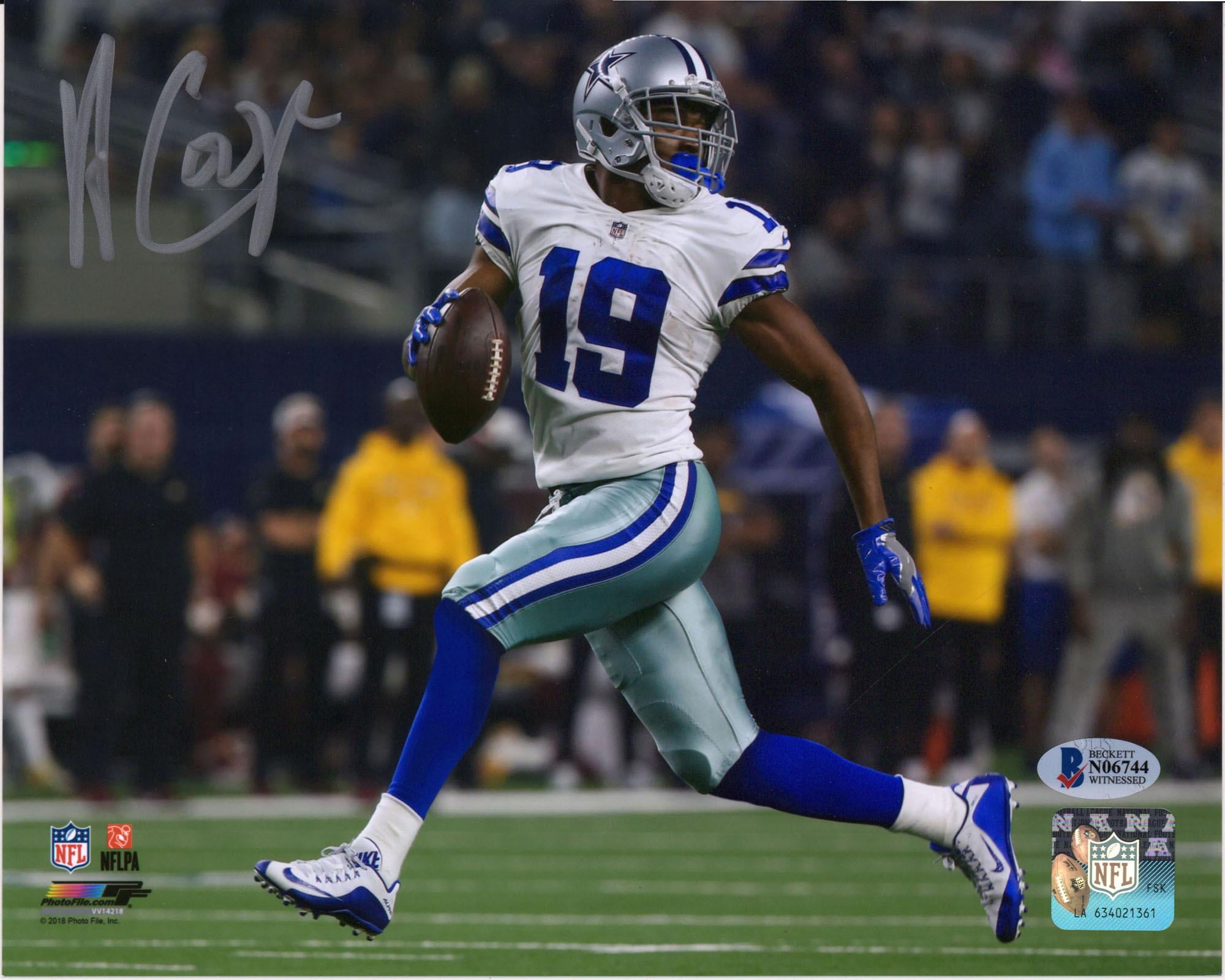
Amari Cooper’s NFL legacy is defined by his reputation as one of the most technically proficient route runners of the 21st century. Over a career spanning more than a decade, Cooper established himself as a perennial Pro Bowler who transformed every passing offense he joined, blending elite footwork with a quiet, professional consistency that earned him the nickname "The Route Doctor."
The Foundation of a Technician: Alabama and Draft Pedigree
To understand Amari Cooper’s professional legacy, one must look at his collegiate dominance at the University of Alabama. Playing under Nick Saban, Cooper wasn't just a physical specimen; he was a refined product before he ever stepped onto an NFL field. In 2014, he won the Biletnikoff Award and was a Heisman Trophy finalist, setting the stage for his selection as the 4th overall pick in the 2015 NFL Draft by the Oakland Raiders.
His entry into the league coincided with a shift in how wide receivers were evaluated. While the previous decade focused on "megalithic" receivers like Calvin Johnson, Cooper ushered in the era of the "separation specialist." His legacy began with the expectation that he would be a foundational piece for a franchise, a role he fulfilled immediately by becoming the first rookie in Raiders history to record a 1,000-yard receiving season. This early success validated the scouting reports that touted his "pro-ready" nuances, specifically his ability to manipulate defensive backs' hips through subtle changes in speed and stem direction.
The Oakland Raiders Era: Establishing the Blueprint
Cooper’s tenure in Oakland (2015–2018) was marked by high-end production and the first glimpses of his unique career trajectory. During his first two seasons, he formed a potent duo with quarterback Derek Carr, leading the Raiders to a 12-4 record in 2016. His legacy during this period was built on being a "silent assassin." He rarely engaged in the flamboyant celebrations or sideline outbursts common among elite receivers, choosing instead to let his tape do the talking.
However, this period also introduced a recurring theme in Cooper’s career: the narrative of inconsistency. Despite back-to-back Pro Bowls to start his career, stretches of "disappearing" from games led to questions about his ceiling. Looking back from 2026, these fluctuations are often attributed more to the offensive volatility of the Raiders at the time rather than Cooper’s individual skill. He remained the primary focus of every defensive coordinator, often drawing double teams that opened opportunities for teammates—a selfless aspect of his legacy that traditional box scores frequently overlooked.
The Dallas Cowboys Transformation: The "WR1" Effect
The mid-season trade in 2018 that sent Amari Cooper to the Dallas Cowboys for a first-round pick is arguably the most significant transaction of his career. At the time, the Cowboys' offense was stagnant, and Dak Prescott’s development appeared to have hit a plateau. Cooper’s arrival changed the geometry of the field for Dallas instantly.
In his first nine games with the Cowboys, Cooper recorded 725 yards and six touchdowns, propelling Dallas to an NFC East title. This stretch solidified his legacy as a "force multiplier." He proved that an elite route runner could transcend a playbook, providing a quarterback with a "friendly" target who was open even when he was covered. His 226-yard, three-touchdown performance against the Philadelphia Eagles in December 2018 remains a signature moment in Cowboys lore, showcasing his ability to take over games in high-leverage divisional matchups.
During his three and a half seasons in Dallas, Cooper was the focal point of a top-ranked offense. His legacy here was one of stabilization; he provided the veteran presence and tactical reliability that allowed younger players like CeeDee Lamb to develop without the pressure of drawing the opponent's best cornerback every Sunday.
The Cleveland Browns and the "QB-Proof" Label
When the Cowboys traded Cooper to the Cleveland Browns in 2022 for a fifth-round pick (largely a salary-cap-driven move), many analysts predicted the twilight of his career. Instead, Cooper authored some of his most impressive chapters in Cleveland. His legacy shifted from being a "star on a big stage" to a "dependable veteran who thrives regardless of circumstances."
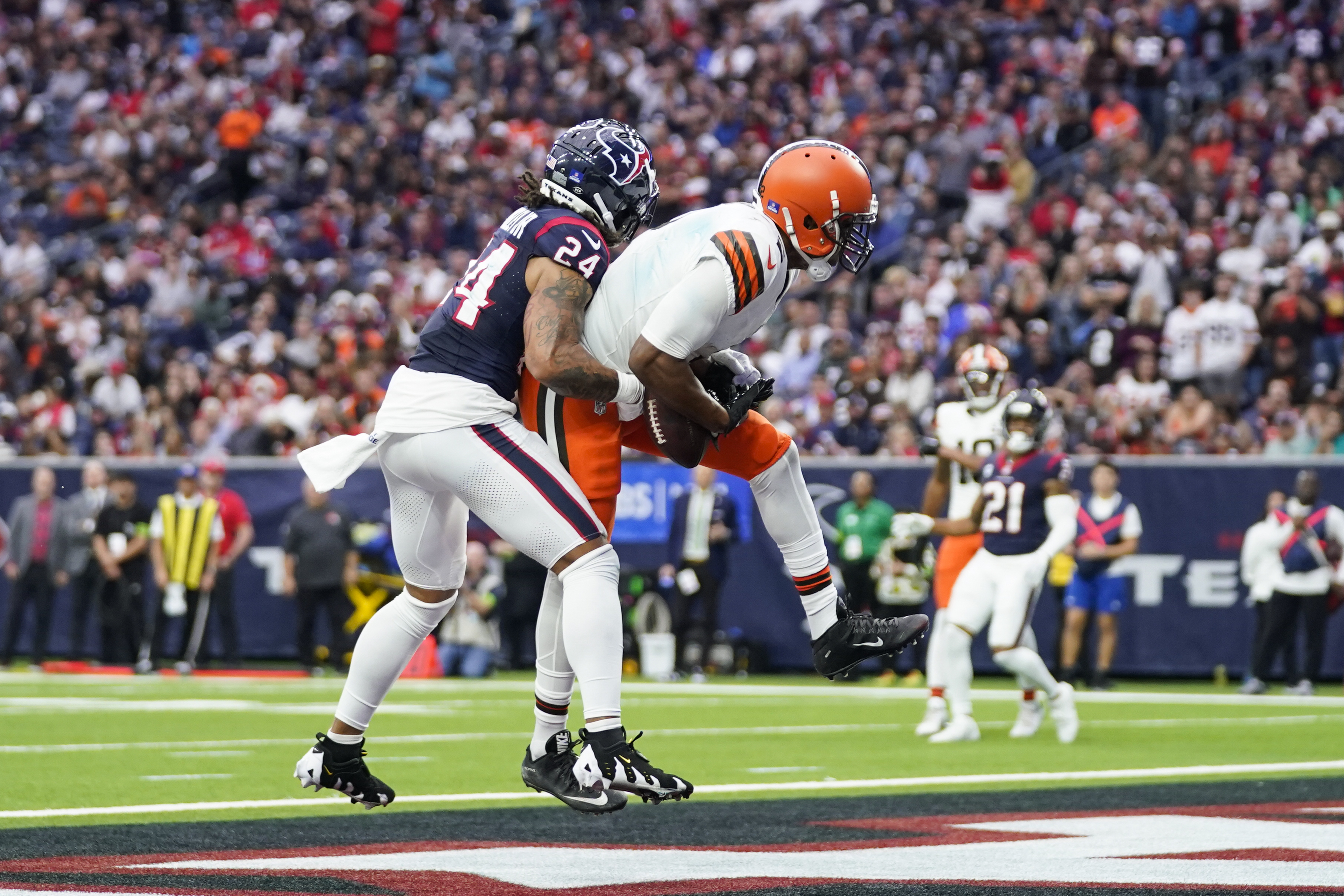
In 2023, Cooper achieved a feat that few receivers in NFL history can claim: he produced elite numbers while catching passes from four different starting quarterbacks in a single season (Deshaun Watson, P.J. Walker, Dorian Thompson-Robinson, and Joe Flacco). His 265-yard explosion against the Houston Texans on Christmas Eve 2023 set a Browns franchise record and served as a masterclass in deep-threat capability.
By the end of his Browns tenure and his subsequent move to the Buffalo Bills in late 2024, Cooper had earned the "QB-proof" reputation. His legacy in these later years was defined by his ability to maintain a high floor of production because his game relied on technique rather than raw, fading athleticism. Even as he aged into his 30s, his releases at the line of scrimmage remained among the quickest in the league.
Technical Analysis: Why "The Route Doctor" Mattered
The "legacy" of Amari Cooper is inextricably linked to the technicality of the wide receiver position. Coaches often use his film to teach the "Diamond Release" and the "Square Cut." Unlike receivers who rely on jump-ball ability, Cooper’s game was built on:
- Stem Leverage: He was a master at "pushing the vertical," forcing cornerbacks to turn their backs to the ball before he snapped off a comeback or a dig route.
- Deceleration: One of Cooper’s most underrated traits was his ability to go from full sprint to a dead stop in two steps, creating massive windows of separation.
- Late Hands: He rarely tipped off the arrival of the ball by reaching early, which prevented defenders from playing through his arms.
From a technical SEO and scouting perspective, Cooper’s career metrics in "average separation yards at target" consistently ranked in the top tier of the league. This data supports the eye test: he didn't just catch passes; he made life easier for his signal-callers by being "open by design."
The Comparative Legacy: Where Does He Rank?
Comparing Amari Cooper to his contemporaries requires looking at his longevity and total yardage. By 2026, Cooper resides in the statistical neighborhood of Hall of Fame-caliber players, having surpassed the 10,000-yard receiving mark and maintaining a high touchdown-to-reception ratio.
| Metric | Raiders Era (2015-18) | Cowboys Era (2018-21) | Browns/Bills Era (2022-25) |
|---|---|---|---|
| Pro Bowls | 2 | 2 | 1 (Plus Alternate Selections) |
| 1,000-Yard Seasons | 2 | 2 | 3 |
| Primary Role | Emerging X-Receiver | Franchise WR1 | Veteran Anchor/Deep Threat |
| Offensive Impact | Built chemistry with Carr | Saved the 2018 Season | Stabilized multi-QB rotations |
While he may not have the individual accolades of a Jerry Rice or the sheer physical dominance of a Randy Moss, his legacy is one of high-floor excellence. He is often compared to players like Keenan Allen or Reggie Wayne—receivers who mastered the craft so thoroughly that they remained effective long after their physical peak.
The "Trade Legacy": A Mercenary of Necessity
A unique part of Cooper’s story is how often he was traded despite his talent. Usually, three trades involving a Pro Bowl-caliber player suggest character issues or declining play. In Cooper’s case, it was the opposite. His legacy is one of a "valuable asset" that teams used to fix their immediate problems or balance their books.
He was never a locker room distraction; rather, his high salary and consistent value made him the perfect trade chip. This "mercenary" aspect of his career actually highlights his greatness—three different franchises (Cowboys, Browns, Bills) all viewed him as the "missing piece" needed to elevate their passing attacks. His ability to learn new playbooks and contribute within days of a trade (as seen in both his Dallas and Buffalo debuts) is a testament to his high football IQ.
FAQs About Amari Cooper’s NFL Legacy
How many Pro Bowls did Amari Cooper make?
As of 2026, Amari Cooper has earned seven Pro Bowl selections. His ability to make the Pro Bowl with three different franchises (Raiders, Cowboys, and Browns) highlights his adaptability and the universal respect he commanded from peers and coaches across the league.
Why was Amari Cooper called "The Route Doctor"?
The nickname "The Route Doctor" was given to him by teammates and analysts because of his surgical precision in running routes. He was known for his ability to "prescribe" the perfect release and break for any defensive coverage, making him one of the hardest players to cover in man-to-man situations.
What is Amari Cooper’s most famous game?
While he had many, his 2023 performance for the Cleveland Browns against the Houston Texans stands out. He recorded 11 catches for 265 yards and two touchdowns. This game is a microcosm of his legacy: he dominated despite having a backup quarterback (Joe Flacco) and broke a long-standing franchise record in the process.
Is Amari Cooper a Hall of Famer?
The debate surrounding Cooper’s Hall of Fame candidacy usually centers on his lack of First-Team All-Pro selections. However, his total career receiving yards (ranking in the top 30 all-time by 2026) and his seven Pro Bowls make him a strong candidate for the "Hall of Very Good" with a legitimate path to Canton through veteran committee longevity.
How did Amari Cooper change the Dallas Cowboys?
Cooper is credited with "saving" the 2018 Cowboys season. Before his arrival, the Dallas offense was bottom-five in passing efficiency. After the trade, the team went 7-2, won the division, and Dak Prescott’s completion percentage and passer rating skyrocketed, proving that a true WR1 could transform a young quarterback's career trajectory.
Final Recommendation: Studying the Craft
For students of the game, players, or coaches, the ultimate takeaway from Amari Cooper’s legacy is the importance of technical mastery over raw athleticism. If you are looking to understand how a receiver can remain productive for over a decade in a high-speed league, analyzing Cooper’s footwork and spatial awareness is the gold standard. His career serves as a blueprint for professional conduct and tactical excellence, proving that you don't need a loud personality to leave a massive footprint on the history of the NFL.