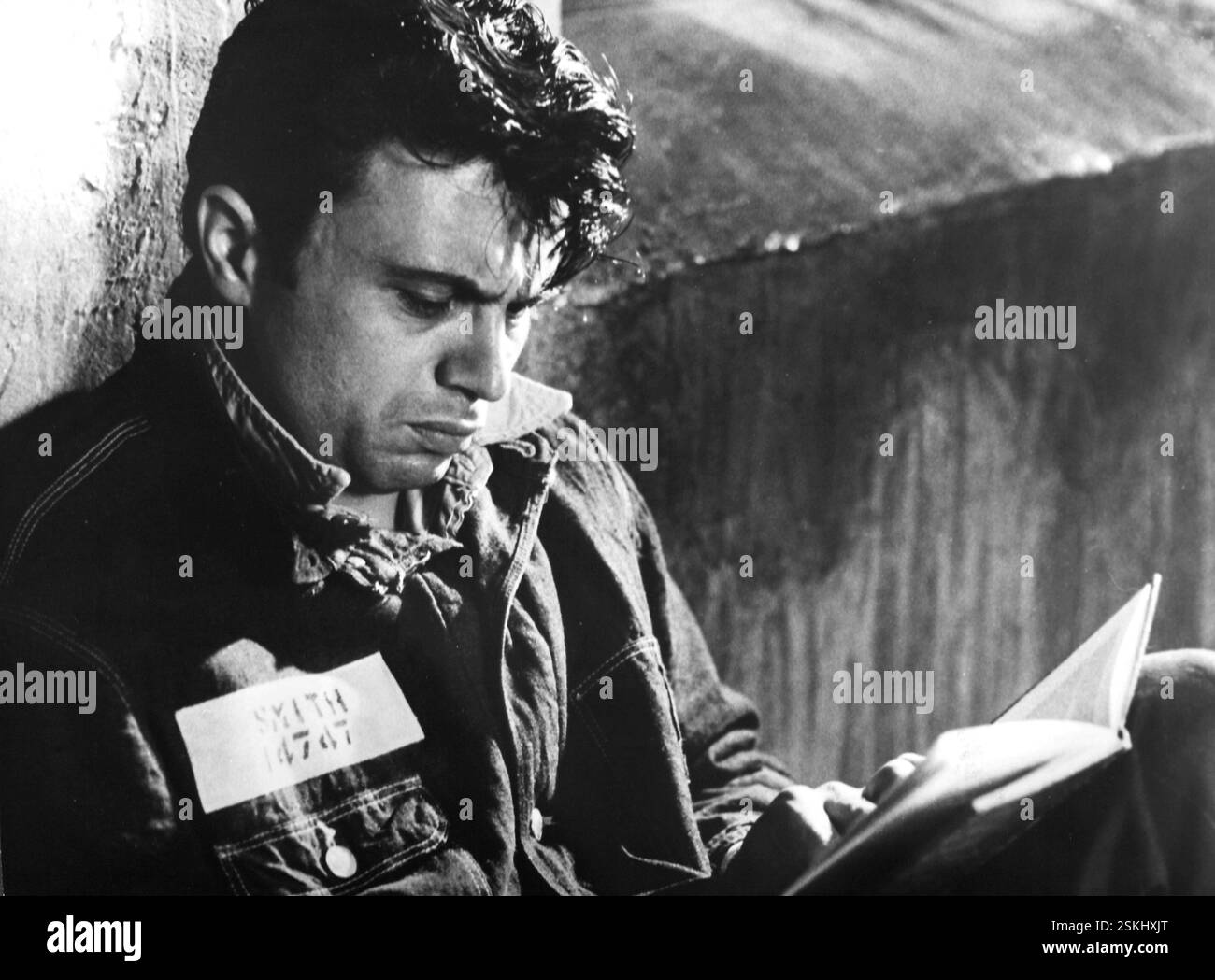
Alvin Dewey was the lead investigator for the Kansas Bureau of Investigation (KBI) who headed the search for the killers of the Clutter family in 1959. In Truman Capote’s seminal non-fiction novel In Cold Blood, Dewey is portrayed as the narrative’s moral anchor and the tireless professional whose obsession with the case eventually leads to the capture, conviction, and execution of Richard Hickock and Perry Smith.
The Historical Context of the Clutter Case and Alvin Dewey
To understand Alvin Dewey's significance, one must first look at the environment of Western Kansas in the late 1950s. On November 15, 1959, the small town of Holcomb was shattered by the discovery of four members of the Clutter family—Herb, Bonnie, Nancy, and Kenyon—brutally murdered in their home. The lack of an apparent motive and the sheer senselessness of the violence created a vacuum of fear in the local community.
Alvin Dewey, a former Sheriff of Finney County and a veteran agent of the Kansas Bureau of Investigation, was uniquely positioned to lead the case. He had been a personal friend of Herb Clutter, which added a layer of personal tragedy to his professional obligation. As the primary investigator, Dewey was responsible for coordinating a massive effort involving local police, the KBI, and eventually authorities across several states. His role was not merely to find the killers but to restore a sense of safety to a community that felt its fundamental innocence had been stripped away.
In 1959, forensic science was in its relative infancy compared to modern standards. There were no DNA databases or digital surveillance networks. Dewey had to rely on traditional "shoe-leather" detective work: interviewing witnesses, following up on hundreds of dead-end leads, and meticulously analyzing the few physical clues left at the crime scene, such as the bloody footprint left by one of the killers.
The Portrayal of Dewey in Truman Capote’s Masterpiece
When Truman Capote arrived in Kansas to research the murders, he sought out the people closest to the investigation. Alvin Dewey and his wife, Marie, became Capote’s primary entry points into the Holcomb community. Through thousands of hours of interviews and personal correspondence, Capote constructed a version of Dewey that served the specific needs of his "non-fiction novel."
Dewey as the Protagonist of Law and Order
In In Cold Blood, Capote frames Dewey as the protagonist of the "official" world, contrasting him with the "anti-heroes" Perry Smith and Richard Hickock. Dewey is depicted as a man haunted by the crime. Capote describes him as losing weight, suffering from insomnia, and becoming increasingly distant from his family as the case consumes him. This characterization serves a dual purpose: it emphasizes the gravity of the crime and creates a relatable, sympathetic figure for the reader to follow.
The Relationship Between Capote and Dewey
The friendship between Truman Capote and Alvin Dewey is a subject of significant literary and historical discussion. Capote stayed with the Deweys and shared many meals with them. This intimacy allowed Capote access to confidential case files and Dewey’s personal thoughts, but it also raised questions about the objectivity of the reporting. Some critics argue that Capote’s portrayal of Dewey was overly favorable—a "thank you" for the access provided—which may have led to the romanticization of the investigation’s efficiency.
The Investigation: Fact vs. Narrative Fiction
While In Cold Blood is celebrated for its narrative drive, modern research and the release of historical KBI files have provided a more nuanced view of the investigation. Capote presents the breakthrough in the case—a tip from a former cellmate of Richard Hickock named Floyd Wells—as a direct result of the pressure and persistence of Dewey’s team.
In reality, while the KBI was certainly working hard, the tip from Wells was a stroke of luck that sat on a desk for a period before being fully acted upon. Once the tip was verified, Dewey’s coordination was indeed instrumental in tracking Smith and Hickock to Las Vegas. However, the narrative suggests a more seamless and intuitive investigative process than the often chaotic and frustrating reality of high-stakes police work.
The Interrogation and Capture
The climax of the investigative arc in both the book and real life occurs during the interrogation of the suspects. Dewey and his fellow agents (Special Agents Church, Nye, and Duntz) conducted a masterclass in psychological interrogation. By confronting Hickock and Smith with the physical evidence—specifically the boots that matched the prints at the scene—the investigators were able to break the suspects' alibis and secure confessions. Dewey’s personal reaction to the confessions, as recorded by Capote, highlights the catharsis of a man who had carried the weight of a murdered family for months.
The Personal Toll on the Dewey Family
One of the most compelling aspects of Dewey’s story is the impact the case had on his home life. Marie Dewey, his wife, is a significant secondary character in In Cold Blood. She represents the domestic stability that the Clutter murders threatened. Through her eyes, the reader sees Alvin’s physical and emotional decline.
The Dewey household became a makeshift headquarters. The phone rang at all hours with tips, threats, and inquiries from the press. For Alvin Dewey, the case was never "just business." The Clutters were his neighbors, and their deaths were a personal affront. This emotional investment is what makes Dewey such a compelling figure in true crime history; he represents the human cost of seeking justice in the face of absolute depravity.
Critiques and Modern Perspectives on Dewey’s Role
As of 2026, the legacy of Alvin Dewey is often viewed through the lens of modern investigative standards and literary criticism. While he remains a hero to many in Kansas, some historians have pointed out discrepancies between Capote’s account and the official records.
- Lead Management: In later years, investigative journalists pointed out that some leads were ignored or delayed, suggesting the KBI was more overwhelmed than Capote depicted.
- The "Hero" Narrative: There is a consensus among literary scholars that Capote intentionally polished Dewey’s image to provide a starker contrast to the chaos of the killers’ lives.
- Post-Trial Influence: Dewey’s involvement did not end with the capture. He was instrumental during the trial and remained a staunch supporter of the death penalty for Hickock and Smith, a stance that Capote captures with clinical precision.
Comparative Analysis: Alvin Dewey in Media and History
| Feature | In Cold Blood (Book) | Historical Reality (KBI Files) | 1967 Film Portrayal |
|---|---|---|---|
| Primary Motivation | Restoring moral order to Kansas. | Professional duty and personal connection to victims. | Stoic, determined lawman. |
| Investigative Style | Intuitive, almost cinematic persistence. | Methodical, bureaucratic, and heavily reliant on the Wells tip. | Action-oriented detective. |
| Relationship with Capote | Deeply cooperative and friendly. | Mutually beneficial; Dewey provided access, Capote provided fame. | Minimal focus on the author. |
| Family Life | Portrayed as strained but supportive. | Accurate; Marie Dewey was a key partner in his life. | Less emphasis on domesticity. |
| Public Image | The "ideal" American lawman. | A highly competent but humanly flawed official. | Iconic figure of 1960s true crime media. |
The Enduring Legacy of Alvin Dewey
Alvin Dewey passed away in 1981, but his name remains synonymous with the birth of the modern true crime genre. Because of In Cold Blood, Dewey became one of the first "celebrity" detectives in American culture. He was not just a name in a police report; he was a character with a soul, a family, and a burden.
His legacy is also tied to the KBI itself. The Clutter case put the Kansas Bureau of Investigation on the map, proving that state-level agencies could effectively manage complex, multi-jurisdictional homicide investigations. Today, the Dewey name is still respected within law enforcement circles in the Midwest, representing a bridge between the old world of rural policing and the more structured, scientific approach of the late 20th century.
Frequently Asked Questions
Did Alvin Dewey actually like how he was portrayed in the book?
For the most part, yes. Dewey and his wife maintained a friendship with Truman Capote for years after the book was published. While Dewey was a private man and sometimes found the sudden fame overwhelming, he felt the book accurately captured the tension of the investigation and the tragedy of the Clutter family. However, some of his colleagues in the KBI felt Capote gave Dewey too much credit at the expense of the other agents involved.
How accurate is John Forsythe’s portrayal of Dewey in the 1967 film?
John Forsythe’s performance is widely considered a faithful adaptation of the character as written by Capote. He captures Dewey’s stoicism and the visible weight of the investigation. However, like the book, the film streamlines the investigative process, making Dewey appear more like a traditional Hollywood detective than the administrative lead he often was in real life.
What happened to Alvin Dewey after the Clutter case?
Dewey continued his career with the KBI until his retirement in 1975. He remained in Garden City, Kansas, and was often consulted by journalists and historians about the case. Despite the fame brought by the book and subsequent movies, he lived a relatively quiet life, remaining a respected member of the community until his death.
Was Alvin Dewey really a friend of Herb Clutter?
Yes. Dewey and Herb Clutter were well-acquainted through community circles in Finney County. This personal connection is one of the reasons the case was so distressing for Dewey. In small-town Kansas in the 1950s, the social fabric was tightly knit, and the murder of a prominent family like the Clutters was felt by everyone, especially those in law enforcement.
Did Dewey receive any of the profits from the book or movie?
While Truman Capote was known to be generous with gifts and occasionally provided financial assistance to people he interviewed, there is no official record of Dewey receiving a formal share of the book’s massive royalties. His "payment" was largely in the form of national recognition and the professional prestige that came with being the man who caught the most famous killers in America at the time.
Practical Recommendation for Further Study
To gain a complete understanding of Alvin Dewey’s role, it is recommended to read In Cold Blood alongside more recent historical analyses, such as the KBI's own retrospective accounts and investigative journalism that emerged after the case files were unsealed in the 2010s. For those interested in the cinematic history, the 1967 film In Cold Blood and the 2005 film Capote (where Dewey is played by Chris Cooper) offer fascinating, though different, interpretations of his character and his relationship with the truth.