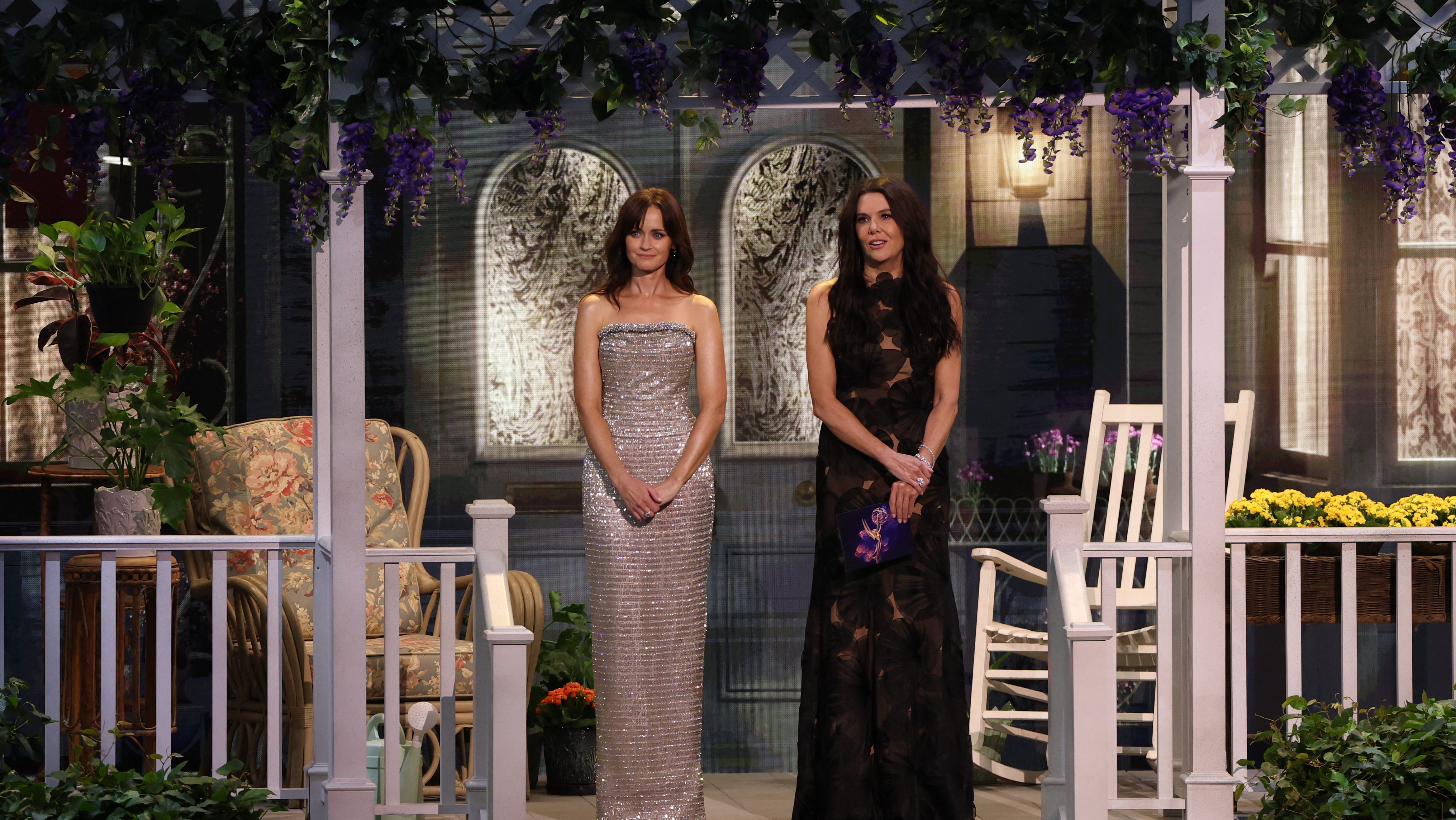
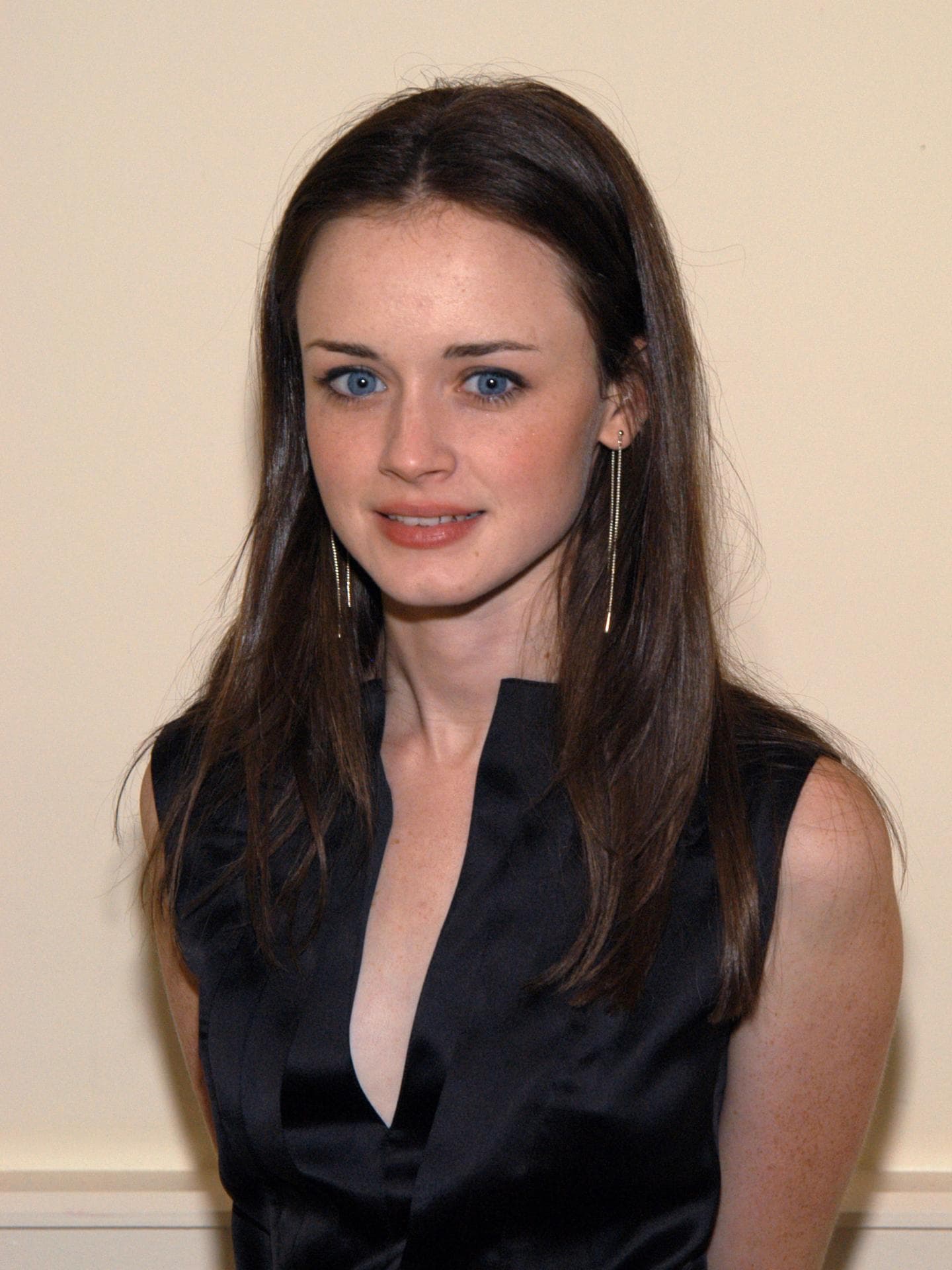
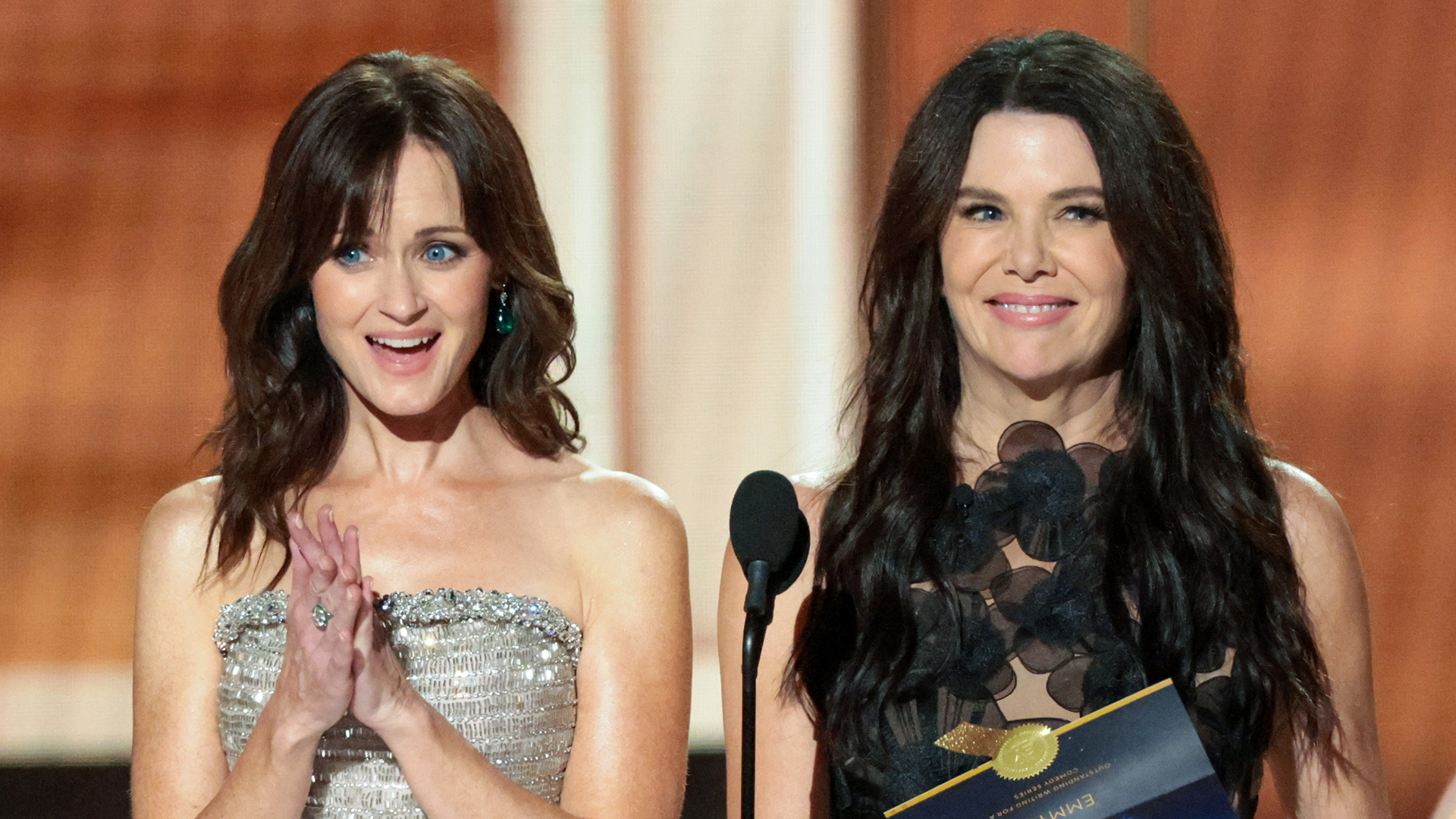
Alexis Bledel achieved the rare transition from beloved teen television icon to critically acclaimed dramatic powerhouse through calculated creative reinvention. After spending seven seasons defining fast-talking Rory Gilmore on Gilmore Girls, Bledel earned an Emmy Award in 2017 for her harrowing portrayal of Emily Malek in Hulu’s The Handmaid’s Tale, cementing her place as an exceptional dramatic talent.
The Stars Hollow Phenomenon: Defining Rory Gilmore
When Gilmore Girls debuted in October 2000 on The WB, Kimberly Alexis Bledel was an unproven nineteen-year-old college student at New York University’s Tisch School of the Arts with a background in community theater and commercial modeling. Born in Houston, Texas, to an Argentine father and an American mother raised in Mexico, Spanish was Bledel’s first language; she did not speak fluent English until entering elementary school. She entered the audition room for creator Amy Sherman-Palladino with no professional screen-acting credits to her name.
Sherman-Palladino was looking for an unconventional lead: someone whose innocence, intellectual intensity, and natural reserve could anchor an ambitious, hyper-literate dramedy centered on an idiosyncratic mother-daughter bond. Bledel's low-key demeanor stood in stark contrast to the performative gloss typical of turn-of-the-millennium teen television.
- The Gilmore Era: 2000–2007
- Hyper-Verbal Performance
- 80+ page scripts per episode (vs. standard 50)
- Relied on rapid cadence, physical guidance
- High-volume television schedule (153 episodes)
- Hyper-Verbal Performance
The role of Lorelai "Rory" Leigh Gilmore demanded exceptional technical discipline from day one. Sherman-Palladino’s scripts ran twenty to thirty pages longer than standard hour-long television dramas to accommodate rapid-fire, screwball-comedy pacing. Co-star Lauren Graham frequently had to loop her arm through Bledel’s in early episodes to guide the young actress to her camera marks without disrupting the continuous tracking shots.
Over seven seasons and 153 episodes, Bledel transformed Rory from a precocious bookworm in Chilton’s uniform into an ambitious Yale undergraduate dealing with the complications of privilege, fractured romances, and journalistic ambitions. The character became a fixture of early-2000s pop culture, earning Bledel widespread recognition and a dedicated fan base. Yet the very qualities that made Rory iconic—earnestness, youthfulness, and verbal agility—threatened to limit Bledel’s future prospects in Hollywood.
Breaking the Ingenue Mold: Strategic Film and Television Pivots
Many young actors who achieve generational fame on a single network series struggle to break free of that persona. Bledel, however, pursued roles that contrasted with Stars Hollow's cozy confines, seeking projects that subverted expectations of her screen identity.
Exploring Mainstream and Independent Cinema
During production hiatuses on Gilmore Girls, Bledel balanced her slate with diverse cinematic projects:
- Tuck Everlasting (2002): Disney’s adaptation of Natalie Babbitt’s classic novel allowed Bledel to demonstrate romantic dramatic weight opposite William Hurt, Sissy Spacek, and Jonathan Jackson.
- Sin City (2005): Directed by Robert Rodriguez and Frank Miller, this hyper-stylized neo-noir thriller cast Bledel completely against type as Becky, an Old Town sex worker who betrays her peers. Dressed in leather and armed with a pistol, Bledel used her famous blue eyes to convey moral conflict and quiet terror.
- The Sisterhood of the Traveling Pants (2005) & Sequel (2008): As the introspective artist Lena Kaligaris, Bledel worked alongside America Ferrera, Blake Lively, and Amber Tamblyn. Her performance grounded the franchise in genuine emotional vulnerability, exploring romantic hesitation, grief, and family expectations.
- Post Grad (2009): In this post-college comedy directed by Vicky Jenson, Bledel tackled the anxieties of entering the workforce during economic uncertainty, displaying physical comedy and approachable frustration.
The Subversive Turn on Mad Men
In 2012, Bledel secured a pivotal guest arc in Season 5 of Matthew Weiner’s acclaimed AMC drama Mad Men. Playing Beth Dawes, an unhappily married suburban housewife who engages in a melancholic affair with Pete Campbell (Vincent Kartheiser), Bledel embraced an aura of domestic despair.
Her arc culminated in Beth undergoing electroconvulsive therapy to treat severe clinical depression, leaving her character hollowed out and unable to remember Pete. The performance was haunting, subdued, and stripped of the comedic brightness that had defined her twenties. The critical reception marked an important turning point: industry casting directors began viewing Bledel through a serious dramatic lens.
Gilmore Girls: A Year in the Life (2016)
Before her major dramatic breakthrough, Bledel returned to Stars Hollow for Netflix's four-part revival, Gilmore Girls: A Year in the Life (2016). Stepping back into Rory’s shoes nearly a decade later presented an unusual artistic challenge: portraying a thirty-two-year-old wandering through professional burnout, aimlessness, and unresolved emotional grief following the death of patriarch Richard Gilmore (played by the late Edward Herrmann).
Rather than playing Rory as the triumphant, flawless journalist viewers had anticipated, Bledel leaned into the character’s creative fatigue, career drift, and moral ambiguity. The performance divided fans who wanted a neat fairy-tale ending, but it revealed Bledel's willingness to resist simple audience sympathy in favor of psychological truth. The revival served as an artistic bridge, closing the door on the character that launched her career just as her most demanding dramatic work was about to begin.
The Dystopian Pivot: The Handmaid’s Tale
In 2017, Bruce Miller adapted Margaret Atwood’s seminal 1985 speculative fiction novel The Handmaid’s Tale for Hulu. Bledel was cast in what was initially intended as a guest role: Emily, introduced under the patronymic name "Ofglen."
- Emily Malek's Dramatic Conflict
- Pre-Gilead Reality
- Senior Lecturer in Cellular Biology
- Married to Sylvia; mother to Oliver
- Academic autonomy & intellectual freedom
- The Republic of Gilead
- Reduced to fertile Handmaid
- Branded a "Gender Traitor"
- Subject to state mutilation & exile
- Pre-Gilead Reality
Emily begins as Offred’s (Elisabeth Moss) assigned walking partner to the market. Initially perceived as an orthodox Gilead conformist, Emily is soon revealed to be a clandestine member of the "Mayday" resistance. As a former university lecturer in cellular biology, married to a woman and raising a son before the totalitarian takeover, Emily represented everything the regime sought to violently eradicate.
Transforming Subtext into Action
The role called for an acting style diametrically opposed to the verbal gymnastics of Gilmore Girls. Under Gilead's oppressive surveillance state, Handmaids are forbidden from speaking freely, making eye contact, or showing emotion. Bledel had to communicate rage, grief, terror, and resilience almost entirely through her eyes, physical posture, and micro-expressions.
In Season 1, Episode 3 ("Late"), Bledel delivered one of the most devastating sequences in modern prestige television. After being put on trial alongside her lover, a Martha, for "gender treachery," Emily is forced to watch her partner's public execution by hanging. Later, Emily wakes up in a sterile hospital ward to discover she has been subjected to female genital mutilation on the orders of Aunt Lydia (Ann Dowd).
Bledel played the horrifying realization entirely in silence: waking up, exploring her surgical bandages with trembling hands, looking up at Aunt Lydia, and letting out a muffled scream of betrayal and agony. It was raw, physically committed, and far removed from any role she had played before.
Later that season, Emily hijacked a Gilead Mercedes in the middle of a crowded market, accelerated into the courtyard, ran down a Guardian soldier, and smiled in triumphant defiance before being dragged from the vehicle. The moment became an emblematic visual for resistance against authoritarian control.
The 2017 Emmy Triumph and Critical Breakthrough
At the 69th Primetime Creative Arts Emmy Awards in September 2017, Alexis Bledel won the award for Outstanding Guest Actress in a Drama Series for her performance in The Handmaid’s Tale.
The win was historic on multiple fronts:
- Validating Network Re-entry: It validated an actor who spent years under the shadow of a single teen-drama role, confirming her technical range within prestige cable and streaming formats.
- Streaming Milestone: The victory contributed to Hulu becoming the first streaming platform to capture the Primetime Emmy Award for Outstanding Drama Series, edging out established cable powerhouses like HBO and Netflix.
- Elevation to Series Regular: Impressed by the depth of her performance and her chemistry on camera, showrunner Bruce Miller expanded Bledel's role from a guest appearance into a central series regular for Season 2 and beyond.
Her performance continued to earn industry recognition. She received three subsequent Primetime Emmy nominations for Outstanding Supporting Actress in a Drama Series in 2018, 2020, and 2021, illustrating that her initial win was not a one-off performance, but the reflection of a sustained dramatic evolution.
Career Trajectory & Performance Analysis
To understand how Bledel transformed her career over two decades, it is helpful to compare the distinct performance styles, vocal registers, and character demands across her most significant roles.
| Project & Character | Primary Genre | Acting Style & Delivery | Primary Artistic Challenge | Critical & Award Recognition |
|---|---|---|---|---|
| Gilmore Girls (2000–2007)Rory Gilmore | Television Dramedy | Hyper-verbal, rapid-cadence, light physical comedy, earnest naturalism | Sustaining intense dialogue volume without formal acting training; handling 80-page scripts | Teen Choice Awards; Young Artist Awards; Family Television Award |
| The Sisterhood of the Traveling Pants (2005)Lena Kaligaris | Coming-of-Age Drama | Quiet, reserved, internal, sensitive romanticism | Conveying emotional vulnerability and artistic hesitation without appearing passive | Teen Choice Award nominations; critical praise for grounded chemistry |
| Sin City (2005)Becky | Neo-Noir / Graphic Adaptation | Cynical, seductive, frightened, physically stylized | Working entirely against green screen; playing explicit, morally compromised material | Broadcast Film Critics Association nomination (Ensemble) |
| Mad Men (2012)Beth Dawes | Period Prestige Drama | Melancholic, subdued, tragic, historically constrained | Communicating 1960s suburban alienation and the psychological aftermath of shock therapy | Universal critical acclaim from major television critics |
| The Handmaid's Tale (2017–2021)Emily Malek | Dystopian Drama | Highly internalized, micro-expressive, silent rage, physical trauma | Expressing profound trauma, rage, and resilience under severe dialogue constraints | Won: Primetime Emmy Award (2017);Nominated: Primetime Emmy (2018, 2020, 2021); SAG Award nominations |
Acting Technique: From Verbal Agility to Non-Verbal Power
The contrast between Rory Gilmore and Emily Malek highlights an artistic evolution built on two opposing performance styles.
The Hyper-Verbal Modality
In Sherman-Palladino’s universe, character is revealed through verbal density. An actor must convey thought in real time, firing off pop-culture references, parenthetical asides, and emotional defenses at a rapid pace. This approach requires:
- Rhythmic Precision: Treating dialogue like sheet music, where missing an inflection disrupts the scene's momentum.
- Externalized Emotion: Characters explain their internal lives at length, requiring the actor to keep conversational dynamics energetic and buoyant.
- High-Energy Projection: Projecting an accessible persona that invites the viewer into an idyllic, small-town atmosphere.
The Internalized Dystopian Modality
In The Handmaid’s Tale, director Reed Morano and showrunner Bruce Miller embraced extreme, shallow-depth-of-field close-ups. In this visual language, speech is dangerous, and an overactive face can get a character killed. Bledel had to adapt by:
Micro-Physicality: Controlling the flutter of an eyelid, the tension in the jaw, and the rhythm of breathing to communicate layered thought.
The Power of the Gaze: Bledel used her large, expressive eyes not to signal youthful wonder (as in Gilmore Girls), but to convey smoldering fury, intellectual processing, and visceral survival instinct.
Physicality in Extreme Environments: In Season 2, when Emily is exiled to the lethal, radioactive "Colonies," Bledel stripped her performance of all aesthetic vanity. Covered in dirt, suffering from radiation sickness, and losing her teeth, she portrayed a woman methodically helping other women die with dignity while poisoning a Gilead Commander’s wife without hesitation.
Technical Performance Comparison
- Rory Gilmore (Gilmore Girls)
- Driven by spoken dialogue
- High tempo, rhythmic cadence
- Transparent emotional states
- Comedic and domestic stakes
- Emily Malek (The Handmaid's Tale)
- Driven by silence and subtext
- Deliberate, measured stillness
- Masked reactions, micro-expressions
- Existential and life-or-death stakes
- Rory Gilmore (Gilmore Girls)
Navigating Career Independence: Departure and Next Moves
In May 2022, ahead of the production of The Handmaid’s Tale Season 5, Bledel made the unexpected announcement that she was stepping away from the series. In an official statement, she remarked:
"After much thought, I felt I had to step away from The Handmaid’s Tale at this time. I am forever grateful to Bruce Miller for writing such truthful and resonant scenes for Emily, and to Hulu, MGM, the cast and crew for their support."
The departure highlighted Bledel’s deliberate approach to her career. Rather than staying tethered to a dark, emotionally draining series past its natural arc for her character, she chose to conclude Emily's story on her own terms. The show honored her departure in Season 5 by revealing that Emily had returned to Gilead to continue fighting in the underground resistance, a fitting narrative resolution for a character defined by defiance.
Throughout her career, Bledel has maintained strict boundaries between her public work and private life. She avoids public social media platforms and keeps her personal affairs out of the headlines, allowing her acting to speak for itself. This intentional distance has given her a degree of creative freedom rare among stars who grew up on network television.
Selected Filmography & Television Milestones
For viewers exploring Bledel's career, the following chronological roadmap highlights her most significant performances:
- Gilmore Girls (2000–2007) – 153 episodes; core series run.
- Tuck Everlasting (2002) – Feature film adaptation starring opposite Jonathan Jackson.
- Sin City (2005) – Crime thriller directed by Frank Miller and Robert Rodriguez.
- The Sisterhood of the Traveling Pants (2005 & 2008) – Coming-of-age ensemble films.
- Mad Men (2012) – Season 5, Episodes 8, 9, and 13 as Beth Dawes.
- Gilmore Girls: A Year in the Life (2016) – 4-part miniseries revival on Netflix.
- The Handmaid’s Tale (2017–2021) – Seasons 1–4; Primetime Emmy Winner (2017) and 3-time nominee.
Frequently Asked Questions
Which episode of The Handmaid’s Tale won Alexis Bledel her Emmy?
Bledel won the 2017 Primetime Creative Arts Emmy Award for Outstanding Guest Actress in a Drama Series for Season 1, Episode 3, titled "Late." In this episode, her character Emily (then Ofglen) is put on trial by Gilead authorities for "gender treachery," witnesses her female lover’s execution, and is subjected to female genital mutilation. Her largely non-verbal performance in the hospital room following the surgery was widely cited by critics and Emmy voters as one of the most compelling dramatic sequences of that television season.
Did Alexis Bledel have any professional acting experience before Gilmore Girls?
No. Bledel had worked as a print and commercial model during her teenage years and participated in community theater productions in Texas (such as Our Town and The Wizard of Oz) to help overcome childhood shyness. However, she had never appeared in a professional film or television production before auditioning for Gilmore Girls while enrolled as a student at NYU. Lauren Graham often had to physically direct her to her marks during the filming of early Season 1 episodes.
Why did Alexis Bledel leave The Handmaid’s Tale before Season 5?
In May 2022, Bledel released an official statement confirming she was stepping away from the series ahead of its fifth season. She did not cite a specific conflict or project, stating simply that after much thought, she felt she had to step away at that time, while expressing deep gratitude to showrunner Bruce Miller, Hulu, and the production team. Showrunners wrote her character out by explaining that Emily had returned to Gilead to fight in the underground Mayday resistance.
Is Spanish really Alexis Bledel's first language?
Yes. Bledel was raised in a Spanish-speaking home in Houston, Texas. Her father, Martin Bledel, was born and raised in Argentina, and her mother, Nanette Dozier, was raised in Mexico. Because her household spoke Spanish, Bledel did not begin learning English until she entered elementary school, and she has identified as Latina throughout her career.
How many Emmy nominations has Alexis Bledel received in total?
Bledel has received four Primetime Emmy Award nominations, all for her work on The Handmaid’s Tale:
- 2017: Outstanding Guest Actress in a Drama Series (Won)
- 2018: Outstanding Supporting Actress in a Drama Series (Nominated)
- 2020: Outstanding Supporting Actress in a Drama Series (Nominated)
- 2021: Outstanding Supporting Actress in a Drama Series (Nominated)
Exploring Bledel’s Body of Work
To appreciate Alexis Bledel’s evolution as an actor, trace her work chronologically rather than sticking to a single genre.
Begin by watching Season 1 of Gilmore Girls to observe how she uses vocal cadence, energy, and comedic timing to build a character with zero prior screen experience. Next, watch Season 5 of Mad Men (specifically episodes "Lady Lazarus" and "The Phantom") to see her initial steps toward darker, more internal roles. Finally, view Season 1, Episode 3 ("Late") and Season 2, Episode 2 ("Unwomen") of The Handmaid's Tale.
Tracking this path reveals how an actor can systematically deconstruct a beloved public persona, expand their range, and build a lasting dramatic legacy.