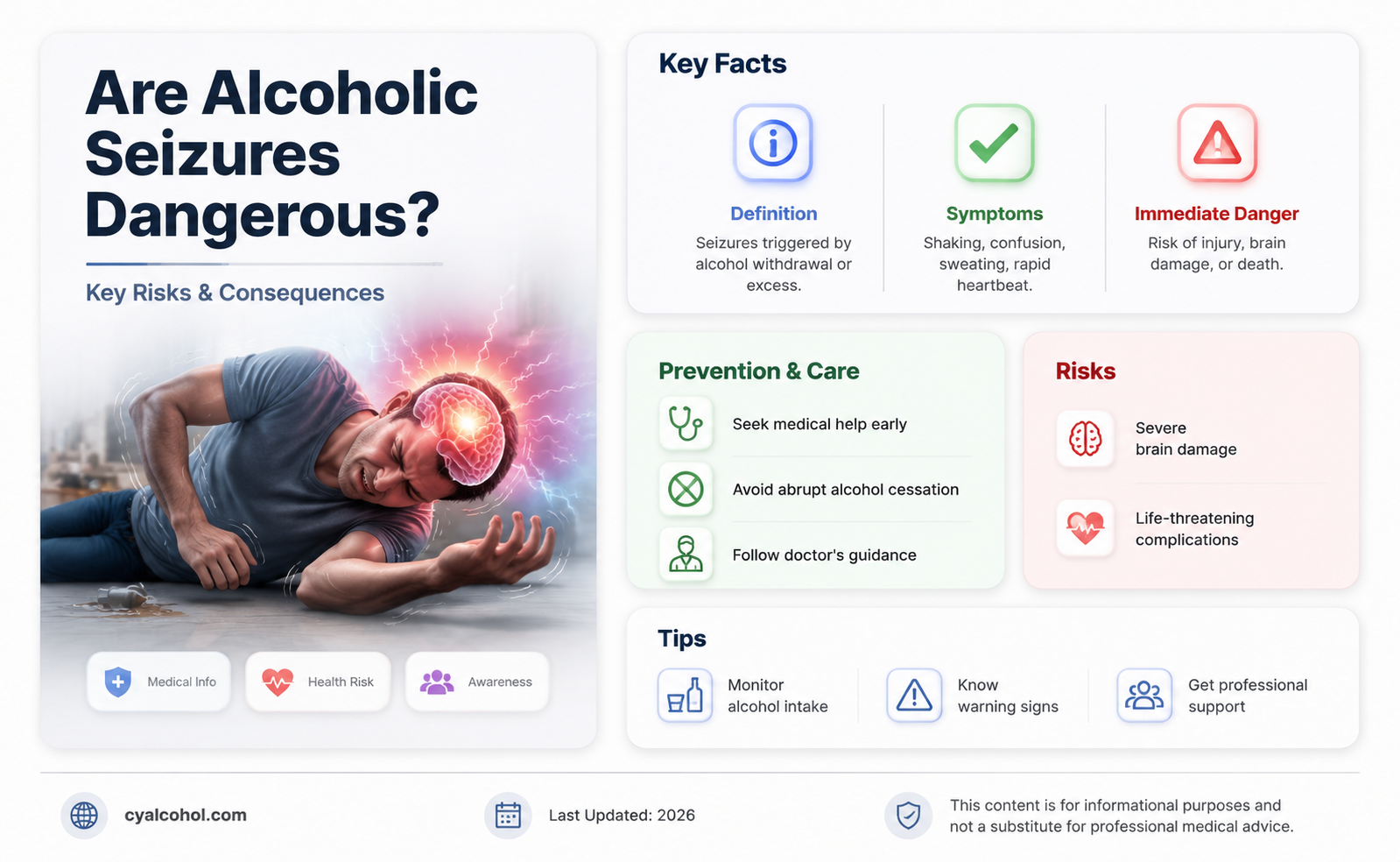
Alcoholic seizures are serious neurological events primarily triggered by the sudden cessation of heavy, long-term alcohol consumption. These episodes, often occurring within 6 to 48 hours after the last drink, represent a critical manifestation of alcohol withdrawal syndrome and require immediate medical intervention to prevent progression to life-threatening conditions like Delirium Tremens.
Understanding Alcoholic Seizures: The Neurobiology of Withdrawal
To understand why alcoholic seizures occur, one must first look at how chronic alcohol consumption alters brain chemistry. Alcohol acts as a central nervous system (CNS) depressant. It achieves this by enhancing the activity of gamma-aminobutyric acid (GABA), the brain's primary inhibitory neurotransmitter, and inhibiting glutamate, the primary excitatory neurotransmitter.
When a person drinks heavily over a long period, the brain attempts to maintain equilibrium (homeostasis) by downregulating GABA receptors (making them less sensitive) and upregulating glutamate receptors (making them more sensitive). This creates a state where the brain is constantly fighting against the sedative effects of alcohol. When alcohol is suddenly removed from the system in 2026, the "brakes" provided by the alcohol are gone, but the brain's "accelerator" (glutamate) remains in overdrive. This results in a state of severe cortical hyperexcitability, which manifests physically as a seizure.
These events are distinct from epilepsy. While an epileptic seizure is caused by inherent brain dysfunction or injury, an alcoholic seizure is a reactive event—a physiological response to the rapid shift in neurochemistry. However, for individuals with pre-existing epilepsy, alcohol withdrawal significantly lowers the seizure threshold, making an episode much more likely and potentially more severe.
The Clinical Timeline: When Do Seizures Occur?
Alcohol withdrawal is a progressive process. While every individual’s physiology differs, medical professionals generally categorize the withdrawal timeline into stages. Alcoholic seizures typically appear in the early stages of withdrawal, often before the onset of Delirium Tremens (DTs).
The most common window for these seizures is 6 to 48 hours after the blood alcohol concentration begins to drop. It is a common misconception that a person must have zero alcohol in their system to experience a withdrawal seizure; a significant drop in levels can be enough to trigger the event in highly dependent individuals.
The "Rum Fit" Phenomenon
Historically referred to as "rum fits," these seizures are almost always of the generalized tonic-clonic variety. They involve a loss of consciousness, muscle rigidity (the tonic phase), and rapid, rhythmic extremities jerking (the clonic phase). Most patients experience a single seizure or a brief cluster of two or three seizures over a short period. If seizures continue for more than 30 minutes or occur in rapid succession without the person regaining consciousness, the condition is known as status epilepticus, which is a high-priority medical emergency.
Recognizing the Warning Signs and Symptoms
While a seizure often occurs suddenly, there are frequently "prodromal" or warning symptoms that indicate the central nervous system is becoming dangerously unstable. Recognizing these signs can be the difference between seeking help early and experiencing a traumatic medical event.
Early Warning Signs (6–12 Hours Post-Drink)
- Intense Tremors: Often called "the shakes," these are most visible in the hands but can affect the entire body.
- Hyperactivity of the Autonomic Nervous System: This includes profuse sweating (diaphoresis), a racing heart (tachycardia), and elevated blood pressure.
- Psychological Distress: Severe anxiety, irritability, and panic attacks are common as the brain enters a hyperexcitable state.
- Gastrointestinal Distress: Nausea and vomiting can exacerbate the situation by causing dehydration and electrolyte imbalances.
Symptoms of the Seizure Event
During the actual seizure, the individual will typically exhibit:
- Sudden Loss of Consciousness: The person may fall abruptly.
- Tonic Phase: The muscles stiffen, and the person may emit a vocalization as air is forced out of the lungs.
- Clonic Phase: Rhythmic jerking of the limbs.
- Postictal State: After the seizure, the person will likely be confused, exhausted, and may have no memory of the event. This recovery period can last from minutes to hours.
Risk Factors and the "Kindling" Effect
Not everyone who consumes alcohol will experience seizures upon quitting, but certain factors significantly increase the risk. Understanding these risks is vital for clinicians and family members in 2026.
- Duration and Volume of Consumption: The more years a person has been drinking and the higher the daily volume, the more the brain has adapted to the presence of alcohol, increasing the severity of withdrawal.
- The Kindling Effect: This is perhaps the most critical concept in withdrawal management. "Kindling" refers to the phenomenon where each subsequent withdrawal episode becomes more severe than the last. Repeated cycles of intoxication followed by withdrawal "prime" the brain to react more violently, making seizures more likely with each attempt to quit.
- Nutritional Deficiencies: Heavy alcohol use interferes with the absorption of essential nutrients, particularly Thiamine (Vitamin B1) and magnesium. Magnesium deficiency, in particular, is known to lower the seizure threshold.
- Co-occurring Medical Conditions: Liver disease, head trauma (common in those who fall while intoxicated), and concurrent use of other drugs (like benzodiazepines or stimulants) can complicate the withdrawal profile.
Comparing Alcohol Withdrawal Stages
The following table outlines the typical progression of alcohol withdrawal symptoms to help distinguish between minor withdrawal and the dangerous territory of seizures and DTs.
| Withdrawal Stage | Timing (Post-Last Drink) | Primary Symptoms | Severity/Risk |
|---|---|---|---|
| Stage 1: Mild | 6 to 12 Hours | Anxiety, insomnia, tremors, palpitations, nausea. | Low to Moderate; needs monitoring. |
| Stage 2: Seizures | 6 to 48 Hours | Generalized tonic-clonic seizures, often in clusters. | High; requires immediate medical care. |
| Stage 3: Hallucinosis | 12 to 48 Hours | Visual, auditory, or tactile hallucinations; stable vitals. | Moderate to High; can be distressing. |
| Stage 4: Delirium Tremens | 48 to 96 Hours | Severe confusion, agitation, fever, extreme hypertension. | Critical; 5-15% mortality rate if untreated. |
Immediate First Aid: What to Do During a Seizure
If you witness someone having an alcoholic seizure, the goal is to keep them safe until the episode passes or professional medical help arrives. You cannot stop a seizure once it has started.
- Protect the Head: Place something soft, like a folded jacket, under their head to prevent trauma against the floor.
- Clear the Area: Move furniture or sharp objects away from the person.
- Do Not Restrain: Trying to hold the person down can result in bone fractures or muscle tears.
- Nothing in the Mouth: It is a myth that people can swallow their tongues. Putting objects in the mouth can lead to broken teeth or airway obstruction.
- Turn the Person: Once the jerking stops, gently roll the person onto their side (the recovery position) to keep the airway clear in case they vomit.
- Time the Event: If the seizure lasts longer than five minutes, call emergency services immediately.
Medical Diagnosis and Clinical Assessment
When a patient arrives at an emergency department in 2026 following a seizure, the medical team must determine if the event was truly caused by alcohol withdrawal or an underlying condition like a stroke, brain tumor, or idiopathic epilepsy.
Clinical Evaluation Tools
Doctors often use the CIWA-Ar (Clinical Institute Withdrawal Assessment for Alcohol) scale. This validated tool measures ten different symptoms (including tremors, anxiety, and clouds of sensorium) to determine the severity of withdrawal and the necessary dose of medication.
Diagnostic Testing
- Blood Work: To check for electrolyte imbalances (low magnesium, potassium, or calcium) and liver function.
- Neuroimaging (CT or MRI): Usually performed after a first-time seizure to rule out structural brain lesions or internal bleeding.
- Electroencephalogram (EEG): While often normal in simple withdrawal, an EEG can help identify if the patient has a primary seizure disorder.
Evidence-Based Treatment and Stabilization
The primary goal of treating alcoholic seizures is twofold: stop the current seizure activity and prevent the progression to Delirium Tremens.
Pharmacological Intervention
Benzodiazepines are the gold standard for treating alcohol withdrawal seizures. These drugs, such as Diazepam (Valium), Lorazepam (Ativan), or Chlordiazepoxide (Librium), work by mimicking the effects of alcohol on GABA receptors, effectively "quieting" the hyperexcitable brain. By tapering the dose of benzodiazepines over several days, doctors can safely guide the brain back to a state of balance without the risk of a seizure.
In 2026, many clinical settings prefer "symptom-triggered" dosing rather than a fixed schedule, as this reduces the total amount of medication needed while providing protection where it is most required.
Nutritional Support
Because thiamine deficiency is rampant in chronic drinkers, patients are typically given high-dose intravenous thiamine (often as part of a "banana bag"). This is crucial to prevent Wernicke-Korsakoff Syndrome, a permanent and devastating brain disorder characterized by confusion, loss of muscle coordination, and severe memory gaps.
Complications and Long-Term Consequences
An alcoholic seizure is not an isolated event; it is a sign of profound physiological distress. If left untreated, the complications can be fatal.
- Aspiration Pneumonia: During a seizure, a person may inhale stomach contents into the lungs, leading to a severe infection.
- Status Epilepticus: Prolonged seizures can cause permanent brain damage due to the massive metabolic demand placed on neurons and the lack of oxygen.
- Progression to DTs: About 30% of people who have withdrawal seizures will progress to Delirium Tremens if not medically stabilized. DTs involve severe autonomic instability that can lead to heart failure or stroke.
- Cognitive Decline: Repeated seizures and the toxic effects of heavy alcohol use contribute to "alcohol-related dementia," characterized by impaired executive function and memory.
Prevention: The Path to Safe Recovery
The only way to truly prevent alcoholic seizures is to manage the detoxification process under medical supervision. For those with a history of heavy drinking, "cold turkey" is not just difficult—it is dangerous.
Medically Supervised Detox
In a detox facility, patients are monitored 24/7. Vitals are checked every few hours, and medications are administered at the first sign of nervous system irritability. This controlled environment virtually eliminates the risk of seizures.
Long-Term Anti-Seizure Medication
While standard anti-epileptic drugs (AEDs) like phenytoin are generally not effective for preventing withdrawal seizures, certain medications like Gabapentin or Topiramate are sometimes used in 2026 as adjunct treatments. These can help stabilize mood and reduce the "kindling" effect during the early months of sobriety.
Addressing the Root Cause
Detox is only the first step. To prevent future seizures, the underlying alcohol use disorder must be treated through a combination of therapy (such as Cognitive Behavioral Therapy), support groups (like AA or SMART Recovery), and potentially FDA-approved medications like Naltrexone or Acamprosate which help reduce cravings and restore brain balance.
Common Questions Regarding Alcoholic Seizures
Can you have a seizure while still drinking?
Yes. While most alcoholic seizures occur during withdrawal, they can also occur during periods of extreme intoxication (acute alcohol poisoning) or due to the rapid fluctuations in blood alcohol levels that occur during a multi-day "binge" where the person stops eating and drinks intermittently.
How many seizures can occur during withdrawal?
Most people experience one or two generalized seizures. However, about 3% of patients may experience multiple clusters. If the seizures are frequent or do not stop, it indicates a very high risk of progressing to Delirium Tremens.
Is it possible to have a seizure months after quitting alcohol?
Generally, no. Seizures occurring months after the last drink are usually not directly caused by alcohol withdrawal. However, chronic alcohol use can cause permanent brain damage or scarring (gliosis) that may create an independent "focus" for seizures, effectively resulting in alcohol-related epilepsy.
Why doesn't everyone who quits drinking have a seizure?
The seizure threshold varies by individual. Genetics, overall health, diet, and the specific pattern of drinking all play a role. However, the risk increases exponentially with the number of times a person has gone through withdrawal before (the kindling effect).
Final Recommendation for Safety
If you or a loved one is struggling with heavy alcohol use and wishes to stop, do not attempt to do so alone. Alcoholic seizures are unpredictable and can occur even if previous withdrawal attempts seemed mild. Contact a healthcare provider or a dedicated detoxification center to discuss a supervised tapering plan or a medically managed detox. In the event of a seizure, always call emergency services immediately, as it is impossible to predict whether the episode will resolve on its own or escalate into a life-threatening complication.