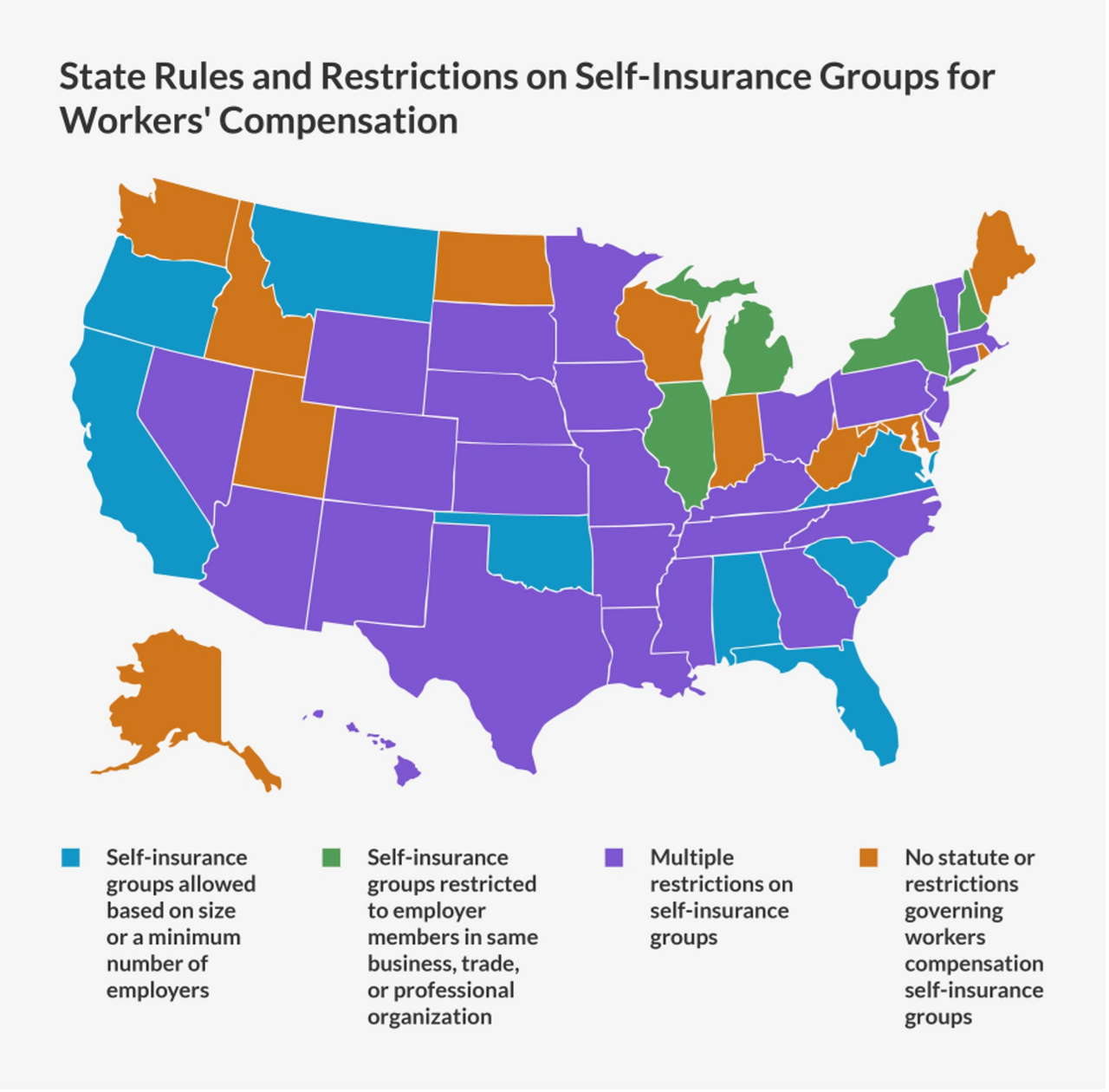
The Alabama Retail Association Workers Compensation Self Insurance Fund provides eligible retail and commercial businesses with an alternative group-fund model to fulfill state statutory workers' compensation requirements, managing risk, claims, and loss control collectively.
For business owners operating in Alabama’s retail and commercial sectors, managing operational overhead is a constant balancing act. Among these overhead costs, workers' compensation insurance represents a substantial line item that fluctuates based on industry classification, payroll size, and historical loss experience. Traditional commercial insurance carriers evaluate risk on an individual basis, which can result in volatile premium swings for businesses that experience isolated workplace incidents despite maintaining proactive safety protocols. To mitigate these challenges, alternative risk transfer mechanisms such as group self-insurance funds have emerged as viable operational structures. The Alabama Retail Association Workers Compensation Self Insurance Fund operates as a specialized vehicle designed to pool the risk of participating employers, providing statutory coverage while emphasizing loss prevention, claims management, and long-term financial stability.
Understanding how this fund functions, who qualifies for membership, and what obligations participants assume requires a detailed examination of group self-insurance regulations in Alabama. Business owners must evaluate whether participating in a pooled fund aligns with their organizational risk tolerance, administrative capabilities, and financial objectives. This comprehensive guide explores the operational framework, eligibility prerequisites, financial mechanisms, and compliance requirements associated with group workers' compensation self-insurance funds within the retail sector.
Understanding Workers' Compensation Self-Insurance Funds in Alabama
Under Alabama law, employers subject to the Workers' Compensation Act must secure coverage for their employees either by purchasing a commercial insurance policy or by qualifying as an individual or group self-insurer. Group self-insurance funds operate under the regulatory oversight of the Alabama Department of Labor (formerly the Department of Industrial Relations) and specific statutory provisions governing group self-insurers.
In a group self-insurance fund, a collection of employers within a similar industry or trade association pool their liabilities. Instead of paying premiums to a traditional stock or mutual insurance company where profits are retained by shareholders, participants in a self-insurance fund contribute to a joint trust. This trust is utilized to pay claims, administrative expenses, and reinsurance premiums. If the fund experiences favorable loss experience—meaning fewer or less costly workplace injuries occur than anticipated—the surplus funds can be retained for future stabilization or distributed back to participating members as dividends, subject to regulatory approval and fund capitalization rules.
However, pooling risk also introduces shared accountability. Members of a self-insurance fund are typically subject to joint and several liability. This fundamental legal principle means that if the fund encounters catastrophic losses or systemic underfunding that reserves cannot cover, participating employers may be assessed additional premiums to cover the shortfall. Consequently, participation in the Alabama Retail Association Workers' Compensation Self Insurance Fund requires rigorous risk management, adherence to strict safety standards, and careful financial vetting of all participating entities.
Eligibility Prerequisites and Membership Requirements
Not every business operating within the state of Alabama qualifies for participation in an industry-specific group self-insurance fund. Regulatory bodies and fund trustees enforce strict underwriting guidelines to ensure that admitted members maintain stable financial standing and a commitment to workplace safety.
Industry Classification and Trade Association Affiliation
The primary prerequisite for admission into the Alabama Retail Association Workers Compensation Self Insurance Fund is alignment with the eligible industrial classifications, predominantly retail trade, wholesale, and related commercial operations. Because the fund is sponsored by or affiliated with the Alabama Retail Association, prospective members often need to maintain active membership within the association itself. This structural tie ensures that participating businesses share common operational risk profiles, making actuarial predictions and loss control strategies more uniform across the membership base.
Financial Stability and Underwriting Criteria
Before a business is accepted into the fund, underwriters review historical financial statements, creditworthiness, and operational longevity. Funds seek to avoid adverse selection—the tendency of high-risk enterprises with poor loss histories to seek out alternative insurance when commercial rates become too expensive. Requirements typically include:
- Satisfactory credit and liquidity metrics demonstrating the ability to pay routine premium contributions.
- Verification of payroll stability and accurate classifications for all employee duties.
- Review of historical experience modification ratings (Mod rates) if the employer previously carried commercial coverage.
Safety Program Implementation
A cornerstone of any successful self-insurance fund is proactive loss control. Prospective members must demonstrate an active commitment to employee safety. Underwriting evaluations frequently require submission of written safety manuals, documentation of employee safety training protocols, and proof of established return-to-work programs for injured workers. Businesses with high frequencies of preventable workplace injuries or disregard for occupational safety standards are typically declined coverage to protect the overall stability of the risk pool.
| Evaluation Metric | Commercial Insurance Model | Group Self-Insurance Fund Model |
|---|---|---|
| Risk Bearing | Shifted entirely to the insurance carrier. | Shared collectively among participating fund members. |
| Profit Structure | Carrier retains underwriting profit and investment income. | Surplus and investment gains may return to members via dividends. |
| Liability Exposure | Limited to paid premiums and deductibles. | Subject to joint and several liability for fund deficits. |
| Safety Emphasis | Standardized loss control services provided by the carrier. | Intensive, peer-driven safety and loss prevention protocols. |
Financial Mechanics: Premiums, Assessments, and Dividends
Operating within a self-insurance fund involves distinct financial mechanisms that differ markedly from standard commercial insurance billing and claims settlement processes.
Premium Calculation and Payroll Audits
Premiums in a self-insurance fund are calculated using standard manual rates established by advisory organizations, adjusted by the employer's individual experience modification factor. Members make regular premium contributions—typically monthly, quarterly, or annually—based on estimated payroll reports. Because payroll fluctuates, annual audits are mandatory. During an audit, fund representatives review actual payroll records categorized by job classification codes to reconcile the initial estimates with actual exposures, resulting in either an additional premium billing or a premium refund.
Reinsurance and Excess Risk Protection
To shield the group self-insurance fund from catastrophic financial losses—such as a single catastrophic accident involving multiple employees or severe permanent total disability claims—the fund purchases specific and aggregate excess insurance (reinsurance) from highly rated commercial reinsurance markets. Specific excess insurance kicks in after a claim exceeds a predetermined retention threshold, while aggregate excess insurance protects the entire fund if total losses across all members exceed a specified annual aggregate limit.
Surplus Distribution and Dividend Policies
When claims experience is exceptionally favorable and reserves are robustly funded according to actuarial standards, the fund may declare a dividend or surplus return. These distributions are allocated to participating members based on their individual contribution history and loss experience over the relevant policy period. Conversely, if adverse loss development occurs, members may face retrospective premium adjustments or assessments to restore the fund's capital adequacy to levels mandated by the Alabama Department of Labor.
Claims Management and Loss Control Protocols
The long-term financial health of the Alabama Retail Association Workers Compensation Self Insurance Fund relies heavily on efficient claims administration and aggressive loss control. When an injury occurs, the speed and quality of the response dictate the ultimate financial impact on the fund.
The Claims Reporting Process
Employers participating in the fund must adhere to strict reporting timelines when an employee sustains a workplace injury. Immediate notification allows claims adjusters to initiate medical management, verify compensability under the Alabama Workers' Compensation Act, and coordinate appropriate care. Delays in reporting frequently lead to escalated medical costs, protracted disability durations, and potential legal disputes, all of which drive up the cost of risk for the entire membership.
Return-to-Work Programs
A proven strategy for managing workers' compensation expenses is the implementation of structured return-to-work or light-duty programs. When injured retail employees are accommodated with temporary modified duties that align with their medical restrictions, indemnity (wage replacement) costs are substantially reduced, and overall employee morale is preserved. Funds often provide consulting resources and standardized documentation to help members establish compliant light-duty options within their retail store environments.
Workplace Safety Audits and Education
Loss control representatives employed or retained by the fund conduct periodic safety inspections of member facilities. These evaluations identify physical hazards—such as improper stacking of retail inventory, ergonomic deficiencies at checkout stations, slip-and-fall hazards in customer or stockroom areas, and lack of proper personal protective equipment. Compliance with loss control recommendations is not optional; failure to remediate identified hazards can result in premium surcharges or cancellation of fund membership.
Advantages and Potential Drawbacks of Participation
Evaluating whether to participate in the Alabama Retail Association Workers Compensation Self Insurance Fund requires an objective weighing of operational pros and cons tailored to each specific retail enterprise.
Advantages
- Cost Stability and Savings Potential: Well-managed funds with low loss ratios can yield lower net costs over time compared to commercial insurance markets, alongside the potential for dividend returns.
- Specialized Industry Focus: Because the fund is tailored to retail and commercial operations, claims handlers and loss control specialists understand the unique operational risks—such as public liability, ergonomic strain, and inventory handling hazards—inherent to the retail sector.
- Control and Transparency: Members have greater visibility into how claims are managed and how administrative expenses are allocated compared to opaque commercial carrier pricing models.
Potential Drawbacks
- Joint and Several Liability: The most significant risk is financial exposure to the financial difficulties or catastrophic losses of other participating members if the fund becomes underfunded.
- Underwriting Volatility: If general economic conditions or sector-specific trends drive up retail injury frequencies, all members may experience increased premium contributions or special assessments.
- Strict Administrative Compliance: Maintaining membership requires ongoing commitment to safety meetings, documentation, payroll audits, and loss control directives, consuming internal management resources.
Conclusion and Next Actions
Participating in the Alabama Retail Association Workers Compensation Self Insurance Fund offers a strategic alternative to traditional commercial insurance for qualifying retail businesses committed to rigorous safety standards and active risk management. Business owners should review their historical loss runs, current premium structures, and internal safety protocols before pursuing membership. To initiate the evaluation process, interested employers should contact the fund administrators or the Alabama Retail Association directly to request a formal underwriting submission packet, conduct a payroll exposure analysis, and verify current eligibility prerequisites.