The "air pressure sign" typically refers to the Tire Pressure Monitoring System (TPMS) warning light on a vehicle's dashboard, which resembles a yellow horseshoe with an exclamation point. It illuminates when one or more tires are significantly under-inflated, posing a risk to safety, fuel efficiency, and tire longevity.
The Anatomy of the Air Pressure Sign
When a driver notices a yellow or amber symbol glowing on their instrument cluster that looks like a cross-section of a tire containing an exclamation point, they are seeing the universal symbol for the Tire Pressure Monitoring System (TPMS). In the automotive industry, this is the primary "air pressure sign" that consumers encounter. Standardized globally, this indicator serves as a critical safety feature designed to alert the operator before a low-pressure condition leads to tire failure or a blowout.
By 2026, dashboard technology has evolved to provide more than just a simple warning light. In most modern vehicles, the air pressure sign is accompanied by a digital readout on the multi-information display (MID) or central infotainment screen, showing the exact pressure for each individual tire in pounds per square inch (PSI), bar, or kilopascals (kPa). However, the classic icon remains the primary visual "handshake" between the vehicle's computer and the driver. Understanding why this sign appears and how to respond is essential for any modern motorist.
The icon itself was born out of the TREAD Act in the United States, following a series of high-profile accidents related to tire failure. Since then, it has become a mandatory safety feature in most global markets. When the light stays on, it indicates a pressure drop of at least 25% below the manufacturer’s recommended cold inflation pressure. If the light flashes, it typically signals a malfunction within the monitoring system itself, such as a dead sensor battery or a communication error between the sensor and the vehicle's engine control unit (ECU).
Why the Air Pressure Sign Illuminates
The illumination of the air pressure sign is rarely a random event; it is governed by the laws of physics and the mechanical health of the vehicle. Understanding the "why" behind the sign can help drivers troubleshoot the issue more effectively before seeking professional assistance.
Seasonal Temperature Fluctuations
One of the most common reasons the air pressure sign appears, particularly in the autumn and winter months, is the direct relationship between temperature and pressure. According to Charles's Law, as the temperature of a gas decreases, its volume—and consequently its pressure—also decreases, provided the volume is contained. For every 10 degrees Fahrenheit (approximately 5.6 degrees Celsius) drop in ambient temperature, a tire typically loses about 1 to 2 PSI. In 2026, with many regions experiencing more volatile weather patterns, it is common for a vehicle parked overnight in freezing temperatures to trigger the TPMS light in the morning, only for the light to disappear as the tires warm up during a drive.
Slow Leaks and Punctures
While temperature changes are often benign, the air pressure sign frequently warns of a physical compromise to the tire. Slow leaks can be caused by a variety of factors, including a small nail or screw embedded in the tread, a corroded wheel rim that prevents a perfect seal, or a faulty valve stem. Unlike a "flat tire" which is immediately obvious, a slow leak might only drop the pressure by a few PSI each week. The TPMS is designed to catch these gradual declines before they reach a dangerous threshold where the tire's sidewall begins to overheat and disintegrate.
Sensor and System Malfunctions
As vehicles age, the technology monitoring the air pressure can itself fail. Most direct TPMS sensors are powered by small lithium-ion batteries integrated into the sensor unit located inside the tire. These batteries generally have a lifespan of 5 to 10 years. By 2026, many vehicles from the early 2020s are reaching the point where these batteries are failing. When a sensor battery dies, the air pressure sign will often flash for 60 to 90 seconds upon starting the vehicle and then remain illuminated. This signifies that the system can no longer "see" one or more of the tires, rather than indicating an actual pressure issue.
Technical Depth: Direct vs. Indirect TPMS
Not all "air pressure signs" are triggered by the same technology. There are two primary types of monitoring systems used in modern vehicles, and knowing which one your car utilizes can change how you troubleshoot the warning.
Direct TPMS
Direct TPMS uses physical pressure sensors mounted inside each wheel, usually as part of the valve stem. These sensors measure the actual air pressure and temperature within the tire and transmit that data via radio frequency (RF) or Bluetooth Low Energy (BLE)—a technology becoming standard in 2026—to the vehicle's computer.
- Pros: Highly accurate; provides real-time PSI data; can detect pressure loss even when the vehicle is stationary.
- Cons: More expensive to replace; sensors can be damaged during tire mounting; battery-dependent.
Indirect TPMS
Indirect TPMS does not use pressure sensors at all. Instead, it relies on the vehicle's Anti-lock Braking System (ABS) wheel speed sensors. The logic is based on the fact that an under-inflated tire has a smaller diameter and therefore rotates at a different speed than a properly inflated tire. The computer calculates these differences and triggers the air pressure sign when a discrepancy is detected.
- Pros: No expensive sensors inside the wheels; no batteries to replace; lower long-term maintenance costs.
- Cons: Cannot provide an exact PSI reading; must be manually reset after every tire pressure adjustment or rotation; may not detect if all four tires are losing pressure at the same rate (e.g., due to temperature drops).
Immediate Actions: How to Respond to the Sign
When the air pressure sign appears, it should be treated as a high-priority maintenance alert. Ignoring the sign can lead to decreased fuel economy, poor vehicle handling, and, in extreme cases, a catastrophic blowout.
- Check Pressure Manually: Do not rely solely on the dashboard display. Use a high-quality digital or analog tire pressure gauge to check each tire when they are "cold" (meaning the car has been parked for at least three hours or driven less than a mile).
- Locate the Placard: Compare your readings to the recommended PSI found on the Tire and Loading Information placard. This is typically located on the driver-side door jamb. Do not use the "Max Pressure" listed on the tire sidewall itself, as this is the limit of the tire, not the optimal pressure for your specific vehicle.
- Inflate to Specification: Using an air compressor—either a portable unit or one at a service station—add air until the tire reaches the recommended level. If you are at a gas station and the tires are "hot" from driving, add 3-4 PSI above the placard recommendation to account for heat expansion.
- The Reset Procedure: On many vehicles, the light will turn off automatically after driving for several miles at speeds above 20 mph. However, for vehicles with indirect TPMS or older systems, you may need to navigate through the infotainment menu to "Reset TPMS" or hold a physical button beneath the steering column.
- Professional Inspection: If the light returns within a few days, there is likely a puncture or a rim leak that requires a professional plug, patch, or bead resealing.
Comparison of Tire Pressure States and Impacts
| Pressure Status | Visual Sign Status | Fuel Efficiency Impact | Safety Risk | Recommended Action |
|---|---|---|---|---|
| Optimal (Placard) | Off | Peak (100%) | Low | Monthly checks only |
| -10% to -15% | Usually Off | -1% to -2% | Low to Moderate | Top off at next convenience |
| -25% (Warning) | On (Solid) | -3% to -5% | Moderate/High | Inflate immediately |
| Flashing Icon | Flashing | Varies | System Failure | Inspect sensors/electronics |
| Over-inflated | Off (Usually) | No gain | Reduced Traction | Bleed air to spec |
The Air Pressure Sign in Industrial and Workplace Safety
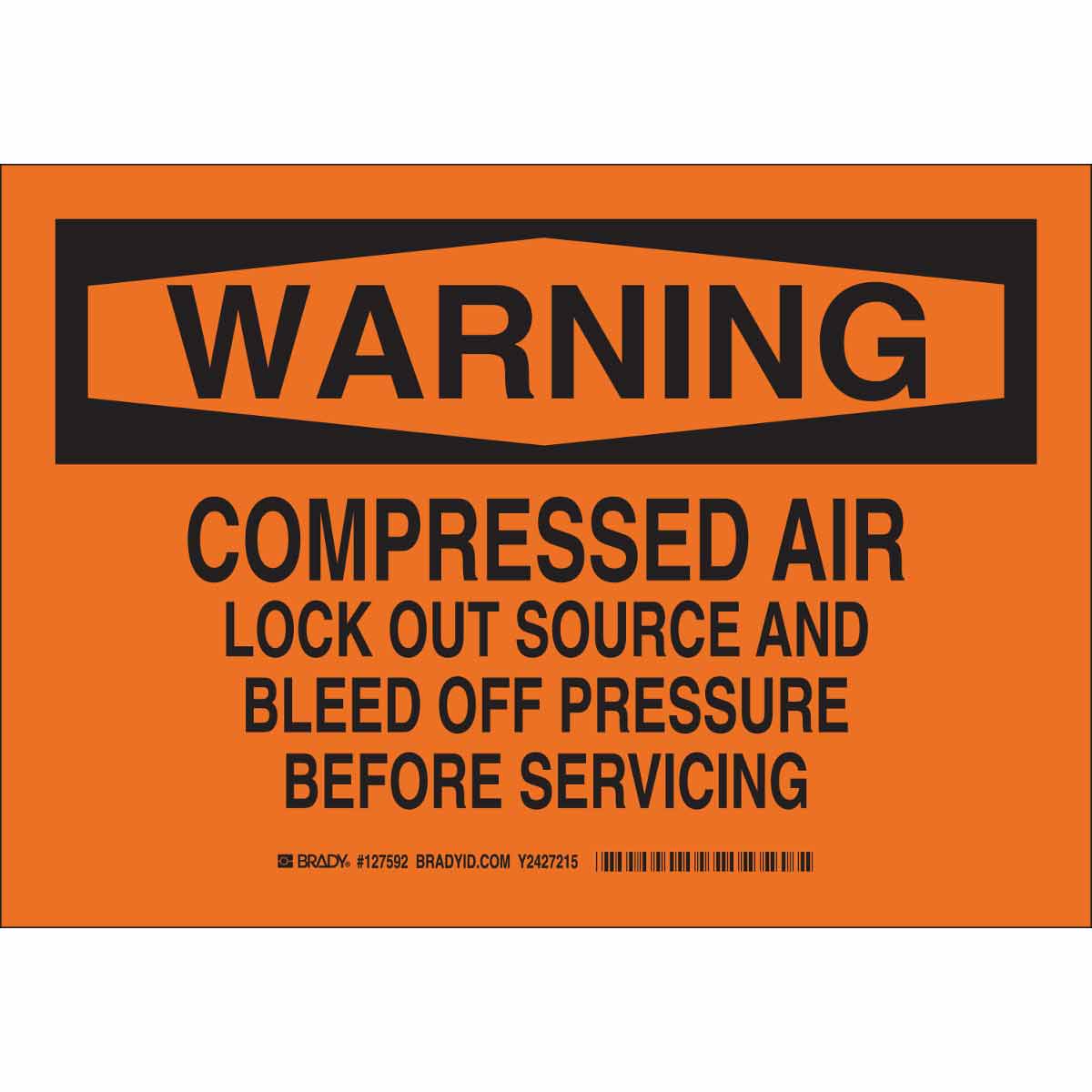
While the most common use of the term "air pressure sign" is automotive, it also refers to physical safety signage used in industrial environments, workshops, and construction sites. These signs are regulated by organizations such as OSHA (Occupational Safety and Health Administration) and are critical for preventing workplace injuries.
In a workshop setting, an air pressure sign might mark the location of a compressed air station or warn of "High Pressure Air." These signs serve several purposes:
- Warning of Hazard: Compressed air can be dangerous if directed at the skin or eyes. Signs often mandate the use of personal protective equipment (PPE), such as safety goggles.
- Operational Instructions: Signs near industrial compressors often list the maximum operating pressure (e.g., "Do Not Exceed 120 PSI") to prevent tool failure or tank explosions.
- System Identification: In large facilities, color-coded signs help technicians identify air lines versus water or gas lines, preventing cross-contamination or accidental discharge.
Whether it is a digital icon on a Tesla or a physical metal sign in a manufacturing plant, the "air pressure sign" always functions as a critical interface between a pressurized system and human safety.
Maintenance and Tech Trends in 2026
As we move through 2026, tire technology has advanced significantly. Many high-end electric vehicles (EVs) now utilize "smart tires" with embedded sensors that track more than just air pressure. These sensors can monitor tread wear, internal temperature, and even road surface conditions.
For EV owners, the air pressure sign is particularly important. Because EVs are significantly heavier than internal combustion engine (ICE) vehicles due to their battery packs, they put more stress on tires. An under-inflated tire on an EV will wear out much faster and significantly reduce the vehicle's driving range. Furthermore, the 2026 automotive market has seen a rise in "tire-as-a-service" models, where sensors automatically notify a service center when the air pressure sign is triggered, allowing for proactive maintenance before the driver even notices the light.
Proper maintenance of the TPMS system itself is also vital. When replacing tires, it is standard practice in 2026 to "service" the TPMS sensors. This involves replacing the rubber seals, valve cores, and nut to ensure an airtight fit. Neglecting this $5–$10 service per wheel can lead to the very leaks the system is designed to detect.
Frequently Asked Questions
Can I drive with the air pressure sign on?
You can drive for a short distance to reach a service station or a safe location to check your tires, but you should not continue normal driving. Low tire pressure changes the vehicle's handling characteristics, increases braking distances, and causes the tire to generate excessive heat. If the light is on, the tire is at least 25% under-inflated, which is a significant safety risk.
Why does my air pressure sign turn on in the morning and off in the afternoon?
This is due to thermal expansion and contraction. Overnight, cold air causes the pressure to drop, triggering the sensor. As you drive, the friction between the tire and the road generates heat, and the ambient temperature rises during the day. This increases the internal pressure enough to cross back over the warning threshold, turning the light off. You should still add air to meet the "cold" pressure specifications.
Does the air pressure sign indicate which tire is low?
In most vehicles manufactured after 2018, the dashboard display will specify which tire is low and show the current PSI. However, in older vehicles or those with basic trim levels, the sign is a "global" indicator, meaning it illuminates for any tire that is low without specifying which one. In these cases, you must manually check all four tires and the spare.
Will the air pressure sign turn off on its own after I add air?
Generally, yes, but it may require a short drive. Most systems require the vehicle to be driven for 5 to 10 minutes at speeds over 20 mph for the sensors to update the ECU and turn off the light. If the light stays on after 20 miles of driving, you may need to perform a manual reset through the vehicle's settings menu or check for a malfunctioning sensor.
Is nitrogen better than air for keeping the sign from coming on?
Nitrogen molecules are larger than oxygen molecules, meaning they migrate through the tire rubber more slowly. Nitrogen is also "dry," meaning it doesn't contain the moisture found in compressed air, leading to more stable pressure during temperature changes. While nitrogen can reduce the frequency of the air pressure sign appearing due to minor fluctuations, it does not eliminate the need for regular pressure checks or protect against punctures.
Final Practical Recommendation
The "air pressure sign" is one of the few dashboard indicators that you can often resolve yourself without a mechanic. To maintain safety and efficiency in 2026, keep a high-quality digital pressure gauge in your glove box and check your tires at least once a month, regardless of whether the light is on. If the sign appears, treat it as an immediate directive: pull over when safe, inspect the tires for physical damage, and adjust the pressure to the manufacturer’s recommended levels as soon as possible. Consistent attention to this small icon will extend the life of your tires, save money at the charging station or fuel pump, and, most importantly, keep you safe on the road.