The primary reason for the crash of Flight 171 on October 12, 1976, was an uncontained failure of the tenth-stage compressor disc in the No. 1 engine. This catastrophic mechanical failure severed fuel lines and triggered an intense fire that destroyed the aircraft’s hydraulic systems, making the plane uncontrollable.
Historical Context of Flight 171
To understand the tragedy of Flight 171 (often designated as IC 171 or AI 171 due to the historical evolution of India's national carriers), one must examine the operational landscape of 1976. At the time, Indian Airlines operated the domestic routes while Air India handled international operations. The aircraft involved was a Sud Aviation SE 210 Caravelle VI-N, registered as VT-DWN.
The Caravelle was a pioneer of the jet age, being the first short-to-medium-range jetliner produced by the French manufacturer Sud Aviation. It featured a unique design with two engines mounted on the rear of the fuselage, a configuration intended to reduce cabin noise but one that presented specific challenges regarding fire containment and hydraulic routing. VT-DWN had been a workhorse for the fleet, and on the night of October 12, it was scheduled for a routine flight from Bombay (now Mumbai) to Madras (now Chennai).
There were 89 passengers and 6 crew members on board. The flight was commanded by Captain H.S. Tiwary, a seasoned pilot with significant experience on the Caravelle platform. Despite the crew's proficiency, the structural vulnerabilities exposed by a specific engine component failure left them with almost no chance of a safe recovery.
The Sequence of Events: From Takeoff to Impact
The flight departed from Santa Cruz Airport in Bombay shortly after midnight. The initial phase of the flight appeared normal, but the situation deteriorated within minutes of the aircraft leaving the runway.
Engine Failure and Fire
As the aircraft climbed through approximately 1,000 feet, a loud bang was heard from the left side of the aircraft. This was the sound of the No. 1 engine (Rolls-Royce Avon) suffering an internal disintegration. The tenth-stage compressor disc had shattered due to metal fatigue. Shrapnel from the disintegrating disc bypassed the engine casing—an event known as an uncontained engine failure.
These high-velocity fragments acted like projectiles, slicing through the surrounding structure. Crucially, they punctured the fuel lines supplying the engine and damaged the hydraulic lines that powered the aircraft's control surfaces (elevators, ailerons, and rudder).
The Emergency Return
Captain Tiwary immediately recognized the severity of the situation. He throttled back the damaged engine and declared an emergency, requesting an immediate return to Santa Cruz Airport. However, the fire fed by high-pressure fuel quickly became an inferno. In the Caravelle's design, the proximity of the engines to the rear stabilizers meant that any significant fire in the engine nacelle posed a direct threat to the tail section's integrity.
Witnesses on the ground reported seeing a trail of fire stretching behind the aircraft as it attempted a wide bank to align with the runway. The crew struggled with the flight controls as hydraulic fluid bled out of the severed lines. Without hydraulic pressure, the Caravelle—a heavy jet—became nearly impossible to maneuver manually.
The Final Moments
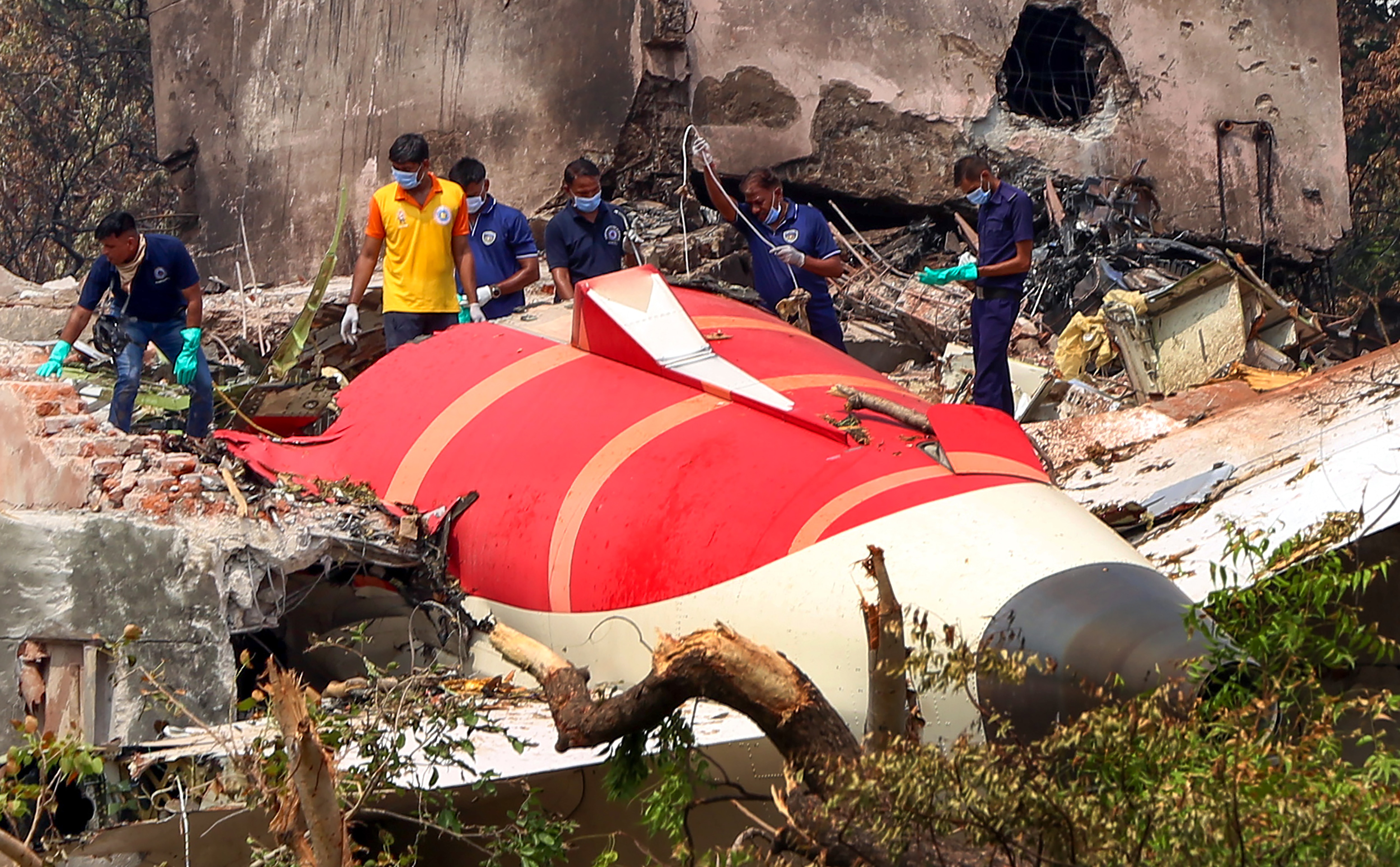
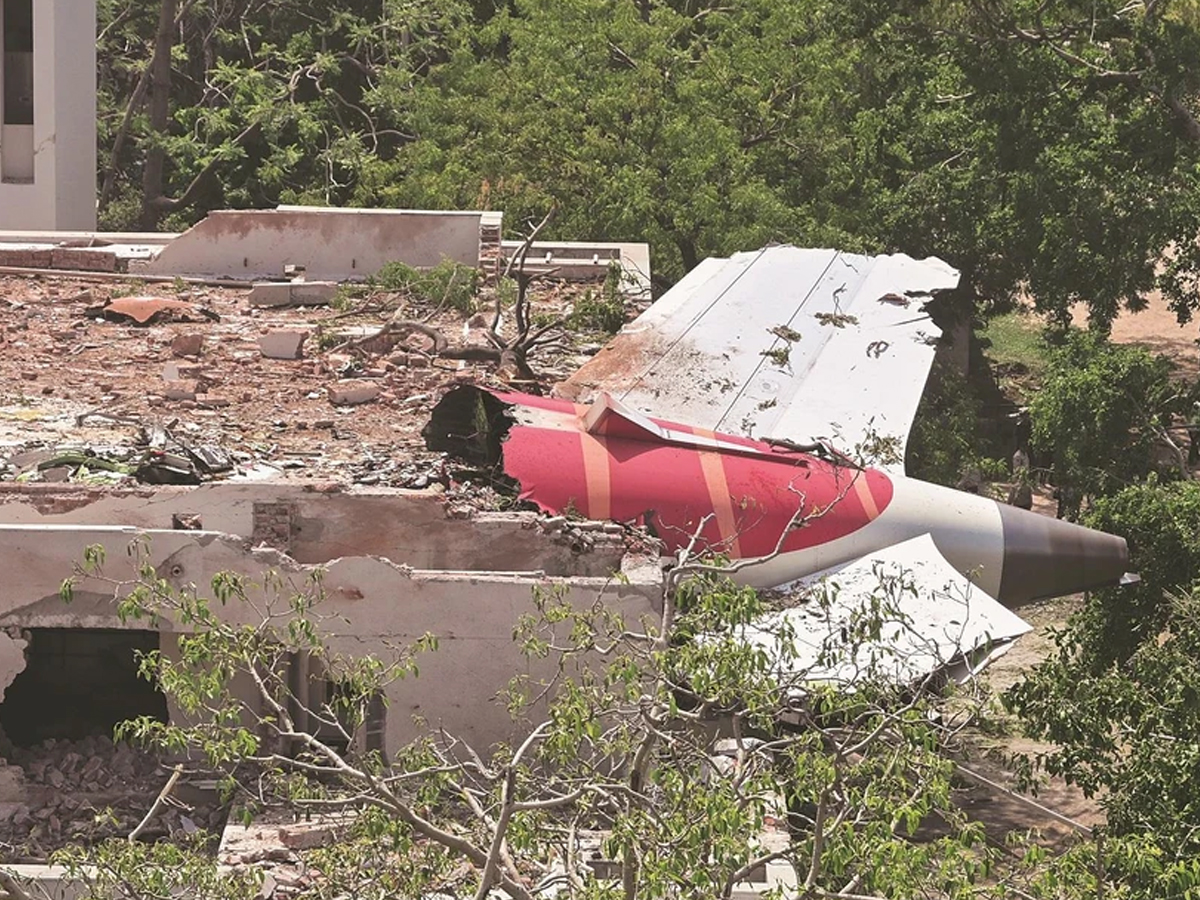
As the aircraft approached the runway for an emergency landing, the fire had likely weakened the internal structure of the rear fuselage or the horizontal stabilizer. Moments before touchdown, the aircraft lost all pitch control. It plummeted and struck the ground near the airport perimeter. The impact was followed by a massive explosion, and despite the rapid response of airport fire services, there were no survivors among the 95 souls on board.
Technical Breakdown: Why the Engine Failed
The subsequent investigation into the crash of Flight 171 was one of the most thorough in Indian aviation history at that time. It focused heavily on the Rolls-Royce Avon 531 turbojet engines.
Metal Fatigue in Compressor Discs
The investigation, led by the Justice S.B. Bhasme Commission, identified a "fatigue crack" in the tenth-stage compressor disc. Metal fatigue is a process where a component develops microscopic cracks after repeated cycles of stress (heating, cooling, and centrifugal force). Over hundreds of flight hours, these cracks grow until the component can no longer withstand operational loads.
In the case of VT-DWN, the crack had reached a critical length. During the high-power setting of the takeoff climb, the disc finally yielded, shattering into several large pieces.
The Uncontained Nature of the Failure
Modern jet engines are designed with "containment rings"—heavy-duty casings meant to trap internal components if they break apart. However, the technology in 1976 was less advanced. The energy released by a spinning compressor disc is immense; in this instance, the casing was insufficient to hold the fragments.
When the fragments exited the engine, they followed a path that took them directly through the fuel tank area and the hydraulic trunking. This created a "cascading failure" where a mechanical engine issue transformed into a structural and control-system catastrophe.
| Technical Specification | Detail |
|---|---|
| Aircraft Model | Sud Aviation SE 210 Caravelle VI-N |
| Registration | VT-DWN |
| Engine Type | Rolls-Royce Avon 531 |
| Failure Point | 10th Stage Compressor Disc |
| Primary Cause | Uncontained Engine Fire / Hydraulic Loss |
| Casualties | 95 (All on board) |
| Date of Incident | October 12, 1976 |
| Location | Santa Cruz Airport, Bombay (BOM) |
The Role of Hydraulic System Vulnerability
One of the most critical "reasons explained" for the loss of the aircraft was the lack of redundancy or isolation in the hydraulic systems. The Caravelle, while revolutionary, featured a design where multiple hydraulic lines were routed through similar areas in the rear of the plane.
When the compressor disc fragments sliced through the rear fuselage, they didn't just hit one system; they hit several. The loss of "System A" and "System B" meant that the pilots were left with "manual reversion," which is extremely difficult to manage during an active fire. Furthermore, the heat from the fire caused the remaining hydraulic fluid—which was flammable in those days—to ignite or vaporize, further accelerating the loss of control.
Modern aviation now uses Type IV fire-resistant hydraulic fluids (like Skydrol) and ensures that redundant lines are physically separated by "zone isolation" to prevent a single event from disabling all control systems.
The Bhasme Commission Findings and Recommendations
The Indian government appointed a formal commission of inquiry to prevent a recurrence of such a disaster. The Bhasme Commission's report was a turning point for Indian aviation maintenance.
- Strict Inspection Intervals: The commission found that the fatigue crack might have been detectable with more rigorous Non-Destructive Testing (NDT) methods. It recommended more frequent X-ray and ultrasonic inspections of engine discs.
- Fire Suppression Limitations: The investigation noted that the Caravelle’s onboard fire extinguishing bottles were insufficient to put out a fire fed by a ruptured fuel line. The recommendations led to the redesign of firewalls in newer aircraft.
- Crew Training: While the crew was cleared of any wrongdoing, the commission emphasized the need for "Simulator Training" (which was in its infancy in India at the time) to help pilots practice for total hydraulic failure scenarios.
- Fleet Modernization: The crash accelerated the phasing out of the Caravelle fleet in India. Both Indian Airlines and Air India began looking toward more modern, wider-bodied aircraft like the Airbus A300, which offered superior safety features and engine reliability.
Safety Legacy: How AI 171 Changed Aviation
The legacy of Flight 171 is seen in the rigorous safety standards of 2026. While the crash was a dark chapter, the lessons learned from the Rolls-Royce Avon engine failure contributed to global turbine safety.
- Disc Life Limits: Following this and similar incidents worldwide, engine manufacturers implemented strict "cycles" limits on compressor and turbine discs. Once a disc reaches a certain number of takeoffs, it is scrapped regardless of its apparent condition.
- Improved Containment: Modern engines use Kevlar-wrapped casings and specialized alloys to ensure that even if a blade or disc fails, the debris remains inside the engine "cowling."
- Safety Management Systems (SMS): The crash highlighted the need for a centralized reporting system where minor engine tremors or oil leaks are tracked to identify patterns of wear before they lead to a catastrophic failure.
The tragedy also remains a significant event in Indian cultural history, as it involved several high-profile passengers, including the famous South Indian actress Rani Chandra. The loss of such a large number of people in a single domestic incident prompted a complete overhaul of the Directorate General of Civil Aviation (DGCA) oversight protocols.
Frequently Asked Questions
Were there any survivors of the Air India/Indian Airlines Flight 171 crash?
No, all 95 people on board, including 89 passengers and 6 crew members, perished. The impact and subsequent fire were too intense for anyone to survive, despite the aircraft being very close to the ground and the runway at the time of the crash.
What was the specific part that failed in the engine?
The failure was traced to the tenth-stage compressor disc of the No. 1 (left) Rolls-Royce Avon engine. A fatigue crack caused the disc to shatter at high RPM, leading to an uncontained engine failure.
Why was the flight sometimes referred to as Air India AI 171?
While the flight was technically operated by Indian Airlines (the domestic carrier) as IC 171, the "AI" prefix is often used colloquially or in modern databases because Indian Airlines eventually merged into Air India. At the time of the crash, the two were separate entities, but they shared resources and sometimes flight codes in certain international-to-domestic transfer contexts.
Could the pilot have landed the plane safely?
Captain Tiwary and his crew did everything possible to return to the airport. However, the fire destroyed the hydraulic lines. Without hydraulic power, the physical force required to move the control surfaces of a Caravelle jet is beyond human strength, especially during the low speeds required for landing. The loss of control was a mechanical inevitability once the fire reached the tail section.
Has a similar crash happened since?
While engine failures still occur, "uncontained" failures that lead to a total loss of flight controls are now extremely rare due to triple-redundant hydraulic systems and improved engine shielding. Modern safety regulations, heavily influenced by 1970s disasters like AI 171, have made commercial aviation significantly safer.
Practical Recommendation for Aviation Researchers
For those seeking the full technical deconstruction of this event, the original Bhasme Commission Report remains the most authoritative source. Historical archives of the Directorate General of Civil Aviation (DGCA) in India and the Aviation Safety Network provide verified data on the airframe hours and specific metallurgical findings regarding the Rolls-Royce Avon engine series. Researchers should also look into the transition of Indian aviation from the Caravelle to the Airbus A300, which was directly influenced by the safety concerns raised by this 1976 incident.