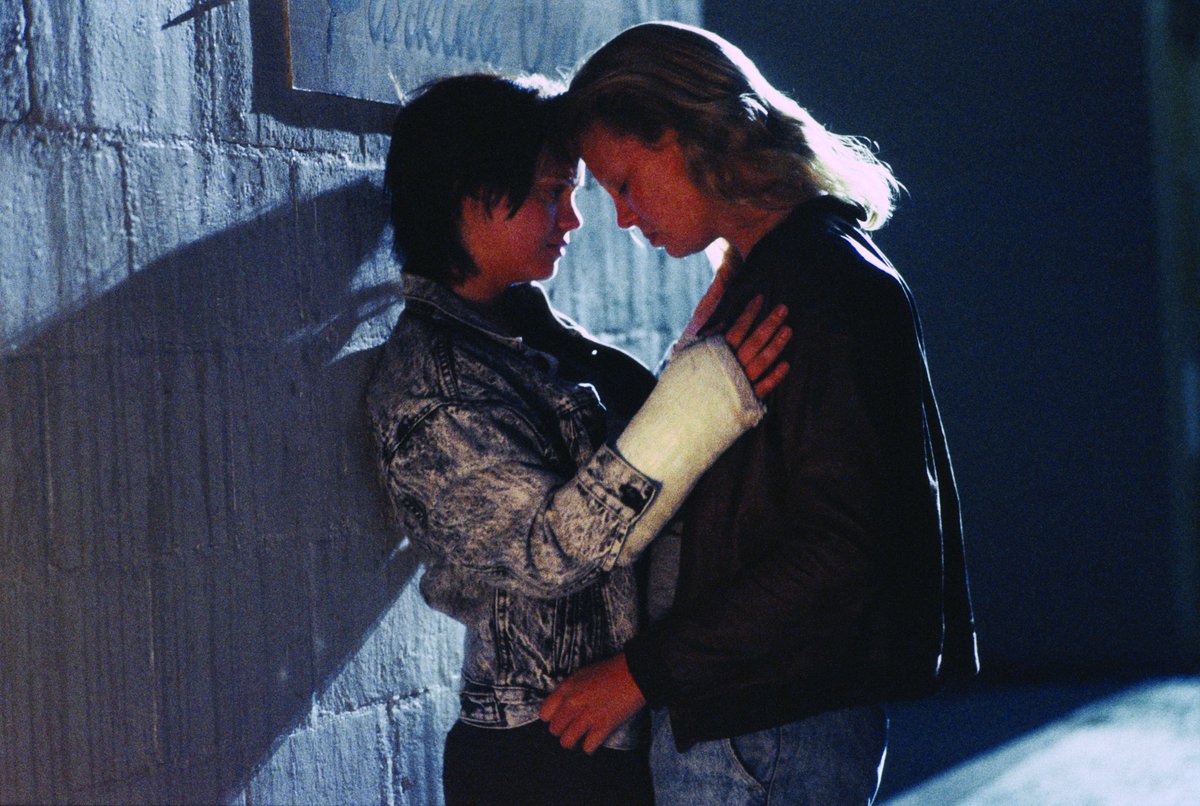
Charlize Theron’s portrayal of Aileen Wuornos in the 2003 film Monster is widely considered one of the most transformative performances in cinema history. By shedding her status as a Hollywood glamour icon to inhabit the role of the Florida serial killer, Theron achieved a level of psychological and physical immersion that defined the modern true-crime biopic. Her performance secured an Academy Award for Best Actress and remains the definitive cinematic depiction of the complex, tragic, and violent life of Wuornos.
The Genesis of a Cinematic Transformation
In the early 2000s, Charlize Theron was primarily known for roles that leaned on her traditional beauty. When director Patty Jenkins approached her for the role of Aileen Wuornos in Monster, the industry expressed significant skepticism. The challenge was not merely to play a criminal but to capture the specific cadence, posture, and internal degradation of a woman who had spent years living on the fringes of society.
Theron’s approach was rooted in rigorous research. She spent months reviewing FBI files, reading Wuornos’s personal letters, and analyzing the documentary footage captured by filmmaker Nick Broomfield, particularly Aileen Wuornos: The Selling of a Serial Killer. This preparation was not focused on mimicry, but on understanding the underlying trauma that governed Wuornos’s behavior. Theron famously gained 30 pounds, wore prosthetic teeth, and underwent extensive skin treatments to alter her appearance, but she maintained that these physical changes were secondary to the emotional labor required to embody a woman rejected by almost every institution she encountered.
Psychological Fidelity: Beyond the Physicality
What elevates Theron’s performance from a simple physical imitation to a profound character study is the psychological nuance. Wuornos was a woman shaped by institutional abuse, transient living, and a desperate, volatile search for human connection. Theron portrays this not through a lens of villainy, but through a lens of defensive isolation.
The film operates on the premise that Wuornos was pushed to a breaking point. Theron captures the "flicker" of humanity—the moments where Wuornos attempts to form a bond with her partner, Selby Wall (a character based on Wuornos’s real-life girlfriend, Tyria Moore)—only to have it suffocated by her own paranoia and the brutal realities of her lifestyle. The performance avoids the tropes of "pure evil," choosing instead to highlight the confusion and rage of a person who feels they have nothing left to lose.
Technical Execution and Methodological Shifts
Theron’s commitment to the role required a shift in acting methodology. She largely eschewed traditional "glam" prep, opting for a stripped-down existence on set that mirrored the scarcity Wuornos faced. By utilizing dental prosthetics, she changed the structure of her jaw, which effectively forced her to change the way she spoke and breathed. This technical adjustment had a cascading effect on her physicality:
- Posture: Theron adopted a hunched, guarded stance, reflecting a life of physical self-protection.
- Vocal Cadence: She modulated her voice to reflect the regional, unrefined accent of a transient laborer in central Florida, avoiding the polished tones typical of major studio films.
- Gaze: Theron maintained a "feral" quality in her eyes, portraying a hyper-vigilance consistent with post-traumatic stress and the dangers of life on the road.
Comparative Analysis of Biopic Performances
When assessing the landscape of true-crime portrayals, Theron’s work in Monster is often contrasted with other method-heavy performances. While some actors focus on the "criminal genius" aspect of their subjects, Theron chose to focus on the human wreckage.
| Feature | Charlize Theron (Monster) | Standard Biopic Approach |
|---|---|---|
| Physicality | Total erasure of existing "star" persona | Maintains recognizable features |
| Primary Lens | Empathy for the cycle of trauma | Focus on the sensationalism of crimes |
| Narrative Goal | Understanding the 'why' of the person | Chronological re-enactment of events |
| Preparation | Deep-dive into original letters/documentaries | Script-focused interpretation |
The Impact of the Director-Actor Synergy
The collaborative relationship between Patty Jenkins and Charlize Theron was instrumental in the film’s success. Jenkins, who wrote and directed Monster, provided a framework that allowed Theron the space to be vulnerable. Because the story deals with sensitive subject matter—including rape, homelessness, and murder—the directorial approach had to avoid exploitation.
Jenkins and Theron ensured that the audience was not invited to "root" for the crimes, but rather to understand the suffocating environment that led to the serial murders of seven men. By keeping the camera close and avoiding wide-angle cinematic gloss, they maintained an intimacy that mirrored a documentary style, grounding the narrative in the grimy, neon-lit reality of Florida highways and motels.
Ethical Considerations in Portraying Serial Killers
The portrayal of real-life criminals carries an inherent ethical burden. Aileen Wuornos was a divisive figure in the legal system, and her execution in 2002 remains a point of historical contention regarding mental competency and systemic failure. Theron’s portrayal faced criticism for potentially humanizing a person who took the lives of others.
However, the film’s intent was to illustrate the complexity of the "born or made" debate. By presenting the abuse Wuornos suffered throughout her life, the film posits that she was a product of a violent cycle. Critics and audiences in 2026 continue to debate whether such portrayals are necessary for public awareness or if they inadvertently glamorize violence. Theron navigated this by portraying Wuornos as damaged rather than empowered, ensuring the audience felt the weight of the tragedy rather than the thrill of the hunt.
Legacy and Influence on Contemporary Acting
Theron’s performance set a high bar for "transformation acting." It shifted industry standards, signaling that an actress’s willingness to deconstruct their own image for the sake of accuracy was a badge of artistic integrity. This performance paved the way for a generation of actors to prioritize the "unfiltered" truth of a character over aesthetic appeal.
In the years since Monster debuted, the landscape of crime biopics has evolved to include more diverse perspectives on the victims and the legal systems involved. Yet, the 2003 film remains the benchmark for how a performer can inhabit a character so thoroughly that the audience forgets the actor entirely. It is a study in how to approach dark, historically complicated subject matter with a blend of objective research and subjective, empathetic performance.
Frequently Asked Questions
1. Was Charlize Theron’s physical transformation in Monster entirely makeup-based? No, it was a combination of weight fluctuation, specialized skincare, and dental prosthetics. Theron spent significant time studying the physical mannerisms of Aileen Wuornos to ensure the internal character matched the external changes.
2. How did the real-life people involved with Aileen Wuornos react to the movie? The reaction was mixed. Some who knew Wuornos felt the film captured her volatility and desperation accurately, while others in legal circles worried the film took too many creative liberties with her psychological state and the nature of her relationships.
3. Did Charlize Theron win an award for this portrayal? Yes. Charlize Theron won the Academy Award for Best Actress in a Leading Role in 2004 for her performance as Aileen Wuornos. She also won the Golden Globe and the Screen Actors Guild Award for the same performance.
4. Is Monster considered a historically accurate documentary? No, it is a dramatized feature film. While it uses historical events and the biographical details of Wuornos’s life as a foundation, it is a narrative work designed to explore the psychological arc of the character rather than a forensic retelling of her legal case.
5. How did Theron prepare for the "feral" nature of the character? Theron immersed herself in the actual footage captured by documentary filmmakers during the 1990s. By observing Wuornos’s erratic behavior, specific speech patterns, and defensive body language in interviews, Theron was able to internalize those traits to make them feel reactive rather than rehearsed.
Recommendations for Further Study
To fully understand the gap between the film’s portrayal and the historical reality, one should view the original documentary footage from Nick Broomfield’s investigations. Comparing the source material with Theron’s dramatization provides a unique opportunity to see how an actor translates raw, unscripted human behavior into a structured narrative. If you are interested in the craft of acting, analyze the specific scenes where Theron uses silence and gaze—these are the moments where the character’s history is most evident without the need for dialogue. For those researching the legal case, consult the official records of the Florida Supreme Court regarding the appellate process for Wuornos’s death penalty, which provide a cold, administrative contrast to the film’s emotional intensity.