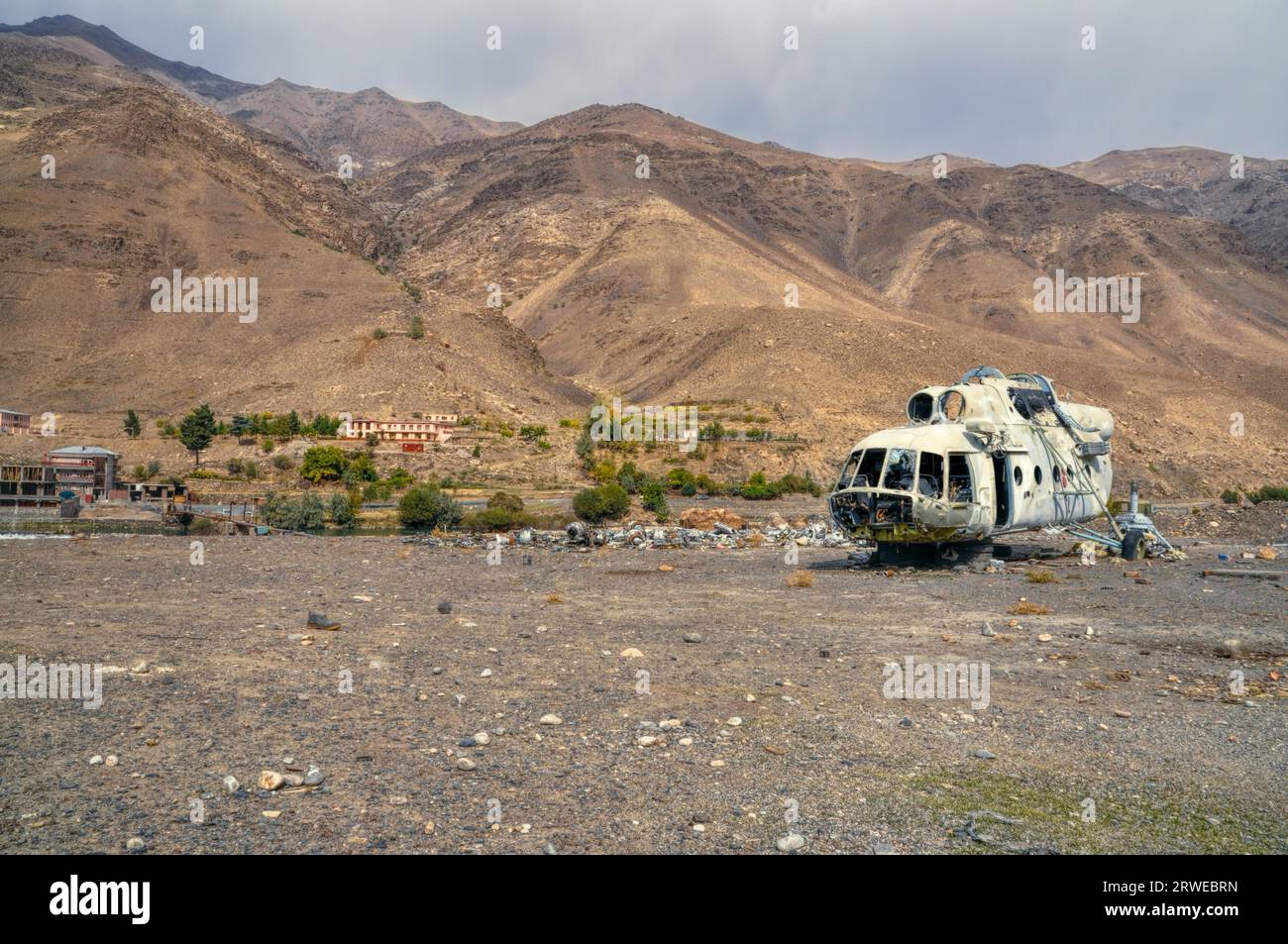
An Afghanistan flight crash refers to incidents involving aviation accidents within the complex, high-altitude, and often politically volatile airspace of Afghanistan. These events typically trigger international investigation protocols, search-and-rescue operations by local and regional authorities, and significant scrutiny regarding civil aviation safety standards in the region. Understanding these incidents requires looking at terrain, weather, and operational oversight.
The Complexity of Afghan Airspace and Terrain
Afghanistan presents one of the most challenging operating environments for aviation globally. The country is dominated by the Hindu Kush mountain range, with peaks often exceeding 20,000 feet (6,000 meters). When a flight crash occurs in this region, the immediate response is heavily dictated by the extreme topography.
High-altitude operations require specialized pilot training and aircraft capable of navigating thin air, which affects engine performance and aerodynamic lift. Furthermore, weather patterns in the region are notoriously unpredictable. Sudden mountain waves, localized turbulence, and rapid cloud formation can create "whiteout" conditions or unexpected downdrafts that challenge even the most experienced flight crews. Historically, many reported crashes in the region have been attributed to Controlled Flight Into Terrain (CFIT), a scenario where an airworthy aircraft is inadvertently flown into the ground or an obstacle by the crew.
International Aviation Protocols and Investigation
When an aviation accident occurs, the investigation process is governed by the Convention on International Civil Aviation, commonly known as the Chicago Convention. Under Annex 13, the state where the accident occurred is responsible for investigating. However, in the case of Afghanistan, political stability and the lack of a universally recognized governing body with comprehensive aviation infrastructure can complicate the process.
Typically, the investigation involves several key phases:
- Search and Rescue (SAR): The immediate priority is the location of the wreckage and the recovery of survivors or remains. Due to the remote mountain terrain, this often necessitates the use of specialized military or rotary-wing assets.
- Data Recovery: The retrieval of the Flight Data Recorder (FDR) and the Cockpit Voice Recorder (CVR)—often called "black boxes"—is essential. These devices provide the telemetry and audio history necessary to reconstruct the final minutes of the flight.
- Forensic Analysis: Engineers examine the wreckage for signs of mechanical failure, bird strikes, or structural degradation.
- Human Factors Assessment: Investigators review the crew’s training records, communication logs with Air Traffic Control (ATC), and physical or psychological health to determine if pilot error or fatigue played a role.
The Role of Air Traffic Control and Navigation
Civil aviation in Afghanistan relies on a network of high-altitude airways and navigation aids. However, the reliability of these systems has fluctuated based on the political status of the country. International carriers often utilize "overflight" paths through Afghan airspace to save fuel and time when traveling between Europe and Asia.
Following any significant flight crash incident, aviation authorities often issue Notices to Air Missions (NOTAMs) to warn pilots of potential hazards, temporary closure of flight levels, or the unavailability of specific navigation beacons. Airlines use these notices to adjust flight paths, often rerouting around the affected area to prioritize passenger safety and mitigate insurance liabilities.
Comparative Factors in Aviation Safety
Safety statistics in conflict-prone or high-altitude regions are often compared against global standards set by the International Civil Aviation Organization (ICAO). The following table illustrates the common variables that impact flight safety in difficult terrains like the Afghan mountains.
| Factor | Impact on Flight Safety | Mitigation Strategy |
|---|---|---|
| Topography | High risk of mountain-related turbulence and obstacles. | Minimum Sector Altitude (MSA) enforcement and terrain awareness systems. |
| Communication | Potential for "dead zones" due to signal masking by peaks. | Satellite-based communication and redundant frequency monitoring. |
| Infrastructure | Limited or aging radar and navigation beacon coverage. | Use of Performance-Based Navigation (PBN) and GPS-guided procedures. |
| Meteorology | Unpredictable mountain micro-climates and icing. | Robust pre-flight weather analysis and real-time satellite imaging. |
| Security | Risk of ground-based interference in conflict zones. | Adherence to established international flight corridors and altitudes. |
Practical Guidance for Concerned Parties
If you are a relative of an individual involved in a flight incident or a member of the press, it is critical to rely on official updates rather than unverified reports on social media.
- Verification of Information: Aviation accidents are subject to misinformation. Official information regarding missing aircraft or crash sites will only be released through government transport ministries or the civil aviation authority of the country where the aircraft was registered.
- Support Services: Airlines have established "Emergency Response Plans" that include dedicated family support teams. These teams are the primary point of contact for information regarding the welfare of passengers and crew.
- Legal and Insurance Matters: Claims arising from an aviation accident are handled under the Montreal Convention, which dictates the liability of air carriers. If you are a claimant, it is advisable to consult with legal counsel specializing in international aviation law before signing any documentation presented by an airline or insurer.
Common Misconceptions Regarding Aircraft Crashes
One frequent misconception is that all crashes are due to pilot error or sabotage. In reality, aviation accidents are almost always the result of a "chain of errors." This model suggests that a single failure (such as a minor mechanical fault) does not cause a crash; rather, a sequence of events—including weather, communication lapses, and mechanical issues—aligns to create a catastrophic outcome. Understanding this helps avoid oversimplification of complex aerial incidents.
Another common point of confusion is the difference between an aircraft "missing from radar" and a confirmed crash. In mountainous regions, radar coverage may be intermittent. An aircraft "dropping off the screen" does not immediately confirm a crash; it may be in a radar shadow, requiring secondary verification through satellite tracking (such as ADS-B data) or emergency beacon signals (ELT).
Next Actions and Safety Updates
For professional aviation stakeholders or researchers tracking regional safety, the most reliable source of ongoing documentation is the ICAO's Safety Report or the state-level Accident Investigation Board reports. These documents provide the most granular analysis of incident causes once the investigation is concluded.
If you are currently traveling or planning flights that pass through Central Asian corridors, ensure that you check your airline’s specific safety advisories. While international civil aviation authorities maintain rigorous oversight, the regional geopolitical climate means that safety procedures can evolve rapidly. Always prioritize routes that utilize modern, well-maintained navigation infrastructure and observe the recommended altitude buffers when traversing high-mountainous regions.
For the most accurate, up-to-date information regarding specific flight incidents, consult the official records of the regional civil aviation authority or the national transportation safety board of the airline's country of origin.