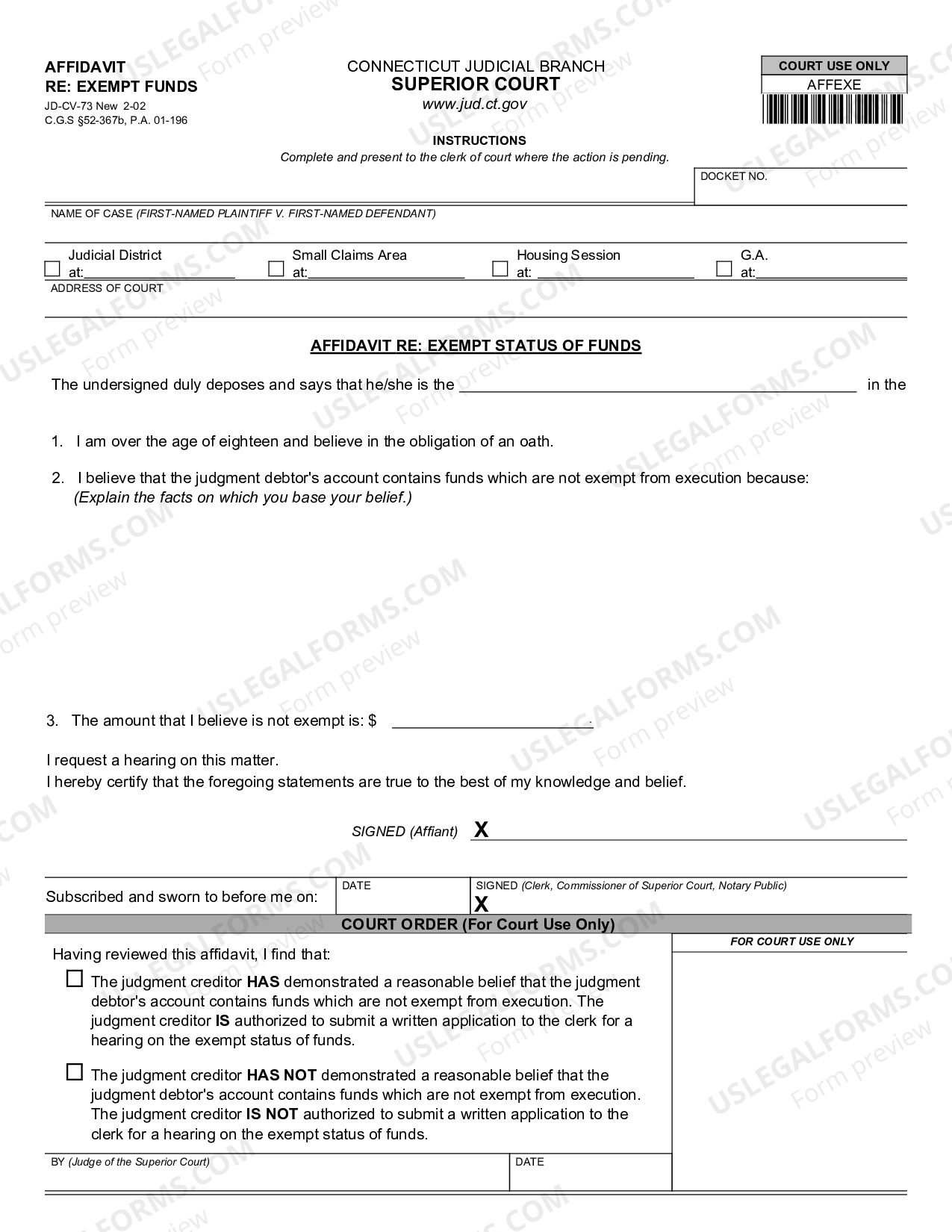
An Affidavit of Exempt Status is a legal document used by individuals—typically sole proprietors, partners, or corporate officers—to formally swear they are not required to carry workers’ compensation insurance under their state's Workers' Compensation Act. By filing this document, the individual acknowledges they are not an "employee" for insurance purposes and waives their right to claim workers' compensation benefits from a hiring contractor or the state.
The Legal Foundation of the Workers’ Compensation Act in 2026
By 2026, the landscape of labor and insurance law has become increasingly focused on the distinction between traditional employment and independent contracting. The Workers’ Compensation Act (a title used by many states, such as Oklahoma and Tennessee) serves as the primary regulatory framework ensuring that employees injured on the job receive medical care and wage replacement. However, the Act also recognizes that certain business owners and highly autonomous contractors should not be forced into the same mandatory coverage pool as traditional labor.
The Affidavit of Exempt Status serves as the primary mechanism for navigating this boundary. It is not merely a piece of paper; it is a statutory instrument that shifts the burden of liability. Under most versions of the Act, a "hiring entity" (a general contractor or business) is legally responsible for providing workers' compensation for any worker who does not have their own policy. Without a valid affidavit or proof of insurance, the general contractor's insurance carrier will likely charge the contractor a premium for the subcontractor’s "uncovered" labor during an annual audit.
Who Qualifies for Exempt Status?
Eligibility for filing an affidavit is strictly defined by law to prevent employers from misclassifying regular employees as "exempt" to save on insurance costs. While specific criteria vary slightly by jurisdiction, the 2026 standards generally require the following:
Sole Proprietors and Partners
If you own a business by yourself or with a partner and have no employees, you are generally not required to cover yourself under workers' compensation. However, you are still considered a "worker" when you step onto a job site. The affidavit allows you to declare that you are the owner and that you choose to opt-out of the system.
Corporate Officers and LLC Members
In many states, individuals who hold at least 10% to 25% ownership in a corporation or a Limited Liability Company (LLC) can elect to be exempt. This is common in small family-owned businesses or specialized consulting firms where the owners prefer to rely on private health and disability insurance rather than the state-mandated workers' compensation system.
The Independent Contractor Test
To legally sign an affidavit of exempt status, you must truly function as an independent contractor. In 2026, regulatory bodies use refined versions of the "ABC Test" or the "Economic Realities Test" to verify status. This means:
- Control: You must control how the work is performed, not just the result.
- Equipment: You must provide your own tools, vehicles, and specialized equipment.
- Profit/Loss: You must have the potential to suffer a financial loss or gain a profit based on your management of the task.
- Independence: You must offer your services to the general public or multiple clients, not just one "employer."
The Critical Trade-off: Rights and Responsibilities
Filing an affidavit of exempt status is a serious legal decision that involves a significant trade-off. It is essential to understand the "Exclusive Remedy" rule and how it interacts with your exempt status.
Normally, workers' compensation is an "exclusive remedy." This means an employee cannot sue their employer for negligence if they are injured, but in exchange, they receive guaranteed medical benefits regardless of who was at fault. When you file an Affidavit of Exempt Status, you are stepping outside this "Grand Bargain."
- Waiver of Benefits: You are swearing that if you are injured on the job, you will not seek benefits from the hiring contractor or their insurance company. You are responsible for your own medical bills.
- Liability Exposure: While you waive benefits, you also lose certain protections. If a hiring contractor is truly negligent, your path to recovery may be limited to a civil lawsuit, which is expensive, time-consuming, and carries a high burden of proof.
- The "Lending" Prohibition: You cannot use an affidavit of exempt status to cover people who work for you. If an exempt contractor hires a helper or a "laborer," that helper must be covered by a workers' compensation policy. The affidavit only applies to the individual signer.
Step-by-Step Process for Filing the Affidavit
The process has been largely digitized by 2026, though the legal weight remains the same. Most state departments of labor or specialized workers' compensation commissions handle these filings.
1. Verification of Eligibility
Before filing, consult with a legal professional or your insurance agent. Ensure your business structure (Sole Prop, LLC, Corp) matches the statutory requirements for exemption in the state where the work is performed.
2. Form Completion
The form typically requires:
- Legal name and Social Security Number (or FEIN).
- Business name and address.
- The specific section of the Workers’ Compensation Act under which you are claiming exemption.
- A description of the services provided.
3. Execution and Notarization
Despite digital advancements, many states still require the affidavit to be signed in the presence of a Notary Public. This reinforces that the statement is made under penalty of perjury. In 2026, "Remote Online Notarization" (RON) is frequently used to complete this step via secure video link.
4. Submission and Fees
Submit the form to the state agency (e.g., the Workers’ Compensation Commission). There is usually a nominal filing fee, often ranging from $50 to $100. Once processed, you will receive an "Acknowledgment of Exempt Status" or a stamped copy of the affidavit.
5. Distribution to Clients
Your affidavit is not useful if it sits in a drawer. You must provide a copy to every general contractor or client you work for. They will keep this on file for their insurance auditor to prove they do not owe premiums for your labor.
Comparison of Coverage Status
| Feature | Covered Employee | Exempt Individual (with Affidavit) |
|---|---|---|
| Premiums Paid By | Employer | No premiums (self-funded risk) |
| Medical Benefit Right | Guaranteed for work injuries | No right to WC benefits |
| Wage Replacement | Provided if unable to work | None provided |
| Legal Status | Statutory Employee | Independent Contractor / Owner |
| Lawsuit Ability | Generally barred (Exclusive Remedy) | Can sue for negligence (complex) |
| Requirement to Hire | Mandatory for most businesses | Optional/Statutory choice |
The Role of Insurance Audits and Compliance
For businesses that hire subcontractors, the Affidavit of Exempt Status is a vital compliance tool. Every year, workers’ compensation insurance carriers perform audits to ensure that the premiums paid match the actual risk (payroll) of the company.
When an auditor sees payments to "John Doe Construction," they will assume John Doe is an employee unless the contractor can produce:
- A Certificate of Insurance (COI) proving John Doe has his own policy.
- A valid Affidavit of Exempt Status filed with the state.
If neither is present, the auditor will reclassify the payments to John Doe as "uninsured payroll" and charge the contractor the full premium rate for that labor. This can lead to massive, unexpected bills for general contractors. Consequently, in 2026, many hiring entities refuse to work with any individual who does not have an active, verified affidavit on file.
Common Mistakes and Legal Risks
Misusing the affidavit can lead to severe financial and legal penalties. The 2026 regulatory environment is particularly sensitive to "misclassification," where companies force employees to sign affidavits of exempt status just to avoid paying insurance premiums and taxes.
- Expired Affidavits: Most affidavits are valid for only one or two years. Working under an expired affidavit is legally equivalent to having no exemption at all.
- Incorrect Business Entity: If you file as a "Sole Proprietor" but later form an LLC, your old affidavit may be void. The legal name on the affidavit must match the name on the checks you receive.
- Hiring Help: As soon as an "exempt" individual hires a part-time helper or even a family member to assist on a job site, they cease to be exempt in the eyes of the law regarding that helper. They must obtain a standard workers’ compensation policy for their employees.
- Fraudulent Filing: If a state investigator determines that a worker is actually an employee (due to the level of control the boss exerts) but was forced to sign an affidavit, the employer may face stop-work orders, heavy fines, and potential criminal charges for insurance fraud.
Frequently Asked Questions
Does an affidavit of exempt status replace my general liability insurance?
No. An affidavit only addresses workers' compensation (injuries to yourself). It does not protect you if you damage a client’s property or cause an injury to a third party. You still need General Liability (GL) insurance to protect your business assets from lawsuits.
Can I cancel my affidavit if I decide to buy insurance later?
Yes. If your business grows and you decide to hire employees, or if you simply prefer the safety net of the state system, you can obtain a workers’ compensation policy. Usually, the issuance of a valid policy supercedes the affidavit for the period the policy is active.
Is an Oklahoma Affidavit of Exempt Status valid in other states?
Generally, no. Workers' compensation laws are state-specific. If you are a contractor based in Oklahoma but you take a job in Tennessee or Kansas, you must comply with the Workers' Compensation Act of the state where the work is physically being performed. You may need to file a new affidavit in that jurisdiction.
What happens if I get hurt and I have an affidavit on file?
If you filed a valid affidavit, you have legally sworn that you are not an employee. Therefore, you cannot file a claim against the hiring contractor’s workers' compensation policy. You will have to rely on your personal health insurance or disability insurance to cover your medical costs and lost income.
How long does it take for the state to process the affidavit?
In 2026, most digital submissions are processed within 24 to 72 hours. However, if your state requires a manual review of your ownership documents or if there are discrepancies in your business registration, it could take several weeks. Always file well before you plan to start a new contract.
Practical Recommendation for 2026
If you are an independent professional or a small business owner, the Affidavit of Exempt Status is a powerful tool for maintaining your independence and reducing overhead. However, it should never be viewed as a way to "skip" insurance. It is a legal declaration of self-reliance.
Next Action: Before filing, review your current health and disability insurance. Ensure that your private policies do not have "work-related injury" exclusions. If they do, filing an affidavit could leave you with zero financial protection in the event of a catastrophic accident. Once your personal safety net is confirmed, submit your affidavit through your state’s digital labor portal to ensure you remain compliant for upcoming contracts.