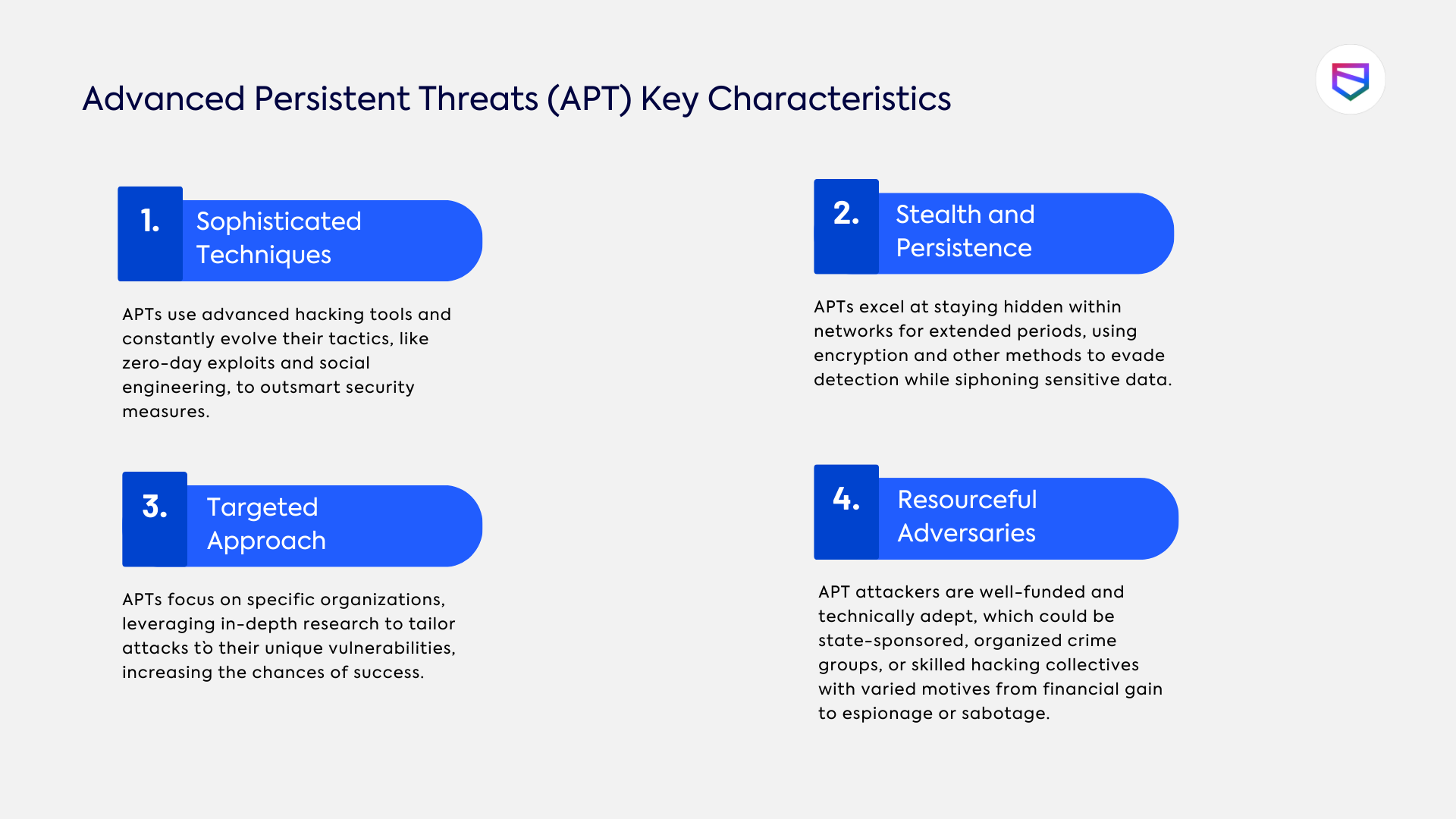
Advanced persistent threat actors and their evolving tactics represent a sophisticated category of cyber adversaries—frequently backed by nation-states or well-funded syndicates—that maintain prolonged, unauthorized access to computer networks while evading standard detection mechanisms. Rather than executing rapid smash-and-grab attacks, these groups prioritize stealth, persistence, and strategic objective completion, continually adapting their methodologies to bypass modern defensive architectures.
Understanding the Threat Landscape: What Defines an APT?
To comprehend advanced persistent threat (APT) actors and their evolving tactics, security professionals must first distinguish them from conventional cybercriminals. While typical ransomware gangs or financial fraudsters focus on high-volume, automated extortion or rapid monetary theft, APT groups operate with high degrees of patience, resource abundance, and distinct geopolitical or industrial espionage goals.
The term itself breaks down into three core components:
- Advanced: The capability to utilize complex, multi-stage exploits, custom malware tooling, zero-day vulnerabilities, and sophisticated evasion techniques that neutralize standard endpoint security.
- Persistent: The maintenance of continuous, resilient access inside a compromised environment over months or years, ensuring survival even through routine system reboots and credential resets.
- Threat: Human-driven adversaries who adapt in real time to defensive countermeasures, rather than static automated scripts.
Historically, APT groups were exclusively associated with sovereign governments conducting espionage against foreign adversaries, defense contractors, and critical infrastructure. Over time, the financial viability of cybercrime has blurred these lines. Some advanced groups now engage in intellectual property theft for economic advantage, or operate under hybrid models supporting both state agendas and private financial enrichment.
The Lifecycle of an Advanced Persistent Threat Operation
Analyzing how adversaries move through a network requires examining the standardized progression of an attack. While defensive security frameworks like the MITRE ATT&CK matrix provide granular breakdown models, the macro-lifecycle typically follows distinct phases.
[Initial Access] ➔ [Establish Foothold] ➔ [Internal Reconnaissance] ➔ [Lateral Movement] ➔ [Objective Execution]
1. Initial Access and Initial Ingress Vectors
APT actors rarely breach a fortified network through brute-force methods alone. Instead, they invest heavily in reconnaissance to identify human and technological vulnerabilities. Common ingress vectors include:
- Spear-Phishing and Social Engineering: Highly customized emails targeting specific individuals with organizational access, often utilizing trusted context or fraudulent documents containing malicious macros or exploits.
- Supply Chain Compromise: Infiltrating third-party vendors, software update servers, or open-source repositories to piggyback trust relationships into the primary target environment.
- Exploitation of Public-Facing Assets: Rapidly weaponizing newly disclosed vulnerabilities (zero-days or unpatched common vulnerabilities and exposures) in perimeter appliances such as VPN gateways, firewalls, and mail servers.
2. Persistence and Defense Evasion
Once inside, the adversary establishes redundant mechanisms to ensure they are not locked out. This involves creating hidden user accounts, installing specialized web shells, or injecting malicious code into legitimate operating system processes (process injection). To evade detection by Endpoint Detection and Response (EDR) solutions, modern actors rely heavily on "Living off the Land" (LotL) techniques—using built-in administrative utilities like PowerShell, WMI, and remote management tools to execute commands, rendering their activity indistinguishable from normal system administration.
3. Lateral Movement and Privilege Escalation
An initial compromise typically occurs at the periphery—often via a standard user workstation or an isolated IoT device. To achieve their goals, actors must escalate privileges to Domain Administrator or root levels and move laterally across the internal network. This phase involves credential dumping (harvesting NTLM hashes or Kerberos tickets from memory), internal network scanning, and exploiting internal trust relationships between servers.
4. Mission Objectives and Data Exfiltration
The final phase depends on the group's specific mandate. For espionage units, this involves identifying, staging, and covertly exfiltrating sensitive intellectual property, diplomatic cables, or classified research. For disruptive operations, it may involve deploying wipers or logic bombs designed to impair operational capabilities.
Evolving Tactics, Techniques, and Procedures (TTPs)
The sophistication of threat actors increases in direct response to the maturation of enterprise security stacks. As organizations adopt cloud environments, Zero Trust architecture, and automated threat hunting, adversary TTPs have shifted accordingly.
The Shift Toward Cloud and Hybrid Infrastructure
As enterprise workloads migrate from on-premises data centers to cloud platforms (such as Microsoft 365, AWS, and Google Cloud), APT actors have shifted their focus. Rather than targeting physical servers, adversaries increasingly target identity providers, federation servers, and cloud APIs. Techniques such as token theft, adversary-in-the-middle (AiTM) phishing attacks that bypass multi-factor authentication (MFA), and the abuse of legitimate administrative application credentials allow attackers to maintain persistence directly within cloud ecosystems without deploying traditional malware.
Weaponization of Artificial Intelligence and Automation
While security vendors utilize artificial intelligence for anomaly detection and automated remediation, threat groups leverage AI technologies to optimize their own operations. AI-driven tools assist adversaries in:
- Generating hyper-realistic spear-phishing content without grammatical errors or cultural anomalies.
- Automating internal reconnaissance and vulnerability mapping at speeds matching or exceeding human defenders.
- Rapidly mutating custom malware binaries to bypass static signature detection engines.
Living off the Cloud and Abuse of Legitimate Services
To blend in with normal network traffic and evade egress filtering, APT actors frequently utilize legitimate cloud storage providers, content delivery networks (CDNs), and communication platforms (such as Telegram or Discord) for Command and Control (C2) communications. By leveraging trusted domains and valid SSL/TLS certificates, attackers ensure their malicious traffic looks identical to ordinary business operations.
Comparative Analysis: Traditional vs. Modern APT Methodologies
Understanding how adversary behavior has transformed requires a direct comparison between historical methodologies and current TTPs deployed by sophisticated threat groups.
| Vector / Dimension | Traditional APT Approach (Historical) | Modern Evolving APT Approach (Current) |
|---|---|---|
| Infrastructure | Dedicated custom C2 servers hosted on offshore VPS providers; rigid IP ranges. | Legitimate cloud services, CDNs, compromised enterprise tenants, and decentralized infrastructure. |
| Authentication | Reliance on stolen static credentials, brute-force attempts, and weak password policies. | AiTM phishing, session token hijacking, MFA fatigue, and cloud identity federation abuse. |
| Tooling | Heavy reliance on proprietary, custom-built malware binaries and bespoke backdoors. | "Living off the Land" (LotL), abuse of native system tools, dual-use administration utilities. |
| Persistence | Registry run keys, scheduled tasks, custom Windows services, and basic rootkits. | Cloud service principal credentials, hijacked web applications, and embedded firmware implants. |
| Detection Profile | Signature-based network anomalies, unusual outbound traffic spikes, known IOCs. | Behavioral anomalies, subtle identity misuse, living within normal administrative baselines. |
Strategic Defense and Mitigation Frameworks
Combating persistent adversaries requires a defensive strategy that moves beyond perimeter security toward continuous resilience, visibility, and assumption of breach.
Implementing Zero Trust Architecture
The core philosophy of Zero Trust—"never trust, always verify"—is essential for neutralizing lateral movement. Organizations must enforce strict micro-segmentation, ensuring that a compromise in one segment of the network does not grant unfettered access to sensitive data stores. Continuous identity verification, context-aware access policies, and hardware-backed multi-factor authentication significantly raise the operational cost for attackers.
Threat Hunting and Behavioral Monitoring
Because sophisticated actors frequently bypass automated signature alerts, proactive human-led threat hunting is critical. Security teams should continuously analyze telemetry data from endpoints, identity providers, and network logs to identify subtle behavioral anomalies, such as unexpected administrative logins, unusual data staging patterns, or unauthorized API querying in cloud environments.
Robust Supply Chain Security
Given the prevalence of supply chain vectors, organizations must maintain rigorous vendor risk management programs. This includes auditing third-party software bills of materials (SBOMs), enforcing strict access controls for external partners, and monitoring the security posture of connected third-party infrastructure.
Frequently Asked Questions
What differentiates an APT actor from a typical cybercriminal group?
APT actors are distinguished by their strategic goals, level of resourcing, and operational patience. While typical cybercriminals generally seek immediate financial gain through high-volume ransomware or fraud, APT groups prioritize long-term, stealthy access for espionage, intellectual property theft, or strategic disruption, often backed by nation-state resources.
How do APT actors bypass multi-factor authentication (MFA)?
Modern threat actors bypass standard MFA using sophisticated techniques such as adversary-in-the-middle (AiTM) phishing proxies that intercept session tokens, MFA fatigue attacks (bombarding users with push notifications until they approve one), and the direct compromise of cloud identity provider federation tokens.
What is "Living off the Land" (LotL)?
Living off the Land refers to a technique where attackers utilize legitimate administrative tools and binaries already installed on an operating system (such as PowerShell, WMI, or remote management utilities) to execute malicious tasks. This allows actors to blend in with normal administrative traffic and evade endpoint detection systems.
Can small and medium-sized businesses (SMBs) be targets of APT actors?
Yes. While large enterprises and government agencies remain primary targets, SMBs are frequently targeted as stepping stones or supply chain vectors to gain access to larger, primary corporate targets connected via shared networks or trusted vendor relationships.
How can organizations detect silent, long-term persistence in their networks?
Detecting silent persistence requires comprehensive visibility across endpoints, network perimeters, and cloud environments, combined with proactive threat hunting. Security teams must look for behavioral anomalies rather than relying solely on known indicators of compromise (IOCs) or signature alerts.
Conclusion and Recommended Next Actions
Advanced persistent threat actors and their evolving tactics present a continuous challenge to modern cybersecurity operations. Because these adversaries constantly refine their methodologies—shifting toward cloud environments, leveraging AI, and exploiting identity systems—static defenses alone are insufficient. Security leaders must adopt a resilience-first mindset, prioritizing continuous visibility, strict identity governance, and proactive threat hunting to detect and neutralize sophisticated adversaries before mission objectives are achieved.