Advanced Broadband Hybrid Radio Systems (ABHRS) provide a vital structural link between high-capacity fiber-optic backbones and mobile 5G infrastructure, allowing smart city networks to achieve ultra-low latency, massive device density, and widespread geographic coverage without the prohibitive cost of running fiber to every individual node.
Municipalities worldwide face a mounting infrastructure challenge: how to scale digital connectivity to support thousands of smart city sensors, traffic controllers, automated public safety systems, and high-speed public Wi-Fi networks. While fiber-optic cables offer unparalleled data transmission speeds and bandwidth, trenching and laying new fiber lines across entire urban landscapes is often economically unfeasible and logistically disruptive. Conversely, traditional wireless networks struggle to handle the colossal bandwidth demands and strict latency requirements of modern urban automation. This is where Advanced Broadband Hybrid Radio Systems emerge as a transformative architecture. By blending the high-capacity throughput of wired fiber networks with the flexibility and deployment speed of advanced radio frequencies, ABHRS creates a unified, resilient backhaul ecosystem. This comprehensive examination explores how ABHRS architectures function, their architectural integration with 5G and fiber networks, operational prerequisites, cost implications, and their definitive role in the evolution of modern smart cities.
Understanding the Urban Connectivity Bottleneck
Modern smart cities generate and consume unprecedented volumes of data. Traffic monitoring cameras stream high-definition video feeds in real time, environmental sensors track air quality metrics down to the second, and automated utility grids require constant telemetry updates. Managing this influx of data demands a robust telecommunications foundation capable of routing vast quantities of information instantaneously.
Fiber optics serve as the gold standard for data transport, boasting virtually unlimited bandwidth and minimal signal degradation over long distances. However, expanding fiber footprints to every street corner, lamppost, and intersection involves extensive civil engineering works. Trenching urban roadways causes traffic congestion, damages existing underground utilities, and requires millions of dollars in capital expenditure.
On the other hand, traditional wireless networks can be deployed rapidly, but they face severe limitations regarding spectrum congestion, line-of-sight constraints, and vulnerability to physical obstructions like concrete and steel buildings. As 5G rollouts accelerate, densifying small cell sites with dedicated fiber backhaul becomes a monumental bottleneck for municipal planners and telecommunications operators alike.
What is ABHRS and How Does It Function?
Advanced Broadband Hybrid Radio Systems represent an engineered convergence of optical fiber transmission and high-frequency wireless radio links. Instead of treating wired and wireless networks as separate entities, ABHRS integrates them into a seamless data pipeline.
At its core, an ABHRS deployment utilizes existing fiber-optic trunk lines as the primary data highway. Where the fiber terminates, high-capacity hybrid radio transceivers pick up the signal, transmitting it across the airwaves using millimeter-wave (mmWave) or microwave frequencies to local 5G small cells, edge computing nodes, and municipal IoT (Internet of Things) gateways.
Key Architectural Components of ABHRS
- Fiber Ingress Points: Strategic connection nodes where data transitions from the core municipal fiber network into the hybrid radio distribution system.
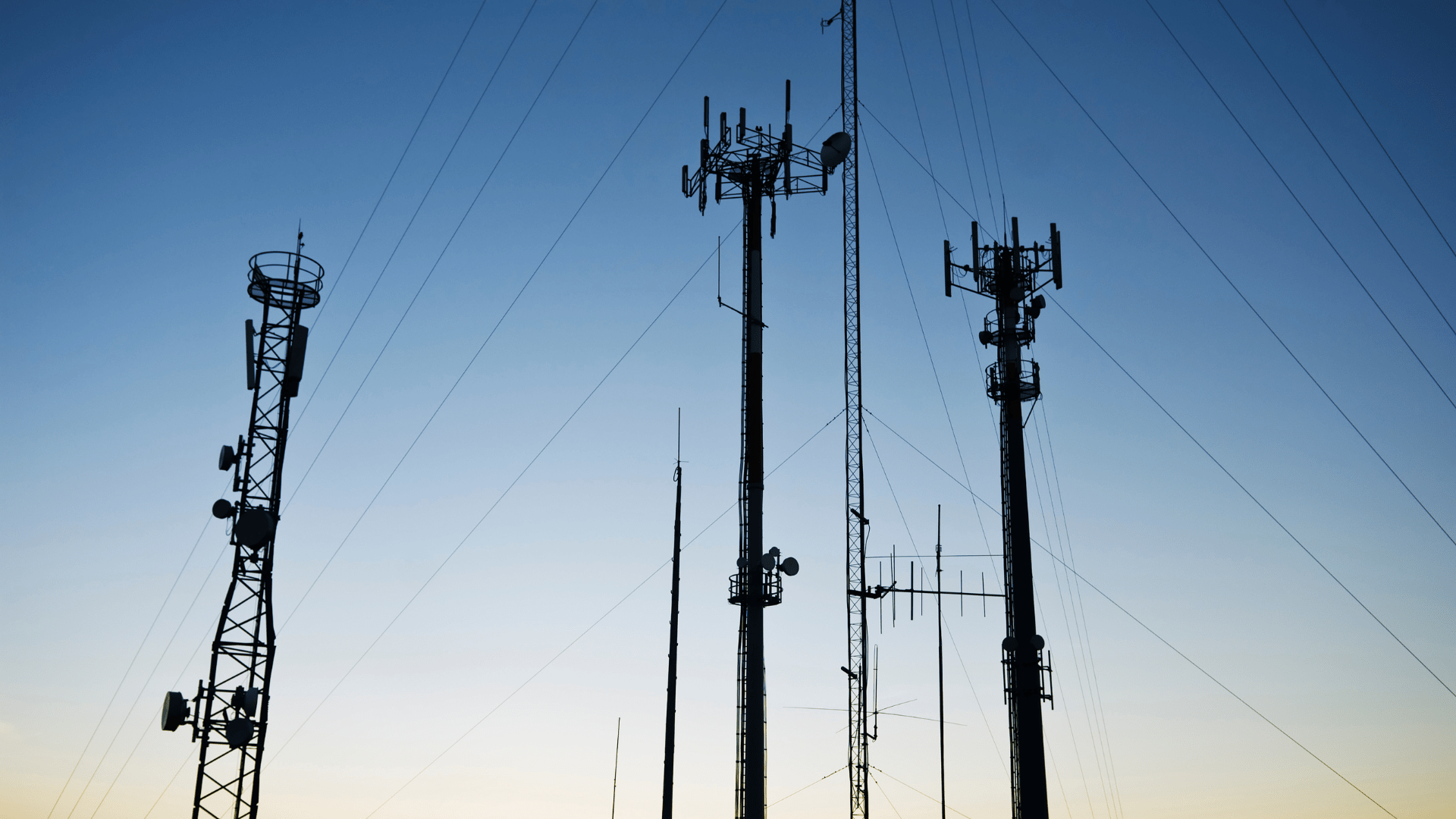
- Hybrid Transceiver Units: Weatherproof, high-gain directional antennas mounted on existing urban infrastructure, such as utility poles, streetlights, and building rooftops.
- Dynamic Spectrum Management Software: Automated algorithms that monitor interference, weather conditions, and traffic loads, dynamically shifting radio frequencies to maintain optimal throughput.
- Edge Processing Modules: Localized computing units that cache and process data at the radio node, reducing the volume of data that must travel back to the central data center.
By combining these elements, ABHRS bypasses the "last-mile" physical trenching problem. It delivers fiber-equivalent performance—characterized by multi-gigabit speeds and sub-millisecond latency—over the air, enabling 5G networks to operate at maximum efficiency across complex urban environments.
Integrating ABHRS with 5G and Fiber Networks
The deployment of 5G networks relies heavily on densification. Unlike legacy 4G towers that broadcast signals over miles, 5G utilizing mid-band and high-band mmWave frequencies requires a dense grid of small cells placed hundreds of feet apart. Connecting every single small cell directly to a dedicated fiber strand is often economically impossible.
ABHRS solves this integration challenge by acting as an invisible bridge. A single fiber termination point can feed an ABHRS master node, which then wirelessly distributes high-bandwidth connections to a cluster of neighboring 5G small cells. This hub-and-spoke distribution model drastically reduces the total amount of new fiber required while maintaining the strict quality-of-service (QoS) metrics demanded by 5G non-standalone (NSA) and standalone (SA) architectures.
Furthermore, ABHRS supports network slicing—a core feature of 5G technology. Network slicing allows municipalities to partition a single physical network into multiple virtual networks tailored to specific applications. For example, emergency services require an ultra-reliable, low-latency slice for public safety communications, while smart waste management bins can operate on a low-power, high-latency slice. ABHRS hardware natively supports priority routing, ensuring that mission-critical municipal data never experiences congestion, even during peak public usage hours.
Comparative Analysis: Traditional Backhaul vs. ABHRS
To understand the strategic value of Advanced Broadband Hybrid Radio Systems, network architects evaluate various backhaul topologies based on deployment speed, capital expenditure, spectral efficiency, and scalability.
| Backhaul Technology | Deployment Speed | Capital Expenditure (CapEx) | Operational Expenditure (OpEx) | Scalability & Bandwidth | Vulnerability to Physical Obstructions |
|---|---|---|---|---|---|
| Dedicated Dark Fiber | Slow (Months to Years) | Extremely High | Low | Virtually Limitless | None (Underground) |
| Traditional Microwave | Fast (Days to Weeks) | Moderate | Moderate | Moderate (Spectrum Limited) | Moderate (Line of Sight Required) |
| Standard Sub-6GHz Wireless | Fast (Days to Weeks) | Low | Low | Low (Congested Spectrum) | Low-Moderate |
| ABHRS (Hybrid Radio + Fiber) | Moderate (Weeks) | Moderate-High | Low-Moderate | High (Multi-Gigabit Capacity) | Low (Dynamic Path Routing) |
As illustrated in the comparison table, ABHRS strikes an optimal balance. It approaches the multi-gigabit scalability of dedicated fiber while offering the rapid deployment timelines characteristic of wireless solutions.
Operational Prerequisites and Site Selection
Implementing an ABHRS network within a smart city framework requires meticulous planning, rigorous engineering analysis, and adherence to regulatory standards. Municipalities and telecom operators cannot randomly mount hybrid transceivers without evaluating several critical prerequisites.
Line of Sight and Fresnel Zone Clearance
Because ABHRS frequently relies on high-frequency radio waves for point-to-point and point-to-multipoint distribution, maintaining a clear Fresnel zone is essential. Radio frequency (RF) engineers must conduct detailed topographical and 3D structural surveys of the urban landscape to identify potential obstructions, such as new construction developments, mature tree canopies, and architectural overhangs.
Power Availability and Pole Attachment Rights
Hybrid transceivers require a steady, reliable power source. Planners must negotiate pole attachment agreements with local electric utilities and municipal departments of transportation. Securing access to existing street lighting poles equipped with unswitched power supplies significantly accelerates deployment timelines and minimizes electrical installation costs.
Backhaul Capacity Auditing
Before deploying ABHRS nodes, engineers must audit the capacity of the ingress fiber backbone. If the central fiber link lacks the bandwidth to support the aggregated traffic of multiple hybrid radio nodes, the system will experience bottlenecks, negating the performance benefits of 5G connectivity.
Economic Impact and Cost Considerations
The financial viability of smart city infrastructure projects depends heavily on balancing upfront capital expenditures against long-term operational savings. Trenching fiber-optic cables through dense urban centers can cost anywhere from tens of dollars to hundreds of dollars per linear foot, depending on subterranean congestion, asphalt restoration requirements, and municipal permitting fees.
ABHRS dramatically reduces these civil engineering costs. By utilizing existing vertical real estate—such as utility poles, communication towers, and municipal buildings—operators can bypass costly street-cutting operations. While ABHRS hardware and specialized transceiver units represent a notable upfront investment, the reduction in labor costs, heavy machinery rentals, and municipal disruption permits yields a compelling return on investment (ROI).
Furthermore, operational expenditures (OpEx) are optimized through remote management capabilities. Advanced software defined networking (SDN) controllers allow network administrators to monitor link performance, reconfigure frequencies, and isolate hardware faults remotely, minimizing the frequency of costly truck rolls by field technicians.
Common Implementation Mistakes and Troubleshooting
Deploying advanced hybrid telecommunications infrastructure in dynamic urban environments presents distinct technical hurdles. Recognizing common pitfalls helps engineering teams maintain network integrity.
1. Neglecting Environmental Interference
Urban environments are saturated with electromagnetic interference from industrial machinery, high-voltage power lines, and neighboring wireless networks. Failing to conduct thorough spectrum analysis prior to deployment can result in severe signal degradation.
- Resolution: Implement automated frequency hopping and dynamic channel selection protocols that allow ABHRS transceivers to automatically migrate away from congested or noisy frequency bands.
2. Underestimating Weather Attenuation
High-frequency radio waves, particularly in the millimeter-wave spectrum, are susceptible to atmospheric attenuation caused by heavy rainfall, dense fog, and accumulating snow on transceiver radomes.
- Resolution: Design link budgets with adequate fade margins and deploy adaptive modulation schemes that automatically lower data throughput in exchange for increased signal robustness during severe weather events.
3. Ignoring Municipal Aesthetics and Zoning Compliance
Public backlash regarding the visual clutter of telecommunications equipment on historic or heavily populated streets can halt municipal projects indefinitely.
- Resolution: Collaborate early with urban planners to select low-profile, aesthetically neutral enclosures that blend seamlessly with existing street furniture and lighting fixtures.
Future Outlook for ABHRS in 2026 and Beyond
As smart cities continue to evolve toward autonomous traffic management, augmented reality public services, and extensive public safety sensor arrays, the demand for ultra-dense, low-latency connectivity will only intensify. By 2026, Advanced Broadband Hybrid Radio Systems have cemented their position as an indispensable architectural layer in telecommunications planning.
Ongoing advancements in semiconductor technology, phased-array antenna design, and artificial intelligence-driven network orchestration will further enhance the performance of ABHRS. These innovations will enable transceivers to self-optimize beamforming paths in real time, adapting instantly to changes in urban density and physical obstruction patterns. For city leaders and network operators seeking to future-proof their digital infrastructure without breaking capital budgets, ABHRS offers a proven, scalable pathway to bridge the gap between fiber and 5G.
Practical Recommendations for Municipal Planners
- Conduct a Comprehensive Asset Inventory: Catalog all municipal-owned vertical assets, including utility poles, traffic signal gantries, and municipal rooftops, to identify viable mounting locations for hybrid transceivers before initiating vendor selection.
- Establish Public-Private Partnerships (PPPs): Collaborate with telecommunications operators to share the financial and operational burden of deploying ABHRS infrastructure, ensuring that municipal smart city initiatives align with commercial 5G expansion plans.
- Prioritize Open Standards: Require vendors to supply equipment compliant with open-radio access network (O-RAN) standards to prevent vendor lock-in and ensure seamless interoperability across mixed-hardware urban deployments.
- Incorporate Scalability Margins: When designing the ingress fiber connections and power supplies for initial ABHRS nodes, engineer a minimum 30% capacity surplus to accommodate future smart city expansion and unexpected spikes in data consumption.