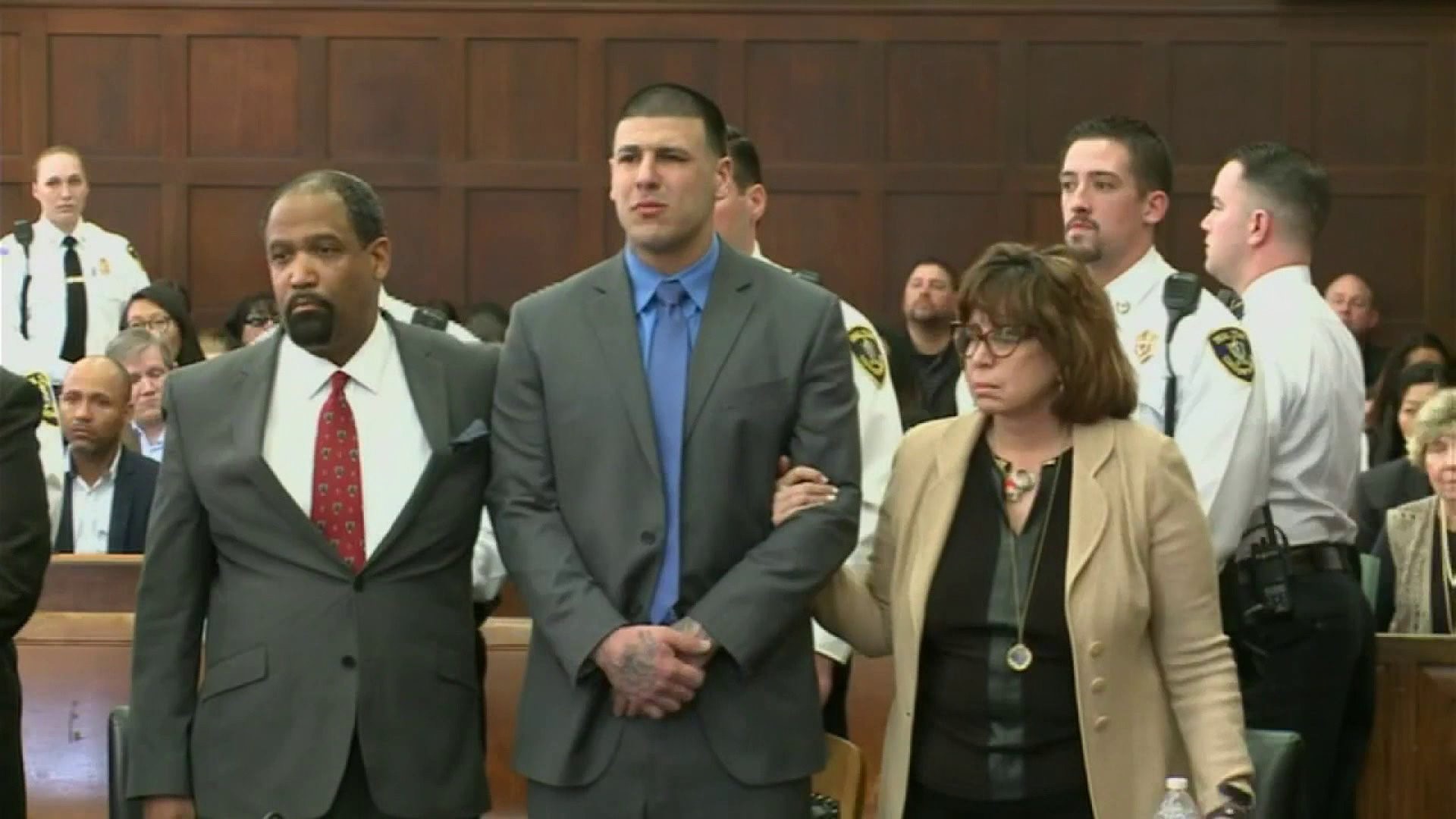
Aaron Hernandez, the former New England Patriots tight end, died by suicide on April 19, 2017, while serving a life sentence at the Souza-Baranowski Correctional Center in Massachusetts. At the time of his death, his net worth was estimated to be near zero or effectively negative, driven by massive legal debts, the forfeiture of his remaining NFL salary, and subsequent civil judgments against his estate.
The tragic fall of Aaron Hernandez remains one of the most complex case studies in modern sports history, intersecting professional football, criminal law, sports finance, and severe medical conditions like chronic traumatic encephalopathy (CTE). While his athletic career once guaranteed generational wealth, a rapid succession of criminal arrests, high-profile trials, and imprisonment completely dismantled his financial portfolio. Understanding the true picture of his financial standing in 2017 requires examining his NFL contracts, the legal battles that drained his assets, and the unique legal doctrine of abatement that ultimately shaped the financial recovery efforts of his victims' families.
The Rise and Peak of Aaron Hernandez: NFL Contracts and Earnings
Before his legal troubles unfolded, Aaron Hernandez was positioned as one of the most financially secure young athletes in the National Football League. Drafted by the New England Patriots in the fourth round of the 2010 NFL Draft out of the University of Florida, Hernandez quickly emerged as a dynamic offensive weapon alongside fellow tight end Rob Gronkowski.
Recognizing his value to the franchise, the New England Patriots signed Hernandez to a lucrative five-year contract extension in August 2012. The deal was worth $39.5 million, which included a substantial $12.5 million signing bonus and $16.36 million in total guaranteed money. At the time, this agreement made him one of the highest-paid tight ends in the NFL, cementing an upward trajectory that promised tens of millions of dollars in career earnings.
However, the structure of NFL contracts heavily favors teams when a player encounters severe off-field legal issues. The signing bonus was scheduled to be paid out across multiple installments, and the guaranteed salary was contingent upon adherence to the NFL Player Contract standard terms. When Hernandez was arrested and charged with first-degree murder in June 2013, the New England Patriots immediately released him. This transaction halted any future payouts from his multi-million-dollar extension, leaving him with only the portions of the signing bonus that had already been distributed—much of which was subsequently funneled into his defense fund.
Legal Collapse, Incarceration, and the 2017 Financial Reality
By 2017, the financial landscape of Aaron Hernandez was entirely defined by litigation, incarceration, and debt. Following his release by the Patriots, Hernandez faced a series of high-stakes criminal trials. In April 2015, a Massachusetts jury convicted him of the first-degree murder of Odin Lloyd, resulting in a mandatory sentence of life imprisonment without the possibility of parole.
Defending against a capital murder charge requires immense financial resources. Legal fees for high-profile criminal defense attorneys, expert witnesses, private investigators, and forensic specialists frequently mount into the millions of dollars. Reports from financial analysts and legal observers at the time indicated that Hernandez liquidated nearly all of his remaining liquid assets, properties, and endorsement deals to pay for his defense teams across multiple trials—including a separate 2017 trial where he was tried and ultimately acquitted for a 2012 double homicide in Boston.
As a result, by April 2017, Hernandez possessed virtually no traditional net worth. His primary asset—his former home in North Attleborough, Massachusetts—was subjected to intense legal scrutiny, liens, and eventual forced sale proceedings to satisfy mounting civil liabilities.
| Financial Category | Status in 2017 | Details |
|---|---|---|
| NFL Salary & Earnings | Forfeited / Terminated | Future payouts voided upon his release by the New England Patriots in 2013. |
| Real Estate | Liquidated / Encumbered | North Attleborough home sold; proceeds tied up in civil litigation and legal fees. |
| Legal Expenses | Exhausted Assets | Millions spent on defense teams across multiple murder trials between 2013 and 2017. |
| Civil Liability Debt | Millions in Deficits | Significant wrongful death judgments owed to the families of victims. |
| Total Estimated Net Worth | Nominal / Negative | Effectively zero or negative due to liabilities far exceeding remaining assets. |
Civil Judgments and the Battle for the Estate
While criminal proceedings concluded with his conviction and subsequent death, civil accountability played a massive role in dictating the final chapter of the Hernandez estate. In 2016, Odin Lloyd’s mother, Ursula Ward, filed a wrongful death lawsuit against Aaron Hernandez. In October 2016, a Massachusetts court found Hernandez liable, awarding the Lloyd family $3.7 million in damages.
In addition to the Lloyd family judgment, Hernandez faced potential civil claims from other victims and survivors of the violence attributed to him. Because Hernandez had no remaining cash or income-generating assets, the primary target for these civil claimants became his former NFL pension and any memorabilia or residual rights associated with his name.
However, a complex legal doctrine known as "abatement ab initio" complicated these recovery efforts for several years. Under traditional Massachusetts common law at the time, if a criminal defendant died while their direct appeal was still pending—as was the case with Hernandez, who died before his appeal for the Odin Lloyd conviction could be heard—the conviction was technically vacated, and the criminal proceedings were treated as though they never occurred.
While the Massachusetts Supreme Judicial Court eventually abolished the abatement doctrine in 2019, ensuring that convictions of defendants who die by suicide while appealing cannot be wiped out, the legal maneuvering in 2017 heavily impacted how his estate was valued and managed. The estate essentially functioned as an insolvent entity, meaning liabilities vastly outstripped any remaining tangible value.
The NFL Concussion Settlement and Trust Considerations
Another financial variable surrounding Aaron Hernandez in 2017 involved the historic concussion lawsuit settlement between the NFL and retired players. Following his death, lawyers representing the Hernandez estate sought to include him in the settlement class, arguing that the repeated sub-concussive and concussive impacts he sustained throughout his football career directly contributed to the development of CTE.
In June 2017, post-mortem examinations conducted by Boston University’s CTE Center revealed that Hernandez suffered from Stage 3 (out of 4) CTE. Neuropathologists described it as the most severe case of the neurodegenerative disease they had ever observed in an individual of his age (27).
This medical finding became a central pillar in civil discussions regarding his estate. The NFL concussion settlement framework provides financial compensation for players diagnosed with severe neurological impairments. However, because Hernandez's estate faced substantial claims from creditors and wrongful death judgment holders, any payout from the NFL concussion settlement would be subject to strict legal distribution rules, primarily benefiting creditors and victims' families rather than providing generational wealth to his surviving relatives.
Frequently Asked Questions
What was Aaron Hernandez's net worth when he died in 2017?
At the time of his death in April 2017, Aaron Hernandez had a net worth estimated to be near zero or negative. While he signed a $39.5 million contract extension with the Patriots in 2012, his release in 2013, millions of dollars spent on criminal defense fees, and substantial civil wrongful death judgments completely depleted his assets.
Why did Aaron Hernandez lose his money so quickly?
His financial collapse was driven by three primary factors: the immediate termination of his NFL contract upon his 2013 arrest, astronomical legal defense costs across multiple high-profile murder trials, and court-ordered civil judgments, including a $3.7 million wrongful death ruling awarded to the family of Odin Lloyd.
Did Aaron Hernandez's family receive money from the NFL after his death?
His estate pursued claims related to the national concussion settlement fund established for retired NFL players, especially following the discovery of severe Stage 3 CTE during his autopsy. However, any financial compensation recovered through these legal channels was subject to claims from creditors and civil judgment holders.
What happened to Aaron Hernandez's house in Massachusetts?
The large home in North Attleborough, Massachusetts, where Hernandez lived during his time with the Patriots, was put on the market and sold as part of the legal efforts to settle debts, liquidate assets, and pay mounting legal and civil liabilities tied to his estate.
How did the legal doctrine of abatement affect his estate?
At the time of his death in 2017, Massachusetts law featured an abatement doctrine that vacated criminal convictions if the defendant died while an appeal was pending. This triggered complex legal battles regarding his murder conviction, though subsequent legal reforms in the state ultimately altered how courts handle convictions when a defendant dies during the appeal process.
Final Recommendation and Next Actions
For researchers, legal professionals, and sports historians examining the financial and legal fallout of high-profile athletes, analyzing the Hernandez case requires reviewing official court records from the Massachusetts trial courts and civil dockets. To gain an accurate, verified understanding of the probate and civil proceedings surrounding the estate, consult documented legal briefs filed by the administrators of the Hernandez estate and public records concerning the distribution of remaining assets to civil claimants.