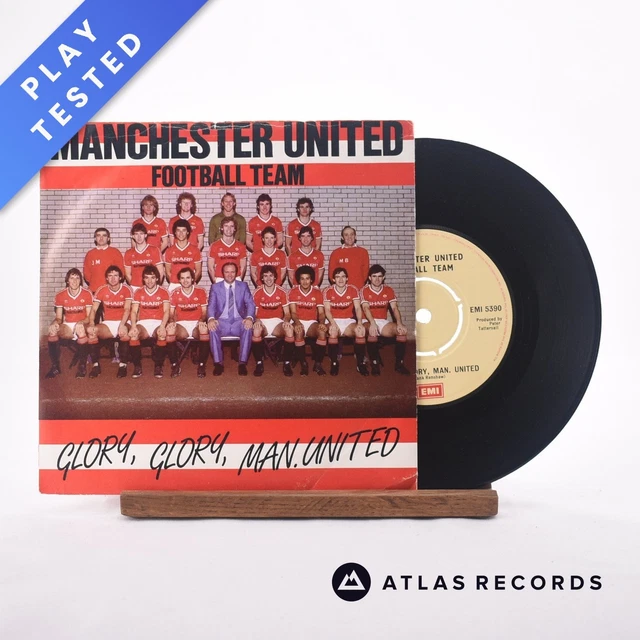
The "97 Goal Glory" refers to Manchester United's record-breaking 1999/2000 Premier League campaign, where the club scored 97 goals in 38 matches. This offensive masterclass was documented in the official VHS and DVD release titled Manchester United: Goal Glory, which showcased every strike from a season that saw the Red Devils finish 18 points clear at the top of the table.
The 1999/2000 season presented a unique challenge for Sir Alex Ferguson’s Manchester United. Having achieved the unprecedented Treble—winning the Premier League, FA Cup, and UEFA Champions League—in May 1999, the primary concern among pundits was whether the squad could maintain its hunger. The answer was a resounding "yes," delivered through an unrelenting attacking philosophy that resulted in one of the most statistically dominant domestic seasons in English football history.
The Context of the 1999/2000 Campaign
Entering the new millennium, Manchester United was a global powerhouse. However, the season was not without controversy. The club famously withdrew from the FA Cup to participate in the inaugural FIFA Club World Championship in Brazil, a move encouraged by the FA to bolster England’s 2006 World Cup bid. This decision meant United’s focus was narrowed primarily to the Premier League and the Champions League.
While they were eliminated from the Champions League in the quarter-finals by Real Madrid, their domestic form was untouchable. The "Goal Glory" era was characterized by a team that didn't just want to win; they wanted to dismantle opponents. The 97-goal haul was a Premier League record at the time, surpassing their own previous tallies and setting a benchmark that would stand for a decade until Chelsea surpassed it in 2010.
Breaking Down the 97 Goals: The Statistical Powerhouse
The sheer volume of goals scored during this period was a testament to the depth of the squad. United averaged roughly 2.55 goals per game. Even more impressive was the distribution of these goals. While many teams rely on a single talisman, Ferguson’s 1999/2000 side had threats from every position on the pitch.
Top Scorers of the 1999/2000 Season
The "Strike Force Four"—Dwight Yorke, Andy Cole, Ole Gunnar Solskjaer, and Teddy Sheringham—contributed the lion's share of the 97 goals, but the midfield was equally lethal.
| Player | Goals Scored (Premier League) | Role |
|---|---|---|
| Dwight Yorke | 20 | Striker |
| Andy Cole | 19 | Striker |
| Ole Gunnar Solskjaer | 12 | Striker |
| Paul Scholes | 9 | Midfielder |
| Teddy Sheringham | 5 | Striker |
| David Beckham | 6 | Midfielder |
| Roy Keane | 5 | Midfielder |
| Ryan Giggs | 4 | Midfielder |
This table illustrates the balance of the team. With 51 goals coming from just three players (Yorke, Cole, and Solskjaer), United possessed a rotational frontline that allowed them to stay fresh while maintaining a high scoring rate.
The Four-Headed Monster: United’s Strike Force
To understand the "97 Goal Glory," one must analyze the chemistry between the four strikers. Sir Alex Ferguson’s ability to keep all four happy was perhaps his greatest managerial feat of the season.
The Yorke and Cole Partnership
The telepathic understanding between Dwight Yorke and Andy Cole reached its zenith in 2000. Their ability to exchange quick passes in tight spaces, exemplified by the famous goal against Barcelona a year prior, continued to baffle Premier League defenders. Yorke provided the flair and aerial ability, while Cole’s movement off the shoulder of the last defender created constant horizontal and vertical stretches in the opposition's defensive lines.
The Super-Sub: Ole Gunnar Solskjaer
By 2000, Solskjaer had solidified his reputation as the world's most clinical substitute. His 12 goals were crucial, often coming late in games when teams were fatigued. The "Baby-Faced Assassin" was a master of finding space in the box, a trait that the "Goal Glory" footage highlights through his various poacher-style finishes.
The Tactical Pivot: Teddy Sheringham
While Sheringham scored fewer goals (5) during this specific league campaign, his role as a "deep-lying" forward allowed Scholes and Giggs to make surging runs into the box. Sheringham’s intelligence and hold-up play were essential during the transition phases of their high-speed attacks.
The Midfield Engine: Creating the Glory
The 97 goals were not merely a product of clinical finishing; they were the result of a midfield that is often cited as the greatest in Premier League history.
- David Beckham: His delivery from the right wing was the primary source of service. Beckham’s ability to "whip" crosses meant that strikers didn't need to beat their markers for pace; they just needed to meet the ball's trajectory.
- Paul Scholes: In the 1999/2000 season, Scholes was transitioning into a more prolific goal-scoring midfielder. His late arrivals into the penalty area added a fifth attacking threat that most 4-4-2 systems of the time were not equipped to track.
- Ryan Giggs: On the left, Giggs provided the directness and dribbling that forced defenders to backpedal, opening up gaps in the center for the strikers.
- Roy Keane: While primarily the enforcer, Keane chipped in with 5 goals and acted as the tactical floor, allowing the other five attacking players the freedom to stay high up the pitch.
Iconic Matches in the 97-Goal Journey
Several key fixtures defined the "Goal Glory" narrative. These matches weren't just wins; they were displays of offensive superiority.
Manchester United 7-1 West Ham United (April 1, 2000)
This match remains the crown jewel of the season’s highlight reel. Paul Scholes netted a hat-trick, and the team displayed a level of passing and moving that bordered on the arrogant. It was this specific game that convinced many that United were playing a different sport compared to the rest of the league.
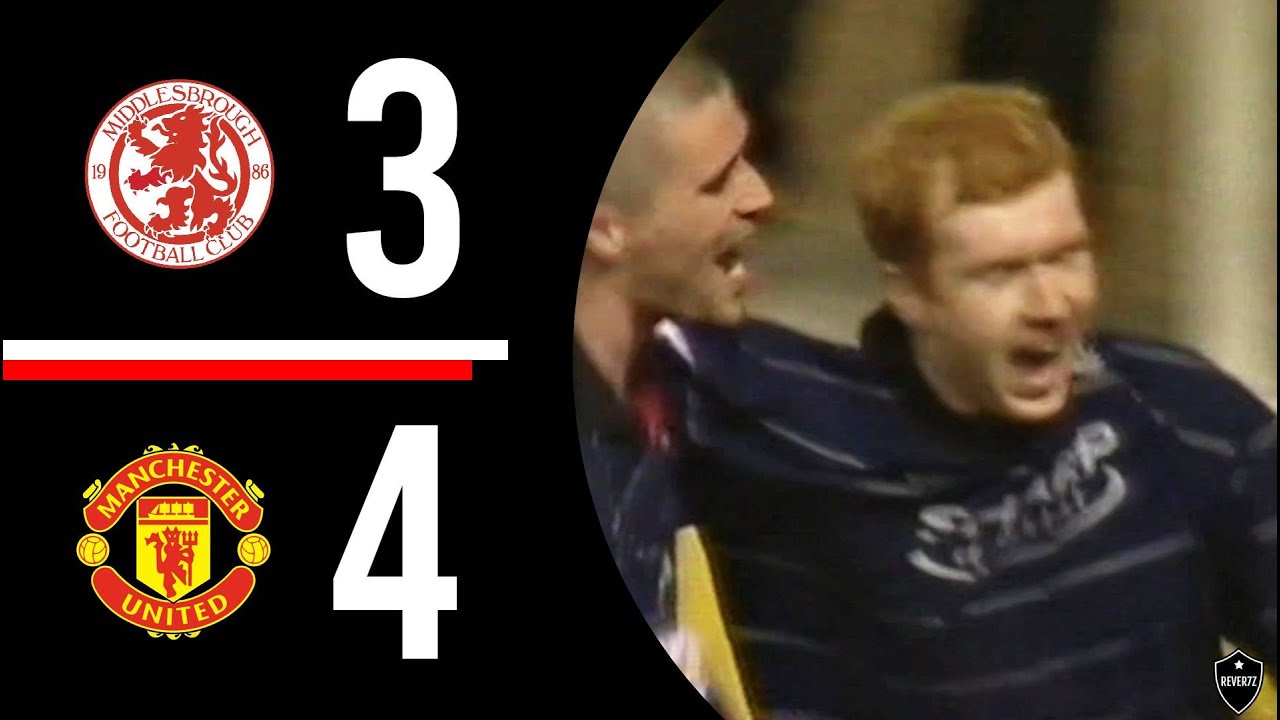
Manchester United 4-3 Middlesbrough (April 10, 2000)
This game highlighted the "win at all costs" mentality. Even when the defense was shaky—conceding three at Old Trafford—the attack simply outscored the problem. This "we’ll score one more than you" attitude was central to the 97-goal tally.
Manchester United 4-0 Bradford City (March 25, 2000)
A routine dismantling of a lower-tier side. Matches like this were bread and butter for the 1999/2000 squad. They showed no mercy to teams in the bottom half of the table, often racking up three or four goals before the 60-minute mark.
Tactical Analysis: Why They Scored So Many
Sir Alex Ferguson’s 4-4-2 was not a rigid system. In the 1999/2000 season, it functioned more like a 2-4-4 when in possession. The full-backs, Gary Neville and Denis Irwin, pushed high, allowing Beckham and Giggs to tuck inside or stay wide depending on the defensive shape of the opponent.
- Overlapping Full-backs: Gary Neville’s relationship with Beckham created constant 2-on-1 situations on the right flank.
- High Pressing: Long before it was popularized by modern coaches, United pressed high up the pitch, winning the ball in the final third and catching teams out of position.
- The "Scholes" Role: Paul Scholes functioned as a ghost in the box. His 9 goals that season were almost all "first-time" finishes from the edge of the area.
- Transition Speed: The speed at which United moved the ball from Peter Schmeichel’s (and later Mark Bosnich’s) hands to the opposition box was unrivaled.
Legacy of the "Goal Glory" Release
The Manchester United: Goal Glory video was a significant commercial success. For fans in the year 2000, it was the ultimate compilation of a team at its peak. Today, in 2026, the footage serves as a historical archive of a specific era of English football—the "Pre-Abramovich" era where dominance was built on youth development and shrewd British-market scouting.
The video itself featured every single goal from the Premier League campaign, narrated with insights from the players. It wasn't just a highlights package; it was a celebration of an identity. For modern viewers, looking back at "97 Goal Glory" offers a glimpse into a time when Manchester United played with a level of fearlessness that defined the Sir Alex Ferguson era.
How to Watch "Goal Glory" Today
Finding the original "97 Goal Glory" media in 2026 can be a task for collectors.
- Physical Media: Second-hand markets like eBay or specialized sports memorabilia shops often carry the original VHS and DVD versions. The DVD version is preferred for its "multi-angle" features and chapter selections for specific players.
- Digital Archives: Manchester United’s official app (MUTV) frequently features "Season Reviews." While the specific "Goal Glory" edit may be distinct from the standard season review, the content—the 97 goals—is preserved in their digital archives.
- Quality Considerations: Since the footage was recorded in the late 90s and early 2000s, the resolution is Standard Definition (4:3 aspect ratio). Modern "AI-upscaled" versions have appeared on fan forums, but the authentic experience remains the original grainier footage.
Comparison With Other High-Scoring Seasons
While 97 goals was a record in 2000, how does it hold up against the modern era of the Premier League?
| Season | Team | Goals Scored |
|---|---|---|
| 2017/18 | Manchester City | 106 |
| 2009/10 | Chelsea | 103 |
| 2019/20 | Manchester City | 102 |
| 2013/14 | Manchester City | 102 |
| 2013/14 | Liverpool | 101 |
| 1999/00 | Manchester United | 97 |
Despite being surpassed numerically, the context of the 97 goals is different. In 2000, the Premier League was generally more physical, and the "top-four" gap was not as financially cavernous as it became in the 2010s. Scoring nearly 100 goals in that era was considered a statistical anomaly.
FAQs About Manchester United's 97 Goals
Who scored the 97th goal of the season?
The 97th goal was scored by Teddy Sheringham in the final game of the season against Aston Villa at Villa Park. United won the game 1-0, cementing the record and ending the season on a high note.
Did Manchester United win any other trophies in 2000?
While they dominated the Premier League, they did not win other major silverware that season. They won the Intercontinental Cup in November 1999 (defeating Palmeiras), but were knocked out of the Champions League by Real Madrid and did not participate in the FA Cup.
Was the 97-goal tally a world record?
No, it was a Premier League record. Many clubs across Europe and in earlier eras of English football (such as the 1930s) had scored more. However, in the modern "Premier League" era (post-1992), it was the benchmark for a decade.
Which goalkeeper conceded the most goals to United that season?
West Ham’s Craig Forrest had the unfortunate distinction of conceding 7 goals in a single game at Old Trafford, which significantly contributed to the 97-goal total.
Is "Goal Glory" available on 4K or Blu-ray?
As of 2026, there has been no official 4K remaster of the specific "Goal Glory" release. The source tape quality usually limits these releases to DVD or 1080p upscales at best.
Final Recommendation for Fans
For any student of the game or Manchester United supporter, revisiting the "97 Goal Glory" era is essential. It represents the pinnacle of 4-4-2 attacking football. If you are looking to witness this season, the best approach is to seek out the Manchester United 1999/2000 Season Review or the specific Goal Glory compilation on MUTV.
The season serves as a reminder that football is as much about the entertainment of the "hunt" for goals as it is about the trophies in the cabinet. While the 1999 Treble was about the achievement, the 2000 season was about the sheer, unadulterated joy of scoring.