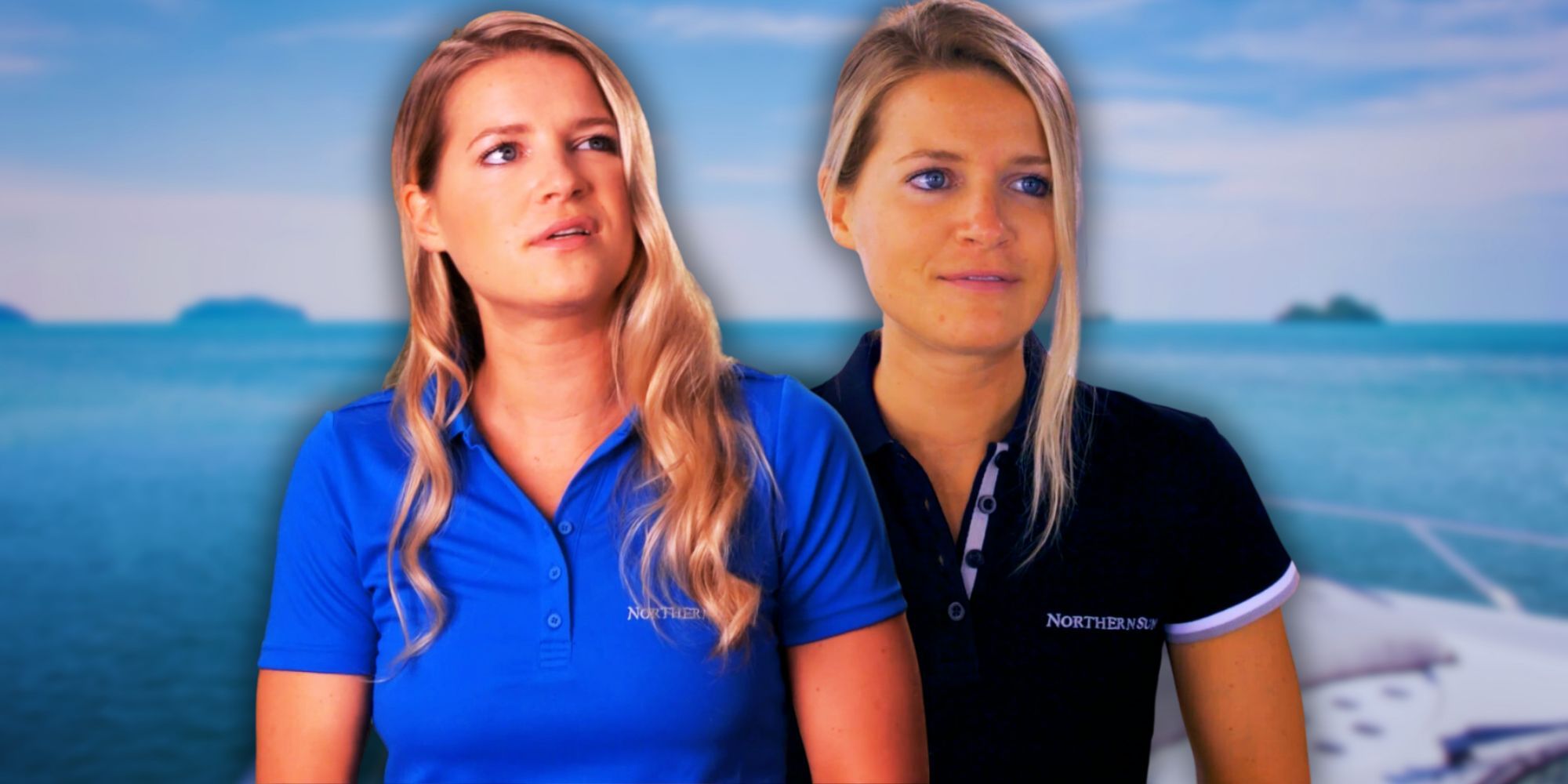
In Below Deck Down Under Season 2, Episode 6, titled "All's Fair in Love and Yachting," the crew of the Northern Sun transitions from a demanding charter to a chaotic night out. The episode is defined by the departure of the Budrie family, mounting deckhand errors, and the beginning of a social shift that would ultimately change the franchise's approach to crew safety and production intervention.
1. The Departure of the Budrie Family and the "Snot" Aftermath
The first major highlight of Episode 6 centers on the conclusion of one of the season's most taxing charters. The Budrie family, known among fans as the "Snot" guests due to a particularly unappetizing incident involving a child's nasal congestion at the dinner table, finally prepared to disembark. For the interior team, led by Chief Stew Aesha Scott, this departure was a moment of profound professional relief.
The "Snot" incident itself serves as a case study in the extreme patience required in the luxury yachting industry. Aesha Scott and Stew Laura Bileskalne had to maintain a high standard of service while navigating the biological realities of traveling with young children in a confined, high-end environment. The highlight here wasn't just the exit of the guests, but the psychological toll it took on the crew. Chef Tzarina Mace-Ralph had been under immense pressure to deliver kid-friendly yet gourmet meals, a balancing act that often goes underappreciated by the charter guests themselves.
When the tip meeting finally occurred, the crew received a $17,500 tip. While significant, the discussion among the crew highlighted the "value-to-stress" ratio. In the yachting world, a "good" tip is often relative to the difficulty of the guests. The Budrie charter was physically and emotionally draining, making the financial reward feel like a hard-won victory rather than a bonus. This segment of the episode underscored the reality that on a vintage conversion yacht like the Northern Sun, there are no hidden corners; the crew is always "on," and the relief felt upon the guests' departure was palpable.
2. Technical Failures and Leadership Friction on Deck
While the interior team dealt with guest personalities, the deck team faced structural and technical hurdles that tested Captain Jason Chambers' patience. A primary highlight of Episode 6 is the continued struggle of deckhand Adam Kodra. Despite his earnest nature and likability, Adam’s lack of commercial yachting experience became a glaring liability during the vessel's maneuvers.
The Northern Sun is not a standard superyacht; it is a converted Japanese icebreaker. This means its handling characteristics are unique, requiring precise communication between the bridge and the deck. During a critical anchoring maneuver in Episode 6, Adam struggled with the windlass and the communication protocols, leading to a tense exchange with Captain Jason. Jason’s leadership style—often described as "firm but fair"—was pushed to its limit. He values autonomy, but when safety is at stake, he reverts to a micro-management style that creates friction with the Bosun, Luke Jones.
Luke’s performance as a leader also began to show cracks in this episode. Instead of taking full responsibility for the deck team’s technical shortcomings, Luke often diverted blame or failed to provide the hands-on training Adam clearly required. This highlight is crucial because it established the "competence gap" on the boat. In yachting, technical errors aren't just mistakes; they are safety hazards. The episode effectively demonstrated how a single weak link in the chain of command can jeopardize the safety of a multi-million dollar vessel and everyone on board.
3. The "Love Pentagon" and Interpersonal Volatility
As the crew transitioned from work to play, the interpersonal dynamics shifted into high gear. The "love pentagon" involving Luke, Margot Sisson, Harry van Vliet, Culver Bradbury, and Tzarina Mace-Ralph reached a boiling point. This highlights the "charter fog"—a phenomenon where the isolation of a yacht amplifies romantic and sexual tensions.
The most poignant part of this dynamic was the contrast between Harry’s genuine affection for Margot and Luke’s aggressive pursuit of her. Harry, the young Australian deckhand, had spent the preceding episodes building a respectful rapport with Margot. However, in Episode 6, Luke’s behavior became increasingly dominant. Margot, who expressed a desire to remain friendly with everyone, found herself caught in the middle of Luke’s territoriality.
Meanwhile, a secondary romantic plot involved the returning favorite Culver Bradbury and Chef Tzarina. Culver’s arrival earlier in the season had initially boosted morale, but by Episode 6, Tzarina began to question his "Chief Entertainment Officer" persona. The highlight here was the realization that "yachtmance" is often a coping mechanism for the stress of the job. However, as the crew headed out for their night off, these lighthearted flirtations began to take on a darker, more intrusive tone, setting the stage for the boundary-crossing that occurred later that night.
4. Aesha Scott’s Intuition and Management Style
Aesha Scott’s performance in Episode 6 serves as a masterclass in Chief Stew leadership. Beyond the technical aspects of her job—inventory, service, and guest relations—Aesha’s greatest strength is her emotional intelligence. Throughout the episode, she is seen "checking the temperature" of her team. She noticed Margot’s discomfort with the mounting attention from Luke and attempted to provide a buffer.
Aesha’s role in this episode is a highlight because it showcases the "invisible labor" of a Chief Stew. It’s not just about setting tables; it’s about managing the psychological safety of the interior department. When the crew went out to dinner and drinks, Aesha remained the "designated adult," even while participating in the fun. Her ability to spot red flags in behavior is a recurring theme that would eventually lead to her pivotal role in the following episode's interventions.
Furthermore, the episode highlighted the professional rift between Aesha and her second stew, Laura Bileskalne. Laura’s tendency to prioritize her own opinions over Aesha’s directives began to grate on the team. This subtle conflict is essential for understanding the power dynamics on the boat. In the rigid hierarchy of a yacht, a second stew who challenges a Chief Stew creates a ripple effect of inefficiency, which was clearly visible during the final hours of the Budrie charter.
5. The Fateful Crew Night Out: The Calm Before the Storm
The final and most significant highlight of Episode 6 is the crew's night out at the Cairns marina. This segment is historically significant within the Below Deck franchise because it captures the lead-up to the most controversial moment in the series' history. The highlight is not a single event, but the atmospheric shift as the night progressed and the alcohol consumption increased.
As the crew drank heavily, the boundaries between professional colleagues and private individuals blurred. The cameras captured Luke Jones becoming increasingly physical and demanding of Margot’s attention, despite her visible signs of intoxication and exhaustion. Simultaneously, Laura Bileskalne began an unwanted pursuit of Adam Kodra, ignoring his clear signals of disinterest.
This highlight is essential because it serves as a "prologue to a crisis." It demonstrates how the lack of a "sober officer" or a clear policy on crew intoxication can lead to dangerous situations. While the episode ends on a cliffhanger as the crew returns to the boat during a power outage, the events at the bar provided all the evidence needed to see that the crew's internal culture was fracturing. It highlighted the vulnerability of crew members in a "live-where-you-work" environment and the heavy responsibility placed on production and the Captain to maintain order when the chain of command dissolves in liquor.
Summary of Crew Performance and Dynamics: Season 2, Episode 6
The following table summarizes the status of the crew members at the conclusion of Episode 6, reflecting their professional standing and interpersonal stability.
| Crew Member | Primary Role | Professional Status | Interpersonal Conflict Level |
|---|---|---|---|
| Captain Jason | Master | Highly Stressed | Moderate (with Deck Team) |
| Aesha Scott | Chief Stew | Exemplary | High (managing Laura/Margot) |
| Luke Jones | Bosun | Declining | Extreme (aggressive behavior) |
| Tzarina Mace-Ralph | Chef | Stable | Moderate (Culver romance) |
| Margot Sisson | 3rd Stew | Competent | High (target of Luke's pursuit) |
| Adam Kodra | Deckhand | Struggling | Moderate (unwanted attention from Laura) |
| Laura Bileskalne | 2nd Stew | Contested | High (insubordination/Adam pursuit) |
| Harry van Vliet | Deckhand | Improving | Low (unrequited feelings for Margot) |
| Culver Bradbury | Deckhand | Stable | Moderate (Tzarina dynamics) |
The Impact of the Northern Sun’s Power Outage
A technical highlight that is often overlooked in Episode 6 is the power outage that occurred just as the crew returned to the yacht. This was not a produced "drama" event but a genuine mechanical failure of the Northern Sun’s generators. On a yacht, a total loss of power (a "black boat" situation) is a Tier-1 emergency. It affects everything from navigation lights to bilge pumps and, most importantly for the crew, the air conditioning and security systems.
The power outage created a "fog of war" environment. In the darkness, the usual social cues and geographical boundaries of the boat were erased. This environmental factor played a massive role in the events that followed. Without the standard lighting and the chaos of the crew trying to find their way to their cabins, the predatory behavior of certain crew members was inadvertently shielded. This highlights the intersection of "boat problems" and "people problems"—when the hardware of the yacht fails, the software (the crew's behavior) often follows suit.
FAQs About Below Deck Down Under Season 2 Episode 6
What was the name of the yacht in Season 2?
The yacht featured in Season 2 is the Northern Sun. Unlike the sleek, modern superyachts usually seen in the franchise, the Northern Sun is a 1976-built former Japanese research vessel and icebreaker. It underwent a massive refit to become a luxury explorer yacht, offering a unique "rugged luxury" experience in the Great Barrier Reef.
Why was the "Snot" charter so controversial?
The charter was controversial because of the guests' perceived lack of etiquette and the "snot" incident involving a child at the dinner table. Fans of the show widely criticized the guests for their demanding nature and the hygiene issues presented to the crew. However, the crew's professional handling of the situation is often cited as a high point for Aesha Scott’s leadership.
Does anyone get fired in Episode 6?
No one is fired during the main runtime of Episode 6. However, the episode ends on a cliffhanger that leads directly into the dual firings in Episode 7. Episode 6 serves as the "evidentiary" phase where the behaviors that led to the dismissals of Luke Jones and Laura Bileskalne were documented.
Who was the Bosun in this episode?
The Bosun was Luke Jones. While he started the season with high expectations from Captain Jason, his performance in Episode 6 showed significant decline, both in terms of technical deck management and his professional conduct during the crew's off-time.
What was the total tip for the Budrie charter?
The crew received a $17,500 tip for the charter ending in Episode 6. This was considered a standard-to-good tip for the duration, though the crew felt it was barely enough to compensate for the emotional exhaustion caused by the guests' requirements and behavior.
How did production intervene in this episode?
While the major production intervention happens in the opening minutes of the next episode (Episode 7), Episode 6 shows the camera crews and producers becoming increasingly active in tracking the crew's movements. This episode is famous for the "breaking of the fourth wall" where the safety of the cast became more important than the "reality" of the show.
Final Recommendations for Viewers
To fully appreciate the gravity of Episode 6, it should be viewed as a study in operational stress. The transition from a difficult charter to a high-alcohol social environment is a recipe for disaster in any industry, but particularly in yachting where there is no physical escape from one's colleagues.
For those interested in the technical side of yachting, pay close attention to the anchoring scene with Adam and Captain Jason. It illustrates the difficulty of operating a vintage vessel compared to a modern one. For those focused on the social dynamics, observe the "red flags" exhibited by Luke and Laura; these are now used in many HR and safety training seminars as examples of boundary violations in the workplace.
The most important takeaway from Episode 6 is the importance of leadership presence. When a leader like Luke Jones fails to set a moral and professional tone, the entire ecosystem of the yacht suffers. Viewers should transition immediately to Episode 7 to see how Captain Jason and Aesha Scott resolve the crisis that began in the final moments of this episode.