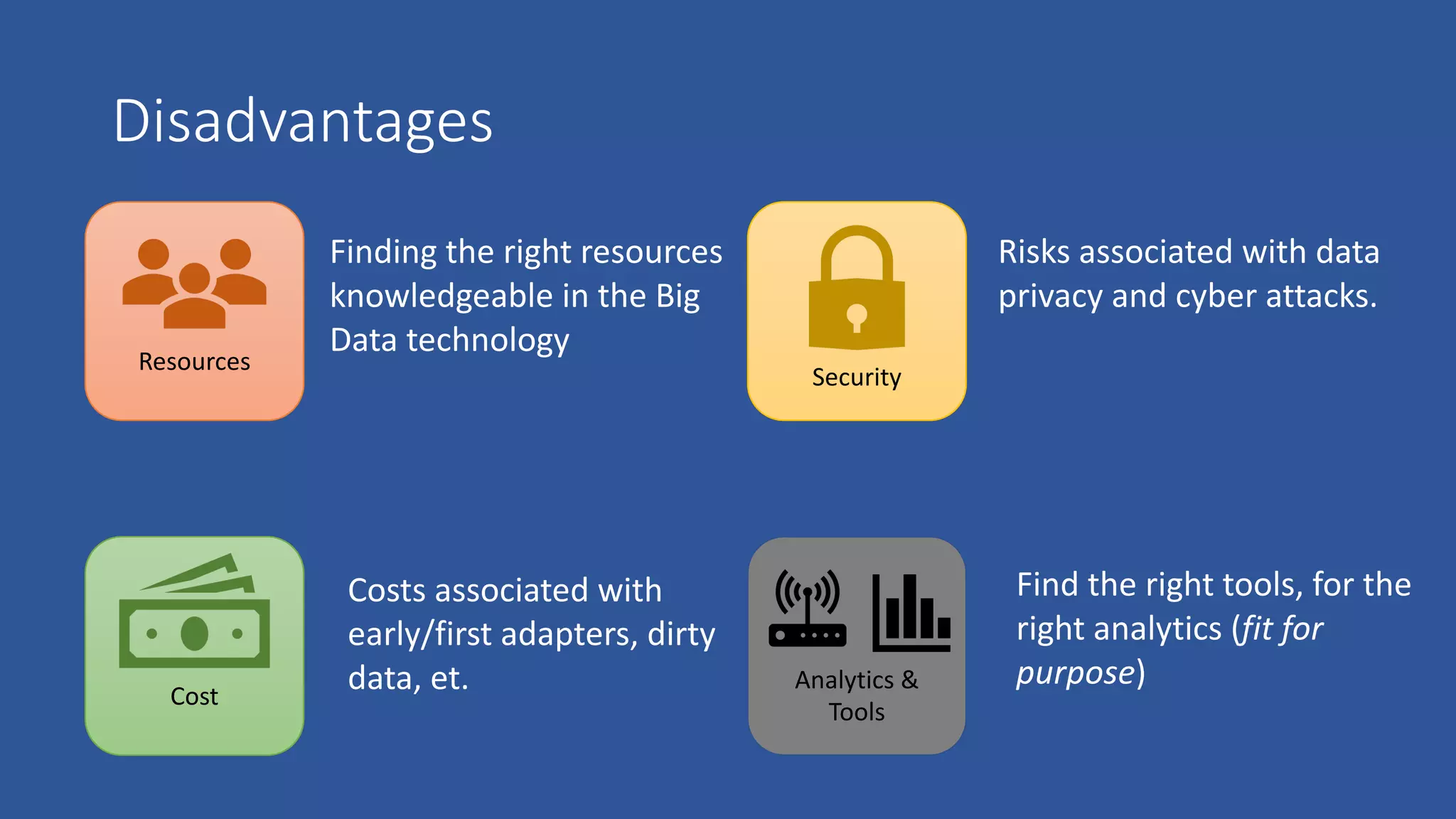
Transitioning workloads from local on-premises servers to cloud environments introduces complex security challenges, primarily revolving around shared responsibility models, multi-tenant architectural risks, and complex identity management. While cloud adoption offers agility and scalability, organizations must systematically evaluate and mitigate these inherent vulnerabilities to protect sensitive enterprise data.
Introduction to Cloud Security Realities
The rapid migration of enterprise applications and sensitive databases to cloud platforms has transformed modern IT architecture. Organizations of all sizes leverage infrastructure-as-a-service (IaaS), platform-as-a-service (PaaS), and software-as-a-service (SaaS) models to reduce capital expenditure and increase operational agility. However, shifting from physical, on-premises data centers to virtualized, multi-tenant cloud environments alters the security landscape dramatically.
Security in the cloud is not merely a matter of transferring existing firewall rules and access control lists to a third-party vendor. It requires an entirely different operational mindset and a deep understanding of how distributed architectures expose networks to unique threats. When applications and data leave the physical confines of an enterprise-owned server room, control is decentralized. This decentralization creates blind spots, increases the attack surface, and forces organizations to rely heavily on external vendors for foundational security hygiene.
Understanding the primary security disadvantages of cloud hosting is essential for designing resilient defense-in-depth strategies. Far from discouraging cloud adoption, recognizing these vulnerabilities allows security architects, DevOps engineers, and compliance officers to implement proactive guardrails. Below is an exhaustive analysis of the three primary security disadvantages associated with hosting applications and their data in the cloud: the complexities of the shared responsibility model, multi-tenant isolation risks, and the expanded attack surface driven by complex identity and access management.
1. The Complexities and Misunderstandings of the Shared Responsibility Model
Defining the Model
At the core of cloud security lies the Shared Responsibility Model, a framework established by major cloud service providers (CSPs) such as Amazon Web Services (AWS), Microsoft Azure, and Google Cloud Platform (GCP). This model dictates how security duties are partitioned between the cloud provider and the customer. Generally, the provider is responsible for "security of the cloud"—securing the underlying infrastructure, including physical data centers, hardware, networking gear, and virtualization software. Conversely, the customer is responsible for "security in the cloud"—protecting what they put into the cloud, including operating systems, network configurations, firewalls, identity management, applications, and customer data.
The Danger of Misconfiguration
The primary security disadvantage embedded within this model is the psychological and operational gap between what administrators assume is covered and what actually falls under their purview. Cloud misconfigurations remain one of the leading vectors for data breaches. According to numerous industry reports from organizations like the Cloud Security Alliance (CSA) and Cybersecurity and Infrastructure Security Agency (CISA), simple oversight errors—such as leaving an object storage bucket (like AWS S3) publicly readable, failing to enforce strong encryption keys, or leaving default administrative credentials active—frequently expose millions of sensitive records.
Unlike traditional data centers where physical access controls and localized network perimeters provide a baseline layer of defense, cloud infrastructure is entirely software-defined. A single incorrect line of code in an infrastructure-as-code (IaC) template, such as a Terraform script, can accidentally expose an entire database cluster to the public internet. Because cloud environments scale rapidly, a single configuration mistake can propagate across hundreds of containerized instances in seconds, transforming a minor oversight into a catastrophic enterprise-wide exposure.
Operational Blind Spots
Furthermore, organizations often struggle with operational visibility under the shared responsibility model. CSPs provide extensive logging and monitoring tools (such as AWS CloudTrail, Azure Monitor, and Google Cloud Audit Logs), but aggregating, analyzing, and acting upon these vast telemetry streams requires specialized tooling and dedicated security operations center (SOC) personnel. When internal teams lack the expertise to interpret cloud-specific logs, anomalous activities—such as unauthorized privilege escalation or covert data exfiltration—can go undetected for months.
2. Multi-Tenant Architectural Risks and Resource Pooling
The Mechanics of Multi-Tenancy
Cloud computing relies heavily on multi-tenancy, a software and hardware architecture where multiple independent customer instances (tenants) share the same physical hardware, storage arrays, and network infrastructure. To maintain isolation, CSPs employ sophisticated hypervisors, containerization engines, and virtual local area networks (VLANs) to logically separate each tenant's data and execution environments from neighboring organizations sharing the same physical silicon.
Virtualization Vulnerabilities and Escape Risks
While logical isolation is generally effective, it introduces unique security disadvantages that do not exist in dedicated, single-tenant physical environments. The most notable technical threat is the risk of virtualization escape or hypervisor vulnerabilities. If a zero-day exploit is discovered in the hypervisor or container runtime environment, a malicious actor might theoretically break out of their isolated virtual machine (VM) or container sandbox and gain access to the underlying physical host. Once on the host, the attacker could potentially pivot to intercept traffic, read memory, or access data belonging to other corporate tenants sharing that physical machine.
Beyond hypervisor vulnerabilities, noisy neighbor effects and resource exhaustion attacks present operational security concerns. In a shared pool, a massive distributed denial-of-service (DDoS) attack or an unoptimized computational workload running on a neighboring tenant's instance can degrade the performance or availability of shared system resources, indirectly impacting an organization's application uptime and responsiveness.
Cryptographic and Storage Separation Challenges
Data at rest in the cloud is typically stored on shared physical storage area networks (SANs) or distributed file systems. Although data is encrypted and logically partitioned, organizations must trust the CSP's internal key management systems and data wiping procedures. If a cloud provider fails to securely overwrite decommissioned storage drives or mismanages cryptographic keys, residual data could theoretically be recovered. This risk requires organizations to implement client-side encryption (Bring Your Own Key, or BYOK models), ensuring that even if physical storage media is compromised or improperly handled, the data remains unreadable without customer-managed keys.
3. Expanded Attack Surface and Identity-Centric Vulnerabilities
The Dissolution of the Traditional Perimeter
In legacy on-premises architectures, security was largely perimeter-defined. Organizations built thick corporate firewalls around their physical offices and internal data centers, operating under the assumption that anything inside the perimeter was trusted. Cloud hosting fundamentally shatters this perimeter model. Applications and data hosted in the cloud are accessed over the public internet by remote employees, mobile devices, automated CI/CD pipelines, and partner API integrations from virtually any location globally.
This dissolution of the physical network perimeter expands the attack surface exponentially. Every open API endpoint, every externally accessible load balancer, and every cloud-native microservice represents a potential entry point for attackers. Without a robust Zero Trust architecture—which mandates continuous verification of every user and device regardless of their network location—an intrusion at one edge of the cloud environment can lead to lateral movement across the entire application stack.
Identity as the New Perimeter
In cloud environments, identity and access management (IAM) serves as the primary security perimeter. Services like AWS IAM, Azure Active Directory (now Entra ID), and Google Cloud IAM govern who—or what—can access specific cloud resources and perform administrative actions. However, managing cloud identities is notoriously complex. Organizations frequently create overly permissive roles, assign static long-term access keys to service accounts, and fail to enforce multi-factor authentication (MFA) across all administrative accounts.
When an attacker compromises a set of cloud administrative credentials—via phishing, credential stuffing, or leaked API keys found in public code repositories like GitHub—they do not need to exploit a software bug. They simply log in through the front door with legitimate administrative privileges. Once inside, attackers can create persistent backdoors, spin up unauthorized cryptocurrency-mining instances, modify networking rules to intercept traffic, or silently exfiltrate proprietary databases.
Comparative Overview of Cloud Security Disadvantages
To evaluate these security considerations clearly, the following table contrasts the traditional on-premises security paradigm with cloud hosting environments across critical operational dimensions.
| Security Dimension | Traditional On-Premises Environment | Cloud Hosting Environment | Primary Risk Factor |
|---|---|---|---|
| Perimeter Control | Physical hardware enclosed in secure, enterprise-controlled facilities. | Software-defined perimeters accessible globally via public networks. | Expanded attack surface and exposure to unauthorized remote access. |
| Responsibility Division | Organization owns 100% of physical, network, and application security. | Shared Responsibility Model split between provider and customer. | Misconfigurations resulting from misunderstood boundaries. |
| Hardware Isolation | Dedicated physical servers and localized storage networks. | Multi-tenant resource pooling utilizing hypervisors and containers. | Potential hypervisor escapes and noisy neighbor resource contention. |
| Access Management | Local directory services (e.g., Active Directory) tied to corporate networks. | Cloud IAM policies, API keys, and federated identity providers. | Compromised administrative credentials leading to full tenant takeover. |
| Visibility & Auditing | Localized system logs and physical network monitoring tools. | Centralized cloud telemetry APIs requiring specialized SIEM integration. | Blind spots and delayed detection of anomalous lateral movement. |
Strategic Mitigation and Best Practices
Mitigating the security disadvantages of cloud hosting requires moving away from reactive compliance checkboxes toward proactive, automated security governance. Organizations can drastically reduce their risk profile by implementing the following foundational controls:
- Enforce Strict Infrastructure-as-Code (IaC) Scanning: Before deploying any cloud architecture, use automated static analysis tools (such as Checkov, tfsec, or Bridgecrew) to scan Terraform, CloudFormation, or Kubernetes manifests for misconfigurations and public exposure risks.
- Implement Zero Trust Identity Policies: Mandate phishing-resistant multi-factor authentication (MFA) for all cloud users, enforce the principle of least privilege (PoLP) across all IAM roles, and regularly audit service accounts and long-lived access keys.
- Adopt Client-Side and Envelope Encryption: Maintain ownership of encryption keys using Cloud Key Management Services (KMS) or Hardware Security Modules (HSMs) with customer-managed keys (CMK), ensuring that data remains encrypted both in transit and at rest independently of the cloud provider's native layers.
- Deploy Continuous Cloud Security Posture Management (CSPM): Utilize CSPM tooling to continuously monitor cloud environments against compliance frameworks (such as CIS benchmarks, HIPAA, and SOC 2) and automatically alert security teams to configuration drift or unauthorized policy changes.
Frequently Asked Questions
Is cloud hosting inherently less secure than on-premises data centers?
No, cloud hosting is not inherently less secure. Major cloud providers invest billions of dollars into physical security, hardware redundancy, and advanced threat detection systems that surpass the capabilities of most individual corporate data centers. However, cloud security relies heavily on the customer's configuration and management. When breaches occur, they are typically the result of customer misconfigurations or compromised credentials rather than vulnerabilities in the cloud provider's foundational infrastructure.
What is the most common cause of cloud security breaches?
Misconfiguration of cloud resources is consistently cited by cybersecurity researchers as the leading cause of cloud data breaches. Examples include leaving storage buckets unencrypted or publicly accessible, misconfiguring security groups to allow unrestricted inbound traffic on sensitive ports, and assigning overly broad permissions to application service accounts.
How does the Shared Responsibility Model affect legal compliance?
While cloud providers achieve various compliance certifications (such as ISO 27001, SOC 2, and FedRAMP) for their underlying infrastructure, holding these certifications does not automatically make a customer's application compliant. Organizations remain legally responsible for ensuring that the data they store, process, and transmit within the cloud meets regulatory mandates regarding privacy, encryption, auditing, and access control.
Can multi-tenancy be completely avoided in the cloud?
Yes, though at a significantly higher cost. Organizations with extreme security or regulatory requirements can purchase dedicated instances or isolated bare-metal cloud infrastructure from providers. In a single-tenant dedicated model, the underlying physical hardware is not shared with any other customer, effectively eliminating multi-tenant virtualization and resource-pooling risks.
Conclusion and Next Actions
Hosting applications and their data in the cloud delivers undeniable scalability, flexibility, and operational efficiency, but it also introduces profound security challenges. The complexities of the shared responsibility model, the architectural realities of multi-tenancy, and the expansive nature of cloud identity perimeters require organizations to fundamentally adapt their security practices. By identifying these disadvantages upfront, security teams can implement robust access controls, automated misconfiguration scanning, and comprehensive visibility tools to secure modern cloud environments effectively.