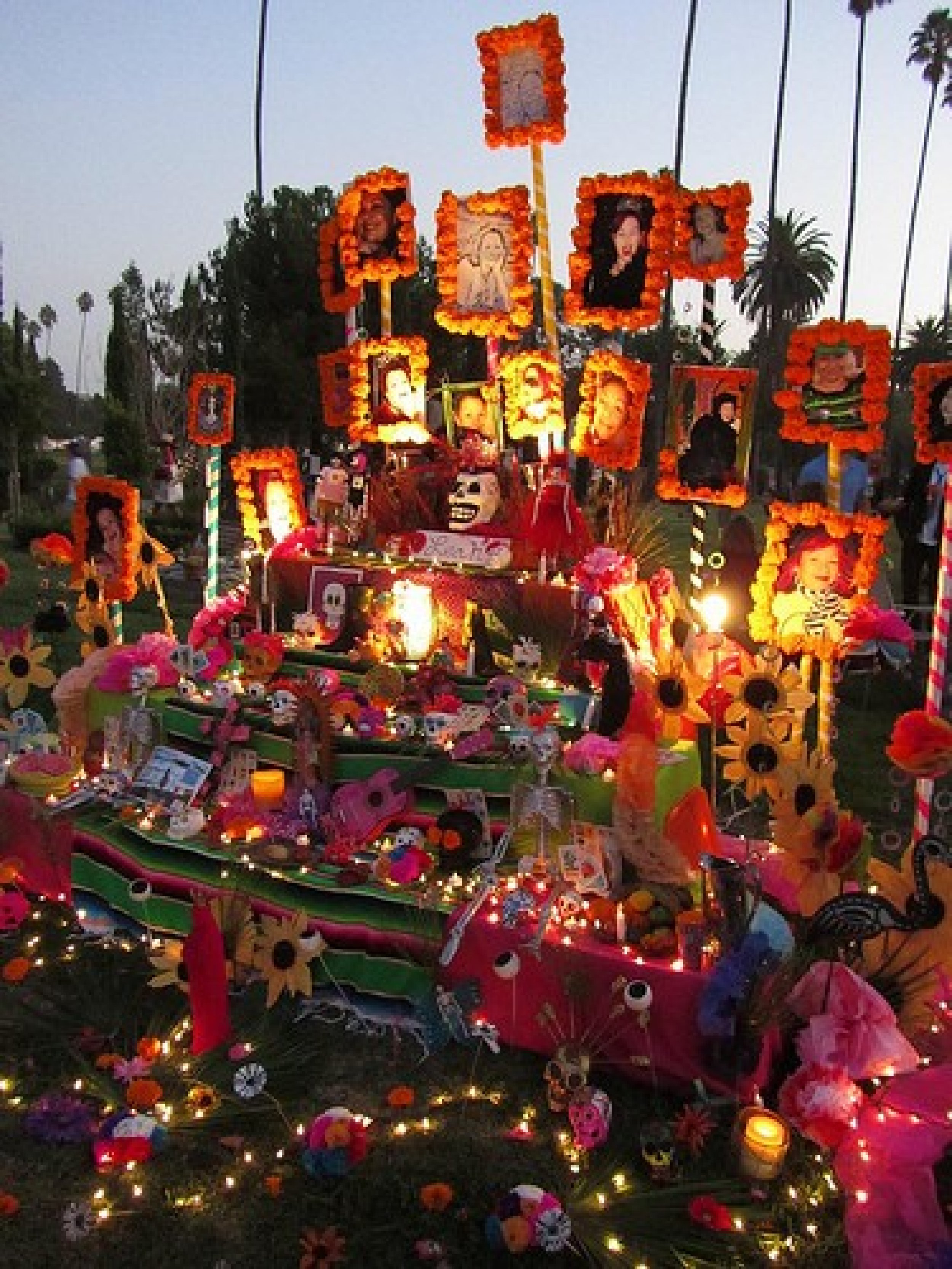
Dia de los Muertos, or Day of the Dead, is a profound Mexican holiday that honors deceased loved ones through vibrant altars, traditional foods, and community gatherings. Far from being a "Mexican Halloween," it is a complex synthesis of indigenous Mesoamerican beliefs and Spanish Catholic traditions, emphasizing the continued relationship between the living and the dead.
To understand this holiday as it stands in 2026, one must look beyond the colorful sugar skulls and face paint to the spiritual and historical pillars that support the celebration. For centuries, the tradition has evolved while maintaining a core philosophy: that death is not the end of existence, but a stage in a larger cycle, and that the memory of the ancestors must be kept alive through active celebration.
Here are three fundamental facts that define the essence of Dia de los Muertos.
1. It is a Synthesis of Ancient Mesoamerican and European Catholic Traditions
The most significant fact about Dia de los Muertos is its origin as a hybrid celebration. While many observers associate the holiday with the Catholic dates of All Saints' Day (November 1) and All Souls' Day (November 2), the roots of the festival reach back over 3,000 years to the indigenous civilizations of Mexico, most notably the Aztecs (Mexica), Toltecs, and Nahua people.
The Indigenous Foundation
In pre-Hispanic Mexico, death was viewed as a natural phase of life’s continuum. The Aztecs did not view the underworld as a place of punishment, but as a destination called Mictlán. To the Aztecs, life and death were complementary opposites, much like day and night. They held a month-long festival in the summer dedicated to the goddess Mictecacihuatl, the "Lady of the Dead," who presided over the bones of the deceased.
When Spanish conquistadors arrived in the 16th century, they viewed these indigenous rituals through the lens of their own Catholic faith. Finding it impossible to eradicate the deeply ingrained native traditions, the Spanish clergy attempted to "Christianize" the festival by moving it to coincide with the Catholic liturgical calendar. This resulted in the modern timeframe of October 31 through November 2.
The Colonial Transformation
The convergence of these two cultures created the unique iconography we see today. The Catholic influence brought the use of candles, crucifixes, and the concept of "All Souls," while the indigenous influence maintained the use of cempasúchil (marigolds), the ritual of the ofrenda (offering), and the belief that the spirits of the dead actually return to earth to visit their families.
As of 2026, UNESCO continues to recognize this cultural synthesis as an Intangible Cultural Heritage of Humanity. This designation, first granted in 2008, highlights that the holiday’s value lies not in the objects themselves, but in the living expression of a community's history and identity.
2. It is a Celebration of Life and Memory, Not a Day of Mourning
A common misconception among those unfamiliar with Mexican culture is that Dia de los Muertos is a somber or "spooky" holiday. In reality, it is a joyous and festive occasion. The fundamental philosophy of the holiday is built upon the "Three Deaths," a concept often cited in Mexican oral tradition:
- The First Death: When the physical body ceases to function.
- The Second Death: When the body is lowered into the earth and returned to the soil.
- The Third Death: The most tragic death, which occurs when there is no one left alive to remember the person.
The Rejection of Sadness
Because the holiday is designed to prevent the "Third Death," it is characterized by storytelling, music, and laughter. Families gather to share "anecdotes"—funny or touching stories about the deceased—rather than weeping over their loss. The belief is that the spirits would be insulted by mourning or sadness; therefore, the living throw a party to welcome them back.
This perspective shifts the focus from the finality of death to the endurance of love. By preparing the favorite foods of the deceased and playing their favorite songs, the living reaffirm that the bond of family transcends the physical realm. In many Mexican towns, this involves cleaning and decorating gravesites with flowers and sitting with the deceased through the night, creating a bridge between the world of the living and the world of the dead.
Symbols of Joy
The "Calavera" (skull) is the primary symbol of this celebratory spirit. Unlike the Western association of skulls with mortality and fear, the sugar skulls (calaveras de azúcar) and skeletal figurines (catrinas) used during Dia de los Muertos are often depicted in festive clothing, dancing, or playing instruments. They serve as a satirical reminder that in death, everyone—regardless of wealth or status—is equal. This tradition was popularized by the artist José Guadalupe Posada and later muralist Diego Rivera, whose "La Calavera Catrina" has become the holiday’s most recognizable icon.
3. The "Ofrenda" is a Sacred Tool for Spiritual Navigation
The third essential fact is that the ofrenda, or altar, is not a decorative display but a functional spiritual tool. Its purpose is to guide the souls of the departed back to the world of the living for a brief visit. Every element placed on an ofrenda serves a specific technical and symbolic purpose intended to assist the spirit on its journey.
The Four Elements of Nature
A traditional ofrenda is carefully constructed to represent the four elements of nature, ensuring a balanced welcome for the returning soul:
- Earth: Represented by food, particularly the Pan de Muerto (Bread of the Dead) and seasonal fruits. The aroma and substance of the food are believed to nourish the spirits after their long journey from the afterlife.
- Wind: Represented by Papel Picado (chiseled paper). These brightly colored, perforated paper banners flutter in the breeze, signaling the arrival of the spirits.
- Water: A pitcher of water is placed on the altar to quench the thirst of the traveling souls.
- Fire: Represented by candles. Usually, one candle is lit for each remembered soul, and an extra one is often lit for the "forgotten" soul. The light serves as a beacon to guide the spirits to the altar.
The Role of the Cempasúchil
The Cempasúchil (Mexican Marigold) is perhaps the most vital component of the ofrenda. Known as the "flower of four hundred lives," its bright orange color and pungent scent are believed to be the only things the dead can perceive clearly. Families create pathways of marigold petals leading from the street or the cemetery directly to the altar, essentially "paving the way" with color and scent so the souls do not get lost.
Levels and Structure
Altars are typically built with multiple levels, which have specific meanings. A two-level altar represents the division between earth and sky. A three-level altar represents the earth, the sky, and the underworld (or the Holy Trinity in a Catholic context). The most elaborate altars have seven levels, representing the seven steps a soul must take to reach eternal rest in certain indigenous traditions.
| Element | Symbolic Meaning | Physical Representation |
|---|---|---|
| Cempasúchil | Guides the spirits with color/scent | Orange Marigolds |
| Salt | Purification and preservation | Small bowl of salt |
| Copal | Clears the air of evil spirits | Incense/Resin |
| Photographs | Identifies the intended guests | Framed pictures |
| Pan de Muerto | The "Body of the Dead" / Generosity | Sugared bread with bone shapes |
| Sugar Skulls | The sweetness of life and presence of death | Molded sugar figurines |
Comparing Dia de los Muertos and Halloween
While both holidays occur at the end of October and beginning of November and share themes of death, they are fundamentally different in their intent and execution. As the global popularity of Dia de los Muertos has grown toward 2026, distinguishing these two has become a priority for cultural preservationists.
| Feature | Halloween | Dia de los Muertos |
|---|---|---|
| Primary Theme | Fear, pranks, horror, fantasy | Love, respect, remembrance, family |
| Cultural Root | Celtic (Samhain) / European | Indigenous Mexican / Spanish Catholic |
| Common Colors | Black and Orange | Vibrant colors (Pink, Orange, Yellow) |
| Tone | Spooky and dark | Joyful and commemorative |
| Main Symbol | Jack-o'-lanterns, ghosts, monsters | Calaveras (Skulls) and Ofrendas |
| Purpose | To ward off evil spirits | To welcome back the spirits of loved ones |
The Modern Context and Global Recognition in 2026
By 2026, Dia de los Muertos has transitioned from a localized Mexican tradition into a global cultural phenomenon. This globalization has brought both benefits and challenges. On one hand, the holiday has become a powerful tool for cultural pride and education. On the other hand, the commercialization of the holiday—often driven by films like Disney’s Coco or the James Bond film Spectre—has led to concerns about cultural appropriation and the loss of the holiday's spiritual depth.
However, in the heart of Mexico—in places like Pátzcuaro, Janitzio, and Oaxaca—the core traditions remain intact. The "parade" seen in many movies is actually a modern addition to Mexico City's celebrations, whereas the true tradition remains centered on the family home and the local cemetery.
As of 2026, the Mexican government and local communities have implemented various programs to ensure that the commercial success of the holiday does not overshadow its sacred roots. This includes supporting local artisans who create traditional pottery, papel picado, and sugar art, ensuring that the economic benefits of the holiday's popularity return to the communities that have kept the tradition alive for millennia.
Common Misconceptions to Avoid
To truly respect the tradition, one must navigate several common myths:
- It is not "Worshiping Death": Participants do not worship a personification of death. Instead, they acknowledge death as a natural part of the human experience.
- It is not a "Scary" Holiday: Children are involved from a young age. They learn that death is not something to be feared, but something to be understood as a transition.
- The skulls are not "Gory": The skulls are art pieces. They are often decorated with flowers, sequins, and the name of the deceased (or even a living friend as a playful gift) written on the forehead.
Frequently Asked Questions
Is Dia de los Muertos celebrated the same way everywhere in Mexico?
No, the traditions vary significantly by region. In rural Michoacán, the focus is often on quiet, candlelit vigils in cemeteries. In Mexico City, you will find massive public installations and parades. In the Yucatán Peninsula, the celebration is known as Hanal Pixán ("food for the souls") and includes specific regional dishes like Mucbipollo (a large corn tamale).
Can people who are not Mexican celebrate Dia de los Muertos?
Yes, provided it is done with respect and understanding. The holiday’s message of remembering ancestors is universal. Many people outside of Mexico now create their own ofrendas to honor their own deceased family members, adopting the symbolism of the elements while maintaining their own personal cultural heritage.
Why do people paint their faces like skeletons?
The "calavera" face painting is a way to bridge the gap between the living and the dead. By painting themselves as skeletons, the living are essentially saying, "We are all the same underneath." It is a performative act of solidarity with those who have passed away and a way to participate in the festive atmosphere.
What is Pan de Muerto and why is it eaten?
Pan de Muerto is a soft, sweet bread topped with sugar. The shapes on top of the bread usually represent human bones and a skull, often arranged in a circle to represent the cycle of life and death. Eating the bread is a way for the living to "commune" with the spirits who are believed to consume the "essence" of the food.
When exactly does the holiday start and end?
In 2026, as in every year, the holiday officially begins at midnight on October 31. November 1 is typically Día de los Inocentes (Day of the Innocents), dedicated to deceased children. November 2 is the actual Día de los Muertos, dedicated to deceased adults. However, preparations often begin weeks in advance.
Next Steps for Cultural Engagement
If you wish to honor this tradition, the best next step is to research your own family history. You do not need an elaborate altar to start; a simple photograph of a loved one, a single candle, and a story shared with your family can capture the true spirit of Dia de los Muertos. By focusing on the "First Fact"—the importance of memory—you ensure that those who came before you are never truly gone.
For those visiting Mexico during this time, prioritize visiting community-led events and purchasing decorations from local markets (mercados) rather than mass-produced retail chains. Supporting the artisans who maintain the traditional techniques of sugar-sculpting and paper-cutting is vital for the continued survival of this ancient celebration.