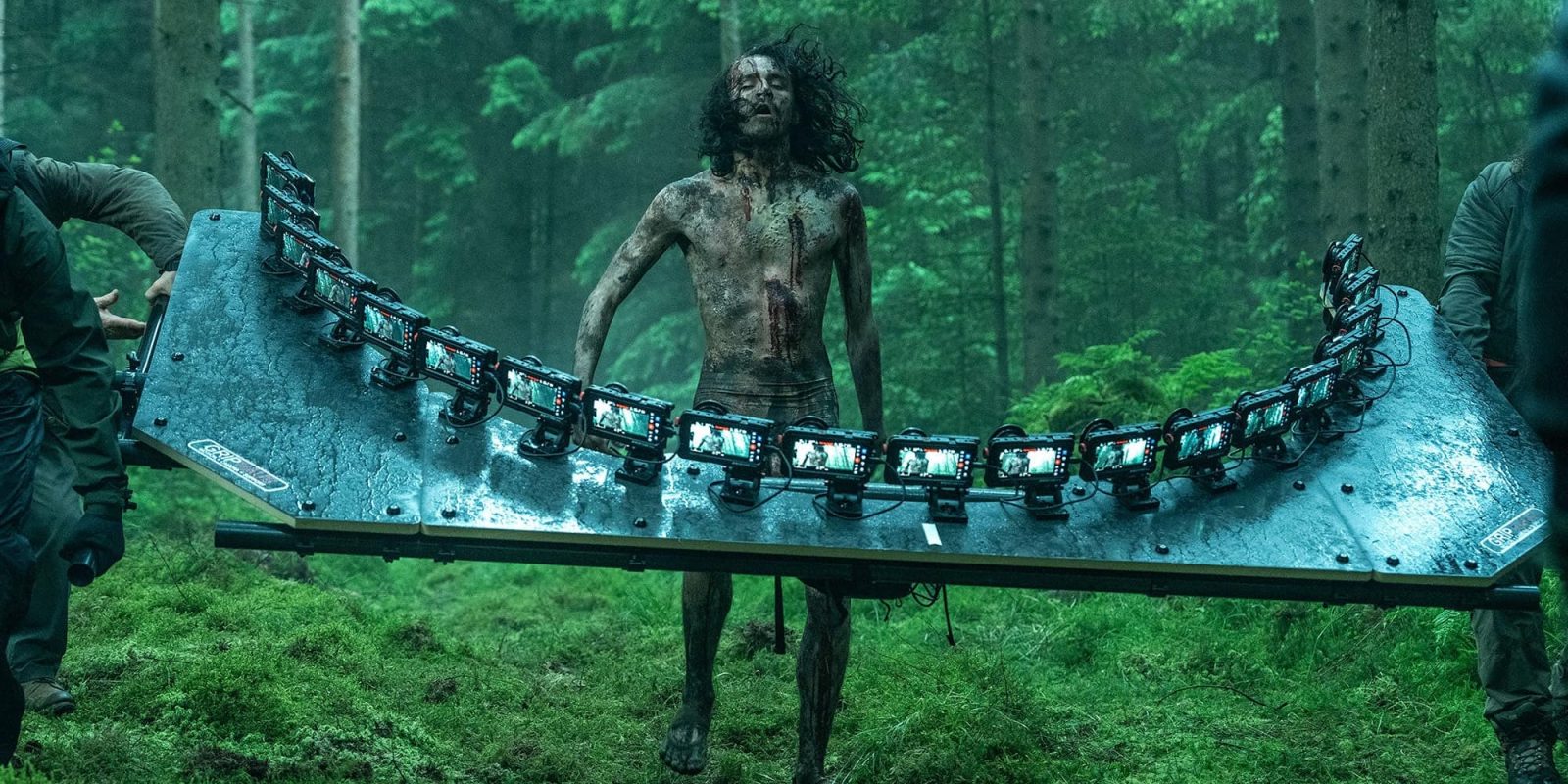
The feature film 28 Years Later, directed by Danny Boyle and captured by cinematographer Anthony Dod Mantle, utilized the iPhone 15 Pro Max as its primary camera system. To meet Hollywood standards, the "rig" integrated the smartphone into a complex ecosystem of professional Panavision lenses, depth-of-field (DOF) adapters, and external recording modules, effectively turning the consumer device into a cinema-grade workstation.
When news broke that a $75 million blockbuster was being filmed on a smartphone, the industry took notice. However, calling the setup simply an "iPhone" is a significant understatement. The "28 Years Later iPhone camera rig" represents a peak in hybrid cinematography, where the portability and unique sensor characteristics of mobile technology are married to the elite glass of traditional filmmaking. This transition is particularly poignant for the franchise; the original 28 Days Later (2002) was famously shot on the Canon XL-1, a standard-definition digital video camera, to achieve a specific, gritty aesthetic. As of 2026, 28 Years Later stands as the definitive proof of concept for high-end mobile cinematography in the mid-2020s.
The Evolutionary Context: From MiniDV to iPhone 15 Pro Max
To understand the rig used in the new film, one must understand the history of the franchise’s visual language. In 2002, Danny Boyle and Anthony Dod Mantle chose the Canon XL-1 because it allowed them to shoot quickly in the deserted streets of London with minimal setup time. The low-resolution, "smeared" look of MiniDV tape became synonymous with the frantic energy of the "infected" genre.
Two decades later, the choice to use the iPhone 15 Pro Max for 28 Years Later is a spiritual successor to that decision. While the iPhone is capable of pristine 4K imagery, it still possesses a different sensor readout and "texture" compared to the industry-standard Arri Alexa or Sony Venice. The rig designed for this production was intended to harness the iPhone’s unique digital footprint while providing the manual control and optical depth required for a theatrical release.
Anatomy of the 28 Years Later Camera Rig
The rig seen on the sets of 28 Years Later was a massive exoskeleton that dwarfed the actual phone. It was designed to solve three primary limitations of smartphone filmmaking: lens limitation, storage bottlenecks, and ergonomic instability.
1. The Lens System and DOF Adapters
The most striking element of the rig was the use of full-sized professional cinema lenses, specifically from Panavision. Because an iPhone sensor is tiny compared to a 35mm film frame, you cannot simply "mount" a cinema lens and expect a cinematic shallow depth of field.
To bridge this gap, the production utilized Depth of Field (DOF) Adapters. A DOF adapter works by projecting the image from the cinema lens onto a piece of ground glass inside the adapter. The iPhone then "films" that ground glass. This allows the filmmaker to use the focus characteristics, bokeh, and distortion of legendary Panavision glass while recording the data onto the iPhone's sensor. The Beastgrip DOF Adapter MK2 is the most prominent commercial version of this technology, and while custom modifications were likely made for a production of this scale, the principle remains the same.
2. The Cage and Support Structure
The "cage" is the metal frame that surrounds the phone. For 28 Years Later, the cage served as the mounting point for:
- Follow Focus Systems: Allowing the focus puller to manually adjust the Panavision lens.
- Matte Boxes: Used for holding ND (Neutral Density) filters to control light exposure without changing the shutter speed.
- External Monitors: So the director and DP could see a large-scale representation of the frame.
- Battery Plates: Utilizing V-mount or Gold-mount professional batteries to power the phone and all accessories for an entire shooting day.
3. External Recording and Data Management
Filming in 4K ProRes HQ—the standard for this production—generates massive amounts of data. The iPhone 15 Pro Max's transition to USB-C with 10Gbps speeds was the "missing link" that made this movie possible. The rig included external SSDs (likely Samsung T7 or SanDisk Professional models) mounted directly to the cage. This allowed the camera team to swap drives just like they would swap film magazines or SxS cards on a traditional digital cinema camera.
Technical Specifications: The 2024-2025 Production Standard
The following table compares the technical foundation of the original 28 Days Later camera with the setup used for 28 Years Later.
| Feature | 28 Days Later (2002) | 28 Years Later (2025/2026) |
|---|---|---|
| Primary Camera | Canon XL-1 (MiniDV) | iPhone 15 Pro Max |
| Resolution | 720 x 480 (SD) | 3840 x 2160 (4K) |
| Recording Format | DV Tape (Compressed) | Apple Log / ProRes 422 HQ |
| Primary Glass | Integrated 16x Zoom | Panavision Cinema Primes |
| Sensor Size | 1/3-inch 3CCD | 1/1.28-inch (Main Sensor) |
| Data Interface | FireWire (IEEE 1394) | USB-C 3.2 Gen 2 |
| Aesthetic Goal | Gritty, News-like, Lo-Fi | Professional Digital with Mobile Texture |
Why Use an iPhone for a $75 Million Film?
The primary question surrounding the "28 Years Later iPhone camera rig" is why. If the budget allows for an Arri Alexa 65, why use a consumer device?
The "Dogme 95" Influence
Anthony Dod Mantle was a key figure in the Dogme 95 movement, which emphasized raw, handheld, and naturalistic filmmaking. The iPhone allows for a level of physical intimacy that a 40-pound cinema camera cannot match. The rig, while large, is still more maneuverable in tight spaces, allowing for the kinetic, "run-and-gun" style that defines the 28 franchise.
Log Encoding and Color Grading
The introduction of Apple Log changed the game for professional colorists. Log (logarithmic) recording preserves a much higher dynamic range in the highlights and shadows. When combined with the 10-bit color depth of the iPhone 15 Pro Max, the footage can be manipulated in post-production (using tools like DaVinci Resolve) to match the look of traditional film stocks. This ensures the "iPhone movie" doesn't look like a "home movie."
Discreet Shooting
Large camera crews often attract crowds and require extensive permits. An iPhone-based rig, even a heavily modified one, has a smaller footprint. This allowed the production to film in public spaces with a degree of speed and invisibility that helped maintain the "empty world" atmosphere of the post-apocalyptic setting.
Challenges and Troubleshooting the Rig
Operating an iPhone on a professional set is not without its hurdles. The technical crew had to account for several factors that traditional cameras handle more robustly.
- Heat Management: Recording 4K ProRes for hours on end generates significant heat. The professional rigs used in 28 Years Later often featured small, silent cooling fans or heat sinks attached to the back of the phone to prevent thermal throttling, which would otherwise drop frames or shut the device down.
- Variable Frame Rates: Smartphones often struggle with "shutter sync" when filming under certain types of artificial lighting (flicker). The crew likely used the Blackmagic Camera App rather than the native iOS camera app to lock the shutter angle to 180 degrees, ensuring consistent motion blur.
- Focus Calibration: Because the iPhone uses "computational focus" and autofocus by default, the rig had to be set to a fixed focal point on the ground glass of the DOF adapter. Any slight shift in the phone's position within the cage would ruin the focus of the entire shot.
The Role of the Blackmagic Camera App
The software is just as important as the hardware in the 28 Years Later rig. The Blackmagic Camera App provided the crew with a professional interface, including:
- False Color and Zebras: To monitor exposure precisely and prevent highlights from clipping.
- Focus Peaking: To ensure the iPhone was perfectly sharp on the DOF adapter's ground glass.
- Timecode Sync: Crucial for multi-camera shoots and syncing audio recorded on external professional recorders.
- Fixed Frame Rates: Ensuring the footage was a true 23.976 fps, essential for theatrical synchronization.
Practical Guidance: Building a "28 Years Later" Style Rig
For independent filmmakers looking to replicate the results of the 28 Years Later production, the barrier to entry has never been lower, though it remains a technical challenge.
- Start with the Phone: Use an iPhone 15 Pro or later to ensure you have Apple Log and USB-C recording capabilities.
- Select a Cage: Brands like Beastgrip, SmallRig, or Tilta offer cages that allow for the attachment of handles, SSDs, and microphones.
- The Optics: To get the look of the film, you need a DOF adapter (like the Beastgrip DOF Adapter MK2) and a manual SLR lens (Canon EF or Nikon F mount). This is what creates the organic "depth" seen in the film.
- External Power: Use a power bank with Power Delivery (PD) to keep the phone charged via the USB-C port while simultaneously recording to an SSD using a high-speed hub.
- Software Control: Always use a manual control app. The native camera app is insufficient for professional work as it adjusts exposure and focus automatically, which creates "breathing" and inconsistent shots.
Frequently Asked Questions
Did they really use the iPhone for the entire movie?
While the iPhone 15 Pro Max was the primary "A-camera" for the production, it is common in Hollywood to use "specialty" cameras for specific shots (such as drones or underwater housing). However, the vast majority of the principal photography was indeed captured on the iPhone rig to maintain the specific aesthetic intended by Boyle and Mantle.
What lenses were used in the 28 Years Later iPhone rig?
Leaked set photos and industry reports indicate the use of Panavision lenses. These are the same high-end lenses used on traditional digital and film cameras, adapted to the iPhone via a complex depth-of-field adapter system.
How does the iPhone footage look on a massive IMAX screen?
Because the footage was shot in 4K Apple Log and ProRes 422 HQ, it contains enough data for high-quality upscaling. The "gritty" texture inherent in the small sensor actually works in the film's favor, providing a film-like grain that feels appropriate for the horror/thriller genre.
Is the iPhone 15 Pro Max rig better than a professional cinema camera?
"Better" is subjective. It is not "better" in terms of raw dynamic range or low-light performance compared to an Arri Alexa. However, it was the "better" choice for the specific creative vision of 28 Years Later, offering a blend of mobility, unique digital texture, and the ability to use elite optics in a small form factor.
Recommendations for Filmmakers
If you are aiming to achieve the look of 28 Years Later, focus less on the phone and more on the lighting and glass. The iPhone is merely the digital back (the "film stock"). The way you shape light and the quality of the lens you place in front of the sensor will determine 90% of the final image quality. Invest in a solid DOF adapter and vintage manual lenses to break away from the "over-sharpened" look typical of most smartphone videos.
As we move through 2026, the legacy of this rig is clear: the gap between "consumer" and "professional" is no longer defined by the camera body, but by the expertise of the rigging and the intentionality of the cinematography.