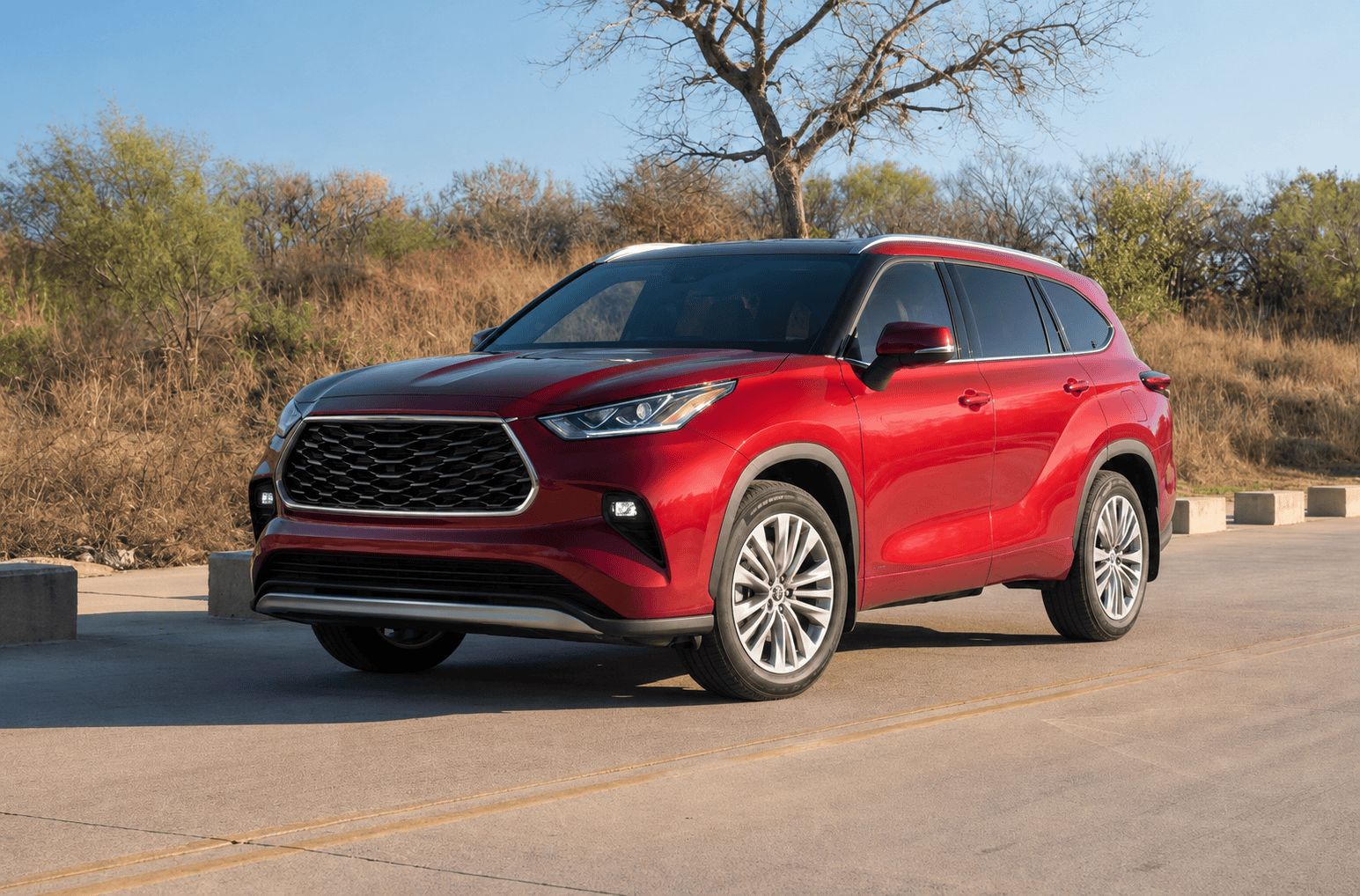
The 2020 Toyota Highlander reviews generally praise the vehicle's complete redesign, which introduced a more robust exterior styling, an upgraded interior cabin, improved ride comfort, and standard Toyota Safety Sense 2.0 across all trim levels. Automotive critics and consumer reports note that while the third-row seating remains tight for adults, the midsize SUV delivers exceptional everyday usability, strong safety scores, and a choice between a refined V6 engine and a highly efficient hybrid powertrain.
When evaluating midsize three-row crossovers, automotive enthusiasts and family vehicle buyers frequently return to the fourth-generation redesign introduced for the 2020 model year. This overhaul marked a significant departure from the softer, more rounded lines of its predecessor, shifting toward a bolder, more muscular aesthetic coupled with a transition to the Toyota New Global Architecture (TNGA-K) platform. For prospective buyers evaluating used models or researching historical automotive assessments, understanding how these expert and consumer reviews translate into real-world ownership experience is essential. This comprehensive analysis synthesizes major automotive evaluations, safety metrics, mechanical specifications, and practical ownership considerations to help you determine if the 2020 Highlander meets your driving needs.
Identity, Scope, and the 2020 Redesign
The 2020 Toyota Highlander represented a pivotal generational shift for Toyota’s popular midsize crossover. Built upon the TNGA-K platform—which also underpins the Camry and Avalon—the vehicle gained structural rigidity, a lower center of gravity, and enhanced driving dynamics compared to older model years.
Automotive critics from major publications such as Car and Driver, MotorTrend, and Edmunds heavily scrutinized this generational leap. The consensus across major reviews highlighted three primary areas of improvement:
- Chassis Rigidity: The new platform reduced body roll during cornering and minimized harsh impacts from broken pavement.
- Cabin Insulation: Acoustic windshield glass and extensive sound deadening created a notably quieter cabin environment at highway speeds.
- Styling Evolution: Sweeping character lines, a larger trapezoidal grille, and slimmer LED headlights gave the vehicle a more commanding, truck-like stance without sacrificing its family-oriented identity.
Trim Levels and Pricing Structure
Toyota offered the 2020 Highlander in a comprehensive lineup of trim levels, ranging from the fleet-friendly L to the luxury-leaning Platinum. Each grade built progressively upon the previous one, offering varying degrees of interior appointments, wheel sizes, and drivetrain configurations.
| Trim Level | Drivetrain Options | Notable Standard Features | Target Buyer Profile |
|---|---|---|---|
| L | FWD / AWD | 8-inch touchscreen, LED headlights, Toyota Safety Sense 2.0 | Budget-conscious families and fleets |
| LE | FWD / AWD | Power liftgate, blind-spot monitoring, leather-wrapped steering wheel | Value seekers wanting core safety tech |
| XLE | FWD / AWD | SofTex synthetic leather, heated front seats, sunroof, second-row captain's chairs | Mainstream families prioritizing comfort |
| Limited | FWD / AWD | Leather seating, ventilated front seats, premium JBL audio, hands-free liftgate | Buyers looking for near-luxury amenities |
| Platinum | FWD / AWD | Panoramic sunroof, 12.3-inch touchscreen, digital rearview mirror, 20-inch wheels | Enthusiasts and families wanting maximum features |
(Note: Pricing for these models varies significantly based on current used-car market conditions, mileage, condition, and geographic location. Buyers should consult trusted valuation guides like Kelley Blue Book or Edmunds for up-to-date regional pricing.)
Powertrain Performance and Fuel Economy
Reviewers evaluated two distinct powertrains for the 2020 model year: a traditional gasoline V6 and a four-cylinder hybrid system.
3.5-Liter V6 Engine
The workhorse of the lineup is a 3.5-liter naturally aspirated V6 engine producing 295 horsepower and 263 lb-ft of torque, paired with an 8-speed automatic transmission. Reviewers praised this engine for its smooth power delivery and linear acceleration.
- Performance: It provides ample passing power on highways and allows for a maximum towing capacity of up to 5,000 pounds when properly equipped.
- Fuel Economy: EPA estimates sat at roughly 21 mpg city / 29 mpg highway for front-wheel-drive models, and 20/27 mpg for all-wheel-drive variants.
2.5-Liter Hybrid Powertrain
The hybrid variant combined a 2.5-liter four-cylinder engine with electric motors to output a net 243 horsepower, utilizing an electronically controlled continuously variable transmission (e-CVT).
- Performance: While acceleration is more leisurely than the V6, reviewers noted that electric torque fills in low-end gaps smoothly around town.
- Fuel Economy: This was the standout metric in reviews, achieving an EPA-estimated 36 mpg combined for front-wheel-drive configurations and 35 mpg for all-wheel-drive models—a massive leap in efficiency for a three-row crossover.
Interior Comfort, Infotainment, and Cargo Space
Inside the cabin, the 2020 Highlander received mixed reviews regarding passenger volume versus its competitors, though material quality won universal praise.
Seating and Ergonomics
Lower trims (L, LE, XLE) accommodate up to eight passengers with a second-row bench seat, while higher trims typically feature second-row captain's chairs, reducing capacity to seven.
- Front and Second Rows: Reviewers consistently highlighted the supportive seating, ample legroom, and thoughtful storage cubbies built into the dashboard.
- Third Row: This remains a common pain point in professional reviews. The third row features a low-mounted cushion that forces adult passengers into a knees-up posture, making it best suited for children on longer trips.
Infotainment Technology
Base models feature an 8-inch touchscreen interface compatible with Apple CarPlay, Android Auto, and Amazon Alexa. Higher trims, particularly the Platinum, upgrade to a striking 12.3-inch touchscreen display. While critics praised the inclusion of physical volume and tuning knobs alongside the touchscreens, some noted that Toyota’s native software interface feels utilitarian compared to luxury rivals.
Cargo Capacity
With all rear seats folded flat, the 2020 Highlander provides 84.3 cubic feet of cargo space. Behind the second row, owners get 48.4 cubic feet, while utilizing all three rows limits cargo room to 16.0 cubic feet behind the rearmost seats.
Safety Ratings and Driver Assistance
Safety is one area where 2020 Highlander reviews are overwhelmingly positive. Toyota made its Toyota Safety Sense 2.0 (TSS 2.0) suite standard across every single trim level.
Key safety features include:
- Pre-Collision System with Pedestrian Detection
- Lane Tracing Assist and Lane Departure Alert with Steering Assist
- Full-Speed Range Dynamic Radar Cruise Control
- Road Sign Assist
- Automatic High Beams
Third-party testing reflected these robust engineering choices. The Insurance Institute for Highway Safety (IIHS) named the 2020 Highlander a Top Safety Pick+, earning the highest possible rating of "Good" in all crashworthiness evaluations. Similarly, the National Highway Traffic Safety Administration (NHTSA) awarded the vehicle an overall 5-star safety rating.
Pros and Cons Based on Expert Evaluations
Synthesizing professional automotive critiques reveals clear advantages and disadvantages for prospective buyers to consider.
Advantages
- Exceptional Safety Scores: Standard TSS 2.0 package and top-tier crash test results from the IIHS and NHTSA.
- Impressive Hybrid Efficiency: Class-leading fuel economy for hybrid models without sacrificing everyday utility.
- Quiet and Composed Ride: The TNGA-K platform successfully isolates cabin occupants from road imperfections and wind noise.
- High Resale Value: Toyota's reputation for long-term reliability supports strong residual values in the secondary market.
Disadvantages
- Cramped Third Row: Adult passengers will find rear-most seating tight on extended journeys compared to larger competitors like the Volkswagen Atlas or Chevrolet Traverse.
- Sluggish Hybrid Acceleration: The four-cylinder hybrid powertrain feels strained when passing at highway speeds compared to the punchy V6.
- Infotainment Graphics: Native menus and graphics appear dated when benchmarked against contemporary rivals in the tech space.
Frequently Asked Questions
What are the main engine choices for the 2020 Toyota Highlander?
The 2020 Highlander offers a 3.5-liter V6 engine producing 295 horsepower with an 8-speed automatic transmission, as well as a 2.5-liter four-cylinder hybrid system producing 243 net horsepower with an e-CVT. Both powertrains are available in front-wheel drive or all-wheel drive.
Is the third row in the 2020 Highlander suitable for adults?
Reviewers generally consider the third row too cramped for adults on long drives due to limited legroom and a low seat cushion. It is best reserved for children or occasional short trips with adults.
What fuel economy does the 2020 Highlander Hybrid achieve?
The 2020 Highlander Hybrid achieves an EPA-estimated 36 mpg combined for front-wheel-drive models and 35 mpg combined for all-wheel-drive models, making it one of the most fuel-efficient three-row SUVs in its class.
Does the 2020 Highlander come with Apple CarPlay and Android Auto?
Yes, smartphone integration via Apple CarPlay, Android Auto, and Amazon Alexa comes standard across all trim levels, housed on either an 8-inch touchscreen or the optional 12.3-inch display.
What safety ratings did the 2020 Highlander receive?
The vehicle earned a 5-star overall safety rating from the NHTSA and was named a Top Safety Pick+ by the IIHS, aided by the standard inclusion of Toyota Safety Sense 2.0 driver-assistance technologies.
Conclusion and Buying Recommendation
The 2020 Toyota Highlander reviews confirm that this midsize crossover represents a well-rounded, safe, and efficient choice for families. If you prioritize fuel economy and lower ownership costs, the Hybrid variant delivers unmatched efficiency in the three-row segment, provided you test-drive it to ensure the acceleration meets your preferences. For traditional power and frequent towing needs, the V6 engine remains the preferred choice. Before finalizing a purchase, thoroughly inspect service records, verify the condition of the hybrid battery components if applicable, and test-fit all passengers in the third row to ensure the spatial layout aligns with your family's daily routine.