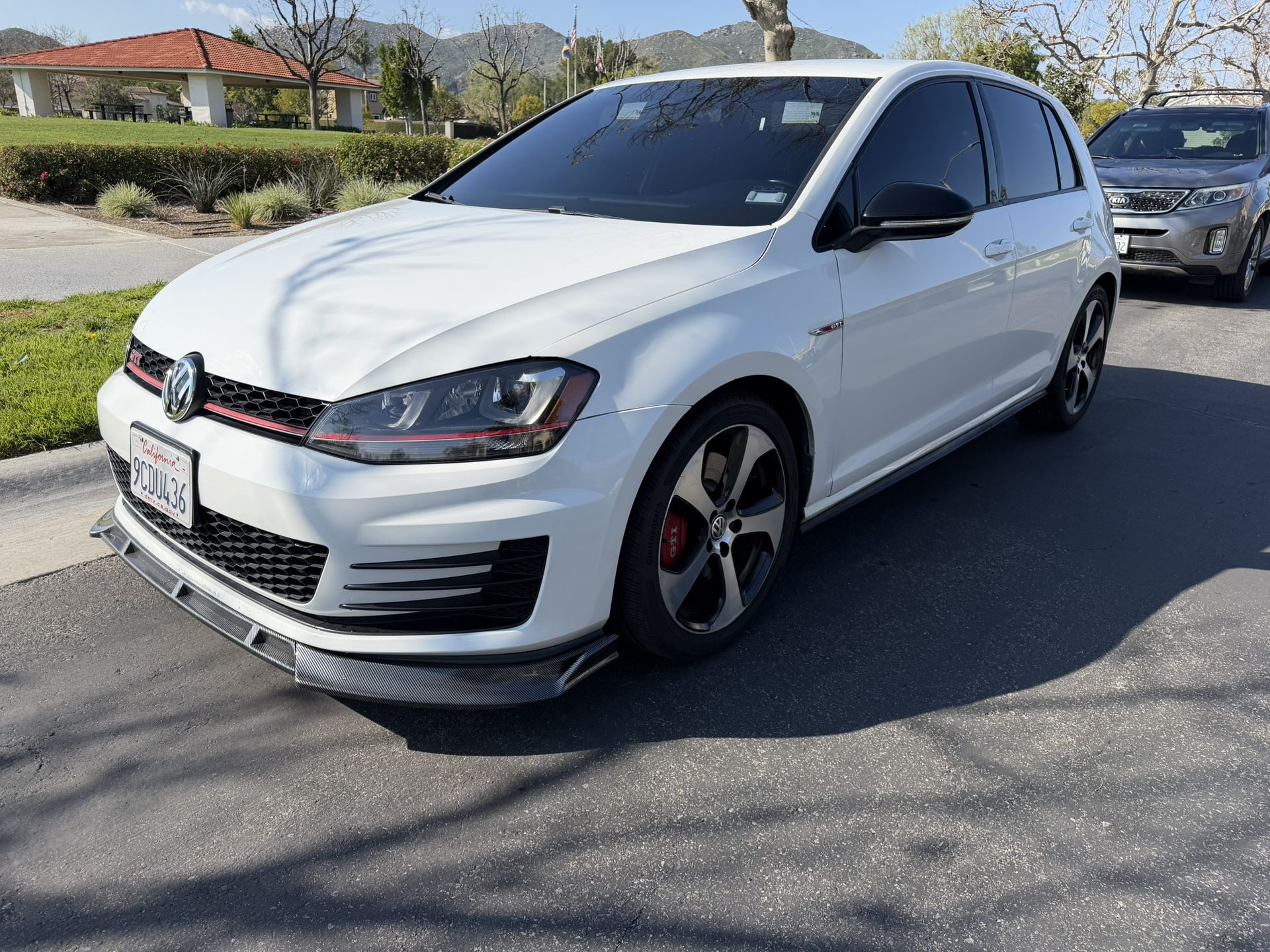
The 2017 Volkswagen Golf GTI accelerates from 0 to 60 mph in 5.7 to 6.1 seconds, depending on the transmission, trim level, and tire configuration. Models equipped with the 6-speed DSG dual-clutch automatic transmission and launch control achieve the fastest sprint, while 6-speed manual versions typically complete the acceleration run in 5.9 to 6.3 seconds.
2017 Volkswagen Golf GTI 0–60 Times by Trim and Transmission
The seventh-generation Volkswagen Golf GTI (MK7) remains a benchmark in the modern hot hatch market. For the 2017 model year, Volkswagen adjusted trim packages and hardware availability, making high-performance options more accessible across the lineup. Understanding how individual trims and transmission choices impact 0–60 mph acceleration requires examining both factory power ratings and drivetrain mechanics.
0-60 MPH Acceleration Range (Stock 2017 Golf GTI)
- DSG Dual-Clutch (With Launch Control & VAQ LSD): 5.7 - 5.8s
- DSG Dual-Clutch (Standard Differential): 5.9 - 6.0s
- 6-Speed Manual (With VAQ LSD): 5.9 - 6.1s
- 6-Speed Manual (Standard Differential): 6.1 - 6.3s
Transmission Breakdown: DSG vs. Manual
The transmission choice plays the most significant role in dictating the 2017 GTI's 0–60 times.
- 6-Speed DSG Dual-Clutch Automatic (DQ250): The wet-clutch DSG transmission utilizes dual input shafts, allowing the next gear to pre-engage before a shift occurs. Upshifting takes less than 80 milliseconds, maintaining engine boost during full-throttle acceleration. Furthermore, the DSG includes an integrated factory Launch Control system. When engaged, Launch Control holds engine speed at approximately 3,000 RPM, pre-loads the transmission clutches, and optimizes wheel slip upon brake release. This results in consistent 0–60 mph times of 5.7 to 5.9 seconds under favorable road conditions.
- 6-Speed Manual (MQ350): The standard manual transmission offers greater driver engagement but introduces variables that slow straight-line acceleration. Human shift speed, pedal modulation, and wheelspin control on launch add fraction-of-a-second delays. Drivers must slip the clutch precisely to avoid either bogging down the engine or spinning the front tires uncontrollably. Tested manual 0–60 mph times typically range between 5.9 and 6.3 seconds.
Power Variations: Standard vs. Performance Package Trims
In 2017, Volkswagen offered four main trims in the North American market: S, Sport, SE, and Autobahn. Power outputs differed depending on whether the vehicle included the factory Performance Package hardware:
- Standard S Trim (210 Horsepower): The base S trim delivers 210 horsepower at 4,500 RPM and 258 lb-ft of torque starting at 1,500 RPM. It uses a conventional open front differential and standard brakes.
- Sport, SE, and Autobahn Trims (220 Horsepower): For 2017, the newly introduced Sport trim made the Performance Package standard equipment. The SE and Autobahn trims also included the Performance Package as standard or widely equipped options. This package raises peak output to 220 horsepower (a 10-hp increase achieved via ECU engine tuning) while maintaining the same 258 lb-ft torque figure. More importantly, it adds the VAQ electronically controlled mechanical front differential lock and larger front/rear brake rotors sourced from the Golf R.
While a 10-horsepower gain sounds minor, the addition of the VAQ differential in Performance Package models drastically improves off-the-line traction. By reducing front wheelspin during hard launches, VAQ-equipped GTI models consistently cut 0.1 to 0.2 seconds off 0–60 mph sprint times compared to base open-differential models.
Key Engine Specifications and Drivetrain Architecture
Under the hood of every 2017 Golf GTI sits Volkswagen’s EA888 Gen 3 2.0-liter turbocharged inline 4-cylinder engine. This engine features an iron block, aluminum cylinder head, integrated exhaust manifold cooling, and double overhead camshafts with variable valve timing and variable valve lift (AVS) on the exhaust side.
2017 VW EA888 Gen 3 2.0T Engine
- Power: 210 hp / 220 hp @ 4,500–4,700 RPM
- Torque: 258 lb-ft @ 1,500–4,500 RPM
- Turbocharger: IHI IS20 Twin-Scroll
- Compression Ratio: 9.6:1
Torque Delivery and Acceleration Dynamics
Unlike naturally aspirated engines that require high RPMs to produce power, the EA888 Gen 3 generates its full 258 lb-ft of torque as low as 1,500 RPM and holds it flat through 4,500 RPM. This broad torque plateau provides instant responsiveness off the line. However, because all 258 lb-ft of torque is directed solely to the front wheels at low engine speeds, launching the vehicle effectively requires balancing throttle input against tire traction limits.
| Specification | Standard GTI Trim (S) | Performance Package Trims (Sport, SE, Autobahn) |
|---|---|---|
| Engine Code | EA888 Gen 3 2.0L TSI | EA888 Gen 3 2.0L TSI |
| Peak Horsepower | 210 hp @ 4,500 RPM | 220 hp @ 4,700 RPM |
| Peak Torque | 258 lb-ft @ 1,500–4,500 RPM | 258 lb-ft @ 1,500–4,500 RPM |
| Turbocharger | IHI IS20 Twin-Scroll | IHI IS20 Twin-Scroll |
| Front Differential | Open Differential | VAQ Electronically Controlled Mechanical Lock |
| Front Brake Rotors | 12.3-inch Vented | 13.4-inch Vented (Golf R Specification) |
| Curb Weight (Manual) | ~3,030 lbs | ~3,110 lbs |
| Curb Weight (DSG) | ~3,080 lbs | ~3,160 lbs |
Complete 2017 Golf GTI Performance Data Matrix
The following table summarizes real-world acceleration metrics across different configurations of the 2017 Golf GTI, derived from standard automotive instrumented tests under dry ambient conditions.
| Trim & Drivetrain Configuration | Engine Output | 0–60 MPH Time | 1/4-Mile Acceleration | Trap Speed | Top Speed (Governed) |
|---|---|---|---|---|---|
| 2017 GTI S (6-Speed Manual) | 210 hp / 258 lb-ft | 6.1 – 6.3 sec | 14.6 sec | 98 mph | 124 mph (155 mph unlocked) |
| 2017 GTI S (6-Speed DSG) | 210 hp / 258 lb-ft | 5.9 – 6.0 sec | 14.4 sec | 99 mph | 124 mph (155 mph unlocked) |
| 2017 GTI Sport / SE (6-Speed Manual) | 220 hp / 258 lb-ft | 5.9 – 6.1 sec | 14.4 sec | 100 mph | 124 mph (155 mph unlocked) |
| 2017 GTI Sport / SE / Autobahn (DSG) | 220 hp / 258 lb-ft | 5.7 – 5.8 sec | 14.2 sec | 100 mph | 124 mph (155 mph unlocked) |
| Tuned Stage 1 (DSG + Summer Tires) | ~300 hp / ~370 lb-ft | 4.8 – 5.1 sec | 13.1 sec | 107 mph | 165+ mph |
Critical Factors Influencing Real-World Acceleration
Achieving published 0–60 mph times in a front-wheel-drive vehicle requires managing physical dynamics during static-to-dynamic transition. Several factors significantly affect the acceleration times of the 2017 GTI.
1. Front-Wheel Drive Traction and Wheel Hop
Under heavy forward acceleration, weight shifts toward the rear axle, reducing downward force on the front steering and drive wheels. In front-wheel-drive cars, this weight transfer decreases available traction at the moment maximum engine torque is applied.
When front tire traction limit is exceeded, the rubber compliance in engine mounts and front control arm bushings causes violent axle oscillation known as wheel hop. Wheel hop causes the front tires to repeatedly grip and release the pavement, severe vibration, loss of forward momentum, and potential damage to axle joints.
2. The Role of the VAQ Electronic Differential
The VAQ differential (Vorderachs-Quersperre) included in the Sport, SE, and Autobahn trims is an electro-hydraulic, multi-plate clutch system mounted on the front right axle. Unlike brake-based electronic traction control that cuts power or squeezes brake pads to arrest spinning wheels, the VAQ system proactively transfers engine torque.
Traction Loss Event
- Standard Open Diff: Torques drops to losing tire; wheelspin increases.
- VAQ Limited-Slip Diff: Clutch pack engages up to 100%; redirects available torque to the outside wheel with traction.
If one front tire loses traction during launch, the VAQ clutch pack engages, diverting up to 100% of available torque to the front wheel with superior grip. This reduces wheelspin, eliminates differential slippage, and converts power into immediate forward velocity.
3. Tire Compound Selection
From the factory, many 2017 GTI models came equipped with standard all-season compound tires (such as Pirelli Cinturato P7 or Hankook Ventus S1 Noble2). These tires prioritize tread life and cold-weather versatility over mechanical grip.
- OEM All-Season Tires: Prolonged wheelspin on launch; typical 0–60 times range from 6.0 to 6.4 seconds.
- Max Performance Summer Tires: Installing dedicated summer compound tires (such as Michelin Pilot Sport 4S or Continental ExtremeContact Sport 02) dramatically lowers 0–60 times. The softer rubber compound increases traction coefficient, allowing the driver or launch control system to put down maximum torque with minimal slippage. Switching to high-performance summer tires alone can shave 0.2 to 0.4 seconds off a stock GTI's 0–60 sprint.
4. How to Correctly Use DSG Launch Control
To execute an optimal 0–60 run in a DSG-equipped 2017 GTI, follow Volkswagen's built-in Launch Control procedure:
- Bring the vehicle to a complete stop on a safe, dry, closed road or track surface.
- Ensure the engine and transmission have reached full operating temperature.
- Turn off traction control by pressing the ESC button once (activating ASR Off) or holding it to select ESC Sport.
- Shift the DSG gear selector into Sport (S) or Manual (M) mode.
- Firmly press and hold the brake pedal with your left foot.
- Fully depress the accelerator pedal to the floor with your right foot. The engine RPM will rise and hold steadily at approximately 3,000 RPM, and a launch notification may appear in the gauge cluster display.
- Within 2–3 seconds, quickly release the brake pedal while keeping the accelerator fully depressed. The transmission will modulate clutch engagement for maximum acceleration.
How the 2017 Golf GTI Compares to Contemporary Competitors
During the 2017 model year, the compact performance segment offered several distinct front-wheel-drive and all-wheel-drive alternatives. Here is how the MK7 Golf GTI compares in straight-line acceleration and launch characteristics.
0-60 MPH Performance Landscape (2017 Model Year)
- 2017 VW Golf R (AWD DSG): 4.5s
- 2017 Subaru WRX (AWD Man): 5.5s
- 2017 VW Golf GTI (FWD DSG): 5.7s
- 2017 Ford Focus ST (FWD): 6.2s
- 2017 Honda Civic Si (FWD): 6.4s
GTI vs. 2017 Ford Focus ST
The Ford Focus ST produced 252 horsepower and 270 lb-ft of torque from its 2.0L EcoBoost engine—higher output figures than the GTI on paper. However, the Focus ST was available exclusively with a 6-speed manual transmission and an open front differential using brake-vectoring traction control. Due to severe wheelspin on launch and slower manual shift times, the Focus ST recorded slower 0–60 mph times (typically 6.2 to 6.4 seconds) compared to a DSG-equipped Golf GTI.
GTI vs. 2017 Honda Civic Si
The 2017 Civic Si utilized a 1.5-liter turbocharged engine making 205 horsepower and 192 lb-ft of torque, coupled exclusively to a 6-speed manual transmission. While lighter than the GTI, the Civic Si lacked low-end torque. Its 0–60 mph time measured roughly 6.4 to 6.7 seconds, making the GTI notably faster off the line and across the quarter-mile.
GTI vs. 2017 Subaru WRX
The 2017 Subaru WRX featured a 268-horsepower 2.0-liter turbocharged flat-4 engine and Symmetrical All-Wheel Drive. With permanent AWD traction, a aggressively launched manual WRX could hit 60 mph in 5.5 seconds. However, the WRX required aggressive high-RPM clutch drops to achieve those times. On rolling launches or street surfaces, the DSG Golf GTI stays remarkably close while delivering far smoother power delivery and lower fuel consumption.
Modifying the 2017 GTI: Tuning and Acceleration Gains
The EA888 Gen 3 engine is highly receptive to aftermarket ECU (Engine Control Unit) remapping. Because Volkswagen conservatively tunes the factory turbocharger, simple software modifications yield massive performance gains without mechanical hardware replacements.
- Stock Output (220 hp / 258 lb-ft)
- Stage 1 ECU Tune (~300 hp / ~370 lb-ft)
- 0-60 Time: 4.8 - 5.1 seconds
- Traction limited by FWD setup
Stage 1 ECU & TCU Software
A standard Stage 1 ECU tune increases turbocharger boost pressure from the factory ~16–18 PSI up to ~24–26 PSI. This software recalibration increases engine output to roughly 300 horsepower and 370–380 lb-ft of torque on 93-octane pump gasoline.
When paired with a Transmission Control Unit (TCU) tune on DSG models:
- Shift points are optimized for higher power output.
- Clutch pack clamping force is increased to prevent gear slipping.
- Launch control RPM targets can be adjusted (e.g., from 3,000 RPM up to 3,500+ RPM).
With a Stage 1 tune and sticky summer performance tires, a 2017 GTI can achieve 0–60 mph times between 4.8 and 5.1 seconds. Acceleration below 30 mph remains traction-limited due to the front-wheel-drive layout, but 30–80 mph acceleration improves significantly.
Hardware Modifications to Enhance Launch Performance
To fully convert extra power into faster 0–60 times, GTI owners commonly add targeted chassis hardware upgrades:
- Lower Engine Mount Inserts (Dogbone Mount): Polyurethane or billet aluminum inserts fill factory voids in the lower pendulum mount. This restricts engine movement under load, virtually eliminating wheel hop during launch.
- Upgraded Intercooler: The factory front-mounted intercooler suffers from heat soak after successive hard launches or warm weather runs. An upgraded aftermarket intercooler maintains cooler intake air temperatures, preventing the ECU from pulling ignition timing and losing power.
- Upgraded Clutch (Manual Models): The OEM manual clutch in the MK7 GTI is designed strictly for factory torque levels. Adding an ECU tune will cause immediate stock clutch slippage under full load. Upgraded single-mass or heavy-duty dual-mass flywheel clutch kits are required to hold higher torque figures.
Mechanical Maintenance Considerations for Peak Performance
To ensure a 2017 Golf GTI continues performing to factory acceleration specifications, several maintenance areas require regular attention:
Carbon Buildup on Intake Valves
In North American markets, the EA888 Gen 3 engine relies solely on direct fuel injection (unlike European versions that featured dual port and direct injection). Because fuel is sprayed directly into the combustion chamber rather than over the intake valves, oil vapor from the crankcase ventilation system bakes onto the intake valves over time.
By 60,000 to 80,000 miles, heavy intake valve carbon deposits restrict airflow entering the engine, causing rough idling, intermittent misfires under high boost, and lost high-RPM horsepower. Performing a mechanical valve cleaning (media blasting with walnut shells) restores original engine airflow, intake velocity, and factory acceleration metrics.
DSG Fluid Service Schedule
The 6-speed DQ250 DSG dual-clutch transmission relies on specialized synthetic fluid to lubricate gears, cool clutch plates, and actuate hydraulic valves. Volkswagen specifies a mandatory DSG fluid and filter service interval every 40,000 miles.
Neglecting DSG fluid changes leads to clutch slip, slow or clunky gear shifting, elevated operating temperatures, and potential failure of the Mechatronic control unit.
Ignition System and Turbocharger Health
- Spark Plugs and Ignition Coils: The EA888 Gen 3 engine places high demands on spark plugs. Factory service manuals recommend spark plug replacement every 40,000 miles on stock engines, or every 10,000 to 15,000 miles on ECU-tuned engines with tighter plug gaps (e.g., 0.024 inches).
- Wastegate Actuator Calibration: The electronic wastegate actuator on the IHI IS20 turbocharger must maintain correct mechanical voltage calibration. Over time, linkages can wear or stick, leading to boost under-boost faults, delayed boost response, and sluggish acceleration.
Frequently Asked Questions
What is the fastest stock 2017 Golf GTI 0–60 time recorded?
The fastest independently tested 0–60 mph time for a stock 2017 Golf GTI is 5.7 seconds, recorded by automotive publications including Car and Driver. This result was achieved using a DSG-equipped model with the factory Performance Package (220 hp, VAQ differential) using launch control on a prepped test track.
Is the DSG transmission faster from 0 to 60 than the manual transmission?
Yes, the 6-speed DSG dual-clutch transmission is consistently 0.2 to 0.4 seconds faster to 60 mph than the 6-speed manual transmission. The DSG executes gear shifts in less than 80 milliseconds without dropping engine boost and includes a built-in launch control system that optimizes engine RPM and clutch engagement off the line.
How does the Performance Package affect 0–60 times?
The Performance Package adds 10 extra horsepower and, more importantly, the VAQ electronically controlled front mechanical differential lock. While 10 horsepower provides a minor benefit, the VAQ differential significantly increases traction by sending torque to the wheel with the most grip, reducing front wheelspin during hard acceleration off the line.
How fast can a tuned 2017 Golf GTI go from 0 to 60 mph?
A 2017 Golf GTI equipped with a Stage 1 ECU software tune (producing roughly 300 horsepower and 370 lb-ft of torque) and max-performance summer tires can accelerate from 0 to 60 mph in 4.8 to 5.1 seconds. Straight-line acceleration from a standing start remains traction-limited by the front-wheel-drive chassis layout.
Why does my Golf GTI experience heavy vibration (wheel hop) when accelerating hard?
Wheel hop occurs when front-wheel traction is exceeded, causing the rubber compliance in factory engine mounts and suspension bushings to load and unload rapidly. This creates rapid wheel bounce and chassis vibration. Upgrading the lower engine dogbone mount insert and installing stickier summer tires reduces engine movement and suppresses wheel hop.
Final Guidance and Summary
The 2017 Volkswagen Golf GTI delivers strong straight-line acceleration and everyday usability. If maximum 0–60 performance and effortless launch consistency are your primary goals, target a DSG-equipped Sport, SE, or Autobahn trim. The combination of the dual-clutch transmission, launch control logic, and the VAQ mechanical differential lock enables repeatable 5.7 to 5.8 second runs.
To extract maximum performance from any 2017 GTI:
- Replace worn all-season tires with high-rated max-performance summer compound tires.
- Upgrade the lower engine pendulum mount insert to eliminate launch wheel hop.
- Keep up with routine DSG fluid changes at 40,000-mile intervals and clean carbon deposits from intake valves as vehicle mileage increases.