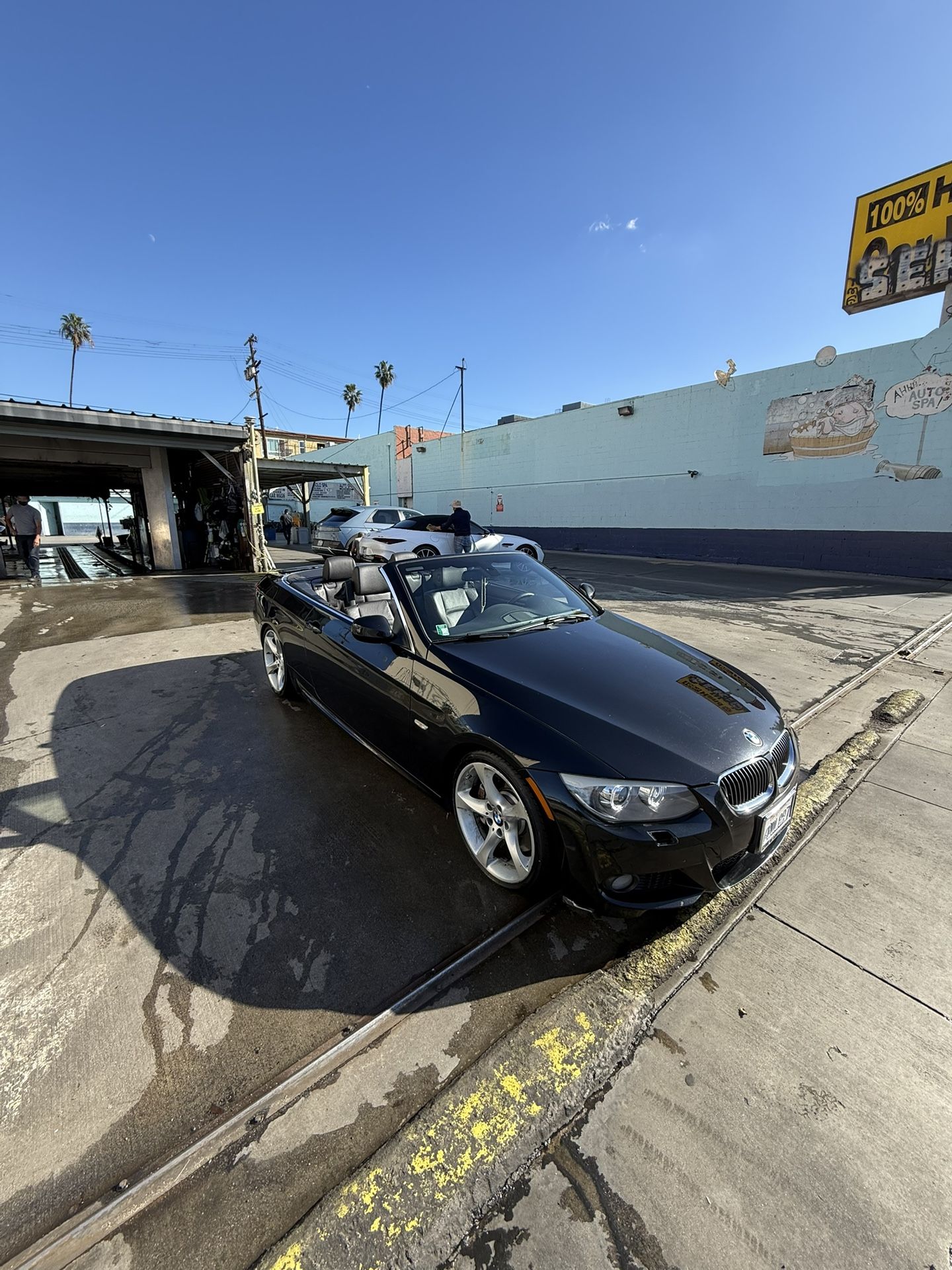
The 2012 BMW 335is convertible is a high-performance variant of the E93 3 Series, featuring the twin-turbocharged N54 engine and an optional 7-speed Dual-Clutch Transmission (DCT). It offers a unique middle ground between the standard 335i and the V8-powered M3, prioritizing torque-rich acceleration and open-top grand touring capabilities.
Understanding the "is" Designation: More Than a Badge
The "is" suffix in BMW’s nomenclature has historically represented a model that bridges the gap between the standard series production cars and the full-fledged M division products. In the context of the 2012 E92 (coupe) and E93 (convertible) lineup, the 335is was a North American exclusive, designed to offer enthusiasts a more aggressive driving experience without the high maintenance costs and high-revving nature of the M3’s S65 V8 engine.
While the standard 2012 335i had transitioned to the single-turbo N55 engine, BMW specifically chose to retain the twin-turbo N54 engine for the 335is. This decision was based on the N54's proven ability to handle increased boost and its robust forged internals, which were better suited for the performance targets of the "is" model. Engineers tuned the powerplant to deliver 320 horsepower and 332 lb-ft of torque. However, the standout feature was the temporary overboost function, which allowed the engine to push up to 370 lb-ft of torque for roughly seven seconds during wide-open throttle, providing a visceral surge of acceleration during overtaking maneuvers.
The N54 Powertrain and Enhanced Cooling
The heart of the 2012 BMW 335is is the 3.0-liter inline-six N54 engine. Unlike the N55, which uses a single twin-scroll turbocharger, the N54 utilizes two smaller, separate turbochargers. This setup minimizes turbo lag and provides a broader torque curve. Because the 335is was designed for more spirited driving, BMW addressed the N54's primary weakness: heat management.
To ensure reliability under load, the 335is received a significantly upgraded cooling system compared to the standard 335i. This included an additional radiator located in the front-left wheel well, a more powerful 850-watt electric cooling fan, and an oil cooler. These modifications were essential for maintaining consistent performance during track days or aggressive canyon driving, preventing the "limp mode" issues that often plagued earlier N54-equipped vehicles.
The exhaust system was also a point of distinction. The 335is came standard with the BMW Performance Exhaust, which featured a more aggressive tone, less restrictive flow, and matte black tips. This system produces a characteristic "burble" and "pop" on overrun that has become a hallmark of the 335is experience.
Transmission Dynamics: DCT vs. Manual
One of the most significant advantages of the 2012 335is convertible is the availability of the 7-speed Dual-Clutch Transmission (DCT). This was the same Getrag-sourced unit found in the M3, though with software mapping tailored to the N54's torque profile.
The DCT offers nearly instantaneous gear shifts, maintaining boost between gears and providing a level of engagement that a traditional torque-converter automatic cannot match. It includes a dedicated "Sport" mode and steering-wheel-mounted paddle shifters. For purists, a 6-speed manual transmission was also available, featuring a heavy-duty clutch designed to handle the increased torque of the "is" tuning. In the 2026 secondary market, the DCT remains the more popular choice for the convertible, as it complements the car's dual nature as a comfortable cruiser and a sharp performance machine.
Performance Comparison: 335i vs. 335is vs. M3
To understand where the 335is sits in the 2012 lineup, it is helpful to compare the technical specifications across the three primary performance tiers of the E93 convertible.
| Feature | 2012 BMW 335i (E93) | 2012 BMW 335is (E93) | 2012 BMW M3 (E93) |
|---|---|---|---|
| Engine | 3.0L N55 Single-Turbo I6 | 3.0L N54 Twin-Turbo I6 | 4.0L S65 Naturally Aspirated V8 |
| Horsepower | 300 hp | 320 hp | 414 hp |
| Torque | 300 lb-ft | 332 lb-ft (370 with Overboost) | 295 lb-ft |
| Transmission | 6-speed Auto / 6-speed Manual | 7-speed DCT / 6-speed Manual | 7-speed DCT / 6-speed Manual |
| 0-60 MPH (approx.) | 5.5 Seconds | 5.2 Seconds | 4.9 Seconds |
| Cooling Upgrades | Standard | Additional Radiator + High-Power Fan | M-specific Quad-Radiator System |
| Exhaust | Standard | BMW Performance Exhaust | M-Performance Quad Exhaust |
Chassis and Convertible Hardtop Mechanics
The E93 chassis is defined by its three-piece retractable hardtop. This design allows the 335is to function as a quiet, rigid coupe when the roof is up and a classic open-top roadster when the roof is stowed. However, the complexity of the roof comes with a weight penalty; the convertible is approximately 400 pounds heavier than its coupe counterpart.
To compensate for this extra mass, the 335is features the M Sport suspension as standard equipment. This includes stiffer springs, recalibrated dampers, and thicker anti-roll bars. While the ride is firmer than a base 3 Series, it remains compliant enough for long-distance touring. The steering is a traditional hydraulic rack, offering more tactile feedback than the electronic power steering systems found in later BMW models (F30 generation and onward). This hydraulic feel is one of the primary reasons the E9x generation is still highly sought after by driving enthusiasts in 2026.
Aesthetic and Interior Distinctions
The 2012 335is is easily identifiable by several model-specific exterior and interior treatments. These touches were designed to give the car a more "menacing" appearance without the flared fenders of the M3.
- Exterior: The car features the M Aerodynamic kit (front and rear bumpers, side skirts). High-gloss Shadowline trim replaces the chrome window surrounds. The kidney grilles and side mirror caps are finished in gloss black. A unique rear diffuser houses the black-tipped exhaust pipes. The 18-inch (Style 313) or 19-inch (Style 313M) five-spoke wheels are iconic to this model, revealing the large brake rotors.
- Interior: Inside, the 335is features an M Sport steering wheel, stainless steel pedals, and an "is" specific instrument cluster with dark grey dials. The trim is typically a "Dark Glacier Aluminum," which has a hexagonal texture. The "335is" badge is prominently displayed on the passenger side of the dashboard and on the door sills.
Long-Term Reliability and Maintenance in 2026
As of 2026, the 2012 BMW 335is is a 14-year-old vehicle. While it is a robust platform, the N54 engine requires proactive maintenance to remain reliable. Potential owners should be aware of several common failure points that often appear as these cars pass the 80,000 to 100,000-mile mark.
The "Big Five" N54 Issues
- High-Pressure Fuel Pump (HPFP): While many were replaced under early recalls, failures can still occur. Symptoms include long cranking times and reduced power.
- Fuel Injectors: The N54 uses piezo-electric injectors. The early "Index" versions were prone to leaking. Owners in 2026 should look for cars that have been upgraded to "Index 12" injectors, which are the most reliable iteration.
- Turbocharger Wastegate Rattle: Over time, the wastegate actuators can wear, leading to a metallic rattling sound and eventual boost pressure faults. Replacement often requires removing the engine or subframe, making it a costly repair.
- Cooling System (Water Pump/Thermostat): The electric water pump is a "when, not if" failure point. It typically lasts between 60,000 and 80,000 miles. A sudden failure will leave the car stranded to prevent overheating.
- Oil Leaks: The Oil Filter Housing Gasket (OFHG) and Valve Cover Gasket (VCG) are notorious for leaking. The OFHG is particularly dangerous; if it leaks onto the serpentine belt, the belt can slip off and be sucked into the front main seal, causing catastrophic engine failure.
Convertible Top Care
In 2026, the seals on the E93 retractable hardtop may begin to dry out or shrink. Regular application of a specialized rubber conditioner (such as Gummi Pflege) is necessary to prevent leaks and wind noise. Additionally, the hydraulic salmon-colored relays for the top mechanism should be replaced periodically, as they can stick and cause the pump to burn out.
Market Value and Buying Advice
In the current 2026 market, the 2012 BMW 335is convertible has transitioned from a used car to a "modern classic." Prices have stabilized as enthusiasts recognize the value of the N54/DCT combination.
- Low-Mileage Examples (Under 50k miles): These can command premium prices, often ranging from $22,000 to $28,000, especially if they have a documented service history and are in a desirable color like Le Mans Blue or Mineral White.
- Driver-Quality Examples (70k-100k miles): These typically trade between $14,000 and $18,000. Buyers should budget at least $3,000 for immediate "refresh" maintenance if it hasn't been performed.
- High-Mileage/Modified Examples: Cars with over 120,000 miles or significant aftermarket tuning can be found for under $10,000, but these carry high risk regarding turbo health and transmission wear.
When inspecting a 335is, always perform a Pre-Purchase Inspection (PPI) with a BMW specialist who can use diagnostic software (like INPA or ISTA) to check for hidden codes and monitor turbo boost targets. Check the service records specifically for the DCT fluid service; while BMW originally claimed it was "lifetime" fluid, specialists recommend changing it every 50,000 to 60,000 miles to preserve the clutches.
Summary of the 335is Ownership Experience
Owning a 335is convertible is about enjoying the balance of refinement and aggression. It lacks the high-strung maintenance of an M3 but offers significantly more character and tuning potential than a base 335i. The overboost torque makes it feel faster in daily traffic than the M3, as the power is available much lower in the RPM range.
The primary trade-off is the added weight of the convertible mechanism and the inherent maintenance requirements of the N54 engine. For those willing to stay ahead of the service intervals, it remains one of the most rewarding open-top driving experiences of its era.
Frequently Asked Questions
Is the 2012 335is faster than an M3?
In a straight-line "roll" from 30 mph to 70 mph, the 335is can feel faster than a 2012 M3 due to its higher low-end torque (370 lb-ft vs 295 lb-ft). However, in a 0-60 mph sprint or on a racetrack, the M3’s higher horsepower and superior chassis balance allow it to outperform the 335is.
Does the 335is convertible have a spare tire?
No. Like most BMWs of this era, the 335is came equipped with Run-Flat Tires (RFTs) and no spare tire. Many owners in 2026 choose to switch to standard performance tires (like Michelin Pilot Sport 4S) for better ride quality and grip, carrying a mobility kit or "slime" for emergency repairs.
Can the N54 engine in the 335is be tuned?
The N54 is legendary for its tuning potential. With simple software flashes (such as MHD or JB4) and a few hardware upgrades like a larger front-mount intercooler (FMIC) and downpipes, the 335is can easily reach 400+ wheel horsepower. However, tuning puts more strain on the turbos and cooling system, so maintenance must be even more rigorous.
How do I know if the DCT transmission is failing?
Common signs of DCT wear include "clunking" when downshifting into first gear, delayed engagement from a stop, or slipping under high torque. Often, these issues can be resolved with a software adaptation reset or a fluid and filter change, but mechanical failures are rare and expensive.
Is the 2012 335is convertible a good daily driver?
Yes, provided you have a secondary transportation option for when it needs specialized service. It is comfortable, has a decent trunk (with the top up), and offers modern amenities like heated seats and a premium sound system. However, its fuel economy is relatively poor by 2026 standards, averaging 17-23 MPG.
Recommended Next Action: If you are seriously considering a 2012 335is convertible, locate a reputable BMW independent shop in your area before purchase. Their expertise in diagnosing N54-specific issues during a PPI is the most important step in ensuring a positive ownership experience.