Mastering in-text citations in MLA 9 requires including the author's last name and the specific page number in parentheses, placed directly after the borrowed information and usually right before the sentence's terminal punctuation. This system allows readers to seamlessly cross-reference your source text with the detailed entry listed in your bibliography or Works Cited page at the end of the manuscript.
Academic writing across the humanities requires a rigorous approach to documenting sources. When you incorporate outside research, theories, or direct quotations into your paper, acknowledging the original creator is both an ethical imperative and an academic standard. The Modern Language Association (MLA) governs these standards, and its ninth edition (MLA 9) serves as the definitive style guide for literary studies, cultural analysis, and various humanities disciplines. Navigating the mechanics of parenthetical documentation can seem daunting at first, but breaking the process down into a methodical, sequential workflow ensures absolute precision, prevents plagiarism, and elevates the professional quality of your research paper.
1. Identify the Source Type and Information Needed
Before writing a single parenthetical reference, you must analyze the exact nature of the material you are citing. MLA 9 relies on a universal author-page style, but the metadata you need depends entirely on whether your source is a printed book, an academic journal article, a website, a film, or an archival document.
Begin by locating the core creator—typically the author, editor, or corporate body responsible for the work—alongside the specific page, section, or timestamp where the information appears. If a source lacks a clear author, you will rely on an abbreviated version of the title. Establishing this information early prevents confusion and ensures that your parenthetical marker matches the first element of your corresponding Works Cited entry.
2. Format Author-Page Parentheses Correctly
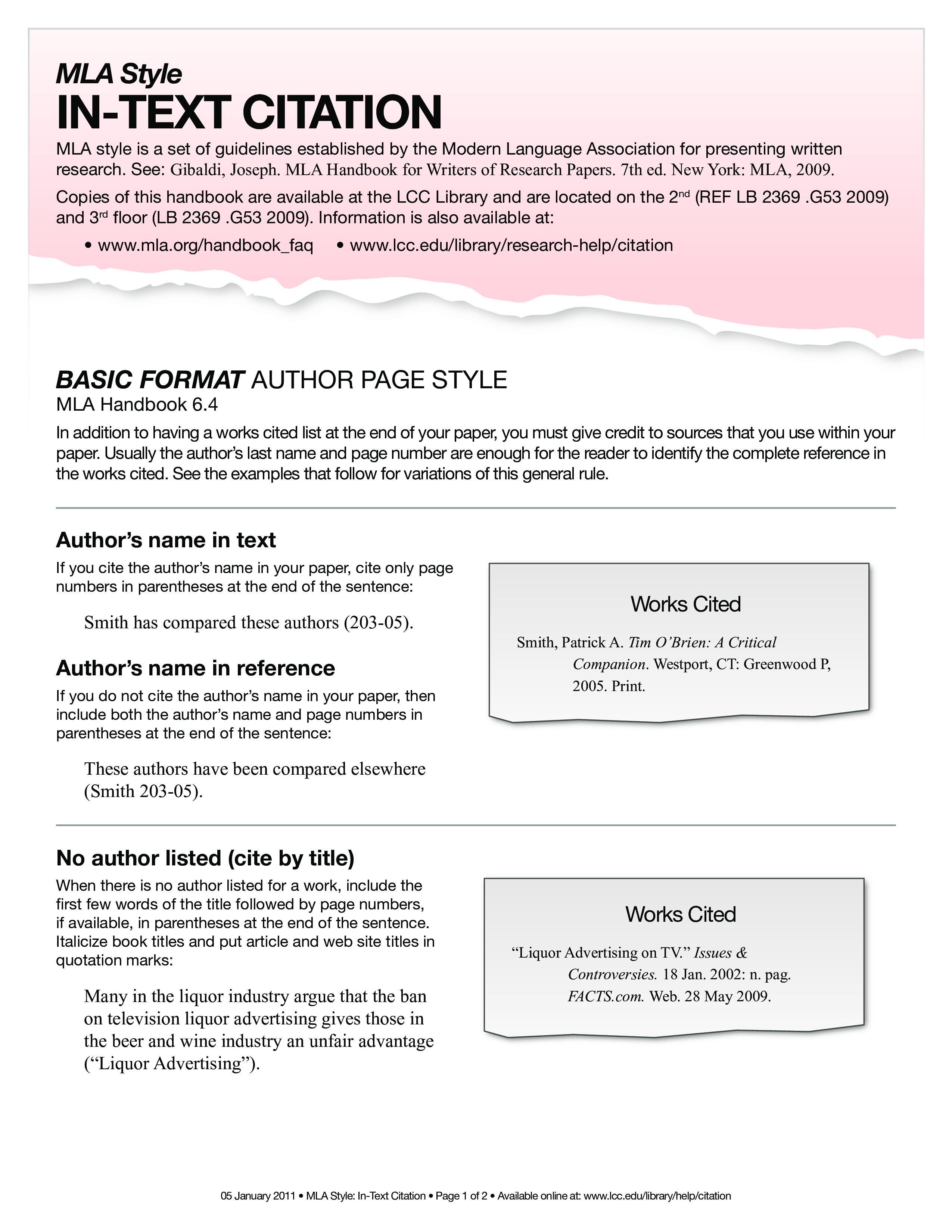
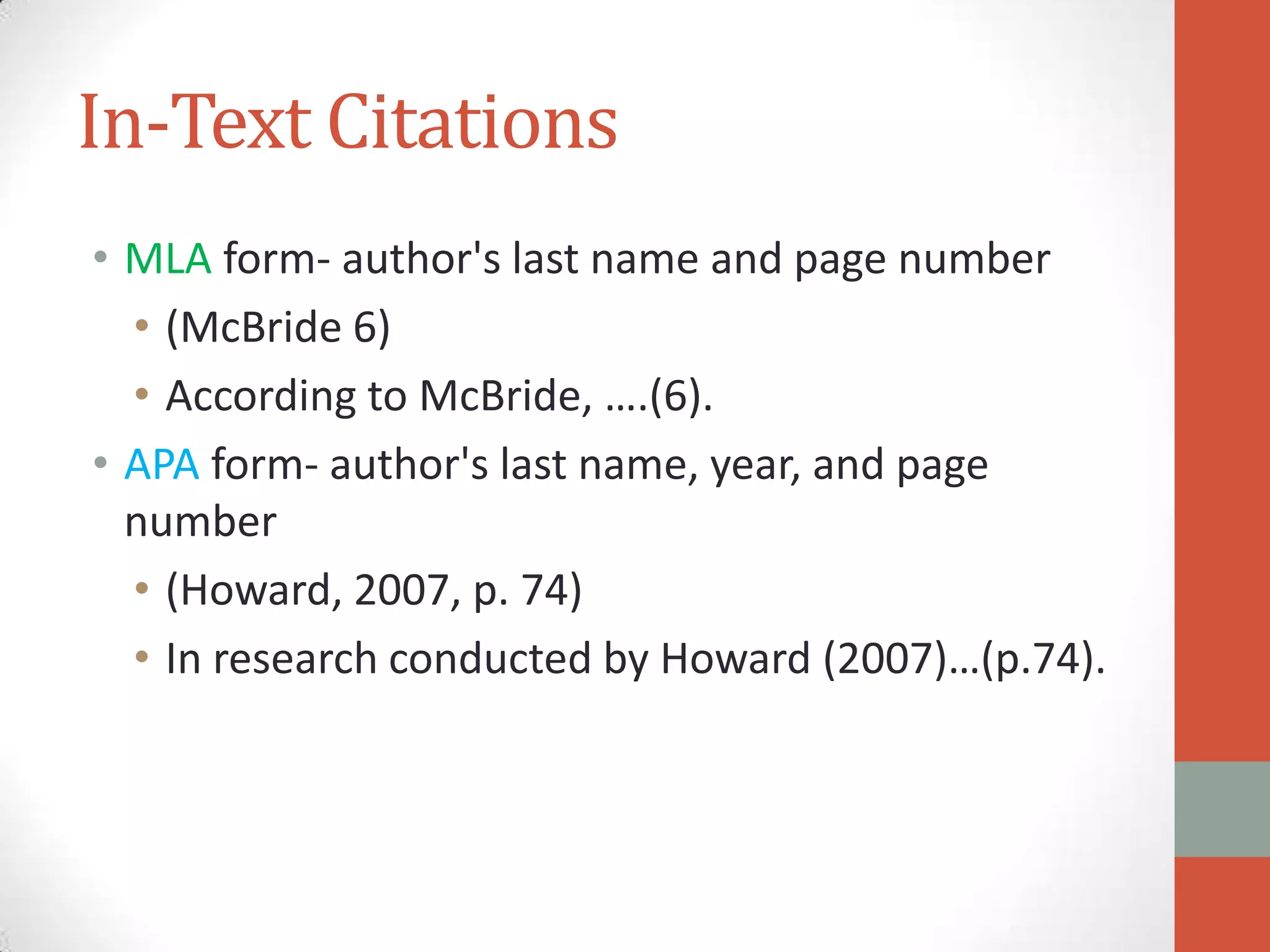
The foundational structure of an MLA 9 in-text citation is remarkably straightforward. When you reference an idea, paraphrase, or direct quote, place the author's last name followed by a space and the Arabic numeral of the page range inside parentheses. Do not use a comma, p, or pp between the name and the number.
For example, a standard citation for a book by author Jane Doe looks like this: (Doe 45). This minimalist approach keeps the reader's attention focused on your argument while providing an unhindered path back to the complete publication data. Ensure that the citation is placed correctly within the sentence structure so that it does not disrupt the natural flow of your prose.
3. Handle Works with Multiple Authors
Real-world research frequently involves collaborative scholarship, which changes how you format your parenthetical markers. MLA 9 streamlines multiple-author rules to match the concise nature of in-text citations.
- Two Authors: Include both last names connected by the word "and" (e.g.,
Smith and Jones 112). - Three or More Authors: List only the first author's last name followed by the Latin abbreviation "et al." meaning "and others" (e.g.,
Garcia et al. 78). Note that MLA 9 dropped the requirement to list all authors in the Works Cited list if there are more than two, but the in-text rule for three or more remains streamlined with et al.
| Author Count | In-Text Citation Format | Example |
|---|---|---|
| One Author | (Lastname Page) |
(Miller 245) |
| Two Authors | (Lastname and Lastname Page) |
(Miller and Davis 88-89) |
| Three or More | (Lastname et al. Page) |
(Miller et al. 142) |
4. Integrate Author Names Directly into Your Prose
You do not always have to tuck the author's name and page number into parentheses at the end of a sentence. Often, integrating the author's name directly into your sentence structure—known as a signal phrase—makes your writing more engaging and fluid.
When you mention the author's name in your text, you should omit it from the parenthetical citation at the end of the sentence. For instance, you might write: "As Miller argues, the economic shift fundamentally altered urban demographics (45)." This approach highlights the human scholarship behind the data and avoids repetitive parenthetical clutter.
5. Cite Corporate Authors and Organizations
Sometimes a text is written not by an individual, but by an institution, government agency, association, or corporation. These entities are known as corporate authors.
When citing a corporate author, treat the organization's name just like an individual author's last name. If the name is long, you can abbreviate common words (such as "Dept." for "Department"), provided the abbreviation is unambiguous and matches the Works Cited entry. For example: (American Psychological Association 115). To avoid overly clunky parentheses, try using the organization as a signal phrase in your sentence text whenever possible.
6. Manage Sources Without Page Numbers
Digital media, websites, audiobooks, and specialized databases frequently lack traditional page numbers. MLA 9 adapts to these modern formats by instructing writers to look for alternative locator markers, such as paragraph numbers, section headings, or timestamps.
If a digital article includes numbered paragraphs, use the abbreviation "par." or "pars." followed by the number: (Smith, par. 4). For sources with clearly defined chapters or sections, you can note those instead, provided they are standard across all copies of the work. If a source has no page numbers, paragraph numbers, or other locators—which is common for many standard web pages—simply omit the locator and include only the author's name or title in the parentheses: (Johnson).
7. Deal with Missing Authors and Unknown Creators
When a source lists no author, editor, or corporate body, you must use an abbreviated version of the work's title in place of the author's name. This ensures that the reader can still match the in-text citation to the alphabetical Works Cited list.
Capitalize the title using standard title case, and enclose article titles, web page titles, or chapter titles in quotation marks, while italicizing book titles, film titles, or journal names. For instance, if you are citing an anonymous article titled "Climate Realities," your citation would appear as: ("Climate Realities" 12). Keep the title as brief as possible while still making it instantly recognizable in your bibliography.
8. Cite Multiple Works by the Same Author
Scholars often reference multiple publications written by the same individual. If your Works Cited page contains two or more sources by the exact same author, a standard parenthetical citation like (Smith 45) will cause ambiguity because the reader will not know which of Smith's works you are referencing.
To resolve this issue, include a shortened version of the specific work's title right after the author's name. Separate the author's name and the title with a comma, and separate the title from the page number with a space. For example: (Smith, Modern Art 45) and (Smith, Renaissance Echoes 112).
9. Position Citations Correctly Relative to Punctuation
The mechanical placement of parenthetical citations relative to periods, commas, and quotation marks is a common point of confusion. In MLA 9, the general rule is simple: the citation belongs inside the sentence, placed immediately after the borrowed material and before the terminal punctuation mark.
When citing a direct quotation, place the quotation marks around the borrowed words, insert the parenthetical citation, and then place the period at the very end of the parentheses: ...as scholars have noted "the paradigm shift was inevitable" (Johnson 89). The only exception occurs with block quotations—indented multi-line quotes—where the parenthetical citation follows the terminal punctuation mark of the quoted text.
10. Cross-Check with Your Works Cited Page
The final step in mastering MLA 9 in-text citations is verification. Every single parenthetical citation in the body of your paper must have a corresponding, fully detailed entry in your Works Cited bibliography at the end of the document. Conversely, every entry in your Works Cited list must be actively cited somewhere within your text.
Scan your paper from start to finish, matching each author's last name or source title in your parentheses to the hanging-indent entries on your final pages. Verify that spelling, publication years, and capitalization match perfectly. This meticulous cross-checking guarantees academic integrity and provides your readers with a reliable roadmap for further research.