Pakistan won the ICC Men’s T20 World Cup once, securing the championship in 2009. Led by captain Younis Khan, the Pakistani team defeated Sri Lanka by eight wickets in the final held at Lord’s Cricket Ground in London on June 21, 2009.
The journey of the Pakistan national cricket team in the T20 World Cup is a narrative of extreme highs and lows, characterized by their reputation as the "unpredictables." Since the tournament's inception in 2007, Pakistan has been a consistent powerhouse, reaching the finals on three occasions (2007, 2009, and 2022) and the semi-finals in several others. As we look back from the perspective of 2026, the 2009 victory remains the crowning achievement of Pakistan’s shortest-format history, serving as a beacon of resilience for a nation that was facing significant challenges at home during that era.
The 2009 Triumph: Pakistan’s Historic T20 World Cup Victory
The 2009 T20 World Cup, hosted by England, was the second edition of the tournament. Coming off the back of a heartbreaking loss in the 2007 final against arch-rivals India, the Pakistani squad entered the 2009 event with a point to prove. However, the lead-up was marred by the tragic 2009 attack on the Sri Lankan team bus in Lahore, which had effectively suspended international cricket within Pakistan. The victory in London was more than just a sporting achievement; it was a moment of national healing.
The Road to the Final
Pakistan’s campaign in 2009 did not start with the dominance one might expect from a future champion. They lost their opening group match to England, putting immediate pressure on their qualification hopes. However, they bounced back with a convincing win against the Netherlands to progress to the Super 8 stage.
In the Super 8s, Pakistan faced a "do-or-die" scenario after losing to Sri Lanka in their first match of that round. Demonstrating their trademark resilience, they secured vital wins against New Zealand and Ireland. The victory against New Zealand was particularly notable for Umar Gul’s legendary bowling performance, where he took 5 wickets for just 6 runs—the first five-wicket haul in T20 International history.
The semi-final against South Africa at Nottingham saw Shahid Afridi rise to the occasion. Afridi, often criticized for inconsistency, played a matured knock of 51 runs and took two crucial wickets to defend a total of 149, propelling Pakistan into their second consecutive T20 World Cup final.
The Final at Lord’s: Pakistan vs. Sri Lanka
The final took place on June 21, 2009, at the "Home of Cricket," Lord’s. Sri Lanka, who were undefeated in the tournament up to that point, won the toss and elected to bat. The Pakistani bowling attack, spearheaded by Mohammad Amir and Abdul Razzaq, dismantled the Sri Lankan top order early.
Sri Lanka managed to post a total of 138/6, thanks to a resilient 64 from Kumar Sangakkara. In response, Pakistan’s chase was clinical. Kamran Akmal provided a brisk start, but it was once again Shahid Afridi who anchored the innings. Afridi’s unbeaten 54 from 40 balls, supported by Shoaib Malik, guided Pakistan to 139/2 with eight balls to spare. The image of Afridi standing with his arms outstretched in his signature pose at the center of Lord’s remains one of the most iconic moments in cricket history.
Pakistan's Performance History in T20 World Cups (2007–2024)
To understand the weight of the 2009 win, one must look at Pakistan’s overall trajectory in the tournament. They have historically been one of the most successful teams in terms of matches won and knockout stage appearances.
2007: The Heartbreak in Johannesburg
The inaugural 2007 World T20 in South Africa saw a young Pakistan team, led by Shoaib Malik, reinvent the way T20 cricket was played. They reached the final against India, a match that is still considered one of the greatest T20 games ever played. Needing 13 runs off the final over, Misbah-ul-Haq hit a six but then attempted a fateful scoop shot off Joginder Sharma, which was caught by Sreesanth. Pakistan lost by 5 runs, a result that sparked a massive shift in the global cricket landscape and the eventual birth of the IPL.
2010–2021: The Era of Semi-Finals
Between 2010 and 2021, Pakistan remained competitive but struggled to cross the final hurdle.
- 2010 (West Indies): Pakistan reached the semi-final but was knocked out by a miraculous Mike Hussey innings that saw Australia chase down 18 runs in the final over.
- 2012 (Sri Lanka): Another semi-final appearance, this time losing to the hosts, Sri Lanka, on a spinning track.
- 2021 (UAE): Under Babar Azam’s captaincy, Pakistan became the first team to beat India in a World Cup match (winning by 10 wickets). They entered the semi-final as favorites but were defeated by eventual champions Australia, following a late-game onslaught by Matthew Wade.
2022: The Resurgence and the MCG Final
The 2022 tournament in Australia was a rollercoaster for Pakistan. After losing their first two games to India and Zimbabwe, their chances of qualification were statistically near zero. However, a series of upsets (including the Netherlands beating South Africa) allowed Pakistan to sneak into the semi-finals. They dominated New Zealand in the semi-final to reach the final at the Melbourne Cricket Ground (MCG) against England.
In a low-scoring thriller, Pakistan’s bowlers fought valiantly, but an injury to lead pacer Shaheen Shah Afridi during the closing stages proved decisive. Ben Stokes guided England to victory, leaving Pakistan as runners-up for the second time in history.
2024: A Group Stage Exit
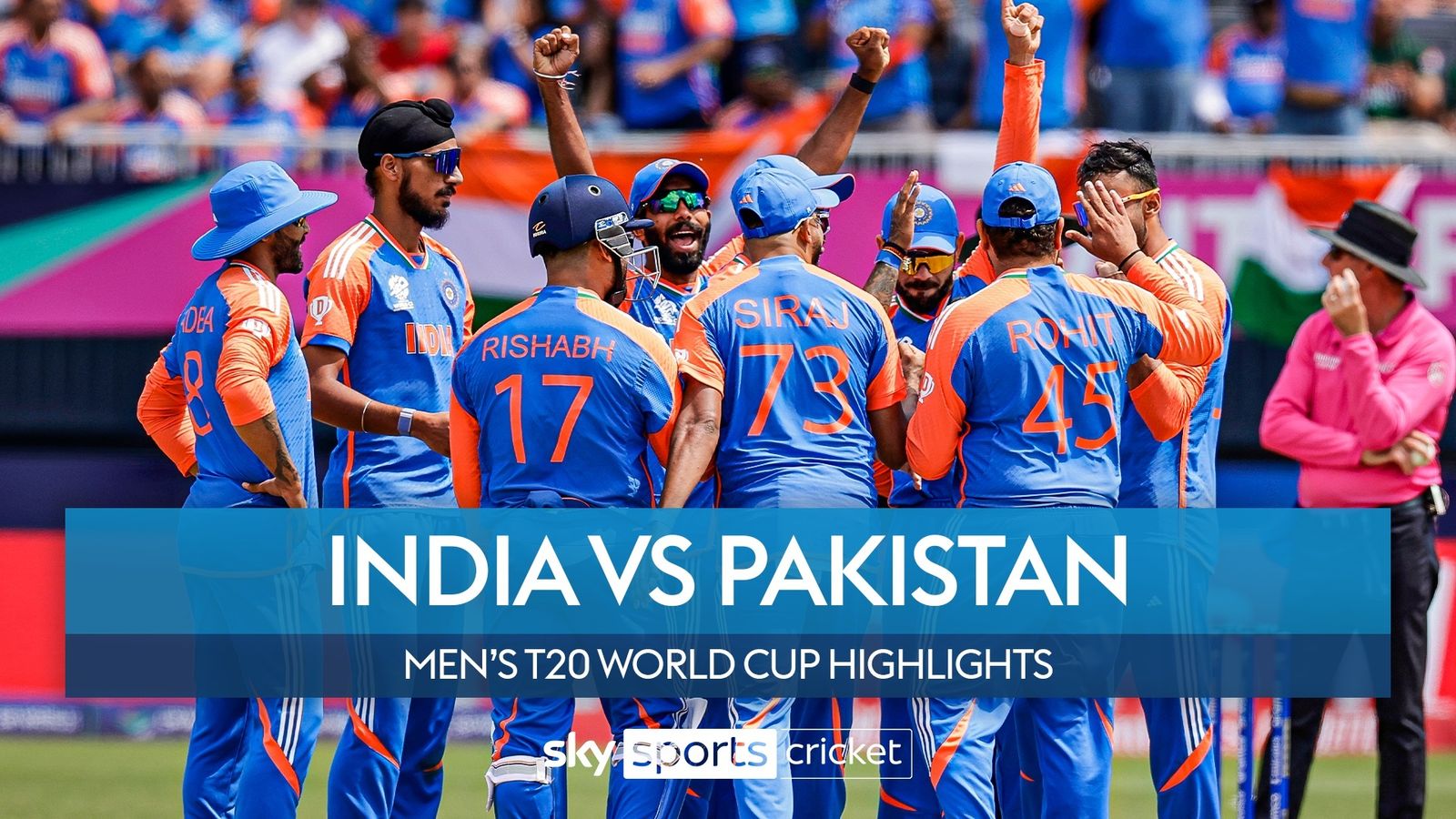
The 2024 T20 World Cup, co-hosted by the USA and the West Indies, was a significant disappointment for Pakistan. The team suffered a shocking defeat to the tournament debutants, the USA, followed by a narrow loss to India in New York. Despite a win against Canada, Pakistan failed to progress to the Super 8s, marking one of their earliest exits in tournament history.
Statistical Overview: Pakistan in T20 World Cups
Pakistan has consistently produced some of the highest-performing individuals in the T20 format. From the pace of Umar Gul to the consistency of Babar Azam, the statistics reflect a team that relies heavily on its bowling strength.
| Year | Host | Result | Captain | Key Performer |
|---|---|---|---|---|
| 2007 | South Africa | Runners-up | Shoaib Malik | Shahid Afridi / Misbah-ul-Haq |
| 2009 | England | Winners | Younis Khan | Shahid Afridi / Umar Gul |
| 2010 | West Indies | Semi-finals | Shahid Afridi | Salman Butt |
| 2012 | Sri Lanka | Semi-finals | Mohammad Hafeez | Saeed Ajmal |
| 2014 | Bangladesh | Group Stage | Mohammad Hafeez | Ahmed Shehzad |
| 2016 | India | Group Stage | Shahid Afridi | Mohammad Amir |
| 2021 | UAE/Oman | Semi-finals | Babar Azam | Babar Azam / Mohammad Rizwan |
| 2022 | Australia | Runners-up | Babar Azam | Shadab Khan / Shaheen Afridi |
| 2024 | USA/West Indies | Group Stage | Babar Azam | Naseem Shah |
Key Players in Pakistan's T20 World Cup History
Shahid Afridi (The All-Rounder)
Known as "Lala," Afridi is synonymous with Pakistan’s T20 success. He was the Player of the Match in both the semi-final and the final of the 2009 World Cup. His ability to bowl quick leg-spin and provide explosive finishes with the bat made him the ultimate T20 prototype. He holds the record for the most Player of the Match awards for Pakistan in T20 World Cups.
Umar Gul (The Death Over Specialist)
Before the era of specialized T20 bowling, Umar Gul mastered the art of the yorker. He was the leading wicket-taker in both the 2007 and 2009 editions of the tournament. His spell of 5/6 against New Zealand remains a benchmark for defensive and aggressive T20 bowling.
Babar Azam and Mohammad Rizwan
In the modern era (2021-2024), the opening duo of Babar and Rizwan redefined Pakistan’s batting approach. While often criticized for their strike rates, their consistency in providing 50+ run stands was the primary reason for Pakistan’s journey to the 2021 semi-final and 2022 final. Babar Azam holds the record for the most runs by a Pakistani captain in World Cup history.
Saeed Ajmal (The Spin Wizard)
During the early 2010s, Saeed Ajmal was the most feared off-spinner in the world. His "doosra" was nearly unplayable, and he played a pivotal role in leading Pakistan to the knockout stages in 2010 and 2012.
Why the 2009 Victory Was a Turning Point
The 2009 victory was not just a sports milestone; it was a socio-political event. At the time, Pakistan was embroiled in a war against militancy, and international teams had stopped touring the country. The win at Lord's provided a rare moment of collective joy for the Pakistani public.
Tactically, the 2009 win validated the "Pakistan model" of T20 cricket: aggressive, wicket-taking bowling backed by mercurial, high-impact batting. This victory also cemented the status of the T20 format in the subcontinent, proving that the 2007 final wasn't a fluke and that Pakistan was a genuine powerhouse in this shortened version of the game.
Common Challenges and Strategies in the T20 Format
Pakistan’s journey highlights several recurring themes and challenges in T20 cricket:
- Bowling vs. Batting Balance: Pakistan has traditionally relied on its "pace battery." When the bowlers (like Wasim Akram, Shoaib Akhtar, and later Shaheen Afridi and Haris Rauf) perform, the team thrives. However, a fragile middle order has often been their undoing in high-pressure finals.
- The "Powerplay" Struggle: Historically, Pakistan has struggled to maximize the first six overs of the batting innings. In the 2022 and 2024 cycles, this became a point of major contention among analysts and fans.
- Spin Dominance: Pakistan’s success in the UAE (2021) showed that they are masters of slow, turning conditions. Their ability to utilize leg-spin (Shadab Khan) and orthodox spin (Imad Wasim) has often choked teams in the middle overs.
Frequently Asked Questions
Has Pakistan won the T20 World Cup more than once?
No, Pakistan has won the ICC Men’s T20 World Cup exactly once, in 2009. They have been runners-up twice, in the inaugural 2007 tournament and again in 2022.
Who was the captain of Pakistan when they won the T20 World Cup?
Younis Khan was the captain of the Pakistan team during the 2009 victory. Following the win, he famously announced his retirement from T20 Internationals, stating that he wanted to leave on a high note.
Who took the most wickets for Pakistan in their winning 2009 campaign?
Umar Gul was the leading wicket-taker for Pakistan (and the tournament) in 2009, claiming 13 wickets at an impressive average of 12.15 and an economy rate of 6.44.
Where was the 2009 T20 World Cup final held?
The final was held at Lord’s Cricket Ground in London, United Kingdom. It is often referred to as the "Home of Cricket," making Pakistan's victory there particularly prestigious.
Why didn't Pakistan win the 2022 T20 World Cup?
Pakistan lost to England in the 2022 final. While their bowling was excellent, they only managed to set a target of 138 runs. A crucial injury to Shaheen Shah Afridi while taking a catch meant he could not complete his final overs, allowing Ben Stokes to steer England to victory.
Final Recommendation for Fans and Researchers
For those looking to study the evolution of T20 cricket, the 2009 Pakistan campaign is a masterclass in tactical bowling and middle-order aggression. To verify specific match scores or player statistics from this era, the most reliable sources remain the official ICC Cricket archives and the ESPNcricinfo database. These platforms provide ball-by-ball data and historical context that illustrate how Pakistan’s "unpredictable" nature became their greatest strength on the world stage.