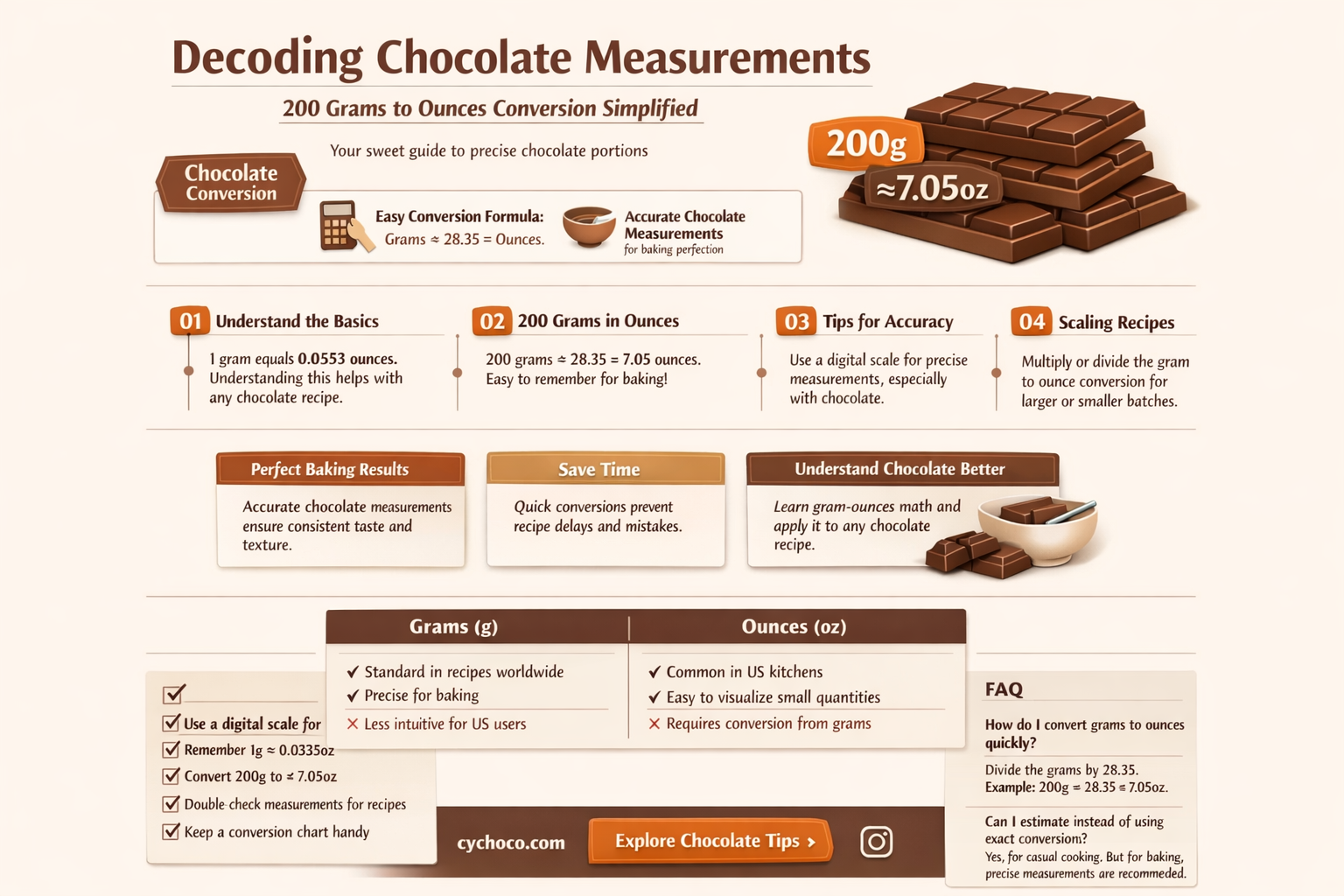
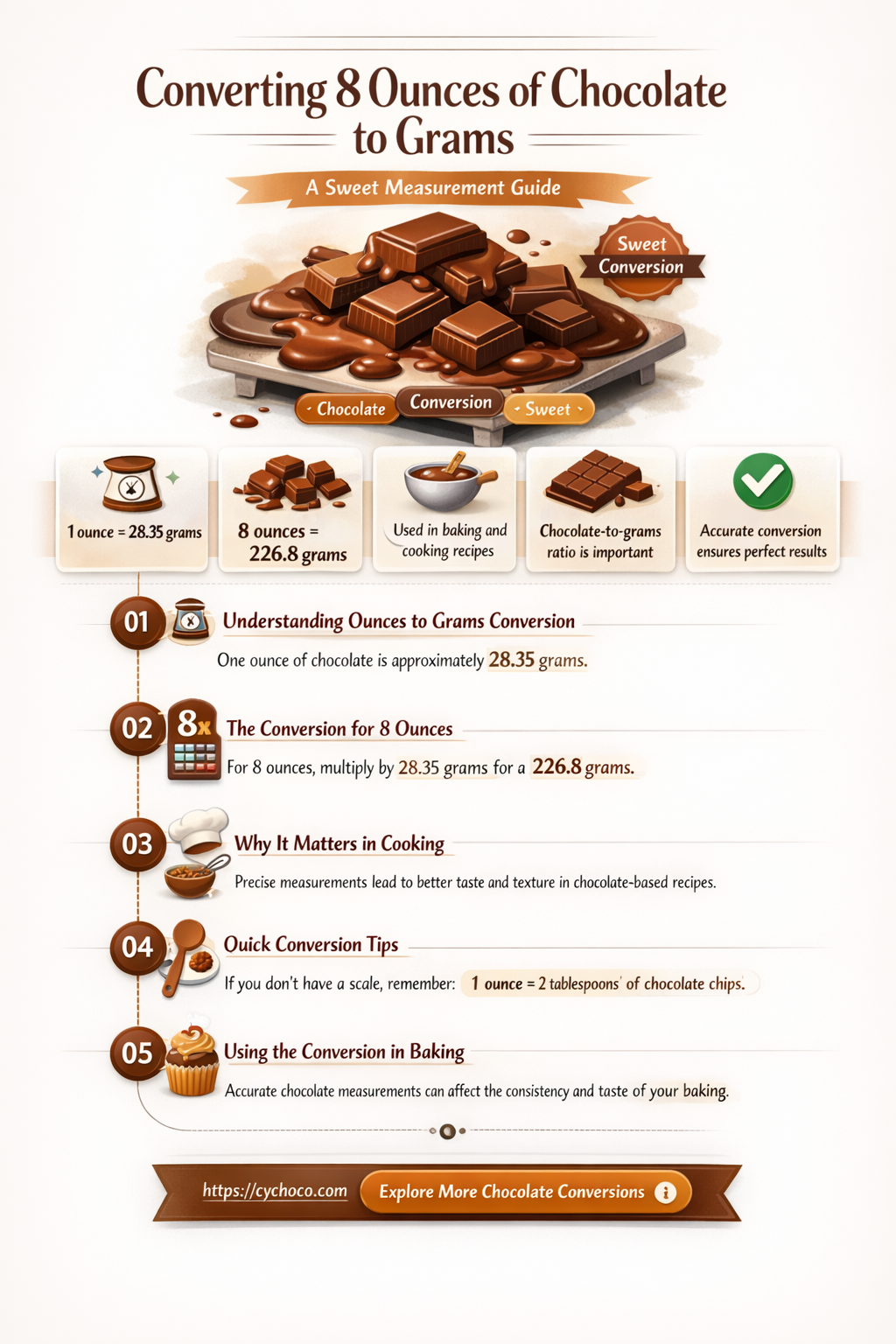
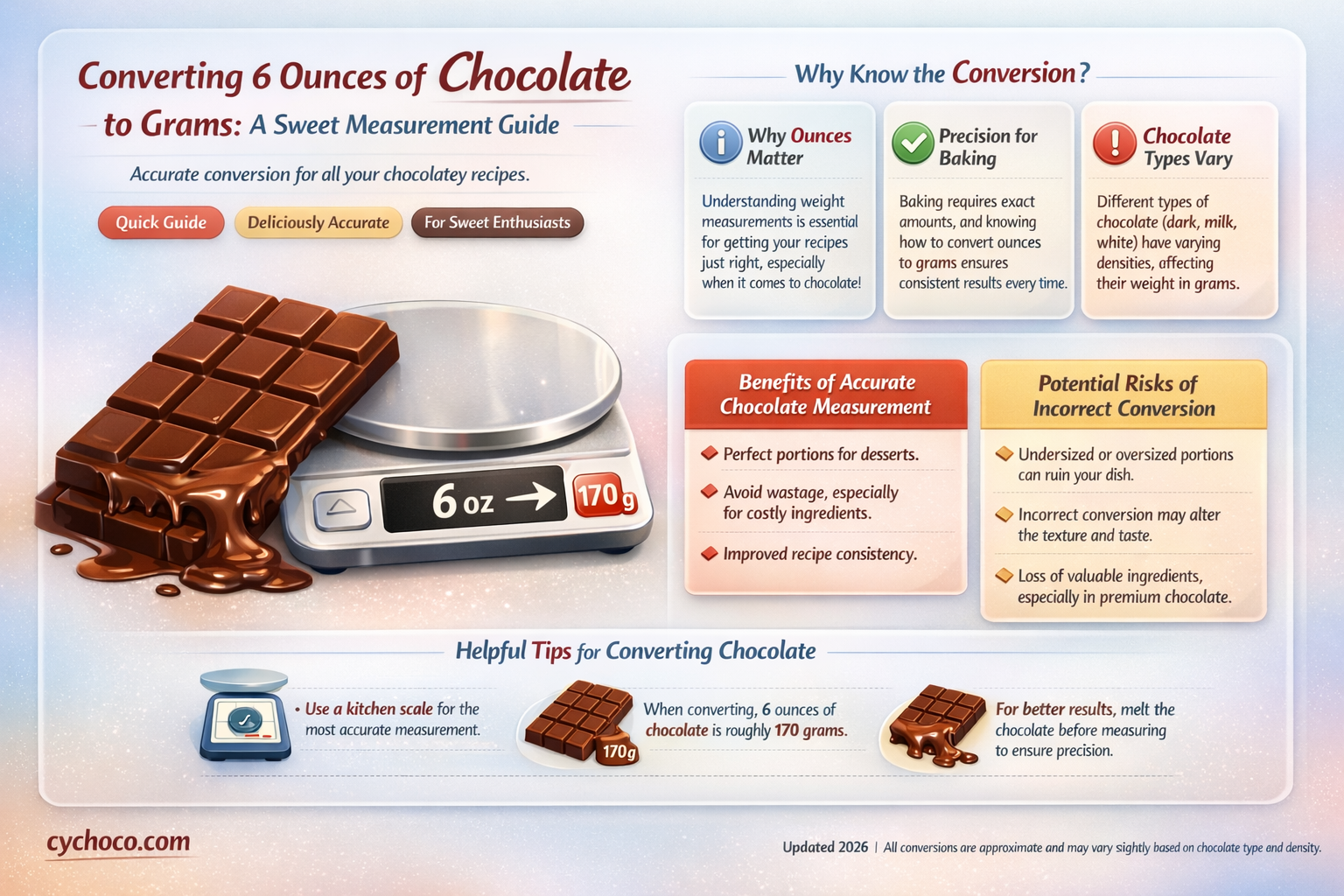
One ounce of chocolate is equal to approximately 28.35 grams. When measuring standard baking quantities, this conversion allows home bakers and professional chefs alike to transition seamlessly between United States customary units and the metric system, ensuring proper consistency, texture, and flavor profiles in confectionery recipes.
Accurate measurement is the cornerstone of successful baking, particularly when working with chocolate. Because chocolate contains a delicate emulsion of cocoa solids, cocoa butter, sugar, and sometimes dairy, even small discrepancies in scaling can alter the rheology of a batter, the crystallization of a ganache, or the snap of a tempered bar. Understanding how to convert measurements from ounces to grams is essential for following international recipes, scaling formulations up or down, and achieving consistent results in the kitchen.
The Mathematical Foundation of Ounce-to-Gram Conversions
To understand the conversion of chocolate weights, one must examine the relationship between the avoirdupois ounce (the standard system of weight used in the United States) and the gram, which belongs to the International System of Units (SI).
By definition, one international avoirdupois ounce is exactly equal to 28.349523125 grams. In culinary applications, this figure is almost universally rounded to 28.35 grams. For most home baking and cooking tasks, rounding to one or two decimal places provides more than enough precision, as standard kitchen scales rarely measure beyond tenth- or hundredth-gram increments reliably.
When scaling recipes, relying on a flat conversion factor prevents cumulative errors. For instance, while a casual baker might round one ounce to 28 grams for quick mental math, a recipe calling for 16 ounces (one pound) of chocolate scaled at 28 grams per ounce would result in a discrepancy of more than 5 grams compared to using the exact conversion factor. For large-batch production or sensitive formulations like truffles and soufflés, utilizing the precise 28.35-gram multiplier ensures absolute fidelity to the original formula.
Why Weight Matters More Than Volume in Chocolate Measurement
In culinary traditions, ingredients are often measured by volume (cups, tablespoons, and teaspoons) or by weight (ounces and grams). However, measuring chocolate by volume is notoriously unreliable due to the myriad forms chocolate takes in the kitchen.
| Chocolate Form | Volumetric Challenges |
|---|---|
| Chocolate Chips | Air gaps create inconsistent packing |
| Chopped Baking Bars | Irregular fragment sizes alter density |
| Cocoa Powder | Prone to compaction and tunneling |
| Melted Chocolate | Viscosity traps air during pouring |
Because chocolate chips, chunks, wafers, and grated blocks settle differently within a measuring cup, a single cup of chopped chocolate can weigh anywhere from 140 to 180 grams depending on how densely the pieces have settled. Conversely, a digital kitchen scale measuring in grams eliminates these variables entirely. Whether the chocolate is in the form of micro-chips, heavy blocks, or thin callets, 28.35 grams on the scale represents the exact same mass of cocoa solids and fat.
Converting Common Chocolate Quantities: From Ounces to Grams
Baking recipes rarely call for just a single ounce of chocolate. Most commercial baking bars in the United States are sold in 2-ounce, 4-ounce, or 8-ounce formats, while European chocolates frequently adhere to 100-gram blocks. Bridging these two measurement systems requires a reliable reference framework.
The following table outlines common baking increments for chocolate, converting ounces into both exact decimal grams and practical rounded cooking measurements:
| Ounces (oz) | Exact Grams (g) | Practical Baking Grams (g) | Common Culinary Equivalent |
|---|---|---|---|
| 0.5 oz | 14.17 g | 14.2 g | Half a standard 1-oz square |
| 1 oz | 28.35 g | 28.4 g | One standard baking square |
| 2 oz | 56.70 g | 56.7 g | Typical single bar section |
| 4 oz | 113.40 g | 113.4 g | One standard US baking stick / 1/4 lb |
| 8 oz | 226.80 g | 226.8 g | Two standard sticks / 1/2 lb |
| 16 oz | 453.59 g | 453.6 g | One full pound of chocolate |
When working with these figures, bakers should consult their digital scale's capabilities. Most kitchen scales switch between ounces and grams at the press of a button, allowing users to bypass manual math if their hardware supports direct metric weighing.
Practical Implications Across Different Types of Chocolate
Not all chocolates behave identically in recipes, and understanding how weight conversions apply to various styles of chocolate ensures proper structural outcomes in baking.
Dark Chocolate
Dark chocolate typically consists of cocoa solids, cocoa butter, and sugar, with minimal or no dairy solids. Because of its high fat and solids content, 28.35 grams of dark chocolate contributes a dense, robust flavor profile and significant structural firmness when cooled. Recipes relying on dark chocolate for structural integrity—such as flourless chocolate cakes—depend heavily on accurate gram measurements to maintain the correct ratio of fat to flour substitutes.
Milk Chocolate
Milk chocolate incorporates milk powder or condensed milk alongside cocoa butter, cocoa solids, and a higher percentage of sugar. Because milk solids absorb and retain moisture differently than pure cocoa butter, substituting milk chocolate for dark chocolate on a strict 1:1 weight basis can alter the setting time of ganaches and the spread of cookies. Nevertheless, 1 ounce (28.35 grams) remains the identical physical mass regardless of cocoa percentage.
White Chocolate
Technically classified as a confection rather than true chocolate by some regulatory bodies, white chocolate is composed exclusively of cocoa butter, sugar, and dairy solids, lacking the non-fat cocoa solids that give dark chocolate its dark color. White chocolate is notoriously sensitive to heat and scorches easily. Measuring 28.35 grams of white chocolate accurately ensures that when formulating emulsions like buttercreams or white chocolate curds, the fat-to-liquid ratio remains undisturbed.
Frequently Asked Questions
How many grams are in 1 ounce of baking chocolate?
There are 28.35 grams in 1 ounce of baking chocolate. This conversion applies universally to all solid food items measured in avoirdupois ounces, including unsweetened, bittersweet, semi-sweet, and milk chocolate varieties.
Can I use a standard measuring spoon instead of a scale for grams?
No, measuring spoons measure volume (milliliters or teaspoons), whereas grams measure mass. To measure ingredients in grams accurately, you must use a digital kitchen scale that displays metric weight units.
Why do European recipes use grams while US recipes use ounces?
European recipes rely on the metric system, which is based on decimals and units of ten, making scaling and formulation simpler. The United States primarily utilizes the customary system, which historically divided pounds into sixteen ounces.
Does melting chocolate change its weight in grams?
No, melting chocolate changes its physical state from solid to liquid, but its mass remains entirely unchanged. 28.35 grams of solid chocolate will weigh exactly 28.35 grams once melted, barring any minor loss from residual chocolate left clinging to the melting container.
How do I convert ounces to grams without a calculator?
For a quick mental approximation, multiply the number of ounces by 28. For greater accuracy in baking, multiply by 28.35 or use the unit conversion function on a digital kitchen scale.
Recommended Next Actions
To apply these conversions effectively in your kitchen, invest in a reliable digital kitchen scale capable of measuring in both grams and ounces with at least 1-gram (or 0.1-gram) resolution. When adapting international recipes, tare your mixing bowl on the scale and weigh out each component sequentially in grams to eliminate measuring cup inconsistencies and guarantee professional baking results.