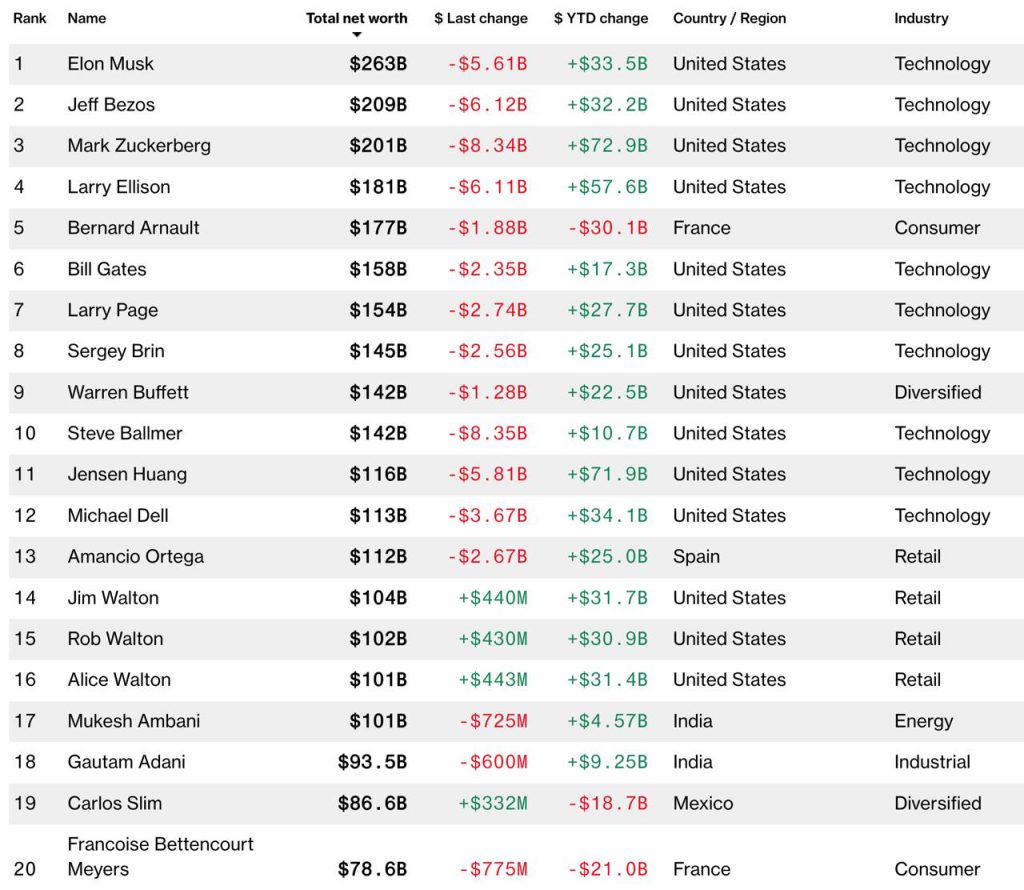
In 2017, Mark Zuckerberg was not the richest man in the world; he typically ranked as the fifth-wealthiest individual globally. While his net worth surged from approximately $56 billion in March to over $74 billion by late 2017 due to Facebook’s stock performance, he remained behind Bill Gates, Jeff Bezos, and Warren Buffett.
The year 2017 remains a significant benchmark in the history of global wealth, primarily because it marked a massive transition in the hierarchy of the world’s billionaires. While the names at the top of the list often seem static, 2017 was a year of intense volatility and rapid growth for technology-based fortunes. For Mark Zuckerberg, the co-founder and then-CEO of Facebook (now Meta), 2017 was a year of staggering financial gains, yet he never reached the number-one spot on the global leaderboard. That distinction was held primarily by Bill Gates, before Jeff Bezos famously overtook him later in the year.
Understanding Zuckerberg's financial standing in 2017 requires a look at the intersection of social media dominance, stock market mechanics, and the philanthropic commitments that began to shape his public profile during that period. This analysis provides a comprehensive breakdown of his net worth, his ranking among his peers, and the economic factors that drove his wealth during that specific fiscal year.
The Financial Standing of Mark Zuckerberg in 2017
In the annual Forbes World’s Billionaires list released in March 2017, Mark Zuckerberg was ranked as the fifth richest person in the world. At that specific moment, his net worth was valued at approximately $56 billion. This was a significant jump from the previous year, reflecting the continued dominance of Facebook in the global advertising market.
However, the "annual" ranking is merely a snapshot in time. Because the vast majority of Zuckerberg’s wealth was (and remains) tied to his ownership of Facebook common stock, his net worth fluctuated daily based on the Nasdaq's performance. By the middle of 2017, as Facebook shares climbed toward record highs, Zuckerberg’s paper wealth frequently crossed the $70 billion threshold. Despite this growth, he was consistently outpaced by three other titans of industry: Bill Gates (Microsoft), Jeff Bezos (Amazon), and Warren Buffett (Berkshire Hathaway).
The 2017 calendar year is often remembered in financial circles as the "Year of the Tech Surge." During this time, the "Big Five" tech companies—Apple, Amazon, Google (Alphabet), Microsoft, and Facebook—saw their valuations skyrocket. Zuckerberg benefited immensely from this trend, but the scale of Amazon’s growth was even more aggressive, which allowed Jeff Bezos to leapfrog both Zuckerberg and Gates to claim the title of the world’s richest man by October 2017.
Breaking Down Mark Zuckerberg’s 2017 Net Worth
To understand how Zuckerberg reached a net worth of over $70 billion by the end of 2017, one must examine the capital structure of his holdings. Unlike traditional billionaires who may have diversified portfolios across real estate, energy, and retail, Zuckerberg’s fortune was almost entirely concentrated in Facebook stock.
The Power of Class B Shares
Zuckerberg’s wealth was primarily derived from his ownership of Class B shares of Facebook. These shares are significant because they carry ten votes per share, compared to the one vote per share of the Class A stock traded on the public market. In 2017, this structure allowed Zuckerberg to maintain absolute voting control over the company despite owning only a fraction of the total equity. This control adds a "premium" to the perceived value of his stake, although for net worth calculations, analysts typically use the prevailing market price of the Class A shares.
Market Capitalization and Revenue Growth
In 2017, Facebook’s revenue model was firing on all cylinders. The company had successfully transitioned to mobile advertising, which accounted for approximately 88% of its ad revenue by the end of the year. Investors were bullish, driving the stock price up from roughly $115 per share in January 2017 to over $175 by December. For every dollar the stock price rose, Zuckerberg’s net worth increased by hundreds of millions of dollars.
Liquid Assets vs. Paper Wealth
It is a common misconception that Zuckerberg had $70 billion in a bank account in 2017. In reality, his liquid assets—cash and cash equivalents—were a tiny fraction of his net worth. Most of his "wealth" was theoretical, based on what his shares would be worth if he sold them. However, as the CEO and founder, selling large blocks of shares is a regulated process that must be disclosed to the Securities and Exchange Commission (SEC) via Form 4 filings to avoid spooking the market.
Why Zuckerberg Was Not the Richest Man in 2017
The question of why Zuckerberg didn't hit the #1 spot in 2017, despite Facebook's massive success, comes down to the even more explosive growth of Amazon and the steady foundation of Microsoft.
In March 2017, the gap between Zuckerberg ($56B) and the #1 spot held by Bill Gates ($86B) was a staggering $30 billion. Even as Facebook's stock performed well, Microsoft and Amazon were also reaching new heights. 2017 was the year Jeff Bezos added over $33 billion to his net worth in a single 12-month period.
The competition for the "Richest Man" title in 2017 was primarily a two-way race between Bill Gates and Jeff Bezos. Gates had held the title for 18 of the previous 23 years. On July 27, 2017, Bezos briefly overtook Gates for the first time due to a spike in Amazon stock, but he dropped back to second place by the end of the trading day. It wasn't until October 27, 2017, following a stellar third-quarter earnings report from Amazon, that Bezos moved into the #1 spot permanently for that era. Zuckerberg, meanwhile, remained comfortably, yet distantly, in the top five.
Comparing the Top 5 Billionaires of 2017 (Forbes Annual Data)
The following table reflects the official rankings from the Forbes 31st Annual World’s Billionaires list, published in March 2017. These figures represent the verified baseline for that year.
| Rank | Name | Net Worth (March 2017) | Primary Source of Wealth | Citizenship |
|---|---|---|---|---|
| 1 | Bill Gates | $86.0 Billion | Microsoft | United States |
| 2 | Warren Buffett | $75.6 Billion | Berkshire Hathaway | United States |
| 3 | Jeff Bezos | $72.8 Billion | Amazon.com | United States |
| 4 | Amancio Ortega | $71.3 Billion | Zara (Inditex) | Spain |
| 5 | Mark Zuckerberg | $56.0 Billion | United States |
Note: By December 2017, Jeff Bezos had moved to #1 with a net worth exceeding $90 billion, and Zuckerberg’s net worth had climbed to approximately $74 billion, often trading places with Amancio Ortega for the #4 or #5 spot.
The Role of the Chan Zuckerberg Initiative (CZI)
One cannot discuss Zuckerberg’s net worth in 2017 without mentioning his philanthropic commitments. In late 2015, Zuckerberg and his wife, Priscilla Chan, announced the birth of their daughter and, simultaneously, the launch of the Chan Zuckerberg Initiative. They committed to transferring 99% of their Facebook shares to the initiative over their lifetimes.
In 2017, this process was in full swing. Zuckerberg began a multi-year plan to sell blocks of Facebook stock to fund CZI’s goals in science, education, and justice. While these sales technically reduced his personal share count, the proceeds were moved into the CZI corporate structure (an LLC rather than a traditional non-profit). This unique structure allowed the couple to maintain control over the funds while technically "divesting" from their personal net worth.
Critics and financial analysts in 2017 often debated how to count these funds. Most wealth trackers, including the Bloomberg Billionaires Index, continued to attribute the value of these shares to Zuckerberg personally, as he maintained control over the LLC.
Factors Influencing Zuckerberg’s Wealth in 2017
Several external and internal factors dictated the fluctuations of Zuckerberg's fortune throughout 2017. It was a year of both immense profit and burgeoning controversy for Facebook.
- Mobile Ad Dominance: Facebook’s ability to monetize Instagram (which it had acquired in 2012) became a primary driver of stock value in 2017. Instagram Stories, launched in late 2016 to compete with Snapchat, reached 250 million daily users by mid-2017, significantly boosting investor confidence.
- The "Pivot to Video": During 2017, Facebook heavily promoted video content on its platform. While this strategy later faced criticism regarding inflated metrics, at the time, it led to higher ad rates and increased the company's valuation.
- Regulatory Scrutiny: 2017 was the year the "Tech-lash" began in earnest. Following the 2016 US election, Facebook faced questions regarding "fake news" and Russian interference. While these issues did not immediately crash the stock, they created periods of volatility that prevented Zuckerberg from climbing higher in the rankings.
- Tax Reform: The passage of the Tax Cuts and Jobs Act in late 2017 in the United States had a positive impact on corporate valuations. Investors anticipated higher after-tax earnings for tech giants, which led to a year-end rally in Facebook stock.
Zuckerberg's Ranking Evolution (2010–2017)
To put the 2017 figure of $56–$74 billion into perspective, it is helpful to see how rapidly his wealth grew in the years leading up to that point.
- 2010: Zuckerberg first appeared in the top ranks with $4 billion.
- 2012: Following the Facebook IPO, his net worth was approximately $17.5 billion, though it dipped significantly shortly after the offering.
- 2014: He broke into the top 20 with $28.5 billion.
- 2016: He reached the top 10 with $44.6 billion.
- 2017: He solidified his place in the top 5 with a year-end estimate near $74 billion.
This trajectory was one of the fastest wealth-accumulation periods in modern history, outstripping the growth rates of earlier billionaires like John D. Rockefeller or Andrew Carnegie when adjusted for inflation and market share.
Frequently Asked Questions
Who was the richest person in the world in 2017?
Bill Gates started the year as the richest person, according to the annual Forbes list. However, by October 2017, Jeff Bezos became the richest person in the world due to the massive surge in Amazon’s stock price. Bezos finished the year in the top spot, a position he would hold for several years.
Was Mark Zuckerberg ever the richest person in the world?
As of 2026, Mark Zuckerberg has never officially held the #1 spot on the Forbes or Bloomberg year-end billionaire rankings. While he has consistently been in the top 10 and often the top 5 since 2016, he has historically been surpassed by individuals like Jeff Bezos, Bill Gates, Elon Musk, and Bernard Arnault.
How much did Facebook’s stock price affect Zuckerberg’s net worth in 2017?
Facebook’s stock price was the almost exclusive driver of his net worth. In 2017, the stock opened the year at around $115 and closed near $176. Because Zuckerberg owned approximately 400 million shares (including Class B) at the start of that period, this $61 per share increase translated to a paper wealth gain of roughly $24 billion within a single year.
Did Zuckerberg lose money in 2017?
On a net basis, no. Zuckerberg’s wealth grew substantially in 2017. While there were specific days or weeks where the stock market dipped, the overall trend for the year was positive. The significant losses for Zuckerberg occurred later, specifically in 2018 (Cambridge Analytica scandal) and 2022 (Metaverse pivot/ad market slump).
How does Zuckerberg’s 2017 net worth compare to his current 2026 wealth?
By 2026, Zuckerberg’s net worth has seen significant volatility. After a major decline in 2022 where his wealth fell below $40 billion, the recovery of Meta's stock (driven by AI integration and efficiency measures) has pushed his net worth well beyond his 2017 levels. In the 2026 landscape, he remains a top-tier billionaire, though his ranking continues to shift alongside names like Musk and Arnault.
Final Recommendation for Researchers
When analyzing historical net worth data like Mark Zuckerberg’s 2017 standing, it is essential to distinguish between snapshot rankings (like the annual Forbes list in March) and real-time rankings (like the Bloomberg Billionaires Index). If you are citing his wealth for an academic or financial report, always specify the date and the source, as the difference between "March 2017" and "December 2017" represents a variance of nearly $20 billion in Zuckerberg’s specific case. For the most accurate historical data, consult the official SEC Edgar Database to view his actual share ownership filings from that period.