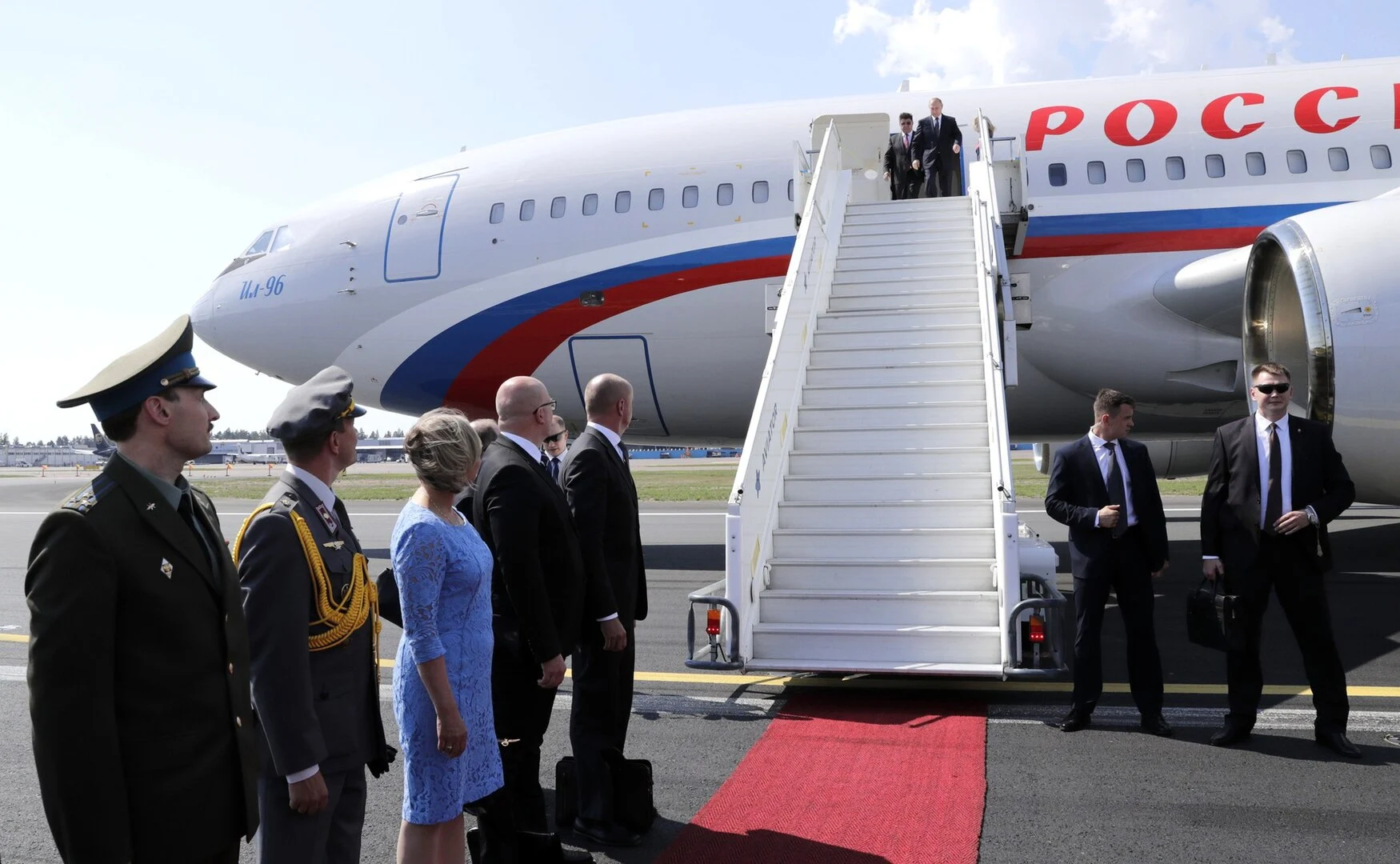
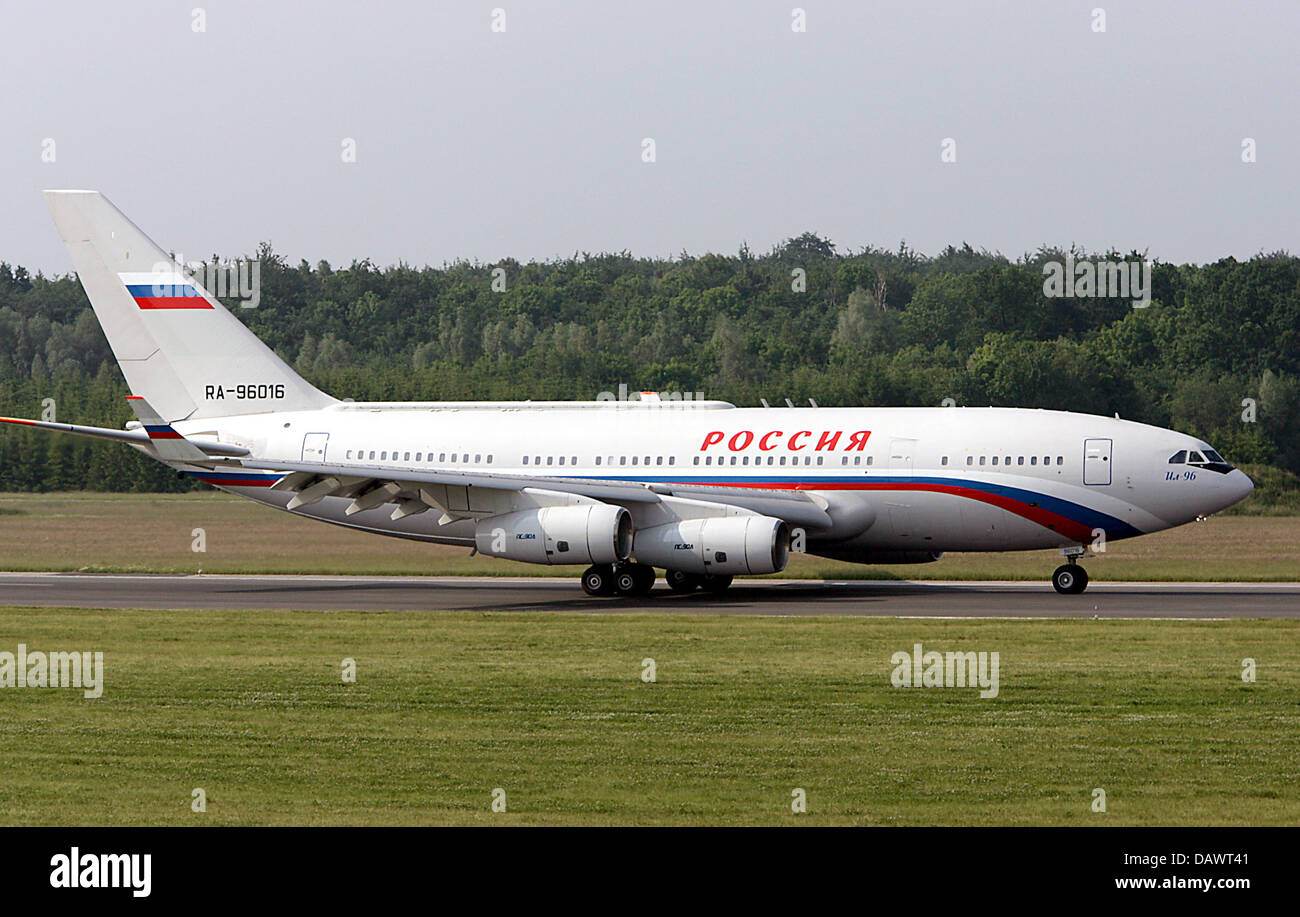
The Ilyushin Il-96-300PU is a highly modified, long-range wide-body aircraft serving as the primary aerial command center for the President of Russia. Operated by the Special Flight Detachment "Rossiya," this "Flying Kremlin" features advanced encrypted communications, specialized defense systems, and a reinforced airframe to ensure continuous government functionality during flight.
The Ilyushin Il-96-300PU (where "PU" stands for Punkt Upravleniya or "Command Point") is not a single aircraft but a small, elite fleet of specialized jets. While the Russian President has several aircraft at his disposal, the Il-96-300PU remains the flagship of the Special Flight Detachment "Rossiya," a subsidiary of Aeroflot that serves the Kremlin. As of 2026, these aircraft continue to represent the pinnacle of Russian aerospace engineering, combining heavy-lift capabilities with the sophisticated requirements of a mobile executive office and a strategic military command center.
Technical Specifications and Design Architecture
The Il-96-300PU is based on the standard Ilyushin Il-96-300, a four-engine wide-body airliner that first entered service in the early 1990s. However, the modifications for presidential use are so extensive that the PU variant is essentially a different class of machine.
Airframe and Powerplant
The aircraft is powered by four Aviadvigatel PS-90A turbofan engines. Unlike many modern Western wide-body aircraft that have shifted to twin-engine configurations for fuel efficiency, the Il-96 retains a four-engine layout. This design choice is deliberate for a head-of-state aircraft; it provides a high degree of redundancy. If one or even two engines were to fail or be damaged by external factors, the aircraft could still maintain flight and perform a safe landing.
In the 2026 operational environment, these engines have undergone several iterations of modernization (the PS-90A-1 and A-2 standards) to improve thrust-to-weight ratios and reduce noise signatures. The airframe itself is constructed with a high percentage of composite materials and advanced aluminum alloys, but the presidential version includes significant additional weight due to localized armoring and electronic shielding.
Range and Performance
The Il-96-300PU has a flight range exceeding 11,500 kilometers (approximately 7,100 miles) without refueling. This allows the Russian President to reach almost any global capital or domestic federal district from Moscow without the need for technical stops.
| Feature | Specification (Il-96-300PU) |
|---|---|
| Wingspan | 60.11 meters |
| Length | 55.35 meters |
| Maximum Takeoff Weight | 270,000 kg |
| Cruising Speed | 850–900 km/h |
| Service Ceiling | 13,100 meters |
| Engine Type | 4 x Aviadvigatel PS-90A |
| Flight Range | 11,500+ km |
| Crew (Flight) | 3 + specialized mission crew |
The "Flying Kremlin": Command and Control Capabilities
The primary purpose of the "PU" designation is to facilitate the uninterrupted governance of the Russian Federation, even in the event of a nuclear conflict or a total breakdown of ground-based infrastructure.
Advanced Communications Suite
The aircraft is equipped with a comprehensive satellite communication system, recognizable by the prominent aerodynamic "hump" on the top of the fuselage. This system utilizes the Glonass satellite constellation and other secure channels to provide high-bandwidth, encrypted voice and data links. These links allow the President to communicate with the Ministry of Defense, the Federal Security Service (FSB), and international leaders in real-time.
The "Nuclear Button" Integration
The Il-96-300PU is designed to function as a terminal for the "Cheget," the Russian nuclear briefcase. The onboard systems ensure that the President can authorize the use of strategic nuclear forces directly from the cabin. This requires a level of electromagnetic pulse (EMP) hardening that is not found on civilian airliners, protecting the sensitive electronics from the effects of nearby nuclear detonations.
Electronic Warfare and Defense
Security is the paramount concern for any presidential transport. The Il-96-300PU is fitted with an integrated self-defense suite. This includes:
- Missile Approach Warning Systems (MAWS): Sensors that detect the heat signatures of incoming surface-to-air or air-to-air missiles.
- Directional Infrared Countermeasures (DIRCM): High-intensity laser systems designed to "blind" the seeking heads of heat-seeking missiles.
- Chaff and Flare Dispensers: Physical decoys to divert radar-guided and heat-seeking projectiles.
- Radar Jamming: Active electronic systems that can disrupt the targeting capabilities of enemy anti-aircraft batteries.
Interior Layout and Luxury Amenities
While the aircraft's exterior and technical bays are focused on survival and command, the interior is designed for comfort and the rigors of long-haul diplomatic travel. The cabin is split into several distinct zones, often characterized by high-end Russian craftsmanship.
The Executive Suite
The President’s private quarters typically include a spacious bedroom, a bathroom equipped with a shower (featuring gold-plated fixtures and marble accents), and a private study. The aesthetic often reflects a blend of classical Russian style and modern luxury, utilizing precious woods, silk, and fine leathers.
Meeting and Conference Rooms
A significant portion of the main deck is dedicated to a large conference room. This area allows the President to hold meetings with cabinet members or foreign dignitaries during flight. The table is equipped with integrated screens and secure communication ports, ensuring that the environment is as productive as an office in the Kremlin.
Ancillary Facilities
To support the President and his staff during long overseas missions, the aircraft includes:
- A Medical Suite: A small but fully equipped clinic with life-support systems and surgical capabilities, staffed by a team from the Central Clinical Hospital.
- A Fitness Center: A compact gym area with treadmills and weight machines to help the President maintain physical fitness during multi-day tours.
- Staff and Press Cabin: Areas for the Presidential Press Service, security details (FSO), and administrative staff, though these are much more functional and less luxurious than the executive zones.
The Special Flight Detachment "Rossiya"
The operation of the Il-96-300PU falls under the Special Flight Detachment "Rossiya," based at Vnukovo-2 Airport in Moscow. This organization is separate from the standard commercial aviation sector and is overseen by the Administrative Directorate of the President of the Russian Federation.
Fleet Management
The detachment does not rely on a single aircraft. As of 2026, the fleet consists of several Il-96-300PU units (including tail numbers like RA-96012, RA-96016, RA-96020, and the newer RA-96024). When the President travels, at least two aircraft are often involved: the primary transport and a "backup" or "reserve" plane that follows the same route. This ensures that if the primary aircraft suffers a technical failure at a remote airport, a replacement is immediately available.
Maintenance and Security Protocols
The maintenance of these aircraft is performed under the strictest security. Every component is vetted for quality and potential sabotage. The technicians working on the Presidential fleet are highly cleared individuals, often with military backgrounds. Furthermore, the aircraft are parked in high-security hangars at Vnukovo-2, which are guarded 24/7 by the Federal Protective Service (FSO).
Comparison: Il-96-300PU vs. Air Force One (VC-25A/B)
In the world of strategic executive transport, the Il-96-300PU is frequently compared to the United States' Boeing VC-25A (and the newer VC-25B), commonly known as Air Force One.
| Feature | Ilyushin Il-96-300PU (Russia) | Boeing VC-25B (USA) |
|---|---|---|
| Base Model | Il-96-300 | Boeing 747-8i |
| Engine Count | 4 | 4 |
| Floor Space | Approx. 350 sq. meters | Approx. 370 sq. meters |
| Refueling | Limited (rarely used) | Capable of in-flight refueling |
| Defense | Integrated Laser/Electronic Suite | Integrated Laser/Electronic Suite |
| Production | Domestic (Russia) | Domestic (USA) |
While both aircraft serve the same purpose, the Il-96 is slightly smaller in volume than the Boeing 747-8 variant but offers comparable range and command capabilities. A key difference has historically been the Il-96's lack of a standard in-flight refueling probe on earlier models, though recent modernization efforts in the 2020s have addressed the logistical needs for ultra-long endurance.
Historical Context and Evolution
The development of the Il-96-300PU was a significant moment for the post-Soviet Russian aviation industry. Following the retirement of the Il-62 (a narrow-body long-range jet), the Kremlin needed a modern wide-body platform. The first Il-96 presidential aircraft was commissioned during the Boris Yeltsin era, but it was under Vladimir Putin that the fleet was expanded and modernized into the sophisticated command centers they are today.
The transition to the Il-96 was also a matter of national prestige. For a nation that prides itself on its aerospace history, having the head of state fly in a domestically produced aircraft—rather than a Boeing or Airbus—is a critical component of "technological sovereignty." In the face of international sanctions and supply chain shifts in the early 2020s, the Il-96 became even more important as the Russian government doubled down on the United Aircraft Corporation (UAC) to maintain and produce these strategic assets.
Operating Challenges and Reliability
Despite its role as the flagship of Russian aviation, the Il-96 has faced challenges. The standard Il-96-300 was largely phased out of commercial service by Aeroflot due to its high fuel consumption compared to western twin-jets. However, fuel economy is a secondary concern for a presidential aircraft.
Reliability is a different matter. The Il-96-300PU has a solid safety record, with no major accidents involving the presidential variants. This is attributed to the intense maintenance schedule and the relatively low number of flight hours these aircraft accumulate compared to commercial airliners. Every flight is preceded by a rigorous "pre-flight" check that lasts several hours, involving both engineers and FSO security teams.
The Future of the Presidential Fleet
Looking ahead from 2026, the Russian government is likely to continue evolving this platform. While there has been discussion of moving to the Il-96-400M (a stretched, more powerful version of the Il-96), the -300PU variant remains the current workhorse.
The focus of future upgrades will likely remain on:
- Avionics Integration: Moving toward a fully digital "glass cockpit" that is compatible with modern international air traffic control requirements while remaining resistant to cyber-interference.
- Next-Generation Stealth/Defense: Improving the aircraft's radar cross-section (where possible) and upgrading the laser defense systems to counter more advanced missile threats.
- Communication Bandwidth: Increasing the speed of satellite data links to support 6G or advanced orbital communications.
Frequently Asked Questions
How many Il-96 aircraft does the Russian President have?
The Special Flight Detachment "Rossiya" operates a fleet of approximately 10 to 12 Il-96-300 variants. However, only a few of these (roughly 4-5) are the specific "PU" (Command Point) configuration used directly by the President for high-security missions. The others serve as support, transport for the delegation, or backup aircraft.
Can the Il-96-300PU survive a nuclear blast?
The aircraft is specifically hardened against Electromagnetic Pulse (EMP) and radiation to ensure its electronics continue to function after a nuclear detonation. While no aircraft can survive a direct hit, the Il-96-300PU is designed to be one of the safest places in the world during a strategic conflict, allowing the President to maintain command from the air.
Who pilots the presidential Ilyushin?
The pilots are elite members of the Special Flight Detachment "Rossiya." They are typically former military pilots with thousands of hours of experience. They undergo continuous training, including simulations of extreme emergency scenarios, and are subjected to rigorous security background checks by the FSB and FSO.
Why does the plane have four engines instead of two?
Four engines provide a significantly higher level of safety and redundancy. In the event of an engine failure or damage (e.g., from a bird strike or combat), the aircraft can continue to fly and land safely with two or even three engines inoperative. For a presidential transport, safety always outweighs the fuel efficiency benefits of a two-engine design.
Does the Il-96-300PU always fly with a fighter escort?
Not always. In Russian airspace or during routine travel, the aircraft's own defense systems and the security of the flight path are considered sufficient. However, during visits to high-risk areas or during specific state ceremonies, the aircraft is often escorted by Sukhoi Su-35S or Su-57 fighter jets.
Practical Recommendation for Further Research
For those interested in the technical nuances of Russian state aviation, monitoring the official press releases from the United Aircraft Corporation (UAC) and the Administrative Directorate of the President of the Russian Federation is the most reliable way to track fleet updates. Additionally, aviation enthusiasts often track the movements of these aircraft using transponder data (when not flying in "stealth" mode) on platforms like FlightRadar24, though the Presidential fleet frequently operates without public ADS-B signatures for security reasons.