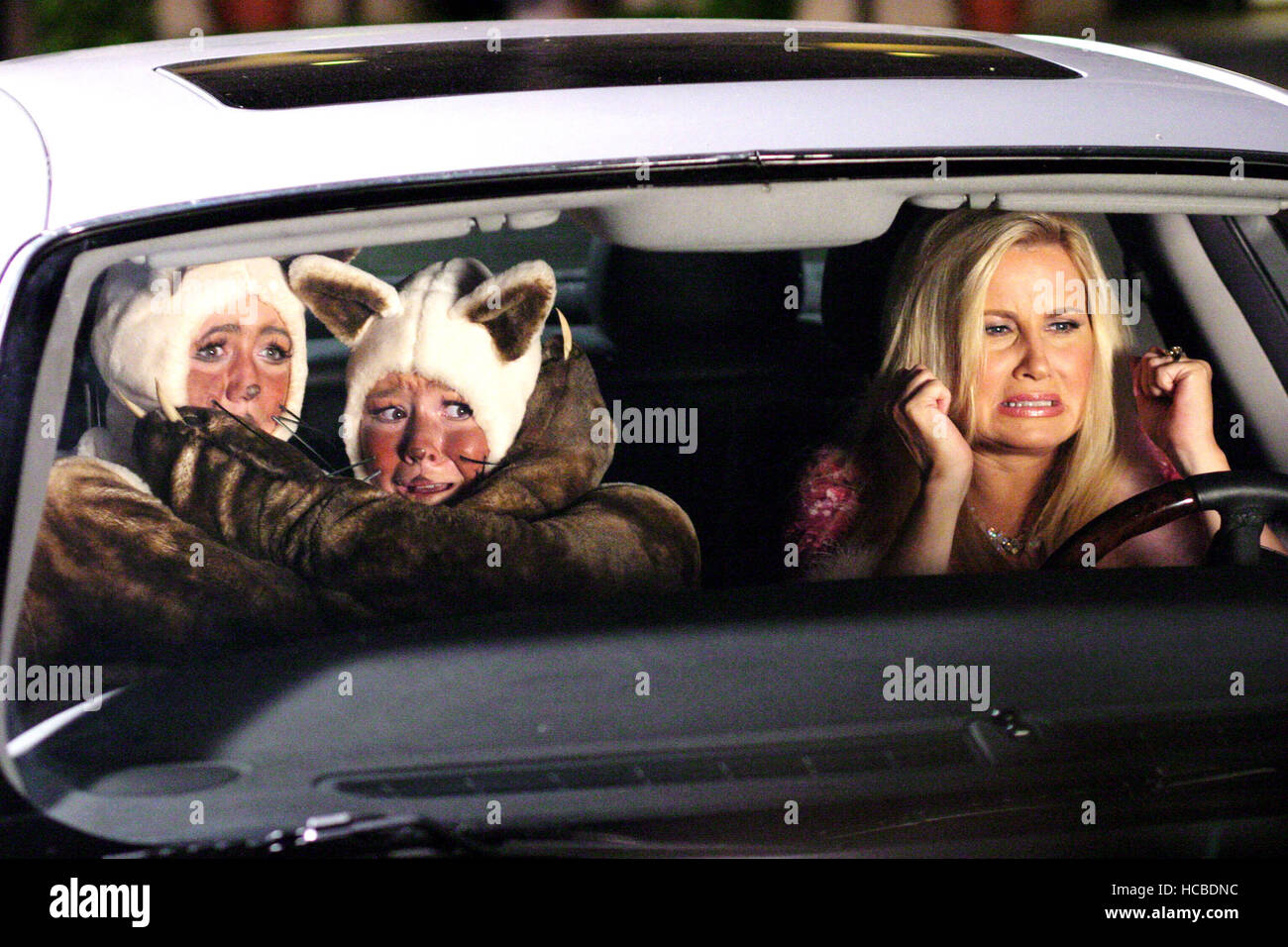
Jennifer Coolidge played the role of Fiona, the vain and manipulative stepmother, in the 2004 teen comedy film A Cinderella Story. Acting alongside Hilary Duff and Chad Michael Murray, Coolidge delivered a standout comedic performance characterized by her signature dry wit, physical humor, and satirical portrayal of mid-2000s beauty standards.
Over two decades after its initial release, A Cinderella Story remains a cornerstone of the teen-movie genre, largely due to its memorable casting. While the film was designed as a modern-day vehicle for Hilary Duff, Jennifer Coolidge’s portrayal of Fiona has aged into one of the most celebrated "villain" performances in 2000s cinema. Coolidge brought a specific brand of camp and improvisational energy to the role, turning what could have been a one-dimensional antagonist into a comedic powerhouse that continues to dominate internet memes and nostalgic retrospectives in 2026.
The Character of Fiona: A Satire of the San Fernando Valley
Fiona is the modern reimagining of the "Wicked Stepmother" archetype from the classic Charles Perrault fairy tale. In this 2004 adaptation, set in the San Fernando Valley, the character’s "wickedness" is filtered through the lens of early-2000s superficiality. Fiona is obsessed with youth, plastic surgery, and social status. She inherits the "Hal’s Diner" empire after the tragic death of Sam’s father, Hal Montgomery, and proceeds to run it into the ground while treating Sam (Hilary Duff) as unpaid labor.
What makes Coolidge’s Fiona unique is her lack of self-awareness. Unlike the cold, calculating Lady Tremaine from the Disney animated classic, Fiona is chaotic and somewhat delusional. She is constantly seen undergoing bizarre beauty treatments—ranging from botox injections that leave her face paralyzed to salmon-based diets and excessive tanning. This satirical take on the "Valley Girl" grown-up provided a sharp contrast to Sam’s grounded, hardworking nature.
Iconic Quotes and Comedic Timing
Jennifer Coolidge’s performance is defined by her delivery of specific lines that have since become cult classics. Her dialogue often highlighted Fiona’s narcissism and disconnect from reality.
- "It’s the humidity!" – One of the most famous lines in the film occurs when Fiona tries to explain away her frantic behavior and appearance.
- "Salmon is a fish, not a color." – This line, delivered during a scene regarding interior design or fashion (depending on the interpretation of her erratic choices), perfectly encapsulates the character's intellectual vanity.
- "I’m a very good listener." – Usually said right before she completely ignores someone or interrupts them to talk about herself.
These lines work because of Coolidge’s specific cadence—a breathy, slightly confused tone that makes even the most malicious actions seem absurdly funny.
The Production and Casting Context of 2004
To understand the impact of Coolidge in this role, one must look at where her career stood in 2004. At the time, she was already a recognized name in comedy thanks to her roles as "Stifler's Mom" in the American Pie franchise and the lovable Paulette Parcelle in Legally Blonde (2001).
A Cinderella Story allowed her to lean into a more antagonistic role, though she maintained the "lovable weirdo" energy that audiences expected. The film was directed by Mark Rosman and produced by Warner Bros. It was intended to capitalize on Hilary Duff’s massive success with Lizzie McGuire. While critics at the time gave the film mixed reviews, it was a massive commercial success, grossing over $70 million worldwide against a $19 million budget.
Collaboration with the Cast
The chemistry between Jennifer Coolidge and the rest of the cast was pivotal. Her interactions with the "Evil Stepsisters," Brianna (Madeline Zima) and Gabriella (Andrea Avery), created a comedic trio that mirrored the absurdity of the era’s reality TV families. Coolidge often felt like the "alpha" of this group, leading them in their collective quest to ruin Sam’s life while simultaneously obsessing over their own perceived flaws.
In scenes with Hilary Duff, Coolidge played a formidable but ridiculous foil. While Sam represented the moral heart of the movie, Fiona represented the vapid consumerism of the 2000s. This dynamic provided the necessary stakes for Sam's eventual "rebellion" and departure for Princeton University.
Technical Elements of Fiona’s Character Design
The visual representation of Fiona was essential to Coolidge’s performance. The costume and makeup departments worked together to create a look that was "expensive but tacky."
- The Wardrobe: Fiona was almost always dressed in bright pinks, animal prints, and heavy jewelry. Her outfits were designed to look like high-end "athleisure" or formal wear that was slightly too small or too loud, emphasizing her desperate cling to youth.
- The Botox Gag: A recurring technical gag involved Fiona’s face being "frozen" from recent cosmetic procedures. This required Coolidge to use her body and eyes for physical comedy, as her mouth movements were intentionally restricted for the bit.
- The Environment: The contrast between the bright, plastic world of Fiona’s home and the greasy, vintage feel of Hal’s Diner served as a visual metaphor for how she had corrupted Hal’s legacy.
| Element | Description | Impact on Character |
|---|---|---|
| Primary Color Palette | Hot pink, leopard print, neon white | Signified vanity and the "Barbie-core" aesthetic of the early 2000s. |
| Key Accessory | Oversized sunglasses and tanning goggles | Represented her shielding herself from reality and her obsession with skin tone. |
| Signature Drink | Diet smoothies/Salmon-based concoctions | Highlighted her dedication to fad diets and "wellness" over actual health. |
| The Car | Heavily customized, flashy vehicles | Showed her misuse of Hal Montgomery's wealth. |
Jennifer Coolidge’s Legacy and the "Coolidge-ance"
By 2026, Jennifer Coolidge has reached a level of legendary status in Hollywood, often referred to as the "Coolidge-ance" (a portmanteau of her name and "renaissance"). While her more recent work in The White Lotus earned her Emmy and Golden Globe awards, fans frequently trace her comedic DNA back to roles like Fiona.
A Cinderella Story served as a masterclass in how a character actress can take a secondary role and make it the most talked-about part of a film. In the decades since the movie's release, Fiona has become a favorite for Halloween costumes and drag performances, proving that the character’s aesthetic and personality have a lasting cultural footprint.
The Evolution of the "Stepmother" Role
In traditional adaptations, the stepmother is a figure of genuine terror. In the 2004 version, Coolidge transformed the role into a figure of ridicule. This shift reflects a broader trend in early 2000s cinema where villains were often portrayed as satirical versions of societal obsessions—in this case, the obsession with plastic surgery and wealth. Coolidge didn’t just play a villain; she played a victim of her own vanity, which made her more complex and infinitely more watchable.
Critical Analysis: Why Fiona Works
The brilliance of Coolidge’s Fiona lies in her rhythmic delivery. Comedy is often about the space between words, and Coolidge is a master of the "pregnant pause." When she tells Sam that "Salmon is a fish, not a color," the beat she takes before and after the line allows the audience to register both the stupidity of the statement and the utter confidence with which she says it.
Furthermore, Coolidge’s background in improvisational theater (specifically with The Groundlings) is evident in A Cinderella Story. Many of her small physical tics—the way she holds a glass, the squinting of her eyes after a botox treatment, and the way she walks in heels—feel like character choices made in the moment to enhance the scene's absurdity.
Detailed Cast and Character Overview
To fully appreciate Coolidge's role, it is helpful to see how she fits into the broader ensemble of the 2004 production.
| Actor | Character | Role in the Narrative | Relationship to Fiona |
|---|---|---|---|
| Hilary Duff | Sam Montgomery | The "Cinderella" figure and protagonist. | Step-daughter and "employee" whom she mistreats. |
| Jennifer Coolidge | Fiona | The "Wicked Stepmother" and antagonist. | Self-appointed head of the household and diner. |
| Chad Michael Murray | Austin Ames | The "Prince Charming" and high school QB. | A social target she wants her own daughters to land. |
| Regina King | Rhonda | The "Fairy Godmother" figure/Diner manager. | The employee who constantly challenges Fiona's authority. |
| Madeline Zima | Brianna | One of the two "Wicked Stepsisters." | Biological daughter and partner-in-bullying. |
| Andrea Avery | Gabriella | The other "Wicked Stepsister." | Biological daughter and partner-in-bullying. |
| Lin Shaye | Mrs. Wells | The school administrator. | A peer Fiona attempts to social-climb around. |
Common Questions About Jennifer Coolidge in A Cinderella Story
What happened to Fiona at the end of the movie?
In the climax of the film, it is discovered that Sam’s father, Hal, actually left a will stating that all his possessions—including the house and the diner—belonged to Sam, not Fiona. Fiona had hidden the will (or claimed it didn't exist). Once the real will was found hidden in a childhood book, Fiona and her daughters were stripped of their wealth. They were forced to work at the diner, now owned by Sam and managed by Rhonda, to pay off their debts and for their past mistreatment of the staff.
Did Jennifer Coolidge improvise her lines in the film?
While the script was written by Leigh Dunlap, Jennifer Coolidge is known for adding her own "Coolidge-isms" to her roles. Director Mark Rosman has noted in various retrospectives that Coolidge was given the freedom to play with the dialogue, especially her reactions to the bizarre beauty treatments. Her specific vocal inflections and physical comedy were largely her own contributions to the character.
Why is the "Salmon" scene so famous?
The "Salmon" scene is famous because it perfectly captures the aesthetic obsession of the 2000s. Fiona’s insistence on a very specific, somewhat nonsensical lifestyle choice—and her indignation when others don't understand it—is a hallmark of her character. It has become a viral clip on platforms like TikTok and Instagram as a shorthand for "rich person delusions."
Is A Cinderella Story with Jennifer Coolidge available on streaming?
As of 2026, A Cinderella Story is a staple of various streaming libraries due to its high rewatch value. It is frequently available on platforms such as Max (formerly HBO Max), Netflix, or for digital purchase on Amazon Prime Video and Apple TV. Because it is a Warner Bros. production, it remains a core title in the Warner Bros. Discovery catalog.
How old was Jennifer Coolidge when she filmed A Cinderella Story?
The film was shot in 2003 and released in July 2004. Jennifer Coolidge was born in August 1961, making her approximately 42 years old during the production of the film. This age was perfect for the role, as she was old enough to play the mother of teenagers but youthful enough to satirize the "desperate for youth" trope.
Final Recommendation for Fans
If you are looking to revisit Jennifer Coolidge’s performance in A Cinderella Story, it is best enjoyed as part of a "2000s Nostalgia Marathon." To get the full experience of her comedic range during this era, pair the movie with Legally Blonde and Best in Show. These films showcase her ability to play characters that are vastly different in social status but unified by a specific, hilarious vulnerability.
For those interested in the technical side of her performance, pay close attention to her eyes during the scenes where her face is supposedly "frozen" from botox. The amount of emotion and comedy she conveys through just her gaze is a testament to her skill as a physical comedian. Whether you are watching for the first time or the fiftieth, Coolidge’s Fiona remains the undisputed highlight of the film, proving that being "wicked" has never been so funny.