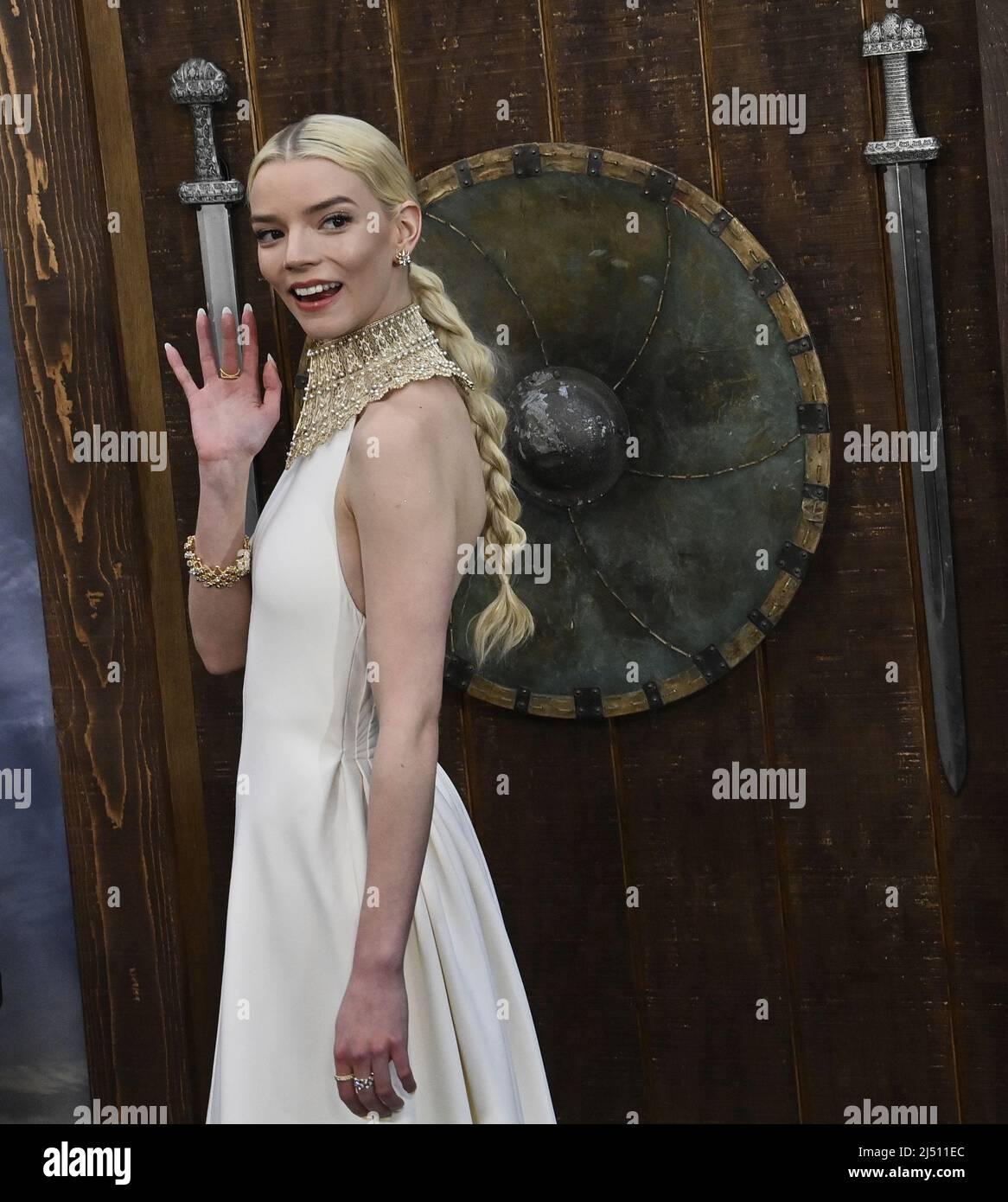
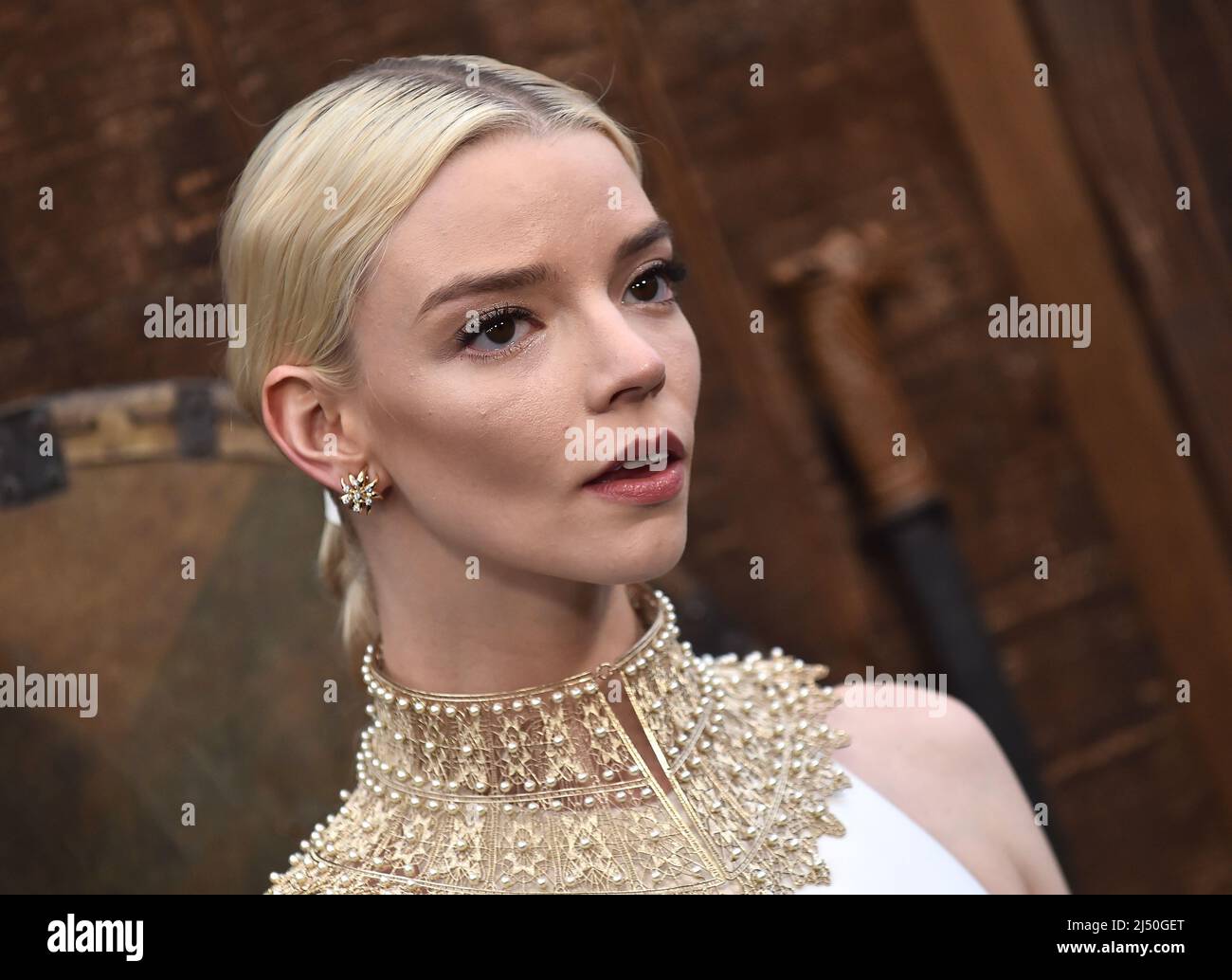
Anya Taylor-Joy portrays Olga of the Birch Forest in Robert Eggers' 2022 Viking epic, The Northman. As a Slavic sorceress and survivor, her character serves as the intellectual and spiritual counterpart to the protagonist, Amleth. Her performance is defined by a blend of ethereal mystery and gritty pragmatism, anchoring the film’s supernatural elements in a harsh, historical reality.
The Role of Olga of the Birch Forest
In The Northman, Anya Taylor-Joy plays Olga, a woman captured from a Slavic village and enslaved by the same Norsemen who occupy the land where Amleth (Alexander Skarsgård) seeks his revenge. Unlike the traditional "damsel in distress" trope, Olga is introduced as a character of immense agency and hidden power. She claims to possess the ability to "break the bones of minds," a reference to her skill in sorcery and psychological manipulation.
Olga represents the "cunning" side of the human spirit, contrasting with Amleth’s raw, physical "strength." Their partnership is born out of a shared necessity for survival, but it evolves into a deep, albeit tragic, romantic connection. Taylor-Joy brings a specific intensity to the role, utilizing her distinct features and wide-eyed gaze to convey a character who sees things others cannot. Her portrayal highlights the vulnerability of a displaced person in the 10th century while never losing the core of a woman who refuses to be broken by her captors.
The Significance of Slavic Sorcery
The character of Olga introduces a different cultural layer to the film. While the narrative is rooted in Norse mythology and the Amleth legend (the precursor to Shakespeare’s Hamlet), Olga’s background is Slavic. This allows the film to explore the intersection of different pagan belief systems. Her "earth magic"—using plants, rituals, and the environment—serves as a grounded version of the supernatural. When she assists Amleth, it is rarely through flashy displays of power, but through strategy and a deep understanding of nature and human psychology.
The Creative Reunion of Taylor-Joy and Robert Eggers
The Northman marked the second major collaboration between Anya Taylor-Joy and director Robert Eggers, following her breakout role in the 2015 folk-horror masterpiece, The Witch. This professional relationship is crucial to understanding the depth of her performance in The Northman.
Eggers is known for his obsessive attention to historical detail and his "maximalist" approach to authenticity. Having worked with him previously, Taylor-Joy was uniquely prepared for the grueling demands of his set. Their creative shorthand allowed for a character that felt lived-in and historically accurate, even within the stylized framework of a revenge epic.
Consistency in the "Eggers Verse"
In The Witch, Taylor-Joy played Thomasin, a girl descending into the supernatural world to escape the constraints of a patriarchal, religious family. In The Northman, Olga is already well-versed in the supernatural and uses it as a tool for liberation. Fans and critics often view Olga as a thematic evolution of Taylor-Joy's previous work with Eggers—a transition from a victim of circumstance to a master of her own fate.
Production Challenges and Method Acting in the Mud
The filming of The Northman was notoriously difficult, with the cast and crew facing the elements in Northern Ireland and Iceland. Anya Taylor-Joy has spoken extensively in interviews about the physical toll the production took. Much of her screen time involved standing in freezing mud, enduring torrential rain, and performing in thin, historically accurate garments that offered little protection against the climate.
According to production reports, Eggers insisted on long takes with complex choreography, meaning that if a mistake happened five minutes into a scene, the actors had to start over in the freezing cold. Taylor-Joy’s ability to maintain a poised, otherworldly presence while being physically miserable is a testament to her technical skill. She famously refused to complain about the conditions, noting that the harsh environment helped ground the performance in the reality of 10th-century life.
Visual Authenticity
The costume design by Linda Muir further enhanced Taylor-Joy’s performance. Her attire transitioned from the rough, mud-caked rags of an enslaved worker to the more intricate, ritualistic garments seen later in the film. These visual cues reinforced Olga’s dual nature: a survivor of the earth and a conduit for the divine.
Comparing Character Dynamics in The Northman
To understand the specific weight Anya Taylor-Joy brings to the film, it is helpful to look at how Olga interacts with the other primary archetypes in the story.
| Character | Relationship to Amleth | Primary Attribute | Archetype |
|---|---|---|---|
| Olga (Anya Taylor-Joy) | Ally / Romantic Interest | Cunning & Magic | The Wise Woman / Sorceress |
| Amleth (Alexander Skarsgård) | Protagonist | Brute Force & Vengeance | The Berserker / Tragic Hero |
| Queen Gudrún (Nicole Kidman) | Mother / Antagonist | Manipulation & Ambition | The Fallen Queen |
| Fjölnir (Claes Bang) | Uncle / Nemesis | Authority & Guilt | The Usurper |
| Heimir the Fool (Willem Dafoe) | Mentor / Spiritual Guide | Truth & Madness | The Shaman / Jester |
This table illustrates that Olga is the only character who provides a path forward for Amleth that isn't rooted entirely in death. While Queen Gudrún represents the cycle of betrayal and Fjölnir represents the burden of the past, Olga represents the possibility of a future—specifically through the children she carries.
Critical Reception and Career Impact
By 2026, The Northman is recognized as a pivotal moment in Anya Taylor-Joy’s career, solidifying her as a "prestige" actress capable of handling massive budgets without losing her "indie" credibility. Critics praised her for providing the "emotional heartbeat" of a film that could otherwise have been a cold, violent exercise in historical recreation.
Her performance was lauded for its subtlety. In a movie filled with screaming berserkers and visceral violence, Taylor-Joy’s quietest moments—a whispered incantation or a knowing look—often carried the most narrative weight. This role followed her massive success in The Queen’s Gambit, and The Northman proved she could hold her own in a high-stakes ensemble cast featuring Academy Award winners like Nicole Kidman and Willem Dafoe.
Legacy of the Performance
As of 2026, the film’s cult status has grown, particularly among fans of "elevated horror" and historical epics. Taylor-Joy's Olga is frequently cited in academic discussions regarding the portrayal of women in Viking-age media. Rather than being a secondary character, she is viewed as the "architect of the ending," as it is her safety and the survival of her lineage that ultimately give Amleth's sacrifice meaning.
Themes of Fate and Agency
One of the central questions of The Northman is whether humans can escape their fate (the "thread of the Norns"). Amleth is bound by a vow to "save my mother, kill my uncle, avenge my father." Olga, however, offers a different perspective. She is a proponent of the idea that while the past is fixed, the future can be influenced by the "seeds" one plants.
Anya Taylor-Joy captures this philosophical nuance beautifully. There is a scene on a boat where she tells Amleth that their path is "not just of blood, but of light." This transition from the darkness of the revenge plot to the hope of the future is carried almost entirely by Taylor-Joy’s performance. She manages to make the audience believe in the possibility of a "happily ever after" in a world that is clearly designed to crush such hopes.
Technical Aspects of Her Performance
From a technical standpoint, Taylor-Joy’s performance in The Northman relies heavily on her mastery of:
- Dialect Work: She adopted a subtle Slavic-inflected accent that distinguished her from the Norse-accented cast, emphasizing her "outsider" status.
- Physicality: Her movements are deliberate and feline, contrasting with the heavy, grounded movements of the male warriors.
- Eye Acting: Given the heavy use of close-ups and low-light cinematography, her ability to convey complex emotions through her eyes was essential for the film’s visual storytelling.
Frequently Asked Questions
Did Anya Taylor-Joy do her own stunts in The Northman?
While The Northman is not a traditional "stunt" movie in the vein of a superhero film, it required immense physical endurance. Taylor-Joy performed the majority of her own scenes in the elements, including wading through deep mud and being exposed to extreme weather conditions. For specialized scenes involving horses or complex action, professional stunt performers were utilized, but the bulk of the "physical hardship" seen on screen was real.
Is Olga a real historical figure?
Olga of the Birch Forest is a fictional character created for the film. However, she is heavily inspired by historical accounts of "Volvas" (Norse seers) and Slavic folk magic. The film's production team consulted with historians and archaeologists to ensure that her clothing, rituals, and the Slavic cultural elements she represents were grounded in 10th-century historical accuracy.
What is the significance of the "Birch Forest" in her name?
The birch tree has deep symbolic meaning in both Slavic and Norse mythology, often associated with protection, rebirth, and the feminine divine. By naming her "Olga of the Birch Forest," the filmmakers signal her connection to the natural world and her role as a source of renewal in a story dominated by death and decay.
How did working on The Northman affect Anya Taylor-Joy's later roles?
By 2026, we can see that The Northman served as a bridge for Taylor-Joy into more physically demanding and action-oriented roles, such as her lead role in Furiosa: A Mad Max Saga. It proved her durability as a performer and her ability to anchor large-scale productions while maintaining the artistic integrity found in her smaller projects.
Is there a "Director’s Cut" of The Northman featuring more of her scenes?
While there have been rumors of longer cuts given Robert Eggers' extensive filming process, the theatrical release (and subsequent 4K home media releases) remains the definitive version. Some deleted scenes featuring Olga were released as bonus features, providing more context for her life in the slave camp, but the core of her performance was fully realized in the primary release.
Practical Recommendation for Viewers
To fully appreciate Anya Taylor-Joy's performance in The Northman, it is recommended to watch the film on a high-definition screen (4K) with a quality sound system. The film relies heavily on atmospheric details—the sound of the wind, the texture of the mud, and the subtle inflections in Taylor-Joy’s voice—which are lost on smaller devices. Furthermore, watching The Witch immediately before or after The Northman provides a fascinating look at the evolution of the actor-director partnership between Taylor-Joy and Eggers.