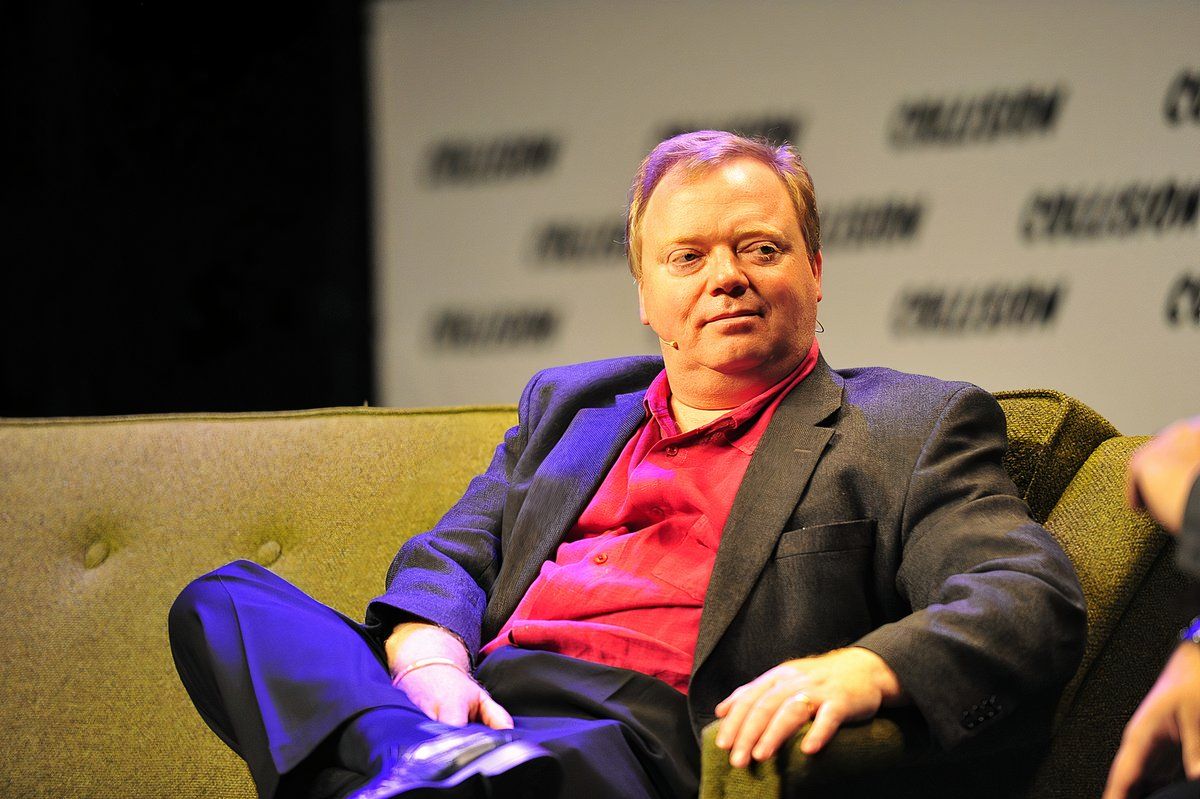
Anthony Wood is the founder, chairman, and CEO of Roku, Inc., and the primary inventor behind the first Roku streaming player. A serial entrepreneur, Wood is also credited with inventing the Digital Video Recorder (DVR) at his earlier company, ReplayTV. His leadership transformed Roku from a hardware startup into a dominant global streaming platform.
The history of streaming media is inseparable from the career of Anthony Wood. While many tech pioneers are associated with a single breakthrough, Wood is responsible for two distinct shifts in how humans consume television. First, he liberated viewers from linear broadcasting schedules via the DVR. Second, he bridged the gap between the internet and the living room by creating a hardware-software ecosystem that could bring any digital service to any television set. As of 2026, Wood remains at the helm of Roku, navigating a landscape defined by intense competition from global titans like Amazon, Google, and Apple.
Early Entrepreneurial Roots and SunRize Industries
Long before Roku became a household name, Anthony Wood was honing his skills as a software engineer and entrepreneur. Born in Manchester, England, and raised largely in Texas, Wood’s affinity for coding began in his teenage years. While studying electrical engineering at Texas A&M University, he did not wait for graduation to enter the business world.
During the late 1980s, Wood founded SunRize Industries. This early venture focused on creating hardware and software for the Commodore Amiga, a computer system beloved by enthusiasts for its advanced graphics and sound capabilities. SunRize specialized in digital audio editing tools, a niche that required Wood to understand the complexities of real-time data processing and user interface design. This experience proved foundational; it taught him how to package complex technical capabilities into products that creative professionals and hobbyists could actually use.
The eventual decline of the Amiga platform forced Wood to look toward the next frontier of consumer technology. However, the lessons from SunRize—specifically the importance of vertical integration between specialized hardware and intuitive software—would become the hallmark of his future inventions.
The ReplayTV Era: Inventing the DVR
In the late 1990s, the concept of "time-shifting" television was purely the domain of the VCR. Recording shows was cumbersome, required physical media, and offered no easy way to skip commercials or pause live broadcasts. Anthony Wood recognized that the increasing capacity of hard drives could be applied to television signals.
In 1997, Wood founded ReplayTV. His goal was to build a device that could digitize an analog television signal and store it on a hard disk in real-time. This was the birth of the Digital Video Recorder (DVR). While ReplayTV famously competed with TiVo, Wood’s version of the DVR was often cited by tech purists as the superior technical achievement, particularly for its early attempts at commercial-skipping features.
The invention of the DVR was more than just a convenience; it was a fundamental disruption of the advertising-supported broadcast model. Although ReplayTV eventually faced legal challenges from media companies and was later sold to SONICblue, the core technology Wood developed became the blueprint for the set-top boxes provided by every major cable and satellite provider in the world.
The Netflix Connection and "Project Griffin"
The most pivotal moment in the invention of Roku occurred during a brief but intense period when Anthony Wood served as a Vice President at Netflix. In the mid-2000s, Netflix CEO Reed Hastings was increasingly focused on transitioning the company from a DVD-by-mail service to an internet streaming powerhouse. However, there was a major hurdle: people did not want to watch movies on their computer monitors; they wanted them on their televisions.
To solve this, Wood was tasked with leading "Project Griffin." This internal Netflix team developed a dedicated hardware device—a small, inexpensive box that would plug into a TV and stream Netflix content via an internet connection. By 2007, the device was nearly ready for mass production.
At the eleventh hour, Reed Hastings made a strategic decision to cancel the hardware project. Hastings feared that if Netflix manufactured its own hardware, other electronics giants like Sony, Samsung, and LG would view Netflix as a competitor and refuse to integrate the Netflix app into their own smart TVs and Blu-ray players.
Rather than letting the hardware go to waste, Hastings allowed Wood to spin the project off into an independent company. Wood used his own previously established corporate entity, Roku (which means "six" in Japanese, representing his sixth company), to take the hardware to market. In May 2008, the "Netflix Player by Roku" was launched, marking the official beginning of the Roku era.
Evolution of the Roku Hardware and Operating System
The first Roku box was a modest device, but it solved a massive problem for the nascent streaming industry. It was the first affordable, easy-to-use bridge between the router and the television. Since that initial launch, Wood has guided the hardware through multiple generations of evolution.
From Boxes to Sticks and Integrated TVs
As technology advanced, Wood pushed the company to shrink the hardware footprint. The introduction of the Roku Streaming Stick in 2012 was a major milestone, allowing the entire device to be powered by a USB or MHL port, hiding it completely behind the television.
However, Wood’s most significant strategic move was the creation of the Roku TV program. Recognizing that the "smart TV" software of the early 2010s was universally poor, Wood decided to license the Roku Operating System (OS) directly to television manufacturers like TCL, Hisense, and Sharp. This move ensured that Roku was not just an add-on accessory but the primary interface for millions of consumers from the moment they turned on their new televisions.
The Technical Edge of Roku OS
Unlike its competitors, which often adapted mobile operating systems (like Android) for the big screen, Anthony Wood insisted that Roku OS be built from the ground up specifically for television. This purposeful design allows Roku devices to run smoothly on lower-cost hardware, which has been a key factor in Roku's ability to maintain competitive pricing.
| Feature | Original Roku (2008) | Roku Pro/Ultra (2026 Standards) |
|---|---|---|
| Max Resolution | 480i / 720p | 4k / 8k Ultra HD with HDR10+ |
| Primary Content | Netflix Only | 500,000+ Movies & TV Episodes |
| Connectivity | Ethernet / Wi-Fi (802.11b/g) | Wi-Fi 7 / Ethernet / Bluetooth 5.3 |
| Interface | Basic List View | AI-Driven Personalized Home Screen |
| Remote Control | Standard IR | Voice-Active with Lost Remote Finder |
| Audio Support | Stereo | Dolby Atmos / DTS:X Spatial Audio |
The Pivot to the Platform Model
One of Anthony Wood’s most successful business maneuvers was shifting Roku’s primary revenue stream from hardware sales to "Platform" revenue. By the late 2010s, it became clear that the real value lay in the data, advertising, and content distribution fees rather than the one-time sale of a $30 streaming stick.
Under Wood’s direction, Roku launched The Roku Channel. This ad-supported streaming service allowed Roku to act as a programmer, curate content, and capture a significant portion of the growing "FAST" (Free Ad-supported Streaming TV) market. By 2026, the Platform segment—comprised of advertising sales and shares of subscription revenue from services like Disney+ or Max—accounts for the vast majority of Roku’s gross profit.
This shift was a direct reflection of Wood’s philosophy: the hardware is merely a vehicle for the ecosystem. By controlling the gateway to the television, Wood positioned Roku as the indispensable middleman of the streaming wars.
Leadership Style and the Future of Roku
Anthony Wood is often described as a "product-first" CEO. Unlike many Silicon Valley executives who focus on marketing or financial engineering, Wood remains deeply involved in the user experience. He is known for his attention to detail regarding the Roku remote—insisting on a simple, tactile button layout that even non-technical users can navigate with ease.
In the 2026 landscape, Wood’s primary challenge is the saturation of the hardware market and the aggressive expansion of "walled gardens" by competitors. However, his long-term strategy of remaining a neutral platform has paid dividends. Because Roku does not produce its own high-budget theatrical films in the same way Disney or Amazon does, it remains a "frenemy" to all content providers, providing a level playing field that consumers seem to prefer.
Wood has also led the company into the smart home sector, integrating cameras, lighting, and security systems into the Roku OS. This expansion suggests that Wood views the television not just as an entertainment hub, but as the central dashboard for the modern automated home.
Common Misconceptions About Anthony Wood and Roku
Despite his massive impact on the industry, several misconceptions persist regarding Wood’s role and the company’s origins:
- "Netflix owns Roku": While Roku was born out of a Netflix project, Netflix has never owned a controlling stake in the company. The two companies have been entirely separate entities since 2008.
- "Wood only invented the box": Wood’s primary contribution was the realization that the software (the OS) was more important than the hardware. He "invented" the concept of a dedicated, purpose-built TV operating system.
- "He is just a hardware engineer": Wood’s background in digital audio at SunRize and software at ReplayTV demonstrates that he is a systems architect who understands the intersection of hardware, software, and content delivery.
FAQs About Anthony Wood and the Invention of Roku
Did Anthony Wood really invent the DVR?
Yes. Anthony Wood founded ReplayTV in 1997 and developed the first Digital Video Recorder. While TiVo launched around the same time and gained more brand recognition, Wood’s ReplayTV was the first to market with several key features, such as the ability to share recordings over a network and automatic commercial skipping. These innovations set the standard for what we now know as the DVR.
Why did Anthony Wood leave Netflix to start Roku?
Wood didn't exactly "leave" in a traditional sense; he pivoted. He was a VP at Netflix specifically to build a hardware player. When Reed Hastings decided that Netflix should not be in the hardware business to avoid conflicts with TV manufacturers, he allowed Wood to take the project and the team to start Roku. Wood remained the CEO of Roku while Netflix became one of its first major investors and its primary content partner.
Is Anthony Wood still the CEO of Roku in 2026?
As of 2026, Anthony Wood remains the Chairman and CEO of Roku, Inc. He has maintained his leadership position since the company's inception in 2002, making him one of the longest-serving founders in the current tech landscape. Under his guidance, the company has expanded from simple streaming boxes to integrated Smart TVs, original content production, and smart home technology.
What does the name "Roku" mean?
The word "Roku" is Japanese for "six." Anthony Wood chose this name because Roku was the sixth company he had founded. His previous ventures included SunRize Industries, IBEX, and ReplayTV. The name reflects his identity as a serial entrepreneur who views each company as a step in a larger journey of technological innovation.
What is Anthony Wood’s net worth?
As of 2026, Anthony Wood's net worth is largely tied to his ownership of Roku stock. Because he remains the largest individual shareholder and CEO, his wealth fluctuates with the company’s market performance. He has consistently appeared on lists of the world's billionaires since Roku's successful IPO in 2017, though he is known for maintaining a relatively low-profile lifestyle compared to other tech moguls.
Moving Forward: How to Engage with the Roku Ecosystem
For those looking to experience the results of Anthony Wood’s inventions, the best next step is to explore the current state of the Roku platform. Whether you are a long-time user or new to the ecosystem, understanding the "Platform" model is key to getting the most value.
- Check for Roku OS Updates: Unlike many other smart devices, Roku frequently pushes updates that add new features and improve performance even on older hardware. Navigate to Settings > System > System Update to ensure you are running the latest version.
- Explore The Roku Channel: To see Wood's vision for the future of media, spend time in the ad-supported "The Roku Channel." It represents the company's shift toward being a content provider rather than just a hardware manufacturer.
- Utilize the Roku Mobile App: The app provides a digital version of the remote Wood spent years perfecting, including "Private Listening" mode, which redirects TV audio to your phone’s headphones—a feature that highlights the company's focus on user-centric engineering.