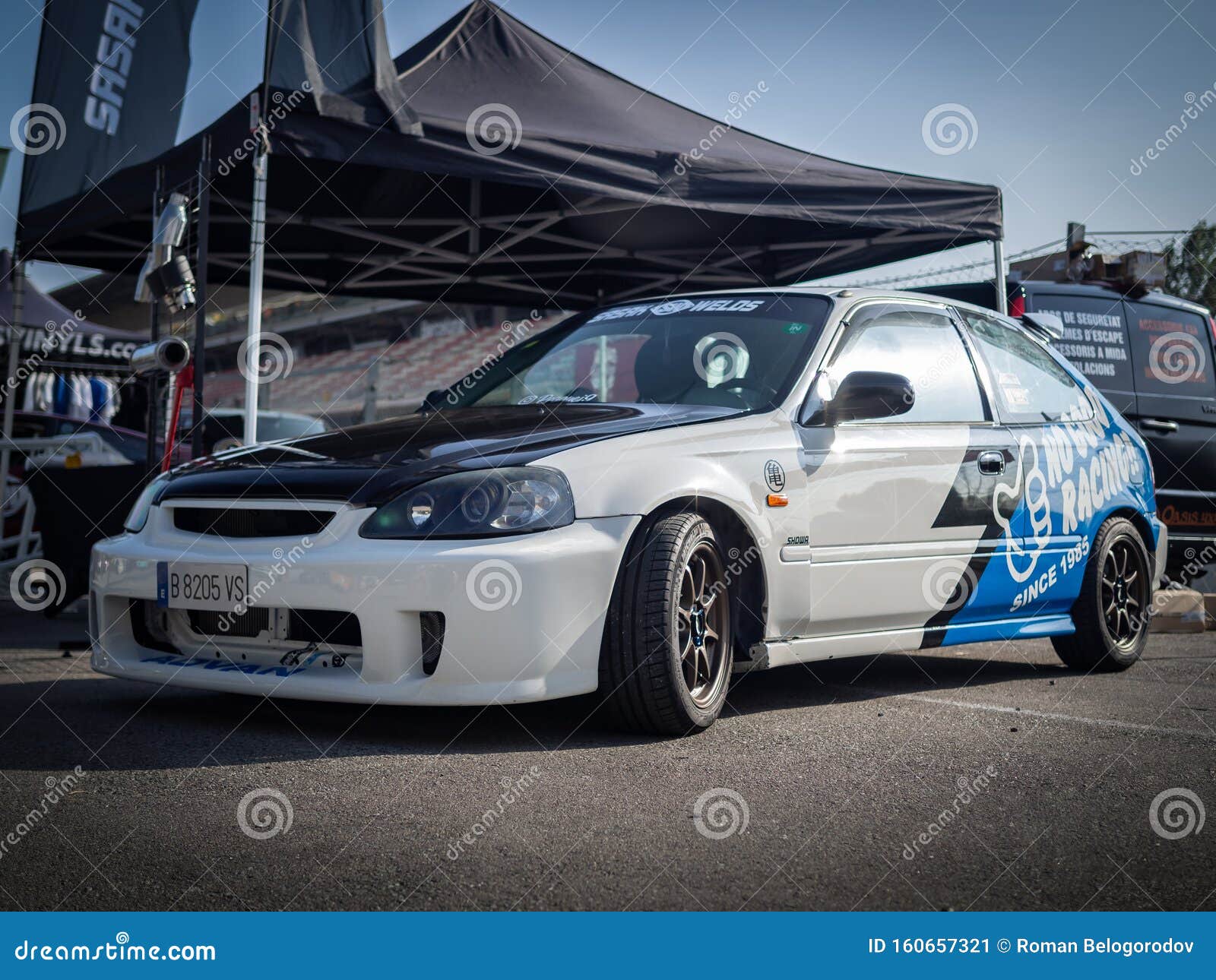
The Honda Civic Si has spanned eleven generations since its 1984 debut, evolving from a lightweight 91-horsepower hatchback to a sophisticated 200-horsepower turbocharged sport sedan. Known for its "Sport Injected" badge, the Si balances daily driveability with performance features like helical limited-slip differentials, close-ratio manual transmissions, and high-revving VTEC engines.
The Honda Civic Si (Sport Injected) represents a unique middle ground in the automotive world. It sits comfortably between the economy-focused standard Civic and the track-ready, high-performance Civic Type R. For over four decades, the Si has served as the gateway to enthusiast driving, offering a manual-only experience that prioritizes driver engagement and mechanical purity over raw, overwhelming power. As we look at the landscape in 2026, the Si remains one of the few surviving icons of the "attainable performance" segment.
The Genesis: Third-Generation Civic Si (1984–1987)
The "Si" badge first appeared in the mid-1980s, a period when Honda was rapidly transitioning from a niche manufacturer of small cars to a global engineering powerhouse. The primary innovation of this era was the move from carburetors to electronic fuel injection, hence the name "Sport Injected."
In 1984, the CRX Si was launched, followed by the Civic Si hatchback in 1986. These vehicles were powered by the EW3 (and later EW4) 1.5-liter, 12-valve SOHC four-cylinder engine. While 91 horsepower sounds modest by modern standards, the car weighed less than 2,000 pounds. This power-to-weight ratio provided a level of agility that defined the "slow car fast" philosophy. The third-generation Si also featured a unique roof spoiler, a deeper front air dam, and sport seats, establishing the visual blueprint for all Si models to come.
The Double Wishbone Era: Fourth-Generation Civic Si (1988–1991)
Many purists consider the late 1980s the beginning of Honda’s "Golden Era." The fourth-generation Civic Si introduced a sophisticated four-wheel double-wishbone suspension system, a technology usually reserved for exotic sports cars of that time. This allowed for superior handling characteristics and mid-corner stability that rivals couldn't match.
Under the hood sat the D16A6 engine, a 1.6-liter SOHC unit producing 105 horsepower and 100 lb-ft of torque. It featured multi-point fuel injection and a five-speed manual transmission with shorter gearing than the base models. This generation was characterized by its low beltline and expansive glasshouse, offering visibility that remains unmatched in modern car design. It was during this era that the Civic Si cemented its reputation as a "momentum car," rewarding drivers who could maintain speed through technical corners.
VTEC Integration: Fifth-Generation Civic Si (1992–1995)
In 1992, the "EG" chassis arrived, bringing with it one of Honda's most famous acronyms: VTEC (Variable Valve Timing and Lift Electronic Control). The 1992 Civic Si utilized the D16Z6 engine, which featured VTEC on the intake valves. This allowed the engine to use a fuel-efficient cam profile at low RPMs and switch to a high-lift profile at high RPMs.
The result was 125 horsepower and a redline that invited the driver to push toward 7,200 RPM. This generation also saw improvements in aerodynamics and safety, including the introduction of a standard driver-side airbag. The fifth-generation Si was only available as a hatchback in the United States, a factor that has made clean, unmodified versions highly sought after by collectors in 2026.
The High-Water Mark: Sixth-Generation Civic Si (1996–2000)
The sixth generation (EK chassis) saw a brief hiatus for the Si badge in the U.S. until 1999, when the legendary EM1 Si Coupe was released. This model is often cited as the pinnacle of the naturally aspirated Civic Si lineage.
For the first time, the U.S. market received a DOHC (Double OverHead Cam) VTEC engine in a Civic: the B16A2. This 1.6-liter engine produced an impressive 160 horsepower—exactly 100 horsepower per liter—and screamed to an 8,000 RPM redline. The EM1 featured exclusive Electron Blue Pearl paint, 15-inch "Si" alloy wheels, and a firmer suspension tune. It was a cultural phenomenon, arriving just as the "tuner" scene was exploding globally, and it remains a benchmark for mechanical purity and engine response.
The Experimental Shift: Seventh-Generation Civic Si (2002–2005)
The seventh-generation Si (EP3) was a departure from tradition. Built in Swindon, England, it was a dedicated three-door hatchback with a unique "breadbox" shape. Most notably, it traded the high-revving B-series engine for the new K-series (K20A3).
While the K-series brought more torque (132 lb-ft), the 160-horsepower output remained the same, and the redline dropped to 6,800 RPM. The interior featured a distinctive rally-style shifter mounted on the dashboard, which offered exceptionally short throws. However, the move from double-wishbone front suspension to MacPherson struts was controversial among enthusiasts. Despite the criticism at the time, the EP3 is now appreciated for its rigidity and practical cargo space.
The Rev-Happy Peak: Eighth-Generation Civic Si (2006–2011)
Honda responded to critics with the eighth-generation Si (FG2 coupe and FA5 sedan). This generation returned to the high-revving formula with the K20Z3 engine, producing 197 horsepower and featuring a 8,000 RPM redline.
This was a transformative era for the Si for two main reasons:
- Helical Limited-Slip Differential (LSD): For the first time, a standard LSD was included, significantly reducing understeer and allowing the car to power out of corners with much greater composure.
- Sedan Availability: Starting in 2007, the Si was offered as a four-door sedan, making it a viable option for enthusiasts with families.
The "VTEC crossover" at 5,800 RPM in the eighth-gen Si is legendary among owners, providing a distinct audible and physical change in the car's personality.
Increased Displacement: Ninth-Generation Civic Si (2012–2015)
In 2012, Honda shifted focus from peak horsepower to "real-world" usability. The ninth-generation Si (FB6/FG4) replaced the 2.0-liter engine with the 2.4-liter K24Z7. While the horsepower increase was marginal (up to 201 hp), the torque jumped significantly to 170 lb-ft.
The car felt much faster in daily traffic because the power was available much lower in the rev range. However, the redline was reduced to 7,000 RPM, and the engine lacked the frenetic top-end rush of its predecessor. Honda updated the styling and interior materials mid-cycle (2013 and 2014) to address early criticisms of the car’s perceived quality, ultimately resulting in a very refined, reliable performance daily driver.
The Turbocharged Revolution: Tenth-Generation Civic Si (2017–2020)
The tenth-generation Si marked the biggest mechanical shift in the model’s history: the move to turbocharging. To meet tightening emissions and fuel economy standards while increasing performance, Honda utilized the L15B7 1.5-liter turbocharged engine.
This model produced 205 horsepower and 192 lb-ft of torque. Unlike any previous Si, the torque was available almost instantly (at 2,100 RPM). This generation also introduced adaptive dampers, allowing drivers to switch between "Normal" and "Sport" modes to adjust the ride stiffness. Available as both a coupe and a sedan, the 10th-gen Si offered a level of chassis sophistication and technological features (like Apple CarPlay and Android Auto) that moved the nameplate into the modern era.
Refinement and Maturity: Eleventh-Generation Civic Si (2022–2026)
The current eleventh-generation Si (FE1) represents a move toward "grown-up" performance. In 2026, it remains the standard-bearer for the segment. While it uses a similar 1.5-liter turbo engine as the 10th generation, it has been refined for better power delivery.
The FE1 Si produces 200 horsepower and 192 lb-ft of torque. While the peak horsepower number slightly decreased, the power band was widened, and a lighter flywheel was added to improve throttle response. This generation borrowed the rev-matching system from the Type R, helping drivers execute perfect downshifts every time. The interior saw a massive leap in quality, featuring a honeycomb dash vent design and a premium 12-speaker Bose audio system. As of 2026, the 11th-gen Si continues to be praised for its exceptional steering feel and shifter tactile feedback, which are considered among the best in the industry at any price point.
Civic Si Generation Comparison Table
| Generation | Years | Engine Code | Horsepower | Torque (lb-ft) | Redline (RPM) | Key Feature |
|---|---|---|---|---|---|---|
| 3rd Gen | 1984–1987 | EW3/EW4 | 91 | 93 | 6,500 | First Fuel Injection |
| 4th Gen | 1988–1991 | D16A6 | 105 | 100 | 7,200 | Double Wishbone Susp. |
| 5th Gen | 1992–1995 | D16Z6 | 125 | 106 | 7,200 | SOHC VTEC Introduction |
| 6th Gen | 1999–2000 | B16A2 | 160 | 111 | 8,000 | DOHC VTEC (U.S. Debut) |
| 7th Gen | 2002–2005 | K20A3 | 160 | 132 | 6,800 | Dash-Mounted Shifter |
| 8th Gen | 2006–2011 | K20Z3 | 197 | 139 | 8,000 | Limited Slip Diff (LSD) |
| 9th Gen | 2012–2015 | K24Z7 | 201 | 170 | 7,000 | 2.4L Displacement |
| 10th Gen | 2017–2020 | L15B7 | 205 | 192 | 6,500 | 1.5L Turbo / Adaptive Dampers |
| 11th Gen | 2022–2026 | L15B7 (rev) | 200 | 192 | 6,600 | Rev-Matching / Premium Interior |
Maintenance and Reliability Across Generations
Regardless of the generation, the Civic Si is built on the foundation of Honda’s reputation for reliability. However, there are specific areas owners should monitor based on the engine series:
- B-Series (6th Gen): These engines are incredibly robust but require periodic timing belt replacements (usually every 90,000 to 105,000 miles). Ignoring this can lead to catastrophic engine failure. Valve adjustments are also necessary to maintain peak VTEC performance.
- K-Series (7th, 8th, 9th Gen): These moved to a timing chain, which is generally maintenance-free but can stretch if oil changes are neglected. The 8th generation is known for potential clear coat peeling and 3rd-gear synchro issues in early models (2006–2008).
- L-Series Turbo (10th, 11th Gen): Turbocharged engines require more frequent oil changes and high-quality synthetic oil. "Oil dilution" was a concern in early 10th-gen models, particularly in cold climates with short trips, though Honda addressed this through software updates and mechanical tweaks in later years.
Why the Civic Si Retains Its Value
The Civic Si consistently enjoys high resale value compared to its competitors (such as the Volkswagen GTI or Subaru WRX). This is driven by several factors:
- Manual Transmission Only: Because Honda refuses to offer an automatic or CVT in the Si, it attracts a dedicated enthusiast base that specifically seeks out the manual experience.
- Low Complexity: Compared to European rivals, the Si generally uses simpler mechanical layouts that are cheaper to maintain over 100,000 miles.
- Tuner Culture: The massive aftermarket support means that even older, high-mileage Si models can be refreshed or modified with ease, keeping demand high in the used market.
Frequently Asked Questions
Which Civic Si generation is the fastest?
On a track, the 10th and 11th-generation models are the fastest due to their superior torque curves, modern suspension geometry, and stickier tire compounds. However, in terms of straight-line 0-60 MPH performance, the 10th generation (2017–2020) often edges out others slightly due to its more aggressive factory tuning and lighter weight compared to the refined 11th generation.
Does the Civic Si require premium fuel?
Yes, for almost all generations, Honda recommends or requires premium (91 octane or higher) fuel. While the ECU (Engine Control Unit) can retard timing to prevent "knock" if you use regular fuel, doing so will result in reduced power output and lower fuel efficiency. In turbocharged models (10th and 11th gen), premium fuel is essential for protecting the engine under boost.
Why did Honda stop making the Civic Si Hatchback?
After the 7th generation (EP3), Honda shifted the Si badge primarily to the Coupe and Sedan body styles for the North American market. This was done to differentiate the Si from the base hatchback and eventually clear a dedicated space for the Civic Type R, which is exclusively a hatchback. In 2026, the Si remains a sedan-only offering.
Is the Civic Si a good first car?
The Civic Si is often considered an excellent first car for a young enthusiast. It teaches the skill of driving a manual transmission and provides a manageable amount of power that is fun but not dangerous. Furthermore, its high safety ratings and legendary reliability make it a practical choice that parents can support.
What are the main differences between the Civic Si and the Type R?
The Type R is a track-focused "halo" car with over 300 horsepower, wider bodywork, aggressive aerodynamics, and a much higher price tag. The Si is designed as a "sporty daily driver" with 200 horsepower. While the Type R is faster, the Si is often cited as being more comfortable for daily commuting and significantly more affordable to insure and maintain.
Expert Recommendation for Buyers
If you are looking for a collector's item, seek out a clean 1999–2000 EM1 Coupe; its value is expected to continue rising as high-revving naturally aspirated engines become extinct. For those who want the best "bang for your buck" daily driver in 2026, a certified pre-owned 11th-generation (2022+) Si is the optimal choice. It provides the most modern safety tech and interior refinement without sacrificing the mechanical soul that has defined the Si badge for over 40 years.