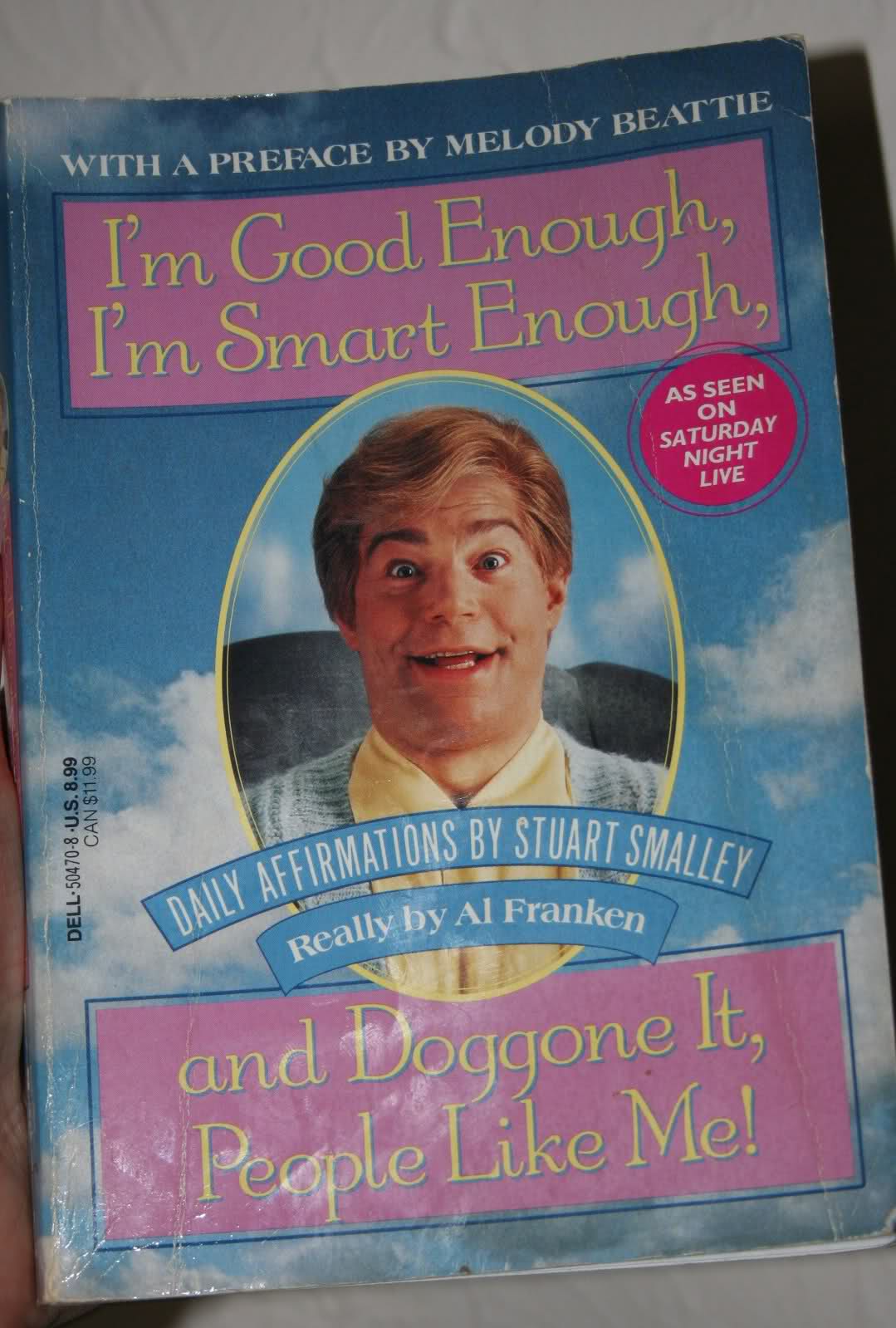
Al Franken’s portrayal of his iconic Saturday Night Live character Stuart Smalley during an appearance on Comedy Central’s The Daily Show captures a fascinating intersection of 1990s political satire and late-night television history. When Al Franken stepped back into the oversized pastel cardigan and earnest demeanor of Stuart Smalley, viewers witnessed a masterclass in character continuity, blending the self-help parody's signature psychological affirmations with contemporary political commentary. This performance served not only as a nostalgic throwback for fans of classic sketch comedy but also as a tactical demonstration of how satirical archetypes can be re-contextualized to address new cultural and media landscapes.
To fully understand the significance of Al Franken reviving Stuart Smalley on The Daily Show, one must examine the origins of the character, the evolution of The Daily Show under Jon Stewart, and the broader cultural impact of Franken's transition from comedian to political figure. This analysis explores how the sketch functioned, why the character resonated so deeply with audiences, and how it fits into the broader timeline of modern political comedy.
The Origins and Cultural Impact of Stuart Smalley
Stuart Smalley first emerged on Saturday Night Live (SNL) in the early 1990s, created and performed by Al Franken during a golden era of the NBC late-night institution. Smalley was a gentle, deeply neurotic, and profoundly earnest advocate of 12-step programs and New Age self-help culture. Armed with his signature catchphrase, "I'm good enough, I'm smart enough, and doggone it, people like me," Smalley hosted a public-access cable show called Daily Affirmations with Stuart Smalley.
The genius of the character lay in its precise calibration of satire. Rather than launching a venomous attack on the self-help movement, Franken played Smalley with a profound sense of empathy, highlighting the underlying insecurity and transparent emotional fragility of a man trying desperately to convince himself of his own worth. The character’s catchphrases entered the American vernacular, becoming shorthand for ironic self-encouragement.
By the time Franken appeared on The Daily Show, the cultural landscape had shifted dramatically. Self-help culture had evolved, and Franken himself had transitioned from a comedy writer and performer into a political commentator, author, and eventually a United States Senator. Bringing Stuart Smalley into the fray of The Daily Show bridged the gap between Franken's comedic roots and his serious political trajectory, demonstrating that the character’s obsessive need for validation could easily be mirrored in the high-stakes, hyper-critical arena of national politics and media punditry.
The Daily Show Context: Satire Meets Late-Night Evolution
By the time Franken made notable appearances on The Daily Show with Jon Stewart, the program had cemented its status as an indispensable cultural and political touchstone. Unlike the traditional late-night talk shows that prioritized celebrity promotion and light banter, The Daily Show operated as a satirical news broadcast that scrutinized political hypocrisy, media spin, and the absurdity of Washington discourse.
When guest stars or alumni like Al Franken appeared on the show, the dynamic was rarely limited to standard promotional interviews. Jon Stewart frequently engaged his guests in discussions that blurred the line between substantive political analysis and meta-commentary on the state of media. Introducing a beloved, legacy character like Stuart Smalley into this environment created a sharp stylistic contrast. The earnest, vulnerable absurdity of a 12-step affirmation show thrown directly into the fast-paced, cynical ecosystem of cable news satire provided a unique comedic friction.
| Element | Stuart Smalley (SNL Era) | Stuart Smalley (The Daily Show Appearance) |
|---|---|---|
| Primary Medium | NBC Network Television (Saturday Night Live) | Comedy Central Cable Television (The Daily Show) |
| Target of Satire | 12-step programs, New Age self-help, public-access television | Political anxiety, media posturing, personal validation in public life |
| Primary Objective | Character-driven sketch comedy and weekly recurring bits | Meta-commentary, nostalgic revival, and satirical commentary on current events |
| Character State | Repressed, neurotic, striving for inner peace | Yielding to the pressures of public scrutiny and political discourse |
Analyzing the Sketch: Performance, Structure, and Subtext
When Al Franken donned the signature sweater and blond wig to channel Stuart Smalley on The Daily Show, the sketch relied on a carefully orchestrated blend of nostalgia and situational irony. The performance was structured to subvert viewer expectations, moving rapidly from a comforting embrace of the past to a sharp critique of contemporary anxieties.
The Return of the Cardigan and the Mirror
The physical transformation was immediate. The oversized knitwear, the soft-spoken cadence, and the hesitant, trembling hand gestures established the character instantly. In typical Smalley fashion, the sketch often revolved around a moment of crisis where Stuart looked into a physical or metaphorical mirror, struggling to maintain his emotional equilibrium in the face of overwhelming odds.
In the context of The Daily Show, the "odds" were no longer just personal neuroses or difficult family members like his often-mentioned uncle, but rather the crushing weight of public opinion, political polarization, and the relentless cycle of 24-hour news. By applying the logic of daily affirmations to the pressures of modern public life, the sketch exposed the absurdity of expecting simple psychological fixes for systemic political and social problems.
Direct Address and Audience Interaction
A hallmark of the original Daily Affirmations sketches was Stuart's direct, intimate address to the home viewer, establishing a parasocial bond built on shared inadequacy. On The Daily Show, this technique was weaponized to engage the studio audience and the viewing public in a collective acknowledgment of national anxiety.
Franken's performance underscored a crucial comedic truth: political obsession and self-righteous punditry often stem from the exact same insecure desire for validation that drove Stuart Smalley to his public-access TV studio. The laughter generated by the sketch was grounded not just in the silly voice and catchphrases, but in the uncomfortable recognition that political figures and media commentators are often just as fragile and self-doubting as anyone else.
Common Misconceptions Regarding Franken's Late-Night Appearances
Because Al Franken’s career spans multiple distinct phases—from Harvard Lampoon writer and foundational Saturday Night Live cast member to political activist, best-selling author, U.S. Senator, and podcast host—audiences frequently conflate the timeline of his various media appearances.
- The SNL vs. Daily Show Timeline: A common error is assuming Stuart Smalley was created for or regularly featured on The Daily Show. In reality, Smalley was exclusively a creation of Franken's Saturday Night Live tenure (1975–1980, 1985–1995), while his appearances on The Daily Show occurred later during his post-SNL career as a political commentator and author promoting books like Lies and the Lying Liars Who Tell Them.
- Character Retirement: While Franken largely retired Stuart Smalley from regular rotation after leaving Saturday Night Live in 1995, he occasionally resurrected the character for special guest spots, charitable events, or targeted political appearances, using the familiarity of the character to draw attention to specific causes or media moments.
The Evolution of Political Comedy and Character Continuity
The survival and adaptation of characters like Stuart Smalley in modern political satire highlight how comedy writers utilize established intellectual property to anchor complex political arguments. When a comedian brings a legacy character into a contemporary satirical space, they leverage the audience's emotional equity. The viewer already understands the rules of the world Stuart Smalley inhabits; therefore, any deviation into political commentary feels earned rather than forced.
This approach paved the way for subsequent generations of political satirists on networks like Comedy Central, HBO, and streaming platforms, where character work, impersonations, and narrative sketches regularly intersect with hard news commentary. Franken's ability to seamlessly pivot from a sweater-wearing neurotic to a sharp political mind demonstrated that comedy and political critique are not mutually exclusive, but rather mutually reinforcing disciplines.
Frequently Asked Questions
What was the main premise of Stuart Smalley on Saturday Night Live?
Stuart Smalley was a neurotic, well-meaning advocate of 12-step recovery programs who hosted a public-access television show called Daily Affirmations. The character's humor derived from his transparent insecurity, emotional fragility, and his attempts to convince himself and his viewers that "I'm good enough, I'm smart enough, and doggone it, people like me."
Did Al Franken create Stuart Smalley specifically for The Daily Show?
No. Stuart Smalley was created by Al Franken and writer Gary Kroeger during Franken's tenure on Saturday Night Live in the early 1990s. Franken revived the character years later during guest appearances on programs like The Daily Show with Jon Stewart for satirical and nostalgic effect.
How did Jon Stewart's Daily Show differ from traditional late-night shows when featuring legacy characters?
Unlike traditional talk shows that utilized guest appearances strictly for promotional interviews, The Daily Show integrated comedy, political critique, and meta-commentary. Bringing a character like Stuart Smalley onto the show allowed Franken and Stewart to satirize media anxiety and political posturing through the lens of a classic 1990s comedic archetype.
What are some of the most famous catchphrases associated with Stuart Smalley?
The character is most famous for the affirmation, "I'm good enough, I'm smart enough, and doggone it, people like me," which he repeated while looking into a handheld mirror. Other recurring themes involved managing relationships with dysfunctional family members and navigating the pitfalls of codependency.
How did Al Franken's career transition impact his comedic legacy?
Franken transitioned from a comedy writer and performer on Saturday Night Live to a prominent political commentator, author, radio host, and U.S. Senator. This trajectory added a layer of meta-irony to his comedic appearances, as audiences watched a former sketch comedian actively participate in the very political arena he once parodied.
Practical Next Steps and Further Exploration
For those interested in exploring the historical context of 1990s television satire and Al Franken's comedic output, several avenues offer deeper insight:
- Examine SNL Archives: Review classic 1990s episodes of Saturday Night Live featuring the Daily Affirmations recurring sketches to study the original comedic structure and character development.
- Read Franken's Literary Works: Explore Al Franken's political and satirical books, such as Rush Limbaugh Is a Big Fat Idiot and Other Observations and Lies and the Lying Liars Who Tell Them, to understand his transition from sketch comedy to political commentary.
- Study Late-Night Evolution: Research the structural development of The Daily Show with Jon Stewart to see how guest interviews and guest appearances evolved into platforms for sophisticated political media criticism.