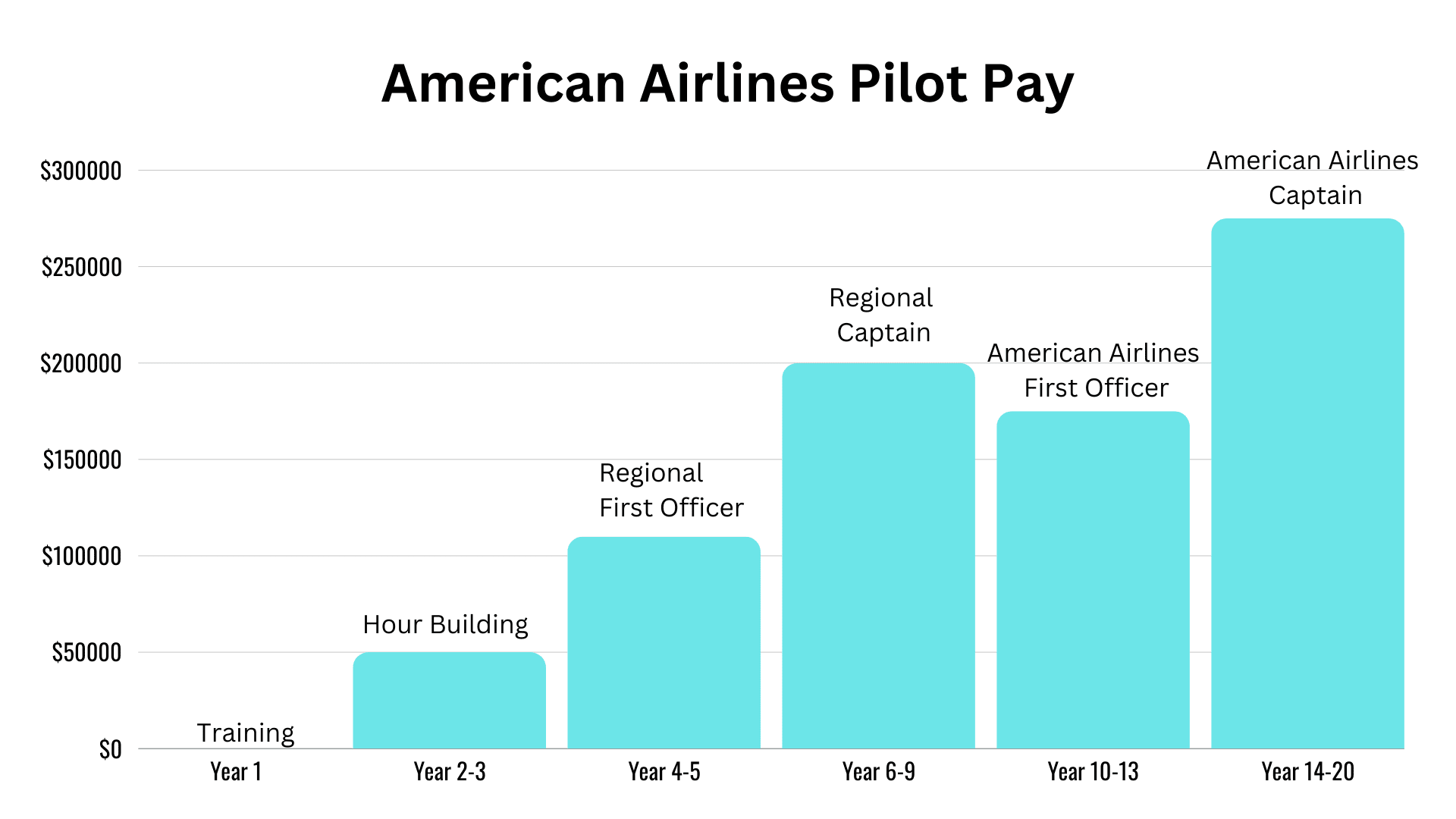
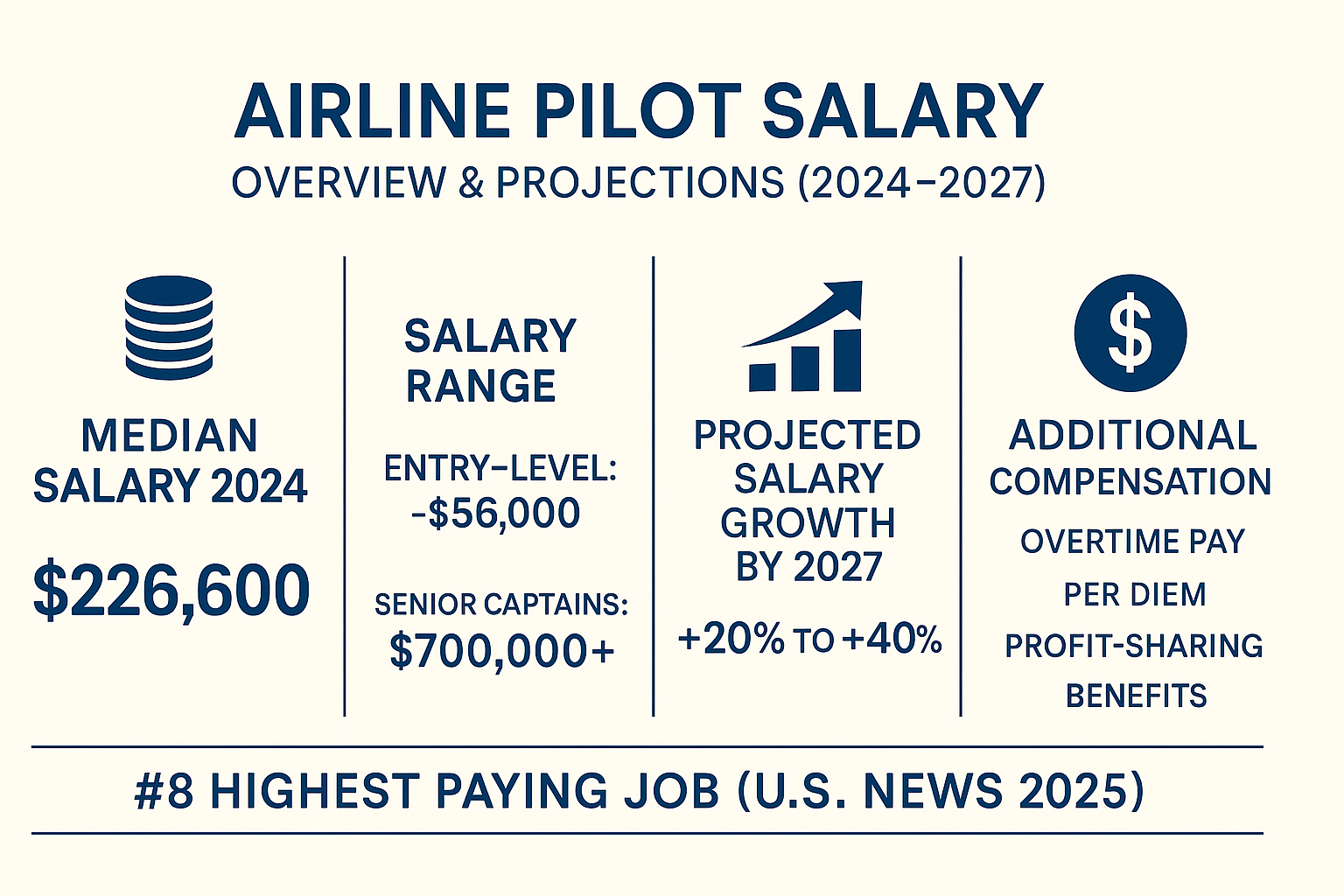
Airline pilot compensation is primarily calculated using hourly pay rates based on "block time," multiplied by a monthly guarantee of 72 to 90 hours. In 2026, total annual earnings range from approximately $60,000 for entry-level regional first officers to over $480,000 for senior wide-body captains at major legacy or cargo carriers.
Understanding airline pilot salary is more complex than reviewing a simple annual figure. Unlike traditional salaried professions, pilots are paid for the time the aircraft is in motion under its own power. This compensation model is influenced by a web of factors, including union contracts, seniority rankings, aircraft type, and the specific tier of the airline. To accurately evaluate the financial prospects of an aviation career in 2026, one must look past the "sticker price" of an hourly rate and examine the secondary components of the total package.
The Hourly Pay Structure: Block Hours and Guarantees
The foundation of pilot pay is the hourly flight rate. This rate is not applied to an 8-hour workday in an office; instead, it applies to "block hours." Block time is defined as the period from when the aircraft pushes back from the gate until it arrives at the destination gate and the parking brake is set.
Because flight schedules can be unpredictable due to weather or maintenance, most airlines provide a monthly guarantee. This is a minimum number of hours the pilot will be paid for, regardless of whether they actually fly that much. In 2026, the industry standard for a monthly guarantee typically falls between 72 and 85 hours. If a pilot flies more than the guarantee, they are paid for those additional hours. If they fly less, they still receive the guaranteed amount.
This system means that a pilot's "base salary" is calculated by:
Hourly Rate x Monthly Guarantee x 12 Months = Base Annual Pay
However, this is only the starting point. Pilots also earn "duty rig" pay or "trip rigs," which ensure they are compensated if they are kept away from home for long periods even if they aren't flying many block hours.
The Impact of Rank: Captain vs. First Officer
The most significant variable in a pilot’s hourly rate is their seat in the cockpit. There are two primary roles:
- Captain (Left Seat): The Pilot in Command (PIC) bears ultimate responsibility for the flight and the crew. Because of this responsibility, Captains earn significantly more than First Officers. In 2026, a Captain's hourly rate is often 40% to 70% higher than a First Officer's at the same airline with the same years of service.
- First Officer (Right Seat): Also known as the Co-Pilot, the First Officer assists the Captain in all phases of flight. While their pay is lower, it has seen dramatic increases over the last several years as airlines have competed to attract and retain talent during the ongoing pilot shortage.
Upgrading from First Officer to Captain is not based on merit alone but on seniority. When a Captain position opens up, the most senior First Officer who is qualified for the upgrade is given the opportunity. In a rapidly growing airline, this "time to upgrade" might be as short as two years; in a stagnant airline, it could take a decade.
The Role of Seniority and Bidding
In the airline industry, seniority is everything. Every pilot at an airline is assigned a number on a master seniority list based on their date of hire. This number determines:
- Pay Scale: Pay increases every year on the anniversary of the hire date, usually capping out at 12 or 15 years.
- Schedule: Pilots "bid" for their monthly schedules. The most senior pilots get the most desirable routes (e.g., non-stop day trips or lucrative international layovers) and have the best control over their days off.
- Equipment: Seniority dictates which aircraft a pilot can fly.
- Base Location: Seniority determines whether a pilot can work out of their preferred city (base) or if they must "commute" to a different hub.
A pilot who has been with a major carrier for 20 years will earn significantly more than a pilot in their second year, even if they are both flying the same aircraft as Captains.
Aircraft Type and "Equipment Precedence"
At most major airlines, pay is scaled based on the size and complexity of the aircraft. This is often referred to as "equipment pay." Flying a "heavy" wide-body aircraft (like a Boeing 787 or Airbus A350) typically pays more than flying a narrow-body aircraft (like a Boeing 737 or Airbus A320).
The logic is twofold: larger aircraft carry more passengers (generating more revenue per flight hour) and require more advanced training and certification. Pilots at cargo giants like FedEx or UPS also follow this model, where flying international long-haul routes in a Boeing 777F results in the highest tiers of the pay scale.
Comparison of Estimated Pilot Salaries in 2026
The following table provides an estimated breakdown of annual compensation across different sectors of the industry. These figures include base pay plus typical bonuses and per diems.
| Airline Category | Role | Year 1 (Entry) | Year 5 (Mid-Career) | Year 12+ (Senior) |
|---|---|---|---|---|
| Regional Airline | First Officer | $60,000 - $75,000 | $85,000 - $110,000 | N/A (Most upgrade/leave) |
| Regional Airline | Captain | $110,000 - $130,000 | $145,000 - $175,000 | $185,000+ |
| Major/Legacy (Narrow-body) | First Officer | $105,000 - $125,000 | $175,000 - $210,000 | $240,000+ |
| Major/Legacy (Wide-body) | Captain | $320,000 - $350,000 | $390,000 - $430,000 | $480,000+ |
| Cargo (Global) | Captain | $310,000 - $340,000 | $385,000 - $420,000 | $475,000+ |
| Low-Cost Carrier (LCC) | Captain | $260,000 - $290,000 | $310,000 - $350,000 | $380,000+ |
Note: These figures are estimates for 2026 based on current union contract trajectories and inflationary adjustments.
Beyond the Hourly Rate: Added Benefits
To understand the full "airline pilot salary explained," one must look at the non-salary compensation, which is often more lucrative than in other industries.
Per Diem Pay
Pilots receive an hourly "per diem" for every hour they are away from their home base. This is intended to cover the cost of meals and incidental expenses. In 2026, per diem rates typically range from $2.50 to $3.50 per hour. While this sounds small, for a pilot who is "on the road" for 15 days a month, this can add $1,000 to $1,500 of tax-advantaged income per month.
Retirement Contributions
One of the most significant benefits at major U.S. carriers is the direct 401(k) contribution. Many major airlines contribute between 13% and 17% of a pilot's total earnings directly into their retirement account, regardless of whether the pilot contributes anything. For a senior Captain earning $400,000, this is an additional $64,000 per year in retirement wealth.
Signing and Retention Bonuses
While more common at regional airlines, signing bonuses remain a factor in 2026 for pilots with specific experience (like "Direct Entry Captains"). These bonuses can range from $20,000 to $100,000, often paid out over one or two years of service.
Profit Sharing
Many major airlines (such as Delta and United) have robust profit-sharing programs. In profitable years, pilots may receive a single check in February or March representing 5% to 15% of their previous year's earnings.
The Path to the High Salary: Training and Costs
While the 2026 salary figures are high, the barrier to entry is both time-consuming and expensive. To reach a major airline, a pilot typically follows this path:
- Flight Training: Obtaining Private, Instrument, Commercial, and Multi-Engine ratings. This costs between $80,000 and $120,000.
- Time Building: The FAA (Federal Aviation Administration) generally requires 1,500 flight hours for an Airline Transport Pilot (ATP) certificate. Most pilots spend 1.5 to 2 years working as Certified Flight Instructors (CFI) to reach this milestone.
- Regional Airlines: Pilots usually start at a regional airline (like SkyWest, Envoy, or Republic) to gain turbine experience.
- Major Airlines: After 2–5 years at a regional carrier, pilots apply to "Major" or "Legacy" airlines.
The "return on investment" (ROI) is significant, but the first five years of a pilot's career are often characterized by high debt and relatively low pay compared to the training requirements.
Current Industry Trends in 2026
By 2026, the aviation industry has stabilized following the massive contract renegotiations of the early 2020s. However, several factors continue to influence salary trends:
- The Mandatory Retirement Age: The FAA's mandatory retirement age for airline pilots remains 65 (though discussions about 67 continue). This creates a steady "pull" of seniority as senior pilots retire, allowing younger pilots to move into higher-paying Captain seats faster.
- Union Power: Most airline pilots are represented by unions like the Air Line Pilots Association (ALPA) or the Allied Pilots Association (APA). These unions negotiate the "Pattern Bargaining" agreements that ensure pay remains competitive across carriers.
- Cargo Growth: The continued reliance on global e-commerce has kept cargo pilot salaries (FedEx, UPS, Atlas Air) at or above the levels of passenger legacy carriers.
Common Misconceptions About Pilot Pay
"Pilots only work 80 hours a month." While it is true that pilots are only paid for about 80 block hours, they are often away from home and "on duty" for 200+ hours a month. This includes pre-flight planning, security screenings, sitting through delays, and mandatory rest periods in hotels.
"The airline pays for all flight training." In the United States, this is rarely true. While some "cadet programs" offer subsidized loans or guaranteed interviews, the vast majority of pilots pay for their own initial training before being hired by an airline. Once hired, the airline pays for the specific training for the aircraft they will be flying (Type Rating).
"International pilots make way more than domestic pilots." Not necessarily. While international routes often use larger aircraft (which pay more), a senior Captain flying a domestic Boeing 737 many times a week might earn as much as an international Captain who flies fewer, longer trips.
Frequently Asked Questions
What is the starting salary for a pilot in 2026?
An entry-level pilot at a regional airline in 2026 can expect to earn between $60,000 and $75,000 in their first year. However, this often includes a signing bonus. Without bonuses, the base hourly pay for a new First Officer is approximately $90–$100 per hour.
Do cargo pilots make more than passenger pilots?
Generally, pay at major cargo carriers like UPS and FedEx is on par with, or slightly higher than, the major legacy passenger airlines (Delta, United, American). Cargo pilots often fly more night routes but benefit from very stable schedules and high retirement contributions.
How often do airline pilots get raises?
Pilots receive "step-raises" every year on their hire date anniversary until they hit the top of the scale (usually year 12 or 15). Additionally, if their union negotiates a new contract, the entire pay scale may shift upward to account for inflation or industry standards.
Does the type of aircraft really change the salary?
Yes. Most union contracts have different hourly rates for different aircraft. For example, a Captain flying an Airbus A320 (narrow-body) might make $320 per hour, while a Captain at the same airline flying an Airbus A350 (wide-body) might make $380 per hour.
Are pilot salaries still increasing?
As of 2026, pilot salaries have leveled off after the record-breaking increases of 2023–2024. Current increases are primarily driven by COLA (Cost of Living Adjustment) clauses within union contracts rather than the massive 30-40% jumps seen previously.
Practical Recommendations for Aspiring Pilots
For those looking to capitalize on these 2026 salary figures, the following steps are recommended:
- Assess the Financial Commitment: Before starting, ensure you have a plan to fund the $100,000+ required for flight training. Look for "accelerated" flight schools that can get you to the 1,500-hour mark quickly.
- Monitor Union Contracts: Follow news from ALPA and APA to see which airlines are currently negotiating new contracts, as this will dictate future pay leaders.
- Prioritize Seniority: The goal is to get your seniority number as soon as possible. Choosing an airline with a fast path to the "Left Seat" (Captain) or a quick flow-through to a major carrier is often more important than the first-year starting pay.
- Consider Total Compensation: When comparing airlines, don't just look at the hourly rate. Factor in the 401(k) contribution percentage, the quality of health insurance, and the "soft pay" rules (like cancellation pay and deadhead pay).