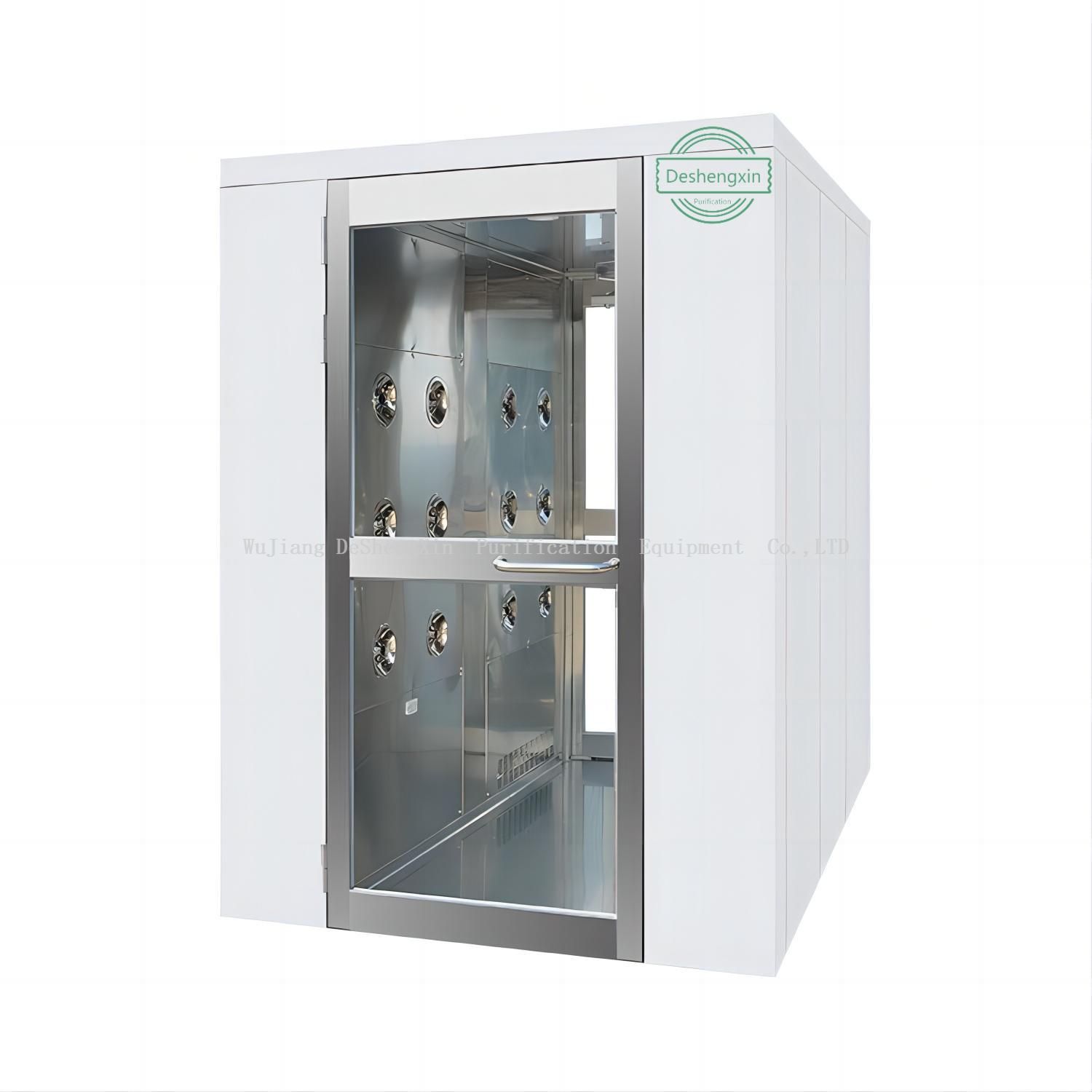
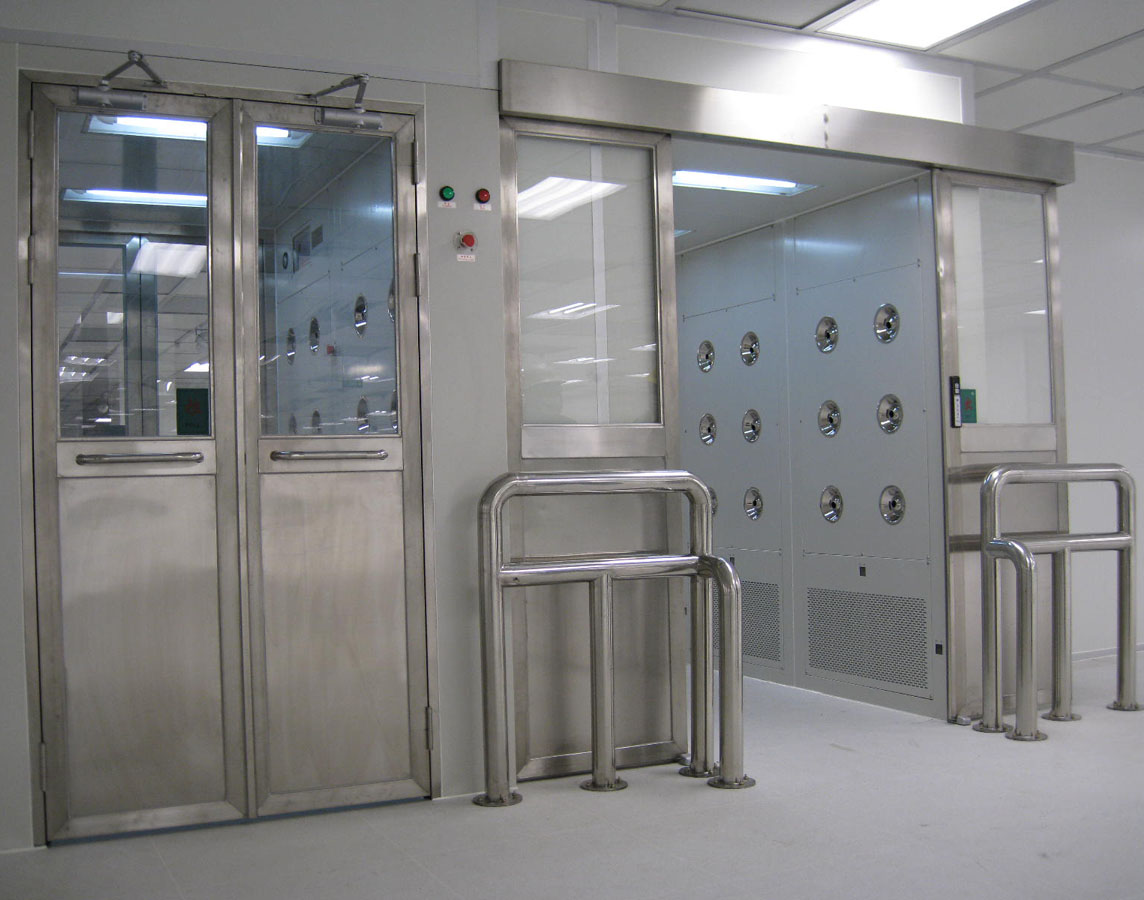
An air shower clean room system is a specialized self-contained entry vestibule utilized to minimize particulate contamination by stripping loose skin flakes, dust, and manufacturing debris from personnel before they enter a controlled cleanroom environment. These systems employ high-velocity, high-efficiency particulate air (HEPA)-filtered jets to mechanically scrub surfaces, functioning as a critical engineering control in highly sensitive facilities.
Understanding the Fundamentals of Cleanroom Contamination Control
Contamination control is the bedrock of advanced manufacturing, biotechnology, and scientific research. In environments where a single microscopic speck of dust can ruin a semiconductor wafer, compromise a sterile pharmaceutical batch, or ruin a micro-optics assembly, human operators present the single greatest vector for contamination.
The Human Factor in Controlled Environments
Despite strict gowning procedures, human beings continuously shed skin cells, hair, and microscopic fibers from their clothing. Every movement within a cleanroom generates airborne particulate matter. Standard cleanroom garments—such as coveralls, hoods, and booties—trap much of this debris, but external surfaces of these garments inevitably accumulate particles during transit through locker rooms and staging corridors.
Without an active intervention point between the unclassified or lower-class staging areas and the high-class cleanroom, operators carry these contaminants directly across the threshold. The air shower serves as this vital intervention point, creating an active hydrodynamic barrier that forces particulate removal prior to entry.
Physical Location and Zonal Transition
An air shower clean room setup is strategically positioned at the boundary between different cleanliness zones, typically bridging an ISO Class 7 or ISO Class 8 gowning area and an ISO Class 5 or cleaner production floor.
- Unclassified / Locker Room
- Gowning Area (ISO 7/8)
- AIR SHOWER UNIT (Interlocked Doors Prevent Simultaneous Opening)
- Cleanroom Production Floor (ISO 5)
- AIR SHOWER UNIT (Interlocked Doors Prevent Simultaneous Opening)
- Gowning Area (ISO 7/8)
The placement ensures that any particle dislodged during the cycle is immediately captured by the internal filtration loop rather than drifting into the hyper-clean manufacturing space.
Core Engineering and Mechanical Design Principles
The operational efficacy of an air shower relies on fluid dynamics, specialized filtration, and strict mechanical sequencing. Understanding these components is essential for facility engineers, cleanroom certifiers, and project managers.
High-Velocity Nozzles and Airflow Dynamics
The defining feature of an air shower is its network of adjustable nozzles. These nozzles are engineered to deliver high-velocity air jets—typically ranging between 20 to 25 meters per second (approx. 4,000 to 5,000 feet per minute).
- Velocity vs. Pressure: High velocity is necessary to overcome the boundary layer of static air clinging to garments, imparting enough kinetic energy to dislodge adhering particles.
- Nozzle Placement: Nozzles are strategically arranged on opposing walls and sometimes the ceiling to ensure 360-degree coverage of the occupant. As the person slowly rotates inside the chamber, the high-speed air reaches all folds and surfaces of the cleanroom garment.
Filtration Systems: Pre-filters and HEPA/ULPA Filters
Air inside a shower is recirculated in a closed-loop fashion during the cycle to conserve conditioned air and maintain system efficiency.
- Intake Grilles: Air laden with dislodged particles is drawn through floor grilles or low-wall returns.
- Pre-filtration: The air passes through coarse pre-filters (typically MERV 8 or MERV 11) to capture large lint, hair, and macroscopic dust, protecting the downstream high-efficiency filters.
- HEPA / ULPA Final Filtration: Blower fans force the air through High-Efficiency Particulate Air (HEPA) filters—or occasionally Ultra-Low Particulate Air (ULPA) filters—which capture 99.97% of particles down to 0.3 microns (and even smaller for ULPA). Clean, filtered air is then routed back through the plenum to the nozzles.
Electrical Interlocking and Safety Mechanisms
To preserve cleanroom integrity and prevent the accidental bypass of the cleaning cycle, air showers are equipped with sophisticated electronic door interlocks.
- Mutual Lockout: When one door is opened, the opposite door is automatically locked electromagnetically.
- Cycle Lock: Once an operator steps inside and closes the entry door, both doors lock, and the blower cycle initiates. Neither door can be opened until the pre-set timer expires and the blower shuts down.
- Emergency Stop: In the event of a power failure or medical emergency, mechanical overrides or automated fail-safe releases instantly unlock the doors to ensure safe egress.
Operational Specifications and Performance Comparison
Selecting the appropriate air shower clean room configuration requires evaluating throughput requirements, spatial constraints, and industry-specific cleanliness standards.
| Feature / Specification | Standard Single-Person Unit | Tunnel-Type / Multi-Person Unit | High-Containment / Bio-Pharma Unit |
|---|---|---|---|
| Typical Dimensions (Internal) | 3' W x 4' D x 6'11" H | 3' W x 8' to 16' D x 6'11" H | Custom engineered to fit strict containment lines |
| Air Velocity at Nozzles | 20 – 25 m/s | 20 – 25 m/s | 22 – 28 m/s with customized nozzle vectors |
| Filtration Standard | HEPA (99.97% @ 0.3 µm) | HEPA (99.97% @ 0.3 µm) | HEPA or ULPA (99.999% @ 0.12 µm) |
| Cycle Duration | Adjustable (typically 5 – 20 seconds) | Adjustable (timed for walking pace traversal) | Extended (up to 30+ seconds for high-risk zones) |
| Primary Material | Powder-coated steel or SUS304 Stainless Steel | SUS304 Stainless Steel | Electro-polished Stainless Steel with antimicrobial seals |
| Ideal Application | Electronics, general cleanrooms, optics | High-volume manufacturing, automotive assembly | Pharmaceutical fill-finish, BSL-3/BSL-4 laboratories |
Step-by-Step Operational Protocol for Facility Personnel
An air shower is only as effective as the behavior of the personnel utilizing it. Training staff on proper entry protocols ensures that the mechanical cleaning cycle achieves maximum particle removal.
- Gowning Completion: Operators must complete all required gowning protocols (hairnets, face masks, coveralls, and dedicated footwear) in the designated gowning room before approaching the air shower threshold.
- Threshold Entry: Approach the entrance door, open it smoothly, step inside the chamber, and close the door completely behind you. Avoid lingering in the doorway, as this can trigger sensor faults or leave the interlock unsecured.
- Initiating the Cycle: Proximity sensors or step-pads automatically trigger the cycle upon door closure, though some units require a gentle push-button activation.
- The 360-Degree Rotation: Once the high-velocity blowers engage, the operator should slowly pivot $360^\circ$ with arms slightly raised away from the torso. This allows the air jets to strip particles from the underarms, back, and lower legs.
- Egress: Upon completion of the timed cycle, the exit door interlock releases. The operator should immediately exit directly into the clean production area without backtracking.
Installation, Maintenance, and Compliance Verification
Integrating an air shower clean room system into an existing or newly constructed facility demands strict adherence to engineering standards and routine maintenance schedules.
Pre-Installation Prerequisites
- Structural Floor Loading: Air showers are heavy, especially stainless steel models equipped with thick glass panels and heavy blowers. The subfloor must support the dead weight plus dynamic operational loads.
- Electrical Supply: High-volume blowers require dedicated three-phase electrical drops (typically 208V, 380V, or 480V depending on regional standards and unit capacity). Facility engineers must verify amperage and breaker sizing prior to delivery.
- Ceiling Clearance: Modular units must clear overhead ductwork, fire suppression piping, and structural ceiling grids during rigging and assembly.
Routine Maintenance and Calibration
To maintain cleanroom validation standards, air showers must undergo scheduled servicing:
- Filter Integrity Testing: HEPA filters should be integrity-tested (PAO or DOP challenge testing) upon installation, after filter replacement, and semi-annually thereafter to detect pinhole leaks.
- Velocity Profiling: Anemometers are used to verify that nozzle discharge velocities remain within the specified 20–25 m/s range. Degraded fan belts or clogged pre-filters will reduce air velocity and compromise performance.
- Sanitization: Internal stainless steel or laminate surfaces must be wiped down with approved cleanroom disinfectants (such as isopropyl alcohol blends) according to standard operating procedures.
Common Implementation Mistakes and Troubleshooting
Facility operators frequently encounter operational hurdles that can be mitigated through proactive oversight and correct troubleshooting procedures.
Frequent Operational Errors
- Overloading Multi-Person Tunnels: Forcing too many operators into a tunnel simultaneously blocks airflow, reducing the hydrodynamic scrubbing efficiency and leaving garments contaminated.
- Skipping Pre-Filter Maintenance: Neglecting monthly pre-filter replacements forces the HEPA filters to work harder, leading to premature motor burnout and reduced airflow velocity.
- Ignoring Interlock Misalignment: Heavy usage can cause doors to sag slightly, throwing off magnetic proximity sensors and causing intermittent locking failures.
Troubleshooting Guide
- Symptom: Door will not unlock after cycle completion.
- Cause: Timer relay failure or residual static pressure holding the door gasket tightly against the frame.
- Action: Check PLC controller program settings, inspect door release solenoids, and ensure pressure equalization vents are clear.
- Symptom: Noticeably reduced air jet force.
- Cause: Clogged pre-filters or loose blower drive belts.
- Action: Inspect and replace pre-filters; check blower motor rotation and belt tension.
Conclusion and Strategic Next Actions
Implementing an air shower clean room system is a pivotal investment in manufacturing quality, product yield, and regulatory compliance. By understanding the fluid dynamics, mechanical prerequisites, and strict operational protocols associated with these units, facility managers can safeguard sensitive environments from particulate contamination. To proceed with an installation, conduct a comprehensive particulate load analysis of your facility, consult with certified cleanroom mechanical engineers, and specify construction materials that align with your industry's exact cleanliness classification.