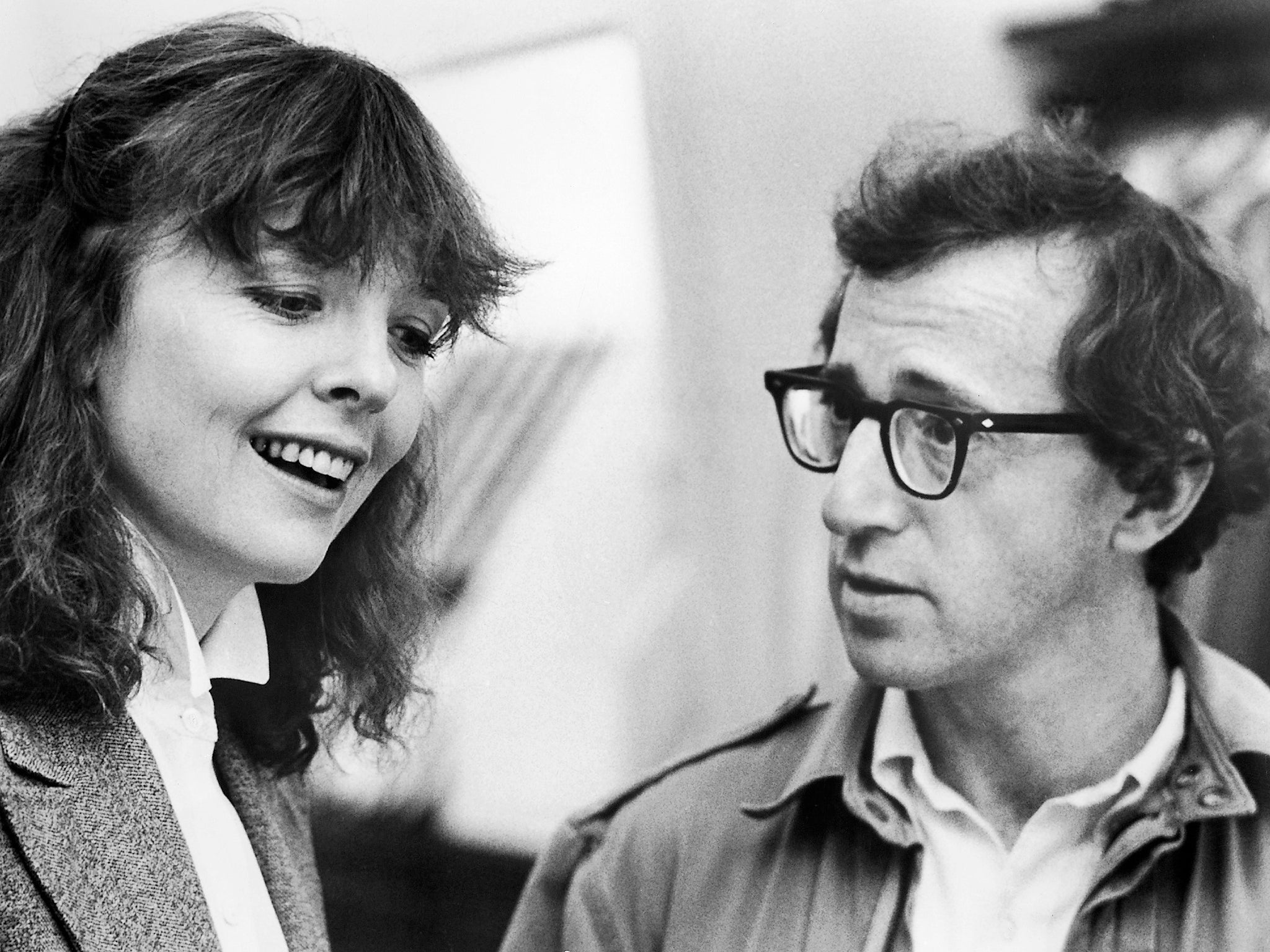
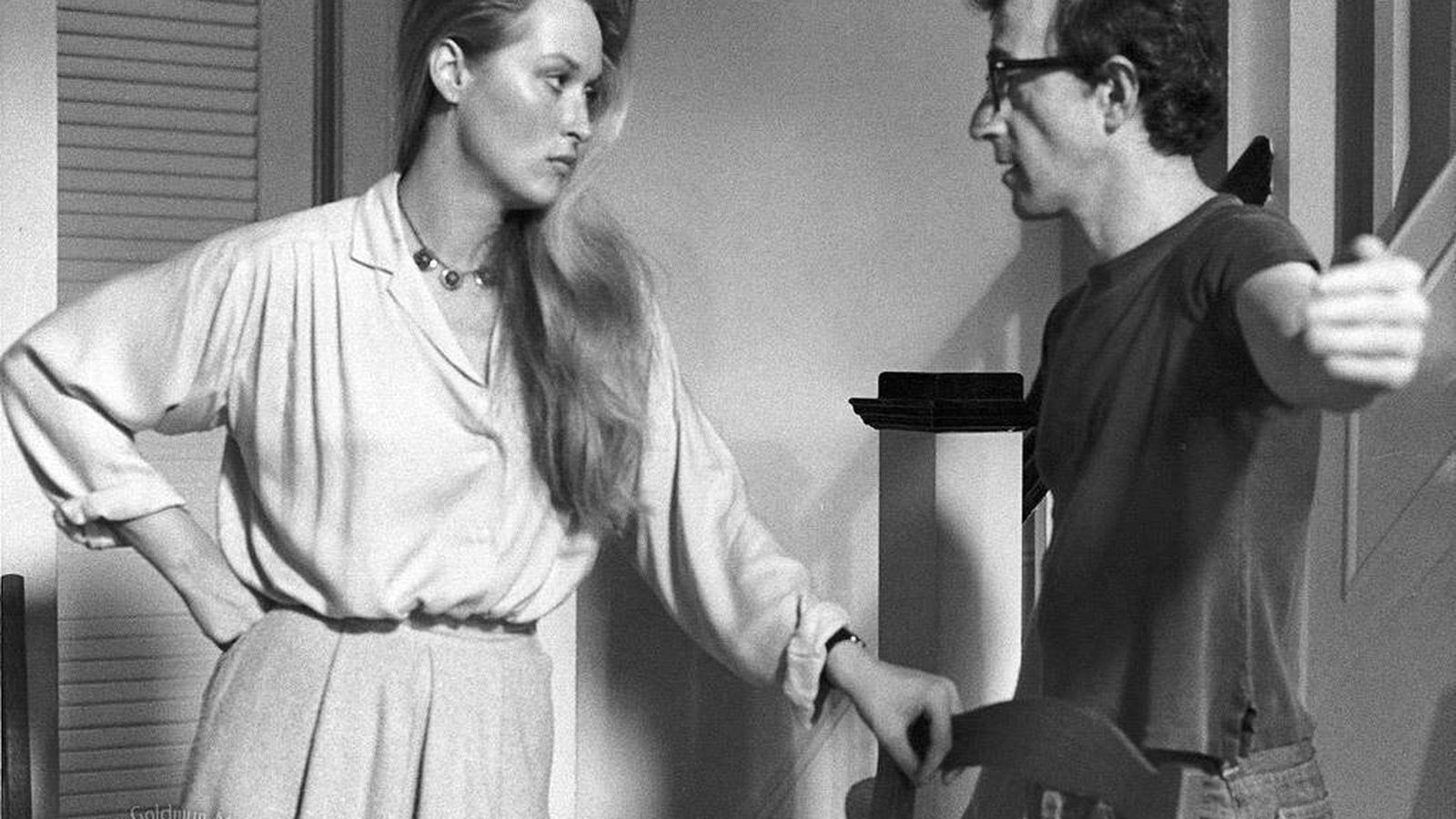
Actresses in Woody Allen films occupy a unique position in film history, having earned six Academy Awards for acting and a total of 18 Oscar acting nominations across five decades. Collaborators like Diane Keaton, Mia Farrow, Dianne Wiest, and Cate Blanchett delivered career-defining performances that reshaped modern romantic archetypes, female interiority, and ensemble dramatic acting on screen.
The Evolution of the Female Archetype in Allen’s Cinema
Throughout the history of modern American film, few directors have crafted as extensive a gallery of complex female characters as Woody Allen. Across more than 50 feature films spanning from the late 1960s into the 2020s, Allen shifted from writing slapstick comedy caricatures to developing multi-dimensional, psychologically driven female protagonists.
In early comedies like Take the Money and Run (1969) or Bananas (1971), female characters primarily functioned as traditional romantic foils or comedic straight figures. However, by the mid-1970s, Allen began prioritizing female subjectivity. His characters evolved into articulate, highly educated, emotionally conflicted modern women navigating urban existence, intellectual self-doubt, and interpersonal instability.
This stylistic pivot coincided with major cultural shifts in American society, including second-wave feminism and changing expectations surrounding gender roles, romantic partnerships, and professional identity. Rather than presenting female leads merely as objects of male affection, Allen’s scripts began centering their choices, moral dilemmas, and inner lives. This thematic focus positioned his work as a vital bridge between classical Hollywood romantic tropes and late 20th-century character studies.
- Slapstick Foils (1960s-1970s)
- Neurotic Romantic Leads (1970s-1980s)
- Dramatic Ensembles & Tragic Realism (1980s-Present)
Era-Defining Collaborations: Muses and Partners
The structural backbone of Allen’s cinematic history rests on a series of prolonged creative partnerships with specific leading ladies. These multi-film collaborations allowed actresses to explore diverse dramatic ranges over consecutive years, leaving a distinct mark on American cinema.
Diane Keaton: Redefining the Modern Woman and Romantic Comedy
The artistic partnership between Diane Keaton and Woody Allen during the 1970s fundamentally altered the visual and thematic grammar of American romantic comedy. Beginning with Play It Again, Sam (1972)—directed by Herbert Ross but written by and starring Allen—and continuing through Allen-directed works like Sleeper (1973), Love and Death (1975), Annie Hall (1977), and Manhattan (1979), Keaton became the definitive onscreen persona of the decade.
In Annie Hall, Keaton portrayed a woman who was self-conscious, artistic, emotionally tentative, yet fiercely independent. Her performance broke away from traditional screen heroines who existed merely to fulfill a protagonist’s romantic arc. Annie Hall possessed her own career ambitions, creative self-doubt, and personal trajectory, eventually choosing her own autonomy over romantic settlement.
Keaton’s distinctive performance style—marked by naturalistic stammers, improvised physical mannerisms, and a gender-fluid wardrobe (conceived by Keaton herself alongside costume designer Ruth Morley)—became a cultural touchstone. The role won Keaton the Academy Award for Best Actress, solidified her place in film history, and established a template for modern onscreen female protagonists that influenced filmmakers for decades.
Mia Farrow: The Golden Age of Dramatic Range (1982–1992)
Following the Keaton era, Allen entered an unprecedented ten-year creative partnership with Mia Farrow. Starring in 13 consecutive films between 1982 and 1992, Farrow demonstrated an extraordinary range that challenged mainstream studio casting paradigms of the 1980s.
Farrow’s performances spanned vastly different genres and character types:
- The Vulnerable Romantic: In The Purple Rose of Cairo (1985), Farrow played Cecilia, a Depression-era waitress trapped in an abusive marriage who finds temporary escape in the fantasy world of cinema. Farrow brought a tender, tragic dignity to the role, which earned her widespread critical praise and a Golden Globe nomination.
- The Brash Character Turn: In Broadway Danny Rose (1984), Farrow underwent a complete transformation as Tina Vitale, a mob widow wearing oversized sunglasses and speaking with a sharp New Jersey accent—a performance entirely divorced from her established fragile public image.
- The Ensemble Anchor: In works like Hannah and Her Sisters (1986), Crimes and Misdemeanors (1989), and Husbands and Wives (1992), Farrow anchored complex ensemble narratives, depicting moral compromise, jealousy, and quietly devastating domestic breakdown.
The sheer volume and diversity of Farrow’s work during this decade remains one of the longest continuous collaborations between a single lead actress and a director in contemporary film history.
Scarlett Johansson and the 2000s European Renaissance
As Allen shifted his production footprint to Europe in the mid-2000s, Scarlett Johansson emerged as a key creative force in revitalizing his critical standing. Their first project together, Match Point (2005), set in London, cast Johansson as Nola Rice, an aspiring American actress caught in a fatal romantic triangle.
Johansson brought a raw, magnetic tension to the screen that departed from the quiet neurosis of previous eras. She followed Match Point with comedic turns in Scoop (2006) and Vicky Cristina Barcelona (2008). Her work during this period reflected a broader shift in Allen’s character writing toward modern international themes, fame, ambition, and global mobility.
Academy Award Achievements: Actresses Directed to Oscar Wins
One of the most notable aspects of film history regarding Woody Allen’s directorship is his record as an actor's director, particularly for female performers. Female actors under Allen's direction have received six Academy Awards and a total of 18 Oscar nominations, making his productions among the most consistent catalysts for female acting accolades in the history of the Motion Picture Academy.
| Actress | Film Title | Year | Award Category | Result |
|---|---|---|---|---|
| Diane Keaton | Annie Hall | 1977 | Best Actress in a Leading Role | Won |
| Geraldine Page | Interiors | 1978 | Best Actress in a Leading Role | Nominated |
| Maureen Stapleton | Interiors | 1978 | Best Actress in a Supporting Role | Nominated |
| Mariel Hemingway | Manhattan | 1979 | Best Actress in a Supporting Role | Nominated |
| Dianne Wiest | Hannah and Her Sisters | 1986 | Best Actress in a Supporting Role | Won |
| Mia Farrow | The Purple Rose of Cairo | 1985 | Best Actress (BAFTA/Golden Globe) | Nominated |
| Judy Davis | Husbands and Wives | 1992 | Best Actress in a Supporting Role | Nominated |
| Dianne Wiest | Bullets Over Broadway | 1994 | Best Actress in a Supporting Role | Won |
| Jennifer Tilly | Bullets Over Broadway | 1994 | Best Actress in a Supporting Role | Nominated |
| Mira Sorvino | Mighty Aphrodite | 1995 | Best Actress in a Supporting Role | Won |
| Samantha Morton | Sweet and Lowdown | 1999 | Best Actress in a Supporting Role | Nominated |
| Penélope Cruz | Vicky Cristina Barcelona | 2008 | Best Actress in a Supporting Role | Won |
| Cate Blanchett | Blue Jasmine | 2013 | Best Actress in a Leading Role | Won |
| Sally Hawkins | Blue Jasmine | 2013 | Best Actress in a Supporting Role | Nominated |
Key Historical Oscar Wins Analyzed
Dianne Wiest (Hannah and Her Sisters, 1986 & Bullets Over Broadway, 1994)
Dianne Wiest is one of a select group of performers to win two Academy Awards under the direction of the same filmmaker. In Hannah and Her Sisters, Wiest played Holly, an anxious, career-shifting woman struggling in the shadow of her more grounded sister. Wiest’s performance combined vulnerability with manic energy, capturing the anxieties of 1980s urban life.
Eight years later, in Bullets Over Broadway, Wiest delivered a completely contrasting performance as Helen Sinclair, a grandiose, theatrical Broadway diva of the 1920s. Her commanding delivery of the iconic line, "Don't speak!" showcased her comedic timing and earned her a second Best Supporting Actress Oscar.
Mira Sorvino (Mighty Aphrodite, 1995)
Mira Sorvino won the Best Supporting Actress Academy Award for her portrayal of Linda Ash, an optimistic sex worker with a high-pitched voice and an earnest heart. Sorvino grounded what could have easily become a theatrical stereotype, imbuing the character with emotional honesty and dignity that elevated the surrounding comedic narrative.
Penélope Cruz (Vicky Cristina Barcelona, 2008)
Playing the volatile artist María Elena, Penélope Cruz delivered a explosive performance alongside Javier Bardem and Scarlett Johansson. Cruz performed in both Spanish and English, portraying passion, artistic frustration, and psychological instability with extraordinary intensity. Her performance earned her the Academy Award for Best Supporting Actress, making her the first Spanish actress to win an Oscar in that category.
Cate Blanchett (Blue Jasmine, 2013)
Cate Blanchett’s turn as Jasmine French—a disgraced, manic New York socialite coping with the aftermath of her husband’s financial fraud—is widely considered one of the greatest female screen performances of the 2010s. Drawing thematic parallels to Tennessee Williams's A Streetcar Named Desire, Blanchett anchored the film with a devastating portrait of denial, mental breakdown, and class anxiety. Her work earned her sweeping critical acclaim, sweeping every major award season trophy, including the Academy Award for Best Actress.
- Keaton (1977)
- Wiest (1986)
- Wiest (1994)
- Sorvino (1995)
- Cruz (2008)
- Blanchett (2013)
Archetypes and Performance Styles: Neurosis, Eccentricity, and Moral Ambiguity
The critical legacy of female performances in Allen's films is rooted in specific character archetypes that challenged traditional Hollywood gender portrayals. Rather than relying on simple moral binaries—the pure love interest versus the manipulative antagonist—his screenplays frequently introduced characters defined by complex human contradictions.
The Intellectual Neurotic
Characterized by verbal fluency, self-analysis, and existential anxiety, this archetype (pioneered by Diane Keaton and later developed by Judy Davis in Husbands and Wives) challenged the idea that female leads had to remain passive or serene. These characters debated literature, psychoanalysis, and art, bringing a sharp intellectual energy to screen acting.
The Uncompromising Artist or Eccentric
Seen in characters portrayed by Penélope Cruz (Vicky Cristina Barcelona), Dianne Wiest (Bullets Over Broadway), and Dianne Wiest in September (1987), this archetype highlights the tension between artistic obsession and personal relationships. These roles offered actresses permission to occupy theatrical, expansive, and unapologetically large screen spaces without being framed purely as villains.
The Tragic Grounding Force
Often set against chaotic male lead characters, performers such as Samantha Morton (who earned an Oscar nomination in Sweet and Lowdown for a entirely non-speaking role as the mute Hattie) and Sally Hawkins (Blue Jasmine) provided grounded emotional realism. Morton’s silent performance, in particular, demonstrated how actors could achieve profound characterization through facial movement and gesture alone within Allen's minimalist frame compositions.
Directors' Style and Working Conditions for Actors
To understand how so many actresses delivered award-winning work within this filmography, film scholars frequently analyze Allen’s unique directional methods. Unlike directors who heavily rehearse or provide detailed character backstories, Allen was famous for a hands-off approach to acting direction.
Minimal Directorial Interference
Actors who have worked on his sets—including Cate Blanchett, Marion Cotillard, and Emma Stone—frequently note that Allen offered minimal direct instructions, rarely doing multiple takes unless technical errors occurred. This methodology granted performers immense autonomy over their choices:
- Trust in Casting: Allen relied almost entirely on the casting process. He believed that hiring the right actor meant 90% of the directorial work was finished before filming began.
- Long Take Master Shots: Allen frequently utilized long, continuous master shots (often designed with cinematographers like Gordon Willis, Sven Nykvist, or Vittorio Storaro) rather than aggressive coverage editing.
- Space for Natural Rhythms: Because the camera ran continuously without frequent cuts, actresses were forced to sustain live dramatic energy, overlap dialogue, and handle physical props naturally, creating an authentic theatrical momentum.
This lack of micro-management created an environment where experienced stage and screen actresses could take dramatic risks, resulting in naturalistic, unforced performances that stood out to critics and award voters alike.
Impact on Film History and Legacy
The historical significance of female performances in Allen's cinema extends far beyond awards counts. By consistently prioritizing women's internal conflicts, intellectual debates, and romantic choices, these films altered several key trajectories in American film history:
Redefining Romantic Comedy Mechanics
Before the late 1970s, mainstream romantic comedy relied heavily on screwball antics or traditional melodramatic setups. The performances of Keaton, Farrow, and their peers introduced a conversational, semi-improvisational tone that changed how dialogue was delivered on screen. Modern indie directors like Noah Baumbach, Greta Gerwig, and Richard Linklater trace critical elements of their performance styles back to the naturalistic, chatter-filled scenes established in Annie Hall and Hannah and Her Sisters.
Expanding Career Longevity for Mature Actresses
During periods when studio Hollywood offered few substantive roles for women over 30, Allen's projects regularly centered mature actresses in dynamic lead roles. Performers like Maureen Stapleton, Geraldine Page, Gena Rowlands (Another Woman), Elaine Stritch (September), and Judy Davis found complex, dramatically challenging material that defied industry ageism.
Critical Re-evaluation and Modern Context
In contemporary film studies, the legacy of Allen’s female characters is examined through a variety of critical lenses. Film historians analyze how his work reflected late-20th-century urban life while examining the boundary between authorial intent and actor performance. While contemporary debates surrounding Allen's personal history have reshaped how audiences engage with his filmography, film archives and academic programs continue to study these performances for their influence on screenwriting, acting technique, and screen presence.
Frequently Asked Questions
Which actress won the first Academy Award for a role in a Woody Allen film?
Diane Keaton won the first Academy Award for an acting role in a Woody Allen film, taking home the Best Actress Oscar for Annie Hall at the 50th Academy Awards in 1978.
How many actresses have won Oscars under Woody Allen's direction?
Five different actresses have won a total of six Academy Awards under his direction: Diane Keaton (Annie Hall), Dianne Wiest (Hannah and Her Sisters and Bullets Over Broadway), Mira Sorvino (Mighty Aphrodite), Penélope Cruz (Vicky Cristina Barcelona), and Cate Blanchett (Blue Jasmine).
Which actress appeared in the highest number of Woody Allen films?
Mia Farrow appeared in the highest number of Allen’s films, starring in 13 consecutive feature films between 1982 (A Midsummer Night's Sex Comedy) and 1992 (Husbands and Wives).
Why do so many actors win Oscars for Woody Allen films?
Film historians attribute this success to Allen's casting philosophy, long-take camera setups, and minimal direct intervention during filming. This approach granted actors broad freedom to shape their performances, rely on natural vocal rhythms, and take significant dramatic risks without feeling micromanaged.
Did any actor win an Oscar for a non-speaking role in his films?
While she did not win, Samantha Morton received an Academy Award nomination for Best Supporting Actress for her role as Hattie in Sweet and Lowdown (1999), a character who does not speak a single line throughout the film.
Practical Viewing Guide for Film Scholars and Students
To understand the stylistic evolution of female performances in modern American film history, cinephiles and film students should review these key performances chronologically:
- The Romantic Paradigm Shift: Watch Annie Hall (1977) to analyze how Diane Keaton dismantled traditional screwball romantic tropes through naturalistic dialogue and self-directed costume choices.
- The Ensemble Mastery: Study Hannah and Her Sisters (1986) to examine how Mia Farrow, Dianne Wiest, and Barbara Hershey navigate overlapping dramatic arcs within a single narrative frame.
- The Pure Dramatic Turn: View Another Woman (1988) featuring Gena Rowlands for an example of how Allen directed severe, Bergmanesque dramatic interiority without traditional comedic elements.
- The Modern Character Study: Watch Blue Jasmine (2013) to observe Cate Blanchett’s integration of classical theatrical technique with modern cinematic realism.