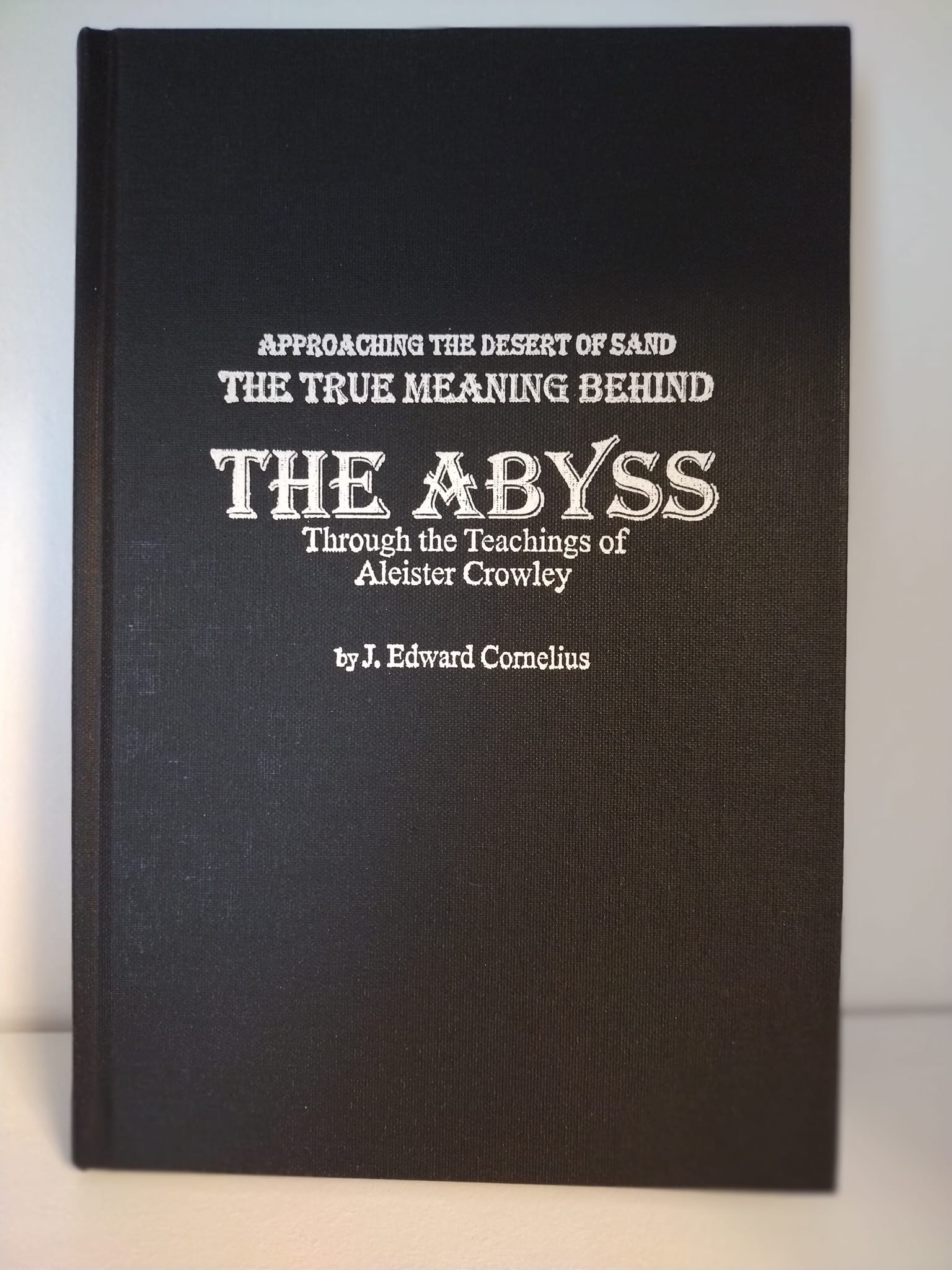
An abyss is defined as a bottomless or unfathomably deep chasm, void, or interior space. Etymologically rooted in the Greek abyssos—meaning "without bottom"—the term describes both physical geological formations, such as ocean trenches, and abstract psychological or existential states characterized by profound depth, uncertainty, or the vastness of the unknown.
The Etymological Foundations of the Abyss
To understand the abyss, one must first look at its linguistic origin. The word derives from the Late Latin abyssus, which itself stems from the Ancient Greek abyssos. This compound is formed from the prefix a- (without) and byssos (bottom). Historically, this term was utilized in early theological and philosophical texts to describe the primeval chaos or the depths of the underworld.
As the word evolved through Middle English, its meaning expanded beyond a purely physical or mythological "bottomless pit." It began to signify an intellectual or moral void—a state of being so deep that it cannot be comprehended or measured. In current usage, the term maintains this duality: it functions as a literal description for geographers and as a potent metaphor for writers, psychologists, and philosophers alike.
Physical and Scientific Manifestations
In the context of the natural sciences, the abyss is not merely a poetic construct; it refers to specific, measurable, and highly specialized environments.
The Hadal Zone
In oceanography, the term "abyssal" and "hadal" are often discussed in conjunction. The abyssal zone is the layer of the ocean at depths of 4,000 to 6,000 meters. The "abyss" in this scientific sense refers to the dark, high-pressure environment where sunlight never penetrates. This ecosystem is characterized by specialized flora and fauna that have evolved to survive in conditions of extreme cold and immense hydrostatic pressure.
Geological Chasms
In geology, an abyss is often a synonym for a deep fissure or a rift. These formations are frequently the result of tectonic plate movement or seismic activity. Unlike a simple trench, the term "abyss" implies a structural instability and a lack of a clear, reachable bottom, often because the opening leads into subterranean cave systems or geological vents that remain largely inaccessible to human exploration.
Metaphorical and Psychological Usage
Outside of physical geography, the abyss is one of the most enduring metaphors in the humanities. Its utility lies in its ability to encapsulate the human experience of encountering the infinite or the incomprehensible.
The Existential Abyss
Friedrich Nietzsche’s famous assertion—"if you gaze long into an abyss, the abyss also gazes into you"—remains the cornerstone of how we interpret the psychological abyss. Here, the term represents a confrontation with the void, nihilism, or the loss of meaning. It describes a state where an individual encounters the absolute freedom or chaos of existence, resulting in a feeling of vertigo or ontological displacement.
Literary Symbolism
In literature, the abyss serves as a narrative device to denote the point of no return. It represents:
- The Unconscious: The depths of the mind where suppressed traumas or desires reside.
- Moral Decay: A state of corruption from which a character cannot escape.
- The Unknown: The threshold between the known world and a realm of mystery, danger, or transformation.
Comparative Analysis of Terminology
Understanding the nuance of the abyss requires distinguishing it from related concepts that denote depth or emptiness.
| Term | Primary Context | Distinguishing Characteristic |
|---|---|---|
| Abyss | Existential/Physical | Implies a lack of a discernible, finite bottom. |
| Chasm | Physical | A deep, wide fissure; usually implies a clear separation. |
| Void | Philosophical | Focuses on the state of nothingness or emptiness. |
| Trench | Geographical | A long, narrow depression, usually in the seabed. |
| Gorge | Physical | A narrow valley between hills, typically with a stream. |
Technical and Operational Applications
While "abyss" is rarely used as a technical term in modern engineering, it appears in specific high-level modeling and creative industries.
Digital and Gaming Landscapes
In the context of 2026 digital design and software development, the term is frequently employed to define "out-of-bounds" areas in virtual environments. If a player or data entity moves into an unrendered space, it is colloquially referred to as "the abyss." Developers must program "kill zones" or invisible collision barriers to prevent entities from falling into these voids, which would otherwise crash the rendering engine or cause data loops.
Industrial Safety and Mining
In mining and industrial excavation, while the technical term is "shaft" or "stope," the colloquial warning of an "abyss" is used to describe an improperly secured vertical drop. The safety protocols for these areas are rigorous, requiring high-tension safety nets, specific lighting requirements, and structural reinforcement to ensure that workers do not perceive the drop as a hazards-prone abyss.
Common Misconceptions
A frequent error is the interchangeable use of "abyss" and "canyon." A canyon, while deep, is generally formed by erosional processes over time and typically has a recognizable bottom or floor. An abyss, by contrast, implies an inability to perceive the base.
Another misconception is that the abyss is inherently negative. While it often carries connotations of death or destruction, it is also frequently associated with creation, potential, and the "womb" of existence—the dark, fertile space from which order arises from chaos. Recognizing these variations in context is essential for clear communication.
Frequently Asked Questions
1. Is an abyss actually bottomless? In a literal, physical sense, no. All physical chasms have a base, whether it is bedrock, water, or the planetary crust. The term "bottomless" is a relative descriptor used to convey that the depths are beyond easy human perception or immediate physical reach.
2. How does the abyss differ from a black hole? A black hole is a specific gravitational singularity in space-time where the laws of physics as we know them cease to function. An abyss is a descriptive term for a deep, dark opening or space, typically occurring within a terrestrial or metaphorical context.
3. Why do people use the term to describe psychological states? The abyss is an effective metaphor because it captures the visceral sensation of vertigo—the fear of falling into something vast and uncontrollable. It externalizes the internal experience of confronting one's own limitations or the vastness of the future.
4. Can an abyss be created artificially? Yes, in the context of infrastructure, an artificial abyss is an open, unshielded drop. In digital media, it is a deliberate design choice for atmosphere, meant to create a sense of scale and dread for the audience.
5. How should I approach the term in academic writing? If using "abyss" in an academic setting, ensure you clarify whether you are referring to the geological formation or the metaphorical void. Using it as a metaphor requires a strong thematic connection to the subject matter to avoid sounding overly dramatic or imprecise.
Practical Recommendations for Usage
When writing or speaking, utilize the term "abyss" sparingly. Because it carries significant emotional weight, it is most effective when used to denote a genuine threshold or an truly insurmountable divide.
If you are describing physical terrain, opt for more precise geological terms like "trench," "fissure," or "ravine" unless the specific intention is to emphasize the inability to see the bottom. If you are describing a psychological experience, use "abyss" to frame the encounter with the unknown as a profound, transformative, or terrifying event. By aligning the word with its appropriate scale, you ensure that the depth of your message remains intact.