The transformation of 790 Glenwood Ave SE represents a pivotal chapter in Atlanta’s urban evolution, marking the transition from an industrial corridor to a vibrant, mixed-use hub. Located at the intersection of the Grant Park and Ormewood Park neighborhoods, this site—now known primarily as Glenwood Place—serves as a primary anchor for the Southside Trail of the Atlanta BeltLine, integrating high-density residential living with essential retail and greenway connectivity.
In 2026, the landscape of 790 Glenwood Ave SE stands as a testament to the complex interplay between large-scale commercial development and the grassroots "New Urbanism" movement. Once a 28-acre industrial site dominated by concrete plants and warehouse structures, it is now a bustling ecosystem that services thousands of residents daily. Understanding the history, the controversies, and the current operational reality of this address provides a clear window into how Atlanta has redefined its urban core over the last decade.
The Historical Context of 790 Glenwood Ave SE
To appreciate the current state of 790 Glenwood Ave SE, one must look back at its industrial pedigree. For decades, this portion of Southeast Atlanta was characterized by heavy industry, rail lines, and manufacturing. The site itself was largely occupied by a Lafarge concrete plant and various aging warehouse facilities. Its location was strategically chosen for its proximity to the rail lines that now form the basis of the Atlanta BeltLine.
During the mid-20th century, the area was not a destination for residents but rather a utility zone that supported the city’s physical construction. However, as the surrounding neighborhoods of Grant Park and Ormewood Park began to undergo a demographic shift in the late 1990s and early 2000s, the industrial nature of the 790 Glenwood parcel became increasingly at odds with the residential desires of the community. The "landscape" was one of chain-link fences, gravel pits, and heavy truck traffic—a stark contrast to the Victorian homes and bungalow-lined streets just a few blocks away.
The shift began in earnest around 2012–2013, when the potential of the Atlanta BeltLine’s Southside Trail became a tangible reality for developers. The 28-acre site represented one of the largest contiguous redevelopment opportunities along the entire loop, sparking a multi-year battle over zoning, density, and the future of urban design in the city.
The Catalyst of Change: The Glenwood Place Development
The primary agent of change for 790 Glenwood Ave SE was Fuqua Development. The proposal to turn the industrial site into "Glenwood Place" was met with significant community resistance and legal challenges. The central conflict revolved around the "Big Box" nature of the proposed anchor tenant—a massive Kroger supermarket—and the inclusion of a fuel station and surface parking, which many neighbors felt ignored the walkability goals of the BeltLine.
The Zoning Battle and Compromise
The community, represented by organizations like Grant Park Neighbors and South Atlantans for Neighborhood Development (SAND), pushed for a more "urban" configuration. They advocated for buildings that faced the street, hidden parking structures, and better pedestrian integration with the BeltLine.
The resulting development, which finalized its initial phases in the late 2010s, was a compromise. While it retained the large-format Kroger, the design included:
- Structured Parking: Moving a portion of the vehicle storage away from the immediate street view.
- Retail Outparcels: Placing smaller shops and restaurants closer to Glenwood Avenue to create a more traditional "streetscape."
- BeltLine Connectivity: Dedicated access points for pedestrians and cyclists coming from the Southside Trail.
By 2026, this development has matured. The trees planted during construction have reached a canopy height that softens the commercial architecture, and the "Glenwood Kroger" (often colloquially referred to as the "Kro-Bar" due to its interior bar and social atmosphere) has become a central community meeting point rather than just a grocery store.
Analyzing the 2026 Mixed-Use Ecosystem
As of 2026, the landscape of 790 Glenwood Ave SE is defined by a dense mix of retail, service-oriented businesses, and multi-family residential units. The site is no longer just a shopping center; it is a transit-adjacent development that functions as a neighborhood center.
The Retail Anchor and Commercial Mix
The 80,000-square-foot Kroger remains the heartbeat of the site. However, the supporting retail has shifted toward "experiential" and "daily-need" services. You will find a mix of:
- Fast-Casual Dining: National brands like Chick-fil-A, Chipotle, and Starbucks operate alongside local boutiques.
- Health and Wellness: Urgent care facilities, dental offices, and boutique fitness studios occupy the upper-tier retail spaces.
- Service Retail: Mobile phone carriers, hair salons, and pet grooming services cater to the high density of apartment dwellers nearby.
Residential Integration: Maverick and Beyond
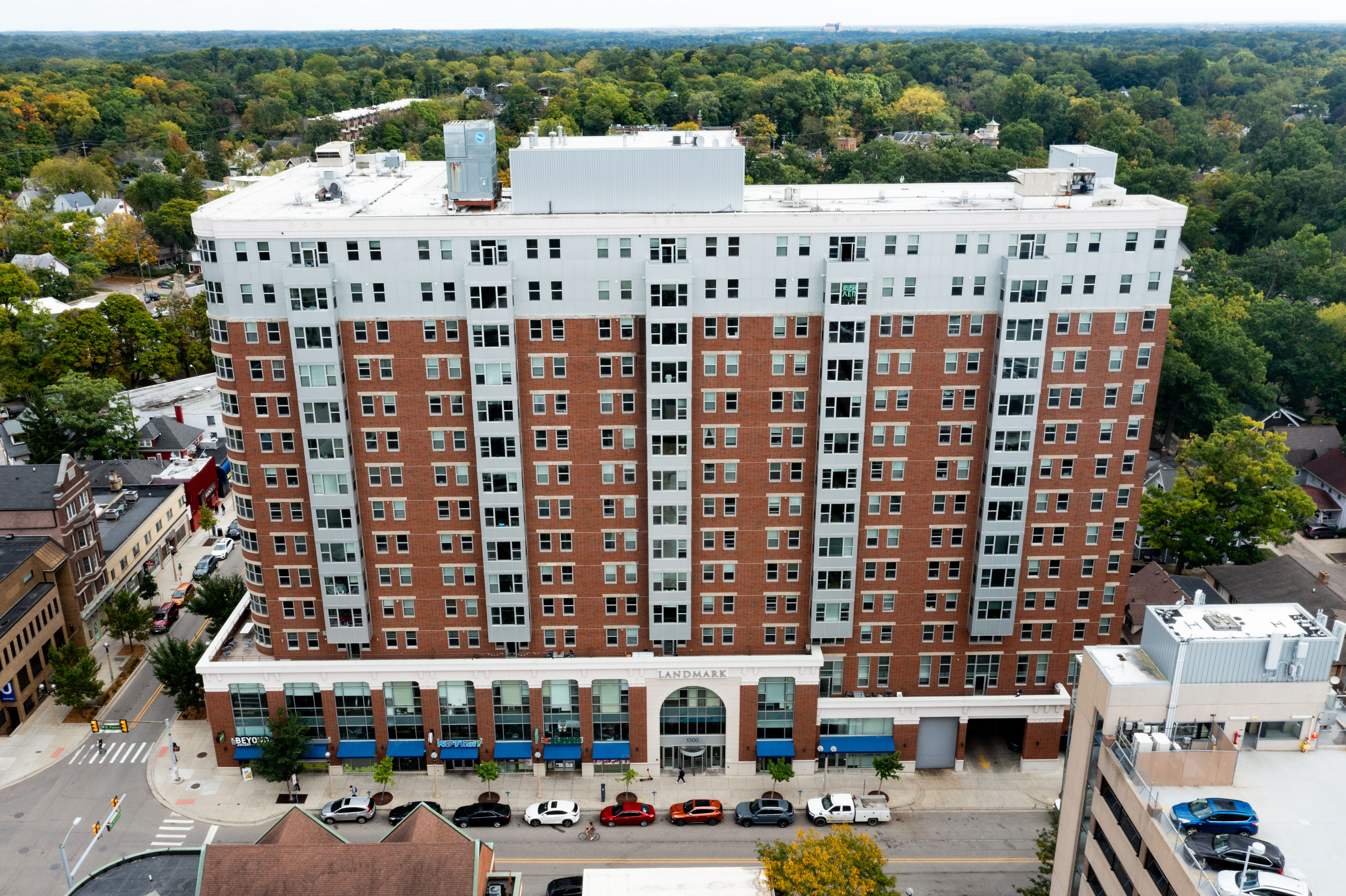
Directly adjacent to and integrated with the commercial footprint are significant residential developments, most notably the Maverick apartments and townhomes. This residential component changed the landscape by introducing hundreds of high-end rental units and for-sale townhouses onto what was once a gravel lot.
The residential density has created a 24-hour cycle of activity. In 2026, the area is characterized by high foot traffic at all hours, a major departure from the "dead zone" status the industrial site held for half a century. The architecture of these residential blocks utilizes modern materials—brick, metal, and glass—that attempt to bridge the gap between the area’s industrial past and its residential future.
| Feature | Pre-Development (Prior to 2014) | Current Status (2026) |
|---|---|---|
| Primary Land Use | Industrial (Concrete Plant/Warehouse) | Mixed-Use (Retail/Residential) |
| Acreage | ~28 Acres | ~28 Acres (Fully Developed) |
| Permeable Surface | Low (Mostly Concrete/Gravel) | Moderate (Enhanced Landscaping/Hardscape) |
| BeltLine Access | None (Industrial Barrier) | Direct (Southside Trail Access Points) |
| Resident Density | Zero | 500+ Units (Apartments/Townhomes) |
| Primary Anchor | Lafarge Concrete | Kroger (80,000 sq. ft.) |
| Traffic Focus | Heavy Trucks/Freight | Pedestrian/Cyclist/Passenger Vehicle |
The BeltLine Effect: Connectivity and Value
The single most influential factor in the changing landscape of 790 Glenwood Ave SE is its relationship with the Atlanta BeltLine Southside Trail. In the early stages of development, the Southside Trail was an unpaved, "interim" path. By 2026, the segments connecting Glenwood to Boulevard and beyond have undergone significant paving and infrastructure improvements.
Strategic Positioning
790 Glenwood sits at a "gateway" point. For residents of Grant Park and Ormewood Park, it is the primary entry point to the BeltLine’s southern loop. This has led to:
- Increased Property Values: The land value of the 790 Glenwood parcel has increased exponentially since its industrial days, influencing the tax assessments of surrounding residential blocks.
- The Rise of Micro-Mobility: The landscape now includes massive docking stations for e-bikes and scooters, as many residents use the BeltLine to commute to the Eastside Trail or the Pittsburgh Yards area without using a car.
- Public Art and Green Space: The transition zone between the retail parking lots and the BeltLine trail now features murals and pocket parks, serving as a buffer and an aesthetic enhancement that was missing in the original site plan.
Community Sentiment and Urban Design Evolution
The landscape of 790 Glenwood Ave SE is as much a social construct as it is a physical one. For long-time residents of Southeast Atlanta, the site is a symbol of "The New Atlanta." While some lament the loss of the gritty, industrial character of the neighborhood and express concerns over gentrification and rising costs, others view the transformation as a massive improvement in safety and convenience.
From an urban design perspective, 790 Glenwood serves as a "lesson learned" for the City of Atlanta. The friction during its development led to stricter "BeltLine Overlay" zoning regulations. Future developments along the Southside Trail are now held to higher standards regarding:
- Building Placement: Ensuring buildings hug the trail or the street rather than being separated by parking.
- Affordable Housing: Later phases of residential development in the area have been subject to inclusionary zoning requirements that were less stringent when 790 Glenwood was first conceived.
Navigating 790 Glenwood: Logistics and Access
For those visiting 790 Glenwood Ave SE in 2026, the experience is defined by choice of mode. Unlike the traditional suburban shopping centers it was modeled after, this site requires a multi-modal approach.
Parking and Vehicle Flow
Vehicle access is primarily through Glenwood Avenue SE and Bill Kennedy Way SE. While there is ample parking, the "landscape" of the parking lot has changed to include EV charging stations and designated areas for rideshare pickup and delivery drivers. Traffic congestion on Bill Kennedy Way remains a challenge, a byproduct of the area’s popularity and its role as a bridge over I-20.
Pedestrian and Cyclist Paths
The site is exceptionally accessible for those on foot. A dedicated pedestrian bridge and ramp system connect the rear of the property directly to the BeltLine. This allows users to move from the grocery store to the trail without ever interacting with heavy street traffic.
The Future Landscape: Continued Maturation
Looking beyond 2026, the landscape of 790 Glenwood Ave SE is expected to stabilize. Most of the 28-acre site is fully "built out," meaning future changes will likely come in the form of "adaptive reuse of the new"—remodeling existing retail spaces as consumer trends shift.
There is also the ongoing potential for the transit component of the BeltLine. If light rail or autonomous shuttles are implemented along the Southside Trail, 790 Glenwood is perfectly positioned to serve as a major transit stop. This would further reduce the reliance on the surface parking lots, potentially allowing for even more "infill" development in the decades to come.
FAQs About 790 Glenwood Ave SE
Is 790 Glenwood Ave SE considered part of Grant Park or Ormewood Park?
The address sits on the border of both neighborhoods. Historically, Bill Kennedy Way often serves as the dividing line, putting 790 Glenwood technically in the eastern edge of the Grant Park area, though it serves as the primary commercial hub for Ormewood Park residents as well. It is often collectively referred to as being in the "BeltLine Southside" corridor.
What happened to the industrial businesses that were originally at this address?
Most of the industrial tenants, including the concrete plant operations, relocated to more heavy-industrial zones further south or west in Atlanta or outside the I-285 perimeter. The transition was part of a city-wide trend of moving heavy industry away from the expanding residential core along the BeltLine.
Can I access the Atlanta BeltLine directly from the Glenwood Place parking lot?
Yes. There is a well-marked pedestrian and bicycle connection located at the southern end of the development, near the residential units (Maverick). This provides direct access to the Southside Trail, which connects westward toward Boulevard and eastward toward Glenwood Park and Memorial Drive.
Is the parking at 790 Glenwood Ave SE free?
As of 2026, the majority of the surface parking for the retail portion of the development remains free for customers. However, some of the structured parking associated with the residential units is permitted and restricted to residents and their guests. Always check for updated signage regarding time limits, as the popularity of the BeltLine often leads to stricter parking enforcement.
Are there any affordable housing units at 790 Glenwood?
The Maverick development and subsequent residential additions in the immediate vicinity include a percentage of units designated as affordable housing, in accordance with the City of Atlanta’s inclusionary zoning ordinance for the BeltLine Overlay District. These units are typically reserved for those earning a certain percentage of the Area Median Income (AMI).
Practical Recommendations for Visitors and Residents
If you are navigating the changing landscape of 790 Glenwood Ave SE, consider the following actions to make the most of the area:
- Utilize the BeltLine for Access: If possible, avoid the heavy traffic on Bill Kennedy Way by accessing the site via the Southside Trail. There is ample bike parking near the Kroger entrance and the smaller retail shops.
- Explore Beyond the Anchor: While the Kroger is the main draw, the smaller retail "outparcels" along Glenwood Avenue often feature local businesses and better dining options that are more pedestrian-friendly.
- Monitor Local Zoning Developments: If you are a resident, stay engaged with the Grant Park Neighborhood Association (GPNA) or SAND. The area surrounding 790 Glenwood is still seeing "infill" projects that could impact local traffic and views.
- Use EV Charging Early: The EV charging stations at Glenwood Place are highly utilized. If you need a charge while shopping, aim for weekday mornings to ensure availability.
The evolution of 790 Glenwood Ave SE from a dusty industrial site to a modern urban crossroads is a reflection of Atlanta’s broader ambitions. By balancing commercial necessity with the community's desire for walkable, connected spaces, the landscape has become a blueprint—albeit a debated one—for the future of the American city.