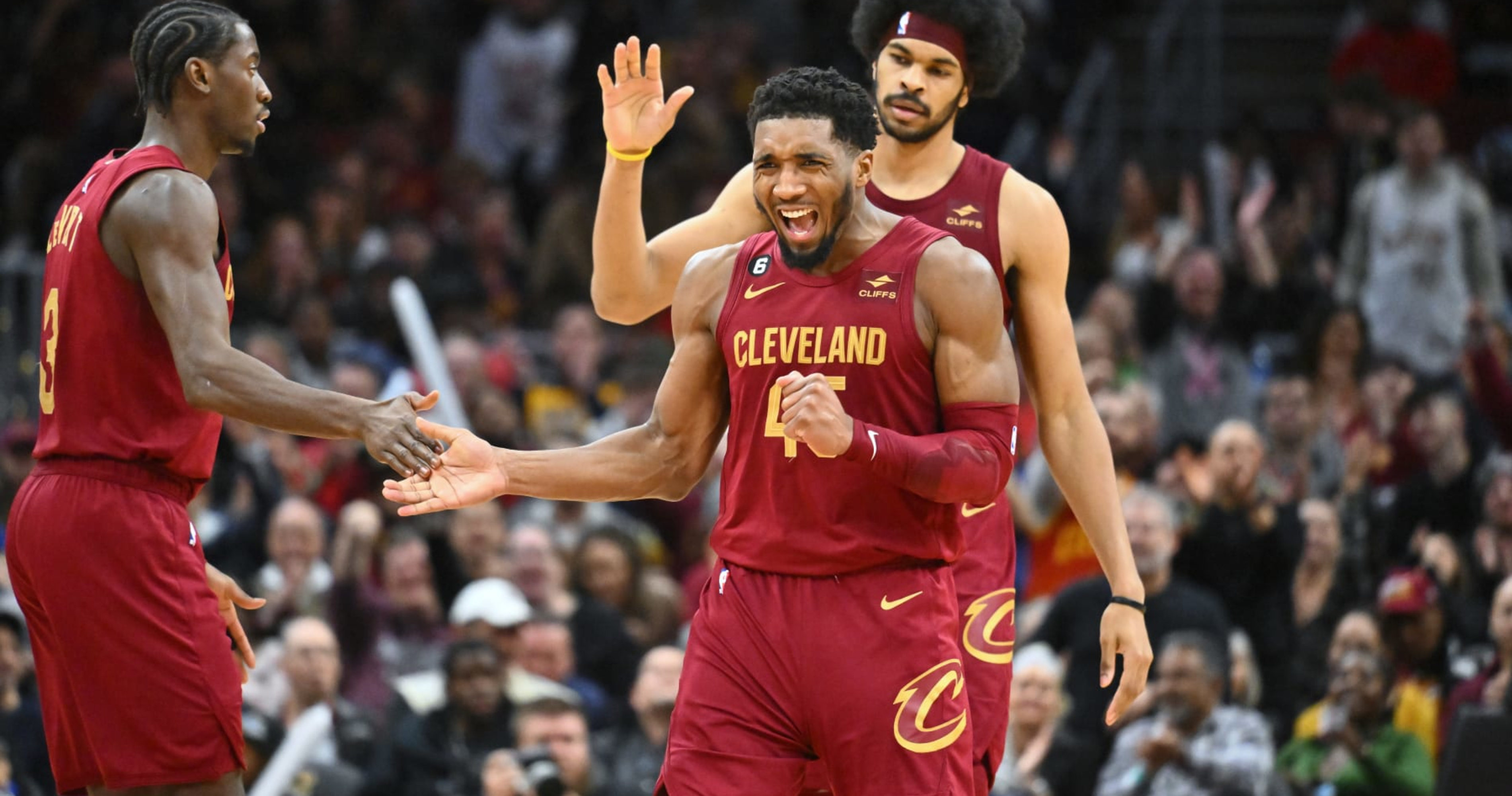
In the long history of the NBA, scoring exactly 71 points is a feat achieved by only four players: Elgin Baylor, David Robinson, Donovan Mitchell, and Damian Lillard. This specific milestone represents one of the rarest scoring plateaus in professional basketball, situated within the elite "70-point club" inhabited by fewer than ten players across the league's entire existence.
To understand the magnitude of a 71-point performance, one must consider that even icons like Michael Jordan, Stephen Curry, and LeBron James never reached this specific total. As of 2026, these four performances remain the gold standard for high-volume scoring efficiency, each occurring in vastly different eras of basketball—from the physical, paint-heavy 1960s to the pace-and-space revolution of the 2020s.
The Pioneers of the 70-Point Barrier
Before 1960, the idea of a single player scoring 70 points was largely considered an anomaly of the Wilt Chamberlain variety. However, the evolution of the 71-point mark began with a performance that redefined what a perimeter-oriented player could achieve.
Elgin Baylor: The First 71 (November 15, 1960)
Elgin Baylor’s 71-point explosion against the New York Knicks on November 15, 1960, was a watershed moment for the Los Angeles Lakers and the NBA. Playing at Madison Square Garden, Baylor converted 28 of his 48 field goal attempts and 15 of his 19 free throws.
What makes Baylor’s performance arguably the most impressive among the 71-point club is the lack of a three-point line. In the modern era, players use the arc to bridge the gap to high totals; Baylor did it entirely through mid-range jumpers, acrobatic drives, and post-ups. Furthermore, he grabbed 25 rebounds in the same game, a feat of secondary production that has never been matched in any other 70-point performance. Baylor’s 71 points stood as the NBA record for 14 months until Wilt Chamberlain eventually surpassed it with a 73-point game, and later his legendary 100-point game.
David Robinson: The Scoring Title Chase (April 24, 1994)
The next time the number 71 appeared on an NBA box score was under much different circumstances. On the final day of the 1993-94 regular season, San Antonio Spurs center David "The Admiral" Robinson was locked in a heated battle with Shaquille O’Neal for the league scoring title.
To secure the crown, Robinson needed a massive outing against the Los Angeles Clippers. The Spurs coaching staff and players actively sought to feed Robinson the ball on nearly every possession. Robinson responded by shooting 26-of-41 from the field and 18-of-25 from the free-throw line. While some critics at the time viewed the performance as "stat-padding," the technical proficiency Robinson displayed—running the floor, hitting face-up jumpers, and dominating the low block—remains a masterclass in center-led offense. Robinson finished the season with a scoring average of 29.8 points per game, narrowly edging out O’Neal’s 29.3.
The Modern Renaissance: Mitchell and Lillard
For nearly three decades, Robinson’s 71 was the last time the number was reached. That changed during the 2022-23 NBA season, a year that saw an unprecedented explosion in individual scoring. Within a span of less than two months, two different guards matched the 71-point mark using the modern tools of the three-point shot and high-frequency pick-and-roll play.
Donovan Mitchell: The 71-Point, 11-Assist Masterpiece (January 2, 2023)
Donovan Mitchell’s 71-point performance for the Cleveland Cavaliers against the Chicago Bulls is often cited by analytics experts as one of the most "valuable" games in history. Unlike previous 71-point games that were often blowouts or statistical hunts, Mitchell’s performance was required for his team to win.
The Cavaliers trailed by 21 points before Mitchell took over. He scored or assisted on 99 points for Cleveland, the second-highest total in NBA history behind Wilt Chamberlain’s 100-point game (where assists were not heavily recorded). Mitchell’s night included a legendary intentional missed free throw that he rebounded and put back himself to force overtime. In the extra period, he scored 13 points to seal the victory. Mitchell finished the night 22-of-34 from the floor, 7-of-15 from three, and 20-of-25 from the line.
Damian Lillard: Precision and Efficiency (February 26, 2023)
Just weeks after Mitchell’s heroics, Portland Trail Blazers guard Damian Lillard produced what many consider the most efficient 71-point game ever recorded. Facing the Houston Rockets, Lillard needed only 39 minutes to reach the mark.
Lillard’s performance was a showcase of the modern "logo three." He hit 13 three-pointers, coming within one of the then-NBA record. His shooting splits were a staggering 22-of-38 from the field (57.9%) and 14-of-14 from the free-throw line. Lillard’s ability to score from 30+ feet out forced the defense into impossible positions, creating a gravity that the Rockets could not solve. Notably, Lillard was 32 years old at the time, making him the oldest player to score 70 or more points in a single game.
Statistical Comparison of 71-Point Games
The following table breaks down the technical specifics of each 71-point performance, highlighting how the style of play evolved from 1960 to the 2020s.
| Player | Date | Team | Opponent | FG / FGA | 3PM / 3PA | FT / FTA | Minutes |
|---|---|---|---|---|---|---|---|
| Elgin Baylor | Nov 15, 1960 | LAL | NYK | 28 / 48 | N/A | 15 / 19 | 48 |
| David Robinson | Apr 24, 1994 | SAS | LAC | 26 / 41 | 1 / 2 | 18 / 25 | 44 |
| Donovan Mitchell | Jan 2, 2023 | CLE | CHI | 22 / 34 | 7 / 15 | 20 / 25 | 50 (OT) |
| Damian Lillard | Feb 26, 2023 | POR | HOU | 22 / 38 | 13 / 26 | 14 / 14 | 39 |
Technical Evolution: Why 71?
The jump from 60 points to 71 is a significant statistical hurdle. In NBA history, there have been dozens of 60-point games, but the air thins out significantly once a player crosses the 70-point threshold. Analyzing the "Why" behind these four specific performances reveals several technical requirements:
- High Usage Rate: In all four instances, the player had a usage rate exceeding 45% during the game. This means nearly half of the team’s possessions ended with that player shooting, drawing a foul, or turning the ball over.
- Free Throw Volume: Reaching 71 is nearly impossible without "easy" points at the charity stripe. Even Lillard, who hit 13 threes, still needed 14 free throws to reach the mark. Robinson and Mitchell both attempted 25 free throws, capitalizing on aggressive defensive coverage.
- The Three-Point Mathematical Advantage: Baylor and Robinson had to work significantly harder in terms of physical proximity to the basket. Mitchell and Lillard used the "three-point math" to accelerate their scoring. For example, Lillard scored 39 of his 71 points from behind the arc.
- Conditioning and Minutes: Except for Lillard’s outlier 39-minute performance, these games typically require the player to stay on the floor for almost the entire game. Mitchell’s performance was aided by an overtime period, giving him an extra five minutes to climb from the 50s into the 70s.
The Impact of Pace and Spacing
When comparing Elgin Baylor’s 1960 era to the 2023 performances of Mitchell and Lillard, Pace of Play is the most critical metric. In 1960, NBA teams averaged roughly 120-130 possessions per game. By the 1990s (Robinson’s era), the pace had slowed to about 90-95 possessions. In the 2020s, the pace climbed back toward 100.
While Baylor had more opportunities (possessions) to score, he lacked the spacing provided by the three-point line. Defenses could pack the paint, making every one of his 28 field goals a physical struggle. Conversely, Mitchell and Lillard played in an era of "pristine spacing," where teammates are positioned at the perimeter to pull defenders away from the basket. This creates wide-open lanes for drives or "pull-up" opportunities where the defender cannot catch up to the shooter.
Historic Context: The 70-Point Club Membership
As we look at these performances from the vantage point of 2026, it is helpful to see where they sit in the hierarchy of the NBA’s highest-scoring games. The 71-point mark is the most common specific number within the 70+ tier.
- 100 Points: Wilt Chamberlain (1962)
- 81 Points: Kobe Bryant (2006)
- 78 Points: Wilt Chamberlain (1961)
- 73 Points: Wilt Chamberlain (twice), David Thompson (1978), Luka Dončić (2024)
- 72 Points: Wilt Chamberlain (1962)
- 71 Points: Elgin Baylor, David Robinson, Donovan Mitchell, Damian Lillard
- 70 Points: Devin Booker (2017), Wilt Chamberlain (1963), Joel Embiid (2024)
The fact that 71 is the "median" for most non-Chamberlain legendary scorers suggests it is the natural ceiling for a modern superstar playing within a standard offensive system before the game either ends or the lead becomes too great to justify keeping the star in the game.
Common Obstacles to Reaching 71 Points
Why don't we see 71 points more often? Several factors usually prevent a player from reaching this milestone even when they are "hot."
- Blowout Logic: In many cases, if a player has 50 or 55 points by the end of the third quarter, their team is leading by 20+ points. Coaches will typically bench the star to prevent injury, as seen multiple times with players like Stephen Curry and Klay Thompson.
- Double-Teams and Traps: Once a player crosses the 40-point mark, professional defenses almost always switch to "box-and-one" or hard double-teams to force the ball out of that player's hands. Reaching 71 requires either a defensive scheme that refuses to adjust or a player who is capable of shooting over multiple defenders.
- Physical Fatigue: The sheer cardiovascular demand of taking 35+ shots and 15+ free throws is immense. Most players' shooting percentages plummet in the fourth quarter due to "heavy legs." The four players who hit 71 are all noted for elite-level conditioning.
Frequently Asked Questions
Who has the most 71-point games in NBA history?
No player has scored exactly 71 points more than once. While Wilt Chamberlain scored 70 or more points six times in his career, none of those specific performances landed on 71 (he had 70, 72, 73, 73, 78, and 100). The four players—Baylor, Robinson, Mitchell, and Lillard—each reached the mark exactly once.
Did any of the 71-point performances happen in the playoffs?
No. All four 71-point performances occurred during the NBA regular season. The record for the most points in an NBA playoff game is 63, set by Michael Jordan against the Boston Celtics in 1986. The high-intensity defensive adjustments and slower pace of playoff basketball make reaching 70+ points significantly more difficult than in the regular season.
Which 71-point game was the most efficient?
Damian Lillard’s 71-point game is widely considered the most efficient. He achieved the total in the fewest minutes (39) and required the fewest total field goal attempts (38) compared to Baylor’s 48 or Robinson’s 41. Lillard also maintained a perfect 100% from the free-throw line during his performance.
How many three-pointers were made in these games?
The three-pointer played a varying role depending on the era. Elgin Baylor made zero (the line did not exist). David Robinson made one (on two attempts). Donovan Mitchell made seven (on 15 attempts). Damian Lillard made 13 (on 26 attempts). This progression clearly illustrates the NBA's shift toward perimeter-centric scoring.
Has anyone scored more than 71 points recently?
Yes. Since the Mitchell and Lillard performances in early 2023, the NBA has seen other massive totals. Luka Dončić scored 73 points in January 2024, and Joel Embiid recorded 70 points that same month. As of 2026, the league remains in a "scoring boom" where the 70-point barrier is threatened more frequently than in any other decade in history.
Final Recommendation for Fans and Analysts
To truly appreciate a 71-point performance, one should look beyond the final box score and examine the True Shooting Percentage (TS%) and Shot Quality of the game. If you are researching these games for historical or scouting purposes, the 2023 performances of Mitchell and Lillard are best studied for their spacing and pick-and-roll navigation. For those interested in the psychological aspect of "the zone," the David Robinson game provides a unique look at how a team can collectively engineer a scoring record for a single teammate. Regardless of the era, the 71-point club remains a testament to the absolute peak of individual offensive capability in professional sports.