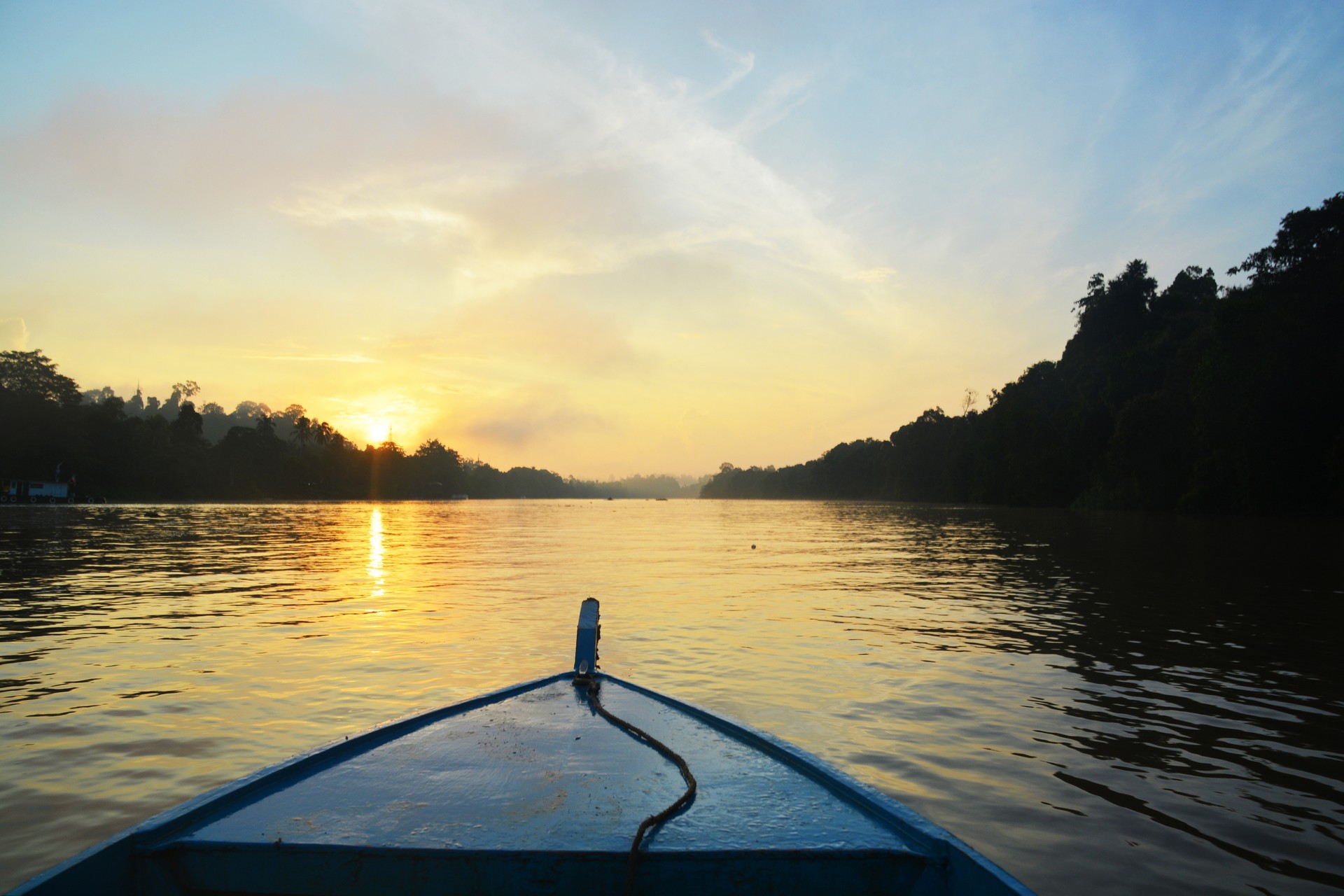
Borneo offers an unmatched immersion into one of the world’s oldest rainforests, providing travelers with rare wildlife encounters, deep cultural experiences, and diverse terrain. An unforgettable trip to this massive island—shared by Malaysia, Indonesia, and Brunei—centers on balancing ecological exploration with respect for its indigenous heritage and sensitive, biodiverse environments.
1. Observe Orangutans in Their Natural Habitat
Seeing a wild orangutan in the rainforest is the definitive Borneo experience. The Sepilok Orangutan Rehabilitation Centre in Sabah, Malaysia, serves as the primary gateway for this encounter. Since 1964, this center has rehabilitated orphaned orangutans, training them for life in the wild. Visitors can observe the morning or afternoon feeding sessions from a designated viewing platform.
To deepen this experience, travel further into the Kinabatangan Wildlife Sanctuary. Unlike the rehabilitation center, the Kinabatangan is a natural river ecosystem where you can take boat cruises at dawn or dusk. This is your best opportunity to see "wild" orangutans, as well as pygmy elephants and proboscis monkeys, in their native canopy without the intervention of feeding platforms. Always maintain a respectful distance and use high-zoom cameras rather than attempting to approach animals.
2. Trek Through Mulu National Park’s Karst Formations
Gunung Mulu National Park in Sarawak is a UNESCO World Heritage site renowned for its towering limestone karsts and an extensive cave system. The park requires significant physical preparation; its "Pinnacles Trek" is a challenging climb that involves vertical ladders and steep, razor-sharp rock paths.
For those seeking a less grueling pace, the Deer Cave and Lang Cave are essential. The Deer Cave is famous for its massive proportions and the spectacular "bat exodus," where millions of wrinkle-lipped bats emerge at dusk to feed. If you plan to visit, ensure you book your guides and park accommodation well in advance, as the park authorities enforce strict visitor limits to protect the fragile subterranean environment.
3. Experience Longhouse Life in Sarawak
Borneo’s cultural heartbeat is found in the traditional longhouses of the Iban, Bidayuh, and Orang Ulu people. A longhouse is a single, extended structure raised on stilts, housing multiple families under one roof. Visiting a community-led homestay allows you to learn about traditional agricultural practices, indigenous beadwork, and the history of headhunting tribes.
When participating in a longhouse visit, focus on cultural exchange rather than mere sightseeing. Participate in community meals, respect the communal living rules, and never enter a private room without an explicit invitation from a village elder. It is standard practice to bring a small, practical gift—such as school supplies for the village children or tea—rather than cash, which can disrupt local social dynamics.
4. Dive the World-Class Reefs of Sipadan
Sipadan Island is consistently ranked among the top ten scuba diving destinations in the world. Its unique position on a dormant volcanic cone rising from the seabed creates an ecosystem filled with barracuda, jackfish, and hundreds of green and hawksbill turtles.
Access to Sipadan is tightly controlled by the Sabah Parks authorities to preserve the coral reef. Only a limited number of permits are issued per day. To secure a spot, you must typically stay at a dive resort in the nearby Semporna region or on the islands of Mabul or Kapalai for at least three to four days. Ensure your diving certifications are up to date and that you have valid dive insurance, as remote medical evacuation is both difficult and expensive in this region.
5. Ascend Mount Kinabalu
Mount Kinabalu in Sabah is the highest peak in the Malay Archipelago, reaching 4,095 meters (13,435 feet) above sea level. This climb is not a technical mountaineering feat requiring ropes, but it is a strenuous endurance challenge. Most climbers complete the ascent over two days, staying overnight at Panalaban base camp before the final summit push in the early hours of the morning.
Registration for the climb is mandatory and must be done through Sabah Parks. Because of the high demand, permits often sell out months in advance. Do not attempt the climb without proper training and altitude sickness awareness. If the weather conditions turn poor, park rangers have the authority to close the trail; prioritize safety over reaching the summit.
6. Cruise the Kinabatangan River
The Kinabatangan River is the longest in Sabah and represents one of the most accessible wildlife corridors in Southeast Asia. The river ecosystem is unique because it supports a high density of mammals, including the endemic proboscis monkey—known for its distinct, large nose—and the endangered Bornean pygmy elephant.
The most effective way to experience the river is via small, electric-motored boats. These minimize noise pollution, allowing you to get closer to the banks where wildlife gathers. Choose a lodge that emphasizes conservation and employs local guides, as their expertise in tracking wildlife is far superior to standard boat operators. The best wildlife viewing occurs during the dry season (March to October), when animals are forced to congregate near the water.
7. Explore the Botanical Wonders of the Rainforest
Borneo is home to some of the most extraordinary flora on the planet, including the Rafflesia, the world’s largest single flower. Because Rafflesia blooms unpredictably and for only a few days, you need a local guide who tracks recent sightings in forest reserves, such as the Poring Hot Springs area.
Beyond the Rafflesia, explore the pitcher plants (Nepenthes), which have evolved to trap and digest insects in the nutrient-poor soil of the rainforest floor. Guided botanical walks allow you to appreciate the complexity of the understory, which is often missed during fast-paced trekking. When walking through the forest, always use leech socks and repellent, as the humid, dense environment is a haven for insects and humidity-loving fauna.
Practical Planning for Your Borneo Trip
| Activity | Region | Physical Difficulty | Booking Lead Time |
|---|---|---|---|
| Sepilok Orangutan Center | Sabah | Easy | 1 week |
| Mulu Cave Systems | Sarawak | Moderate | 2–3 months |
| Longhouse Homestay | Sarawak | Easy/Moderate | 1 month |
| Sipadan Diving | Sabah | High | 4–6 months |
| Mount Kinabalu Climb | Sabah | High | 6+ months |
| Kinabatangan River | Sabah | Easy | 2 months |
| Botanical Walks | Various | Easy | 1 week |
Frequently Asked Questions
Is Borneo safe for independent travelers? Yes, Borneo is generally safe, but travelers should practice standard precautions. Stay informed about regional travel advisories for the coastal areas of Eastern Sabah, where maritime security can fluctuate. Always use registered tour operators for jungle treks and river excursions.
What is the best time of year to visit? The best time to visit is during the dry season, from March to October. During this time, trails are less muddy, and wildlife is easier to spot along riverbanks. Monsoon rains from November to February can disrupt travel plans, particularly for remote river trips and island-based diving.
Do I need special vaccinations for Borneo? Most travelers should ensure they are up to date on standard vaccinations. Depending on your home country and health history, doctors often recommend vaccinations for Hepatitis A, Typhoid, and Tetanus. Consult a travel medicine clinic at least eight weeks before your trip to discuss malaria prophylaxis, as some regions of the interior carry a higher risk.
How do I get around the island? Borneo is massive. Domestic flights are essential for moving between major hubs like Kota Kinabalu, Kuching, and Sandakan. Within cities, ride-sharing apps are widely available. For reaching remote national parks, you will often need to arrange private transfers or join a group tour, as public transport can be infrequent and time-consuming.
What should I pack for the jungle? Prioritize moisture-wicking, breathable clothing that covers your skin to protect against insects and sharp vegetation. Bring sturdy, broken-in hiking boots, a high-quality raincoat, a dry bag for electronics, and a reliable headlamp for cave explorations and night walks.
Expert Recommendation
To maximize your trip, focus on one Malaysian state—either Sabah or Sarawak—rather than trying to cover both in a single visit. Sabah is better suited for wildlife and high-altitude trekking, while Sarawak offers deeper cultural experiences and complex cave systems. Once you have chosen your base, secure your national park permits and accommodation at least six months in advance to avoid disappointment.