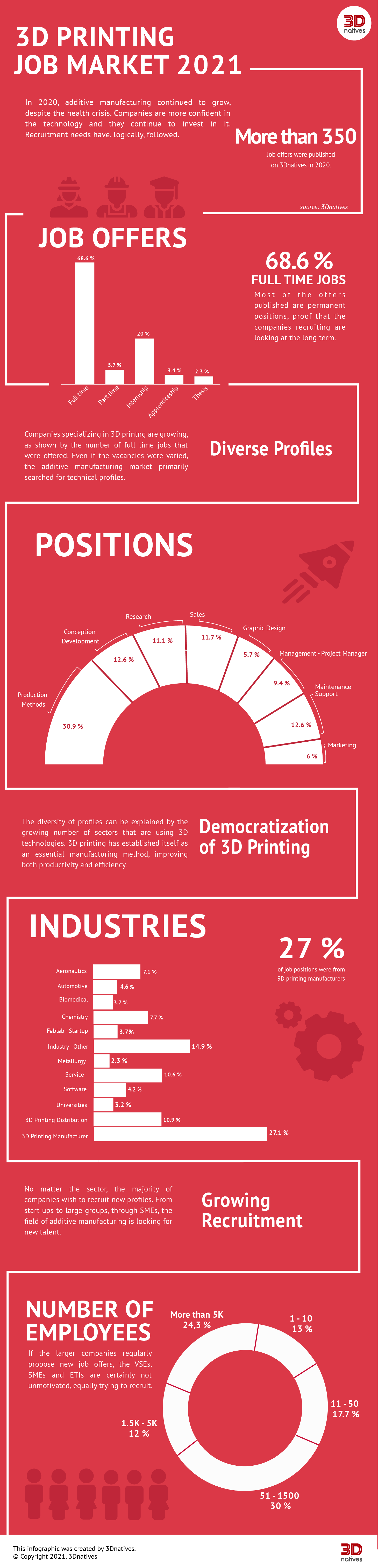
Analyzing 3D printing job salary figures reveals a rapidly evolving compensation landscape driven by the transition of additive manufacturing from rapid prototyping to full-scale industrial production. Compensation varies significantly based on geographic concentration, technical specialization, material science expertise, and industry sector, reflecting a high-skill job market where specialized engineering and operational talents command a premium.
The Evolution of Additive Manufacturing Careers
The 3D printing industry has matured past the point of hobbyist tinkering and desktop experimentation. Today, additive manufacturing (AM) is a core component of advanced supply chains in aerospace, medical device manufacturing, automotive engineering, and defense. This industrial transformation has fundamentally shifted workforce expectations. Organizations no longer look for simple machine operators who can push a start button and clear a jammed print bed. Instead, employers seek additive manufacturing engineers, materials scientists, software developers specializing in slice algorithms, and quality assurance specialists who understand destructive and non-destructive testing of printed parts.
Consequently, the salary structure across the additive manufacturing sector mirrors that of high-tech engineering and advanced materials science disciplines. Professionals entering this space require a blend of computer-aided design (CAD) proficiency, mechanical engineering principles, and a deep comprehension of material behaviors under thermal and mechanical stress. As companies scale their additive operations to produce end-use parts rather than mere mock-ups, compensation packages have adjusted to attract top-tier multidisciplinary engineering talent away from traditional manufacturing sectors like CNC machining and injection molding.
Key Factors Influencing 3D Printing Salaries
Evaluating compensation trends within the 3D printing sector requires examining the primary variables that dictate earning potential. Job titles alone rarely tell the complete story; technical competence, hardware familiarity, and industry context heavily influence individual compensation packages.
Technical Specialization and Role Hierarchy
The structural hierarchy of additive manufacturing teams ranges from entry-level operators to senior R&D directors. Technicians and operators who manage machine maintenance, build preparation, and post-processing typically occupy the entry-to-mid tier of the salary spectrum. These roles focus on print success rates, powder management, and basic troubleshooting.
At the higher end of the spectrum, additive manufacturing engineers and design-for-additive-manufacturing (DfAM) specialists command substantially larger packages. DfAM professionals possess the unique ability to redesign traditional multi-part assemblies into single, optimized, weight-reduced components suited specifically for powder bed fusion, directed energy deposition, or vat photopolymerization technologies. Their salaries reflect the direct cost-savings and performance enhancements they deliver to engineering firms.
Industry Sector Disparities
The sector in which an additive manufacturing professional works plays a massive role in compensation. The aerospace and defense industries typically offer the highest compensation ceilings due to stringent regulatory environments, certification requirements, and the high value of flight-critical components. Medical and dental applications represent another high-paying niche, particularly for professionals working with biocompatible polymers, titanium medical implants, and patient-specific surgical guides. Conversely, consumer goods and generic rapid prototyping service bureaus often offer more modest salary bands, constrained by lower margins and broader market competition.
| Industry Sector | Primary Technologies Used | Typical Salary Range (USD) | Key Compensation Drivers |
|---|---|---|---|
| Aerospace & Defense | Powder Bed Fusion, DED | $85,000 – $145,000+ | ITAR compliance, FAA certification, high-temp superalloys |
| Medical & Dental | Stereolithography, Selective Laser Sintering | $75,000 – $130,000 | Biocompatibility knowledge, FDA regulations, custom implants |
| Automotive & Motorsports | FDM, Multi Jet Fusion, SLS | $70,000 – $115,000 | Rapid tooling, lightweighting, production speed |
| Service Bureaus & Prototyping | Various Industrial Systems | $55,000 – $90,000 | Machine versatility, customer management, operational throughput |
Geographic Variations and Regional Hubs
Geographic clustering heavily influences additive manufacturing compensation. Major tech hubs, aerospace corridors, and medical manufacturing clusters drive salary inflation due to intense competition for specialized talent.
In the United States, regions like Southern California, the Pacific Northwest, the Boston technology corridor, and the industrial Midwest host dense concentrations of AM employers. Professionals working in metropolitan areas with high costs of living and concentrated aerospace or medical device manufacturing see significantly higher base salaries compared to their peers in rural or lower-cost regions. However, remote work and distributed engineering models have introduced nuances to this dynamic, particularly for software-focused roles such as slicing algorithm developers, post-processing automation engineers, and remote fleet management specialists.
Internationally, established manufacturing economies in Western Europe—particularly Germany, the United Kingdom, and Switzerland—feature robust compensation frameworks supported by strong vocational and advanced engineering education pipelines. In these regions, strict labor standards and formal engineering certifications often dictate clear salary progression paths.
Material Science and Hardware Expertise
Employers place an enormous premium on deep material expertise. The transition from printing simple polymers like PLA and ABS to working with engineering-grade thermoplastics (PEEK, PEI), technical ceramics, and high-performance metal powders (Inconel, titanium alloys, tool steels) creates a distinct divide in earning potential.
- Tier 1: High-Performance Metals & Advanced Ceramics (Inconel, Titanium, Zirconia - Highest Earning Potential)
- Tier 2: Engineering-Grade Thermopolymers & Composites (PEEK, Carbon-Fiber Reinforced Nylon - Moderate/High)
- Tier 3: Standard Rapid Prototyping Polymers (PLA, ABS, Standard Resins - Entry-Level/Base Operator)
Professionals who understand the metallurgical phase changes occurring during selective laser melting (SLM) or electron beam melting (EBM) solve complex engineering problems related to residual stress, thermal distortion, and microstructural porosity. This specialized knowledge base bridges the gap between traditional metallurgy and modern digital manufacturing, making these experts invaluable to enterprise organizations and commanding top-tier salaries.
Similarly, hardware expertise matters. Familiarity with specific industrial platforms—such as systems from EOS, SLM Solutions, 3D Systems, Stratasys, HP Multi Jet Fusion, or Renishaw—translates directly to marketability. Managing complex multi-laser industrial machines requires specialized training, safety certifications for handling reactive metal powders, and advanced calibration skills that elevate a technician's market value far above standard operators.
Educational Paths and Skill Acquisition
Entering the 3D printing job market requires a targeted educational strategy. While traditional mechanical engineering and materials science degrees form the standard foundation, specialized certifications and hands-on laboratory experience increasingly differentiate successful candidates.
Academic Degrees Versus Specialized Training
Many universities now offer dedicated additive manufacturing minors, master's degrees, or specialized research labs. These programs teach students how to optimize lattice structures, analyze build plate thermal profiles, and utilize advanced finite element analysis (FEA) software tailored for additive processes.
For working professionals transitioning from traditional manufacturing, industry-recognized certifications—such as those offered by SME (Society of Manufacturing Engineers), ASTM International, or specific hardware manufacturers—validate core competencies. These credentials demonstrate a verified understanding of safety protocols, quality control standards, and machine operation best practices, helping bridge the gap for candidates without a formal engineering degree.
Critical Skills Driving Higher Pay
- Design for Additive Manufacturing (DfAM): Advanced CAD proficiency focused on topological optimization, generative design, and internal cooling channel creation.
- Post-Processing Expertise: Knowledge of CNC machining finished metal prints, heat treatment (stress relief, hot isostatic pressing), and chemical smoothing.
- Quality Assurance and Metrology: Proficiency with CT scanning, blue-light scanning, coordinate measuring machines (CMM), and powder chemistry analysis.
- Software and Automation: Familiarity with build preparation software (Materialise Magics, Netfabb), printer farm management systems, and robotic arm integration for automated print removal.
Frequently Asked Questions
What is the average salary for a 3D printing engineer?
Additive manufacturing engineers typically earn between $80,000 and $120,000 per year in the United States, depending on experience, industry sector, and geographic location. Senior engineers and R&D specialists in aerospace or medical fields frequently exceed $140,000 in total compensation.
Do I need an engineering degree to work in 3D printing?
While an engineering or materials science degree is required for advanced R&D and DfAM roles, many technician and operator positions rely on vocational training, CNC machining experience, and manufacturer-specific certifications rather than a four-year university degree.
Which industry sectors pay the highest salaries for additive manufacturing professionals?
Aerospace, defense, and medical device manufacturing consistently offer the highest compensation packages. These sectors require strict regulatory compliance, specialized material handling, and rigorous quality validation, driving up the value of skilled talent.
How does material expertise affect 3D printing compensation?
Professionals who specialize in high-performance metal powders, carbon-fiber composites, or high-temperature engineering polymers earn significantly more than those working exclusively with standard prototyping plastics due to the complexity of the printing process and the criticality of the end products.
Is the 3D printing job market growing?
Yes, the job market continues to expand as industrial manufacturers shift from rapid prototyping to mass customization and serial production. Demand remains strong for professionals who can bridge the gap between digital design and physical manufacturing execution.
Strategic Next Steps for Career Growth
To maximize earning potential in the 3D printing sector, professionals should target high-value industry verticals, obtain recognized industry certifications, and build demonstrable expertise in advanced metal or composite materials. Whether advancing from machine operations into DfAM engineering or transitioning from traditional machining into industrial additive manufacturing, continuous technical upskilling remains the single most effective driver of long-term career advancement and compensation growth.