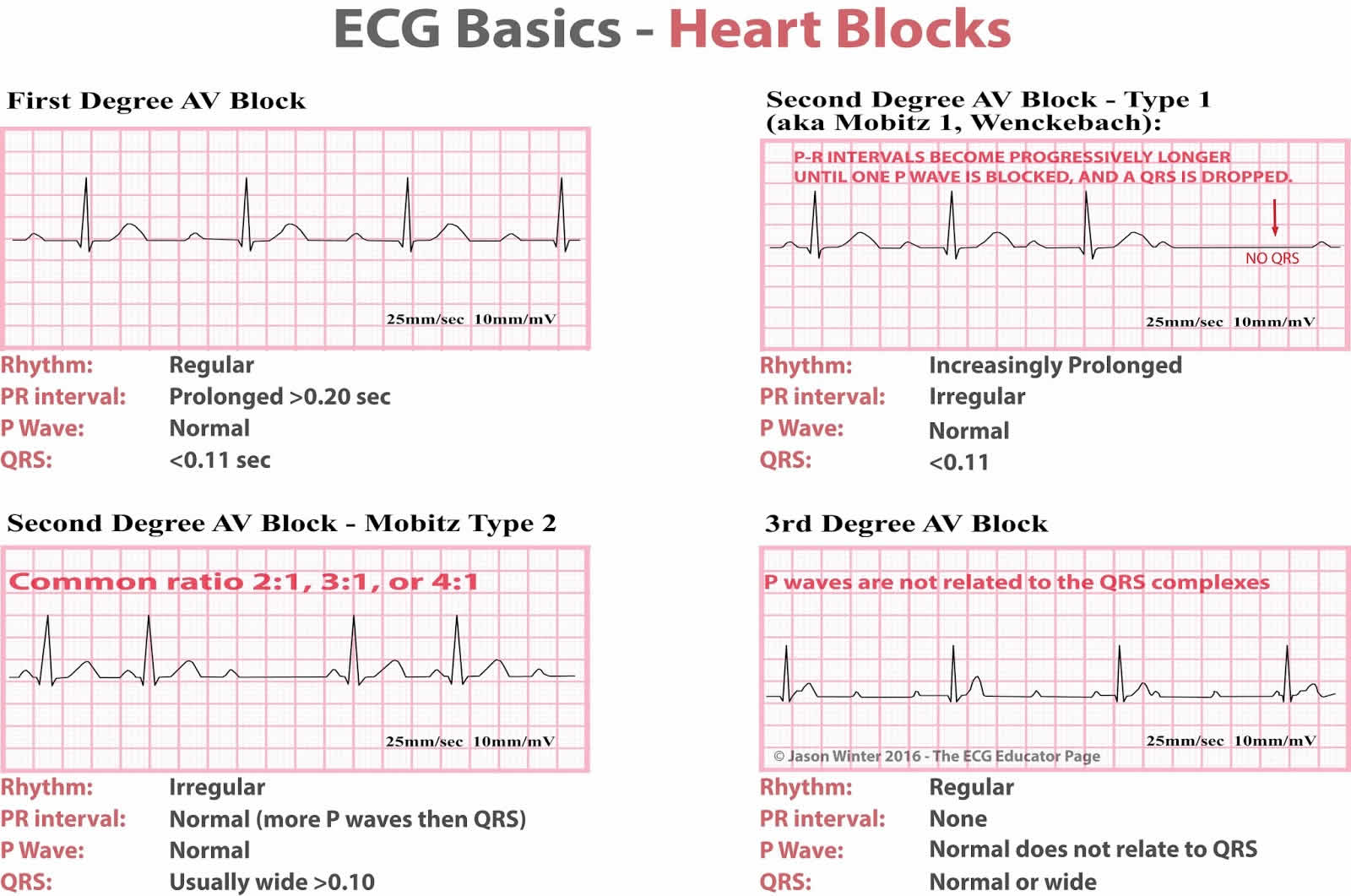
In the context of cardiac health, 2nd-degree heart block Type 1 (Mobitz I/Wenckebach) is significantly better for you than Type 2 (Mobitz II). Type 1 is often benign, frequently asymptomatic, and rarely progresses to dangerous levels, whereas Type 2 is a serious clinical condition that usually indicates underlying structural damage and carries a high risk of progressing to a life-threatening complete heart block.
Introduction to Second-Degree Atrioventricular (AV) Blocks
To understand why one type of heart block is "better" or less dangerous than the other, it is essential to understand how the heart’s electrical system functions. The heart relies on a precise sequence of electrical impulses to coordinate the contraction of the atria (top chambers) and the ventricles (bottom chambers). This signal originates in the Sinoatrial (SA) node, travels through the Atrioventricular (AV) node, and moves down into the Bundle of His and Purkinje fibers to trigger a heartbeat.
A "heart block" occurs when this electrical signal is delayed or completely obstructed. In a second-degree heart block, some signals reach the ventricles, but others are dropped entirely. As we move through 2026, diagnostic tools have become more sophisticated, yet the fundamental distinction between the two subtypes of second-degree block—Mobitz Type 1 and Mobitz Type 2—remains the cornerstone of cardiac risk assessment.
What is 2nd Degree Heart Block Type 1 (Mobitz I / Wenckebach)?
Second-degree AV block Type 1, also known as Mobitz I or the Wenckebach phenomenon, is characterized by a progressive delay in the conduction of the electrical impulse through the AV node. On an Electrocardiogram (EKG), this manifests as a PR interval (the time between the start of the atrial signal and the start of the ventricular signal) that gets longer and longer with each beat until one signal is blocked entirely, resulting in a "dropped" QRS complex (a skipped heartbeat).
The Physiology of Type 1
The primary site of the delay in Type 1 is almost always within the AV node itself. The AV node acts as the heart's gatekeeper, naturally slowing down signals to allow the ventricles time to fill with blood. In Mobitz I, the AV node cells become increasingly fatigued or slow to recover after each beat. Eventually, they fail to conduct a signal at all, resting for one cycle before the process starts over.
Why Type 1 is Generally "Better"
Mobitz I is frequently considered a "physiologic" rather than a "pathologic" condition. This means it can occur in healthy individuals under specific circumstances. For example:
- Athletes: Highly trained athletes often have high vagal tone (activity of the vagus nerve), which naturally slows AV conduction. In these individuals, Mobitz I during rest or sleep is a normal finding and does not indicate heart disease.
- Sleep: Many healthy people experience brief episodes of Type 1 block during deep sleep when the parasympathetic nervous system is dominant.
- Medications: Certain medications, such as beta-blockers, calcium channel blockers, or digoxin, can induce Type 1 block. Often, simply adjusting the dosage resolves the issue.
Because the blockage occurs at the level of the AV node—which is responsive to the nervous system—it is rarely "fixed" or permanent in a way that leads to total heart failure.
What is 2nd Degree Heart Block Type 2 (Mobitz II)?
Second-degree AV block Type 2, or Mobitz II, is a much more serious condition. Unlike Type 1, there is no progressive lengthening of the PR interval. Instead, the PR intervals remain constant and normal (or slightly prolonged), but a ventricular beat is suddenly and unpredictably dropped.
The Physiology of Type 2
In Mobitz II, the electrical failure typically occurs below the AV node, specifically in the Bundle of His or the Purkinje fibers (the "infranodal" conduction system). This part of the heart’s wiring is an "all-or-nothing" system. It does not gradually slow down; it simply fails.
Why Type 2 is Dangerous
Mobitz II is almost always a sign of significant underlying structural disease in the heart's conduction system. It is never considered normal, regardless of the patient's fitness level or age. The dangers include:
- Unpredictability: Because there is no warning (no lengthening PR interval), the heart can skip multiple beats in a row without notice.
- Progression: Mobitz II has a very high rate of progression to Third-Degree (Complete) Heart Block, where no signals from the atria reach the ventricles. This can lead to sudden cardiac arrest.
- Hemodynamic Instability: Because the block occurs lower in the conduction system, any "escape" rhythm that the heart tries to generate to stay alive will be much slower and less reliable than if the block were higher up.
Comparison Table: Type 1 vs. Type 2 Heart Block
| Feature | Type 1 (Mobitz I / Wenckebach) | Type 2 (Mobitz II) |
|---|---|---|
| Site of Block | Usually the AV Node | Below the AV Node (Bundle of His) |
| EKG Pattern | Progressive PR lengthening until a drop | Constant PR interval until a sudden drop |
| Common Causes | High vagal tone, drugs, sleep, inferior MI | Fibrosis, structural heart disease, anterior MI |
| Symptoms | Often none; may have mild dizziness | Syncope (fainting), chest pain, shortness of breath |
| Risk of Progression | Very Low | High (leads to 3rd-degree block) |
| Standard Treatment | Observation; address underlying cause | Permanent Pacemaker (almost always) |
| Urgency | Low (unless symptomatic) | High (Medical Emergency) |
Symptoms and Clinical Presentation
The way a patient feels often correlates with the type of heart block they have, though there is some overlap.
Symptoms of Type 1 (Mobitz I)
Most patients with Type 1 are entirely asymptomatic. The condition is usually discovered incidentally during a routine physical or an EKG for an unrelated issue. If symptoms do occur, they are typically mild and include:
- Mild lightheadedness or dizziness.
- A feeling of a "skipped beat" or palpitations.
- Occasional fatigue during intense exercise.
Symptoms of Type 2 (Mobitz II)
Because Type 2 is more likely to cause a significant drop in cardiac output, symptoms are usually more pronounced and dangerous:
- Syncope (Fainting): Sudden loss of consciousness is common because the brain momentarily loses blood flow.
- Near-Syncope: Feeling as if you are about to black out.
- Shortness of Breath: The heart cannot pump enough blood to meet the body's oxygen demands.
- Chest Pain: If the block is related to an ongoing myocardial infarction (heart attack).
- Extreme Fatigue: A chronic inability to perform daily tasks due to a slow heart rate (bradycardia).
Diagnostic Procedures in 2026
In 2026, the diagnosis of heart block has been refined by wearable technology and advanced electrophysiology. While the standard 12-lead EKG remains the gold standard for immediate diagnosis, other tools are frequently used to differentiate between Type 1 and Type 2 if the EKG is ambiguous.
- Holter and Event Monitoring: If the block is intermittent, patients may wear a monitor for 24 hours to 30 days. In 2026, many of these are "patch" monitors that are water-resistant and provide real-time data to a cardiology center.
- Exercise Stress Test: Type 1 block often improves with exercise because the increase in heart rate and sympathetic tone improves AV node conduction. Conversely, Type 2 block often worsens with exercise, as the diseased infranodal system cannot keep up with the increased demand.
- Electrophysiology (EP) Study: In complex cases, a cardiologist may thread a catheter into the heart to measure the exact timing of electrical signals. This can definitively locate whether the block is at the AV node (Type 1) or below it (Type 2).
- Vagal Maneuvers: Doctors may use carotid sinus massage to see how the heart block responds. Type 1 (AV nodal) will typically worsen with vagal stimulation, whereas Type 2 may remain unchanged or even appear to improve relatively, helping to confirm the site of the block.
Treatment Options and Long-Term Outlook
The treatment for second-degree heart block depends entirely on which type you have and whether you are experiencing symptoms.
Managing Type 1
For asymptomatic patients with Type 1, the standard of care in 2026 remains "watchful waiting."
- No Treatment: If the patient is an athlete or the block occurs only during sleep, no intervention is needed.
- Medication Review: If the block is caused by medications like beta-blockers, the doctor may reduce the dose or switch to a different class of antihypertensives.
- Pacemaker: Only in rare cases where Type 1 causes significant symptoms (like frequent fainting) is a pacemaker considered.
Managing Type 2
Because of the high risk of sudden death and progression to complete heart block, Mobitz Type 2 almost always requires the implantation of a permanent pacemaker.
- Urgency: If a patient is diagnosed with Type 2 in an emergency setting, they are typically hospitalized and monitored with external pacing pads until a permanent device can be implanted.
- Modern Pacemakers: By 2026, leadless pacemakers and dual-chamber pacing systems have become incredibly efficient, with longer battery lives and minimal surgical risks. These devices ensure the ventricles contract every time the atria signal, effectively "curing" the risk associated with the block.
Common Causes and Risk Factors
Understanding what leads to these blocks can help in prevention and management.
- Ischemia/Infarction: An inferior wall heart attack often affects the AV node, leading to Type 1 block. An anterior wall heart attack is more likely to damage the Bundle of His, leading to Type 2 block.
- Fibrosis and Aging: As we age, the heart's conduction system can undergo "Lev's disease" or "Lenegre's disease," which is essentially the scarring or whitening of the electrical pathways. This is a common cause of Type 2 block in the elderly.
- Cardiomyopathy: Diseases that enlarge or weaken the heart muscle can disrupt electrical signals.
- Infections: Conditions like Lyme disease or endocarditis can cause inflammation of the heart tissue (myocarditis), leading to various degrees of heart block.
Frequently Asked Questions
Can Type 1 heart block turn into Type 2?
It is very rare for Type 1 to "turn into" Type 2 because they occur in different parts of the heart's electrical system. However, a person with generalized heart disease could potentially develop both types if the damage is widespread. Usually, they remain distinct clinical entities.
Is second-degree heart block a disability?
Whether it is considered a disability depends on the severity of the symptoms and the requirements of your job. Type 1 rarely limits work capacity. Type 2, if left untreated, can be life-threatening and would likely prevent someone from performing strenuous or safety-critical tasks (like commercial flying or driving). However, once a pacemaker is successfully implanted, most patients return to a completely normal, active lifestyle.
Why do athletes have Type 1 heart block?
Athletes have highly efficient hearts and a very strong "vagal tone." The vagus nerve sends signals to the heart to slow down. In a resting athlete, this signal can be so strong that it causes the AV node to delay conduction to the point of a Wenckebach pattern. This is a sign of a very fit heart, not a diseased one.
Can caffeine or stress cause 2nd-degree heart block?
Caffeine and stress generally increase the heart rate and sympathetic nervous system activity, which usually improves AV conduction. While they can cause other issues like PVCs or tachycardia, they are not typically the primary cause of a second-degree heart block.
How long does a pacemaker last in 2026?
As of 2026, most modern permanent pacemakers have a battery life ranging from 10 to 15 years, depending on how often the device needs to pace the heart. Leadless versions are also becoming more common, which reduces the risk of lead-related complications over time.
Summary and Next Actions
If you have been told you have a 2nd-degree heart block, the most important next step is to confirm the type with a cardiologist.
- If you have Type 1: Do not panic. It is often a benign finding. Focus on reviewing your medications with your doctor and monitoring for any new symptoms like fainting or extreme fatigue.
- If you have Type 2: This requires immediate specialist consultation. You will likely need a pacemaker to prevent progression to a complete block. This intervention is highly effective and significantly improves long-term prognosis.
Regardless of the type, maintaining heart-healthy habits—such as managing blood pressure, staying active (under medical guidance), and avoiding tobacco—is crucial for preserving the integrity of your heart's conduction system.