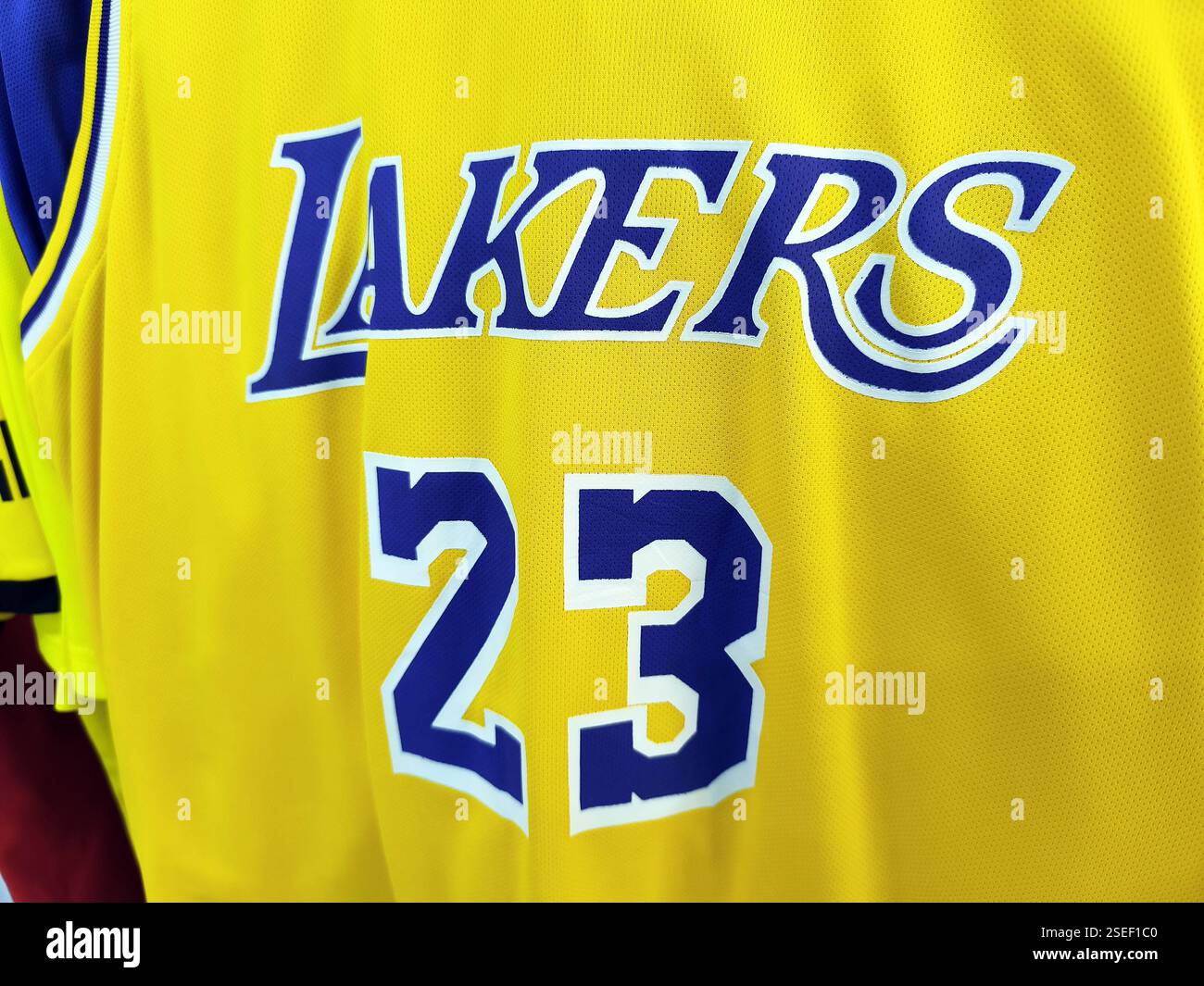
The legacy of jersey number 23 is defined primarily by its transformation from a standard athletic identifier into a global cultural symbol of excellence, dominance, and ambition, largely cemented by Michael Jordan in professional basketball and subsequently adopted by elite athletes across multiple sports worldwide.
The Origins and Evolution of Number 23 in Sports
In the early days of organized team sports, jersey numbers were assigned primarily by a player's position on the field or court. In basketball, for instance, starting lineups often wore numbers ranging from one to five, corresponding roughly to specific roles like point guard, shooting guard, small forward, power forward, and center. As rosters expanded and leagues evolved, players were given more freedom to choose their identifiers.
The number 23 did not start as a glamorous or revered digits; it was simply another integer in the sequence. However, its trajectory changed dramatically when high school and collegiate athletes began selecting it out of personal preference. Before the modern era of sports marketing, numbers gained mythical status strictly through the achievements of the individuals wearing them. When a player achieved transcendent greatness while wearing a specific number, that textile and ink combination began to carry psychological weight for opponents and aspirational value for the next generation of competitors.
By the late 20th century, the commercialization of sports broadcasting, footwear lines, and global merchandising elevated certain jersey numbers from functional uniform markers to valuable intellectual property. Number 23 became the pinnacle of this phenomenon, representing a standard of performance that transcended individual franchises and crossed international boundaries.
Michael Jordan and the Definification of Greatness
It is impossible to examine the legacy of jersey number 23 without analyzing the career of Michael Jordan. When Jordan entered the National Basketball Association (NBA) in 1984 with the Chicago Bulls, he wore the number 23, which he had worn during high school (though he briefly wore 45 upon returning from his first retirement and during a famous single-game instance when his jersey was stolen).
Jordan's association with 23 became synonymous with clutch performance, athletic aerial capability, relentless competitiveness, and global commercial dominance. Every high-flying dunk, game-winning buzzer-beater, and championship trophy reinforced the cultural weight of the number. The pairing of Jordan's personal brand with the Chicago Bulls' red, black, and white uniform created an aesthetic template recognized worldwide.
| Athlete | Sport | Team(s) Associated With | Significance of Number 23 |
|---|---|---|---|
| Michael Jordan | Basketball | Chicago Bulls, Washington Wizards | Globalized the number; synonym for elite competitiveness and championship success. |
| LeBron James | Basketball | Cleveland Cavaliers, Miami Heat, Los Angeles Lakers | Adopted 23 as a tribute to Jordan, building his own multi-era legacy and championship resume. |
| David Beckham | Soccer | Real Madrid, LA Galaxy, AC Milan | Popularized 23 in international football, explicitly choosing it due to his admiration for Jordan. |
| Devin Hester | American Football | Chicago Bulls / NFL Teams (Bears, etc.) | Wore 23 as one of the most prolific kick returners in NFL history, honoring basketball greats. |
The psychological impact of Jordan wearing 23 extended to his opponents. Stepping onto the court against number 23 meant facing a psychological hurdle before the opening tip-off. This intangible aura contributed significantly to the mystique of the digits, ensuring that any future athlete donning 23 would immediately invite comparisons to the standard set in Chicago.
Cultural Replication: Beyond Basketball
The influence of number 23 eventually broke containment from the hardwood and permeated other athletic disciplines, entertainment, and fashion. The most notable crossover occurred in association football (soccer). When English star David Beckham transferred to Real Madrid in 2003, his preferred number 7 was already occupied by club captain Raúl. Inspired by his admiration for Michael Jordan, Beckham chose to wear the number 23 for Real Madrid, instantly shifting the perception of the number in global soccer culture.
Beckham’s adoption of 23 demonstrated that the legacy was no longer bound to a single sport or a single athlete. It became a conscious choice for players seeking to project versatility, leadership, and elite status. Following Beckham, numerous soccer players, baseball players, and rugby competitors selected 23, cementing its status as an international shorthand for a marquee player.
Furthermore, popular culture absorbed the number. Movies, music lyrics, and fashion lines routinely referenced 23 as a shorthand for perfection, age milestones, or peak performance. The phenomenon reached a point where the number itself possessed independent cultural equity, entirely separate from the organizations issuing the uniforms.
The Modern Era and the Burden of the Number
Wearing number 23 in contemporary sports is a double-edged sword. On one hand, it represents a bold statement of ambition. On the other hand, it invites intense scrutiny from fans, media analysts, and opposing teams.
When LeBron James entered the NBA, he initially wore number 23 explicitly because of his childhood idol, Michael Jordan. James managed the unprecedented feat of carving out a legendary career under the exact same number, winning multiple championships and MVPs, thereby creating a dual-pillar legacy for the digits. This rare occurrence proved that the number could accommodate multiple generational talents without diluting its historical significance.
However, for lesser-known players or rookies, requesting number 23 often requires navigating institutional traditions or paying homage to past franchise legends. Many professional sports teams have retired number 23 entirely to honor players who shaped their organizational history, making it unavailable to current rosters. This practice of jersey retirement ensures that the legacy remains preserved within the specific franchise walls where the history was written.
Comparative Impact of Iconic Numbers in Sports
To understand the unique weight of 23, it is helpful to place it in the context of other legendary jersey numbers across sports history. While numbers like 3 (Babe Ruth/baseball), 10 (Pelé/soccer), and 99 (Wayne Gretzky/hockey) hold immense historical value in their respective domains, 23 stands out due to its cross-sport versatility and global commercial footprint.
- Baseball (Number 42): Retired league-wide in Major League Baseball to honor Jackie Robinson, carrying profound social and historical weight rather than purely competitive mythology.
- Hockey (Number 99): Wayne Gretzky's number was retired league-wide in the NHL, representing unmatched offensive statistical dominance.
- Soccer (Number 10): Traditionally worn by the team's creative playmaker, shared by legends like Pelé and Diego Maradona, representing artistic genius on the pitch.
- Basketball/Cross-Sport (Number 23): Associated with competitive ferocity, athletic dominance, and international commercial ubiquity across multiple distinct sports.
This comparative analysis illustrates that while individual sports have their own sacred digits, 23 occupies a rare intersection of individual athletic achievement, cross-sport adoption, and modern pop-culture mythology.
Frequently Asked Questions
Why is jersey number 23 so famous?
Jersey number 23 achieved global fame primarily due to Michael Jordan's transcendent career with the Chicago Bulls. His sustained excellence, paired with massive global marketing campaigns, transformed the number into a universal symbol of athletic greatness and competitive drive.
Did Michael Jordan invent the prestige of number 23?
While other athletes wore the number before him, Jordan elevated 23 from a standard uniform number into a cultural icon. His dominance in the NBA turned the digits into an aspirational symbol for athletes across basketball, soccer, and other sports.
Which soccer player popularized the number 23 outside of basketball?
David Beckham popularized the number 23 in international association football. When he joined Real Madrid in 2003 and his preferred number 7 was unavailable, he chose 23 specifically because of his admiration for Michael Jordan.
Do sports teams retire the number 23?
Yes. Many professional and collegiate sports teams have retired the number 23 to honor players who made historic contributions to their organizations, meaning current players on those teams are barred from selecting it.
How has the legacy of 23 evolved in modern sports?
Today, athletes who choose to wear 23 knowingly accept the immense historical weight and media scrutiny associated with the digits. Players like LeBron James successfully built parallel historic legacies under the same number, proving its enduring psychological and cultural resonance.
Conclusion and Final Perspective
The legacy of jersey number 23 demonstrates how human achievement can imbue inanimate objects with profound cultural meaning. From its humble origins as a standard roster designation, the number evolved through the relentless competitive drive of Michael Jordan and the subsequent adoption by global icons like David Beckham and LeBron James. Whether viewed as a marketing powerhouse, a psychological hurdle for opponents, or a badge of honor for aspiring competitors, number 23 remains an enduring monument to the pursuit of athletic excellence.