The 222 angel number manifestation framework has evolved from a niche esoteric concept into a widely debated digital-age phenomenon, reflecting a significant shift from traditional numerology toward modern psychological self-soothing and internet-driven pop spirituality.
Introduction to the 222 Angel Number and Manifestation
The practice of observing repeating numbers on clocks, receipts, digital screens, and license plates has become a widespread cultural experience. Among these recurring sequences, the sequence 222 holds a prominent place within contemporary manifestation culture. For millions of practitioners engaging in the Law of Attraction, intentional goal-setting, and modern spirituality, seeing 222 is rarely interpreted as a random coincidence. Instead, it is viewed as a signifier—an intentional message or cosmic "green light" confirming that their internal thoughts are actively molding their external reality.
However, the ways in which people interpret and apply this number have undergone a profound transformation. What once belonged to the structured, esoteric domain of traditional numerology has been reshaped by social media algorithms, wellness influencers, and digital-age psychological coping mechanisms. This evolution has sparked an ongoing debate. Skeptical observers and mental health professionals view angel numbers as manifestations of confirmation bias and digital echo chambers, while dedicated practitioners defend them as powerful tools for mindfulness, emotional regulation, and intentional focus.
Understanding this phenomenon requires examining how traditional interpretations differ from modern digital adaptations, exploring the psychological mechanisms that drive its popularity, and analyzing the core debates surrounding its validity in contemporary personal development.
Historical Roots vs. Modern Digital Adaptations
To understand the current debate surrounding the 222 angel number manifestation, it is necessary to trace how interpretations of the number two have shifted over time. The framework rests on a combination of classical numerology, mid-to-late 20th-century New Age literature, and 21st-century internet culture.
Traditional Numerology Foundations
In classical Pythagorean and Chaldean numerology, the digit 2 carries specific symbolic weight. It represents duality, balance, partnerships, patience, cooperation, and receptivity. Unlike the fiery, pioneering energy of the number 1, the number 2 is inherently relational. It speaks to the space between individuals, the necessity of compromise, and the quiet endurance required to build long-term foundations.
When digits repeat to form master numbers or repeating sequences like 222, traditional numerology views the energy of the base number as amplified. In older esoteric traditions, 222 was often associated with:
- The balancing of polarities: Harmonizing opposing forces within one's life, career, or emotional state.
- Patience during incubation: Trusting that seeds planted during a previous cycle (the 1 phase) are developing beneath the surface, even if tangible results are not yet visible.
- Diplomacy and relationships: A prompt to heal rifts, foster deeper connections, or find peaceful resolutions to interpersonal conflicts.
The Rise of the "Angel Number" Framework
The specific term "angel number" gained mainstream traction largely through the work of authors and spiritual writers in the late 20th century, most notably Doreen Virtue, who popularized the concept that guardian angels or spiritual guides use repeating number sequences to communicate subtle guidance. In this framework, numbers lose some of their austere mathematical geometry and take on a warm, parental, and protective persona.
Within this updated lexicon, 222 transitioned from an abstract symbol of balance into a direct message: “You are on the right track. Keep going, and maintain your faith.”
The Social Media and Digital Evolution
The most dramatic shift in the interpretation of 222 occurred during the expansion of platforms like Instagram, TikTok, and Pinterest. In the digital ecosystem, esoteric concepts are subjected to rapid iteration, visual packaging, and algorithm-driven distribution.
Several key shifts characterize this modern digital adaptation:
- Hyper-Speed Manifestation: Traditional numerology emphasized patience and long-term cycles. Modern digital spirituality often positions 222 as an immediate catalyst for quick manifestation—signaling that financial windfalls, romantic unions, or career breakthroughs are arriving instantly.
- Gamification of Awareness: Seeing 222 on a digital clock (2:22) is frequently treated as a mini-game or digital reward. Users pause to screenshot the time, post it to their stories, or type "111" or "222" in comment sections to claim the energy, turning a solitary contemplative practice into a communal performance.
- Semantic Drift: As creators compete for attention, the definition of 222 has broadened to encompass almost any positive emotional state, transforming a specific numerological marker into a catch-all affirmation for general well-being.
Core Themes in 222 Manifestation Practice
When practitioners incorporate 222 into their manifestation routines, they typically anchor their efforts around a few distinct thematic pillars. These themes bridge the gap between abstract spiritual concepts and practical daily intention-setting.
| Manifestation Theme | Practical Application & Interpretation |
|---|---|
| Alignment & Validation | Interpreted as confirmation that current thoughts and actions match long-term personal goals. |
| Trust & Surrender | Acts as a psychological cue to release anxiety, overthinking, and the need to control every outcome. |
| Relational Harmony | Focuses on repairing relationships, finding compromise, and attracting compatible romantic or business partners. |
| Timing & Patience | Serves as a reminder that results take time to materialize and that the current waiting period is necessary. |
Alignment and Validation
The primary draw of 222 in manifestation is the feeling of validation it provides. In a culture marked by burnout, career uncertainty, and decision fatigue, individuals often feel lost or unsure if their efforts are worthwhile. When a practitioner working toward a specific goal repeatedly encounters 222, they interpret it as external validation from the universe. This provides a psychological boost, encouraging them to persist through difficulty.
Trust and Surrender
Manifestation literature frequently emphasizes the danger of "resistance"—the anxiety, doubt, and frantic effort that can block a desired outcome. The 222 sequence is frequently deployed as an antidote to this anxiety. Seeing the number acts as a visual pattern interrupt, prompting the user to take a deep breath, let go of micromanagement, and trust that the process is unfolding naturally.
Relational and Collaborative Manifestation
Because the number 2 is rooted in duality, 222 is frequently invoked in manifestations concerning partnerships. This includes romantic soulmate manifestations, business partnerships, and community building. Practitioners use the appearance of 222 as a prompt to evaluate their interpersonal dynamics, encouraging mutual compromise and emotional honesty.
The Ongoing Debate: Skepticism, Psychology, and Cultural Critique
The growing popularity of 222 angel number manifestation has not gone unchallenged. A robust debate persists across psychology, philosophy, and digital culture, dividing critics and believers along philosophical lines.
The Psychological Lens: Confirmation Bias and Apophenia
From a cognitive science perspective, the frequency with which people notice numbers like 222 is easily explained by well-documented psychological phenomena:
- Apophenia: The human brain is an advanced pattern-recognition machine. It is evolutionarily wired to find connections, faces, and meaningful patterns in random data.
- Frequency Illusion (Baader-Meinhof Phenomenon): Once an individual learns about angel numbers and begins paying attention to them, their reticular activating system (RAS)—the part of the brain that filters unnecessary sensory input—prioritizes spotting those numbers. They do not necessarily appear more often; the brain simply chooses to notice them while ignoring the thousands of other meaningless numbers encountered daily.
- Confirmation Bias: Practitioners remember the times when seeing 222 coincided with a positive event while conveniently forgetting the numerous times the number appeared with no subsequent positive outcome.
The Critique of Spiritual Bypass
Mental health professionals and cultural critics have raised concerns about how modern manifestation culture—including angel numbers—is utilized. A primary criticism is spiritual bypass: the practice of using spiritual ideas and beliefs to avoid dealing with unresolved emotional wounds, psychological trauma, or systemic socioeconomic realities.
Critics argue that framing structural economic challenges, mental health crises, or systemic inequities as mere "vibrational mismatches" or failures to properly interpret angel numbers can be harmful. It places an unfair burden of responsibility on the individual, suggesting that poverty, illness, or personal hardship are the direct result of failing to maintain a high enough frequency or missing cosmic signs.
The Defense: Utility as Mindful Anchors
Proponents and sympathetic psychologists push back against total skepticism by highlighting the practical, psychological utility of these practices. Even if the numbers possess no objective metaphysical power, the ritual surrounding them can serve functional purposes:
- Mindfulness Triggers: Seeing 222 often forces a person to pause, take a breath, and ground themselves in the present moment. In a fast-paced digital environment, this acts as a micro-meditation.
- Placebo and Self-Efficacy: Belief in a supportive universe can lower cortisol levels, reduce catastrophic thinking, and boost self-efficacy. When people believe they are supported, they often approach challenges with greater confidence and resilience, which in turn leads to better real-world outcomes.
Navigating the Phenomenon: Practical Guidance for Practitioners
For those who find personal value in exploring the 222 angel number manifestation framework, navigating the space requires balancing open-minded exploration with grounded critical thinking. Engaging with these concepts does not require abandoning logic or financial prudence.
1. Treat Numbers as Mirrors, Not Oracle Machines
Instead of viewing 222 as an external decree dictating a fixed future or commanding a specific action, view it as a mirror for internal reflection. When you notice the number, use it as a prompt to check in with yourself:
- What was I just thinking about?
- Am I currently feeling anxious, stressed, or aligned?
- What action can I take right now that honors my core values?
2. Balance Esoteric Intention with Tangible Action
Manifestation without practical execution is merely daydreaming. If your manifestation goal relates to career growth, financial stability, or relationship building, use the emotional boost provided by spiritual reflection to fuel concrete steps: updating a resume, setting a budget, or having an honest conversation with a partner.
3. Maintain Emotional Safety and Skepticism
Guard against toxic positivity. Acknowledge that life involves natural cycles of difficulty, grief, and confusion that cannot be bypassed simply by positive thinking or spotting repeating digits. If manifestation practices begin to induce anxiety, obsessive tracking of numbers, or guilt over negative emotions, stepping back to re-ground in clinical reality or secular mindfulness is a healthy and necessary course of action.
Frequently Asked Questions
What does the 222 angel number actually mean in manifestation?
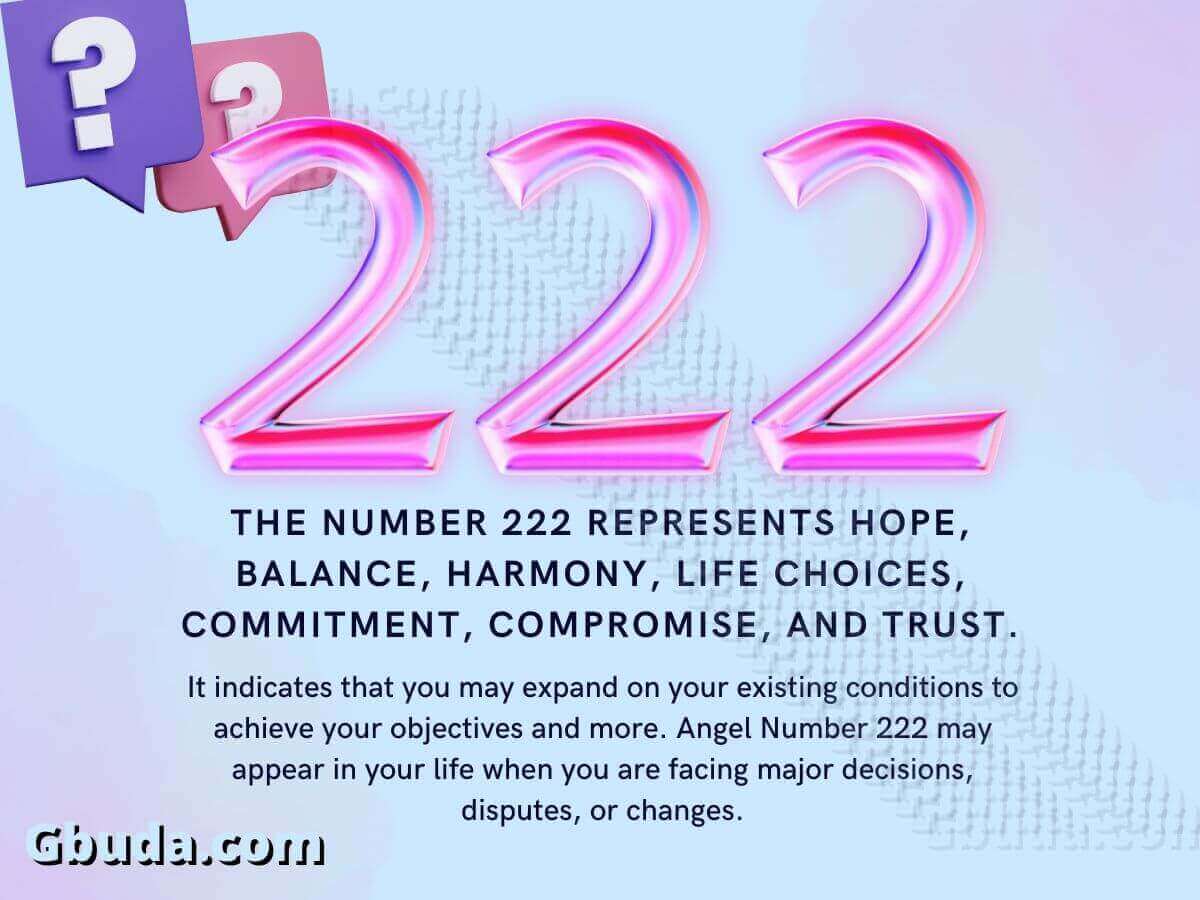
In modern manifestation practice, 222 is generally interpreted as a sign of alignment, trust, and divine timing. It serves as a reminder that your current efforts are taking root, encouraging you to release anxiety, maintain faith in your path, and continue working toward your goals with patience.
Is seeing 222 a sign that my manifestation is coming true?
While popular digital culture often frames 222 as an immediate guarantee of success, psychologists and traditional numerologists view it differently. Psychologically, it acts as a mindfulness trigger that reinforces positive focus. Esoterically, it signifies alignment and preparation rather than an automatic delivery mechanism for your desires.
Why do I keep seeing 222 everywhere I look?
This is primarily driven by the frequency illusion (or Baader-Meinhof phenomenon) combined with your brain's reticular activating system. Once you learn about the significance of 222, your subconscious mind is trained to notice it among the sea of random numbers you encounter every day, making it feel much more common than it actually is.
Can skepticism and manifestation practices coexist?
Yes. Many individuals engage with angel numbers and manifestation rituals purely as psychological frameworks for goal setting, gratitude, and mindfulness. You do not need to believe in literal metaphysical entities to benefit from taking a daily moment to pause, reflect, and center your intentions.
How should I respond the next time I see 222?
Instead of searching for an immediate magical interpretation, use the moment as a natural mindfulness bell. Pause what you are doing, take one deep, deliberate breath, assess your current emotional state, and refocus your attention on whatever productive or meaningful task is directly in front of you.
Conclusion and Next Actions
The ongoing evolution of the 222 angel number manifestation framework highlights humanity's enduring desire to find meaning in a chaotic, fast-paced world. Whether viewed through the lens of ancient numerology, modern digital spirituality, or cognitive psychology, the phenomenon ultimately serves as a mirror for human consciousness.
If you choose to work with these concepts, let them serve as practical tools for calm reflection and intentional living rather than rigid dogmatic rules. Take a balanced approach: ground your spiritual curiosity in concrete, real-world action, maintain awareness of your mental health, and use every moment of mindfulness to build a more deliberate and focused life.