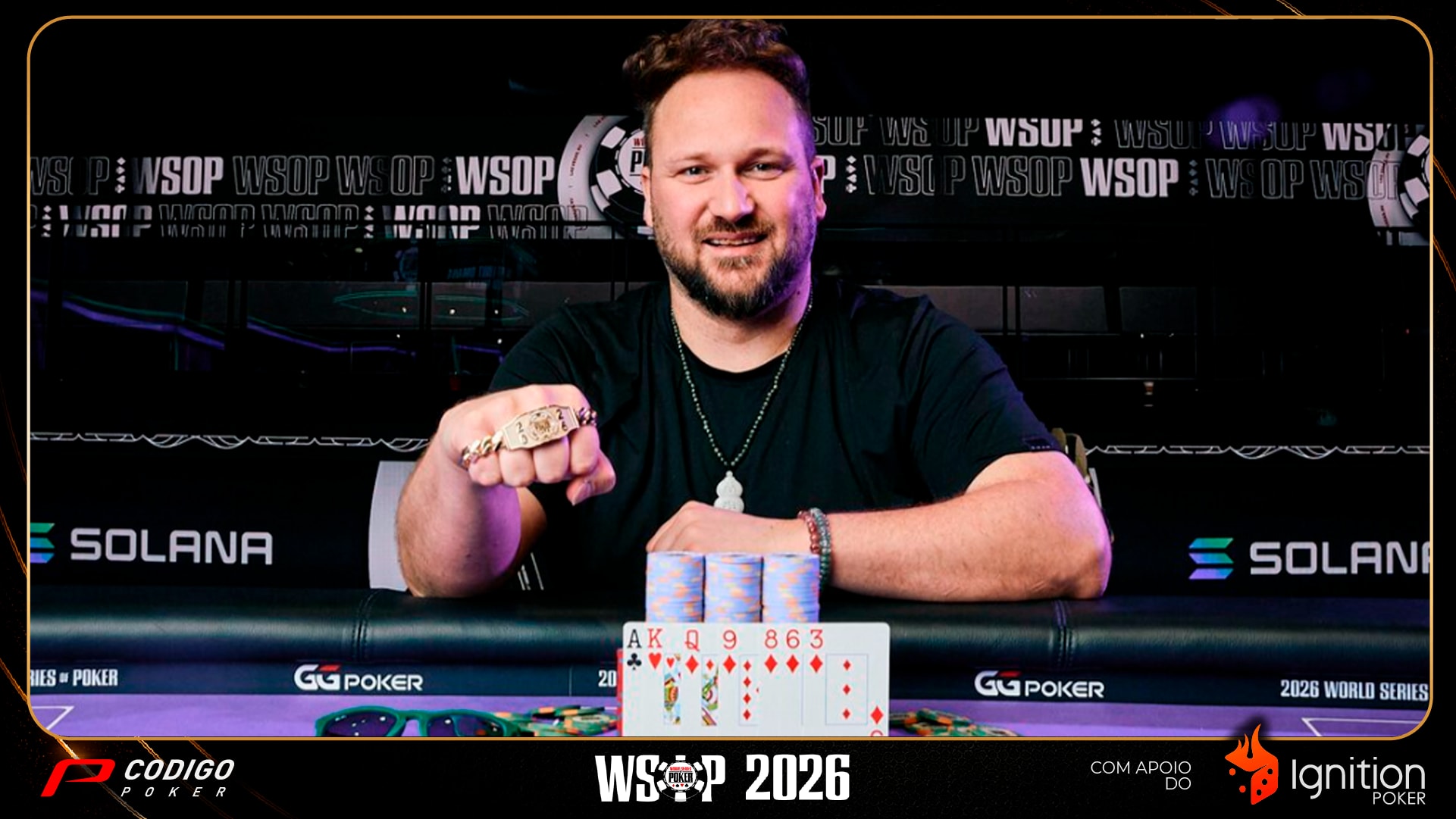
The 2026 World Series of Poker (WSOP) structural design combines deep starting stacks, standardized Big Blind Ante formats, and balanced level durations across its signature bracelet events. This structural framework directly influences Independent Chip Model (ICM) calculations, late-registration dynamics, player variance, and the overall economic health of the global poker ecosystem.
Understanding how blind structures, payout distributions, and schedule design interact allows players to refine their strategic preparation while highlighting the broader operational impact on Las Vegas gaming and international poker circuits.
Tournament Structure Framework at the 2026 WSOP
The structural foundation of any major poker tournament series is defined by three main variables: starting chip stacks, level durations, and the rate of blind escalation. At the 2026 WSOP, structural design reflects a decade of refinements engineered to balance player edge with operational venue efficiency across Paris Las Vegas and Horseshoe Las Vegas.
- WSOP Tournament Structure Architecture
- Starting Stack
- Value: 25k to 300k
- Starting BBs: 100-300
- Level Duration
- Time: 30 to 120 min
- Smooth Level Smooth
- Blind Escalation
- BB Ante Integration
- No Ante Escalation
- Starting Stack
- Strategic & Economic Outcome
- Deep Stack post-flop play in early levels
- Compressed stack-to-pot ratios (SPR) post-late registration
- Standardized 15% payout threshold impacting ICM pressure
Starting Stacks and Blind Levels
Starting stacks across the 2026 event schedule are normalized relative to buy-in tiers. Standard NL Hold'em events ($1,000 to $1,500 buy-in levels) typically grant 25,000 to 50,000 in starting chips with starting blinds of 100/100 or 100/200, yielding deep early-stage stack depths of 125 to 250 big blinds. Championship events ($10,000 buy-ins) offer 60,000 chips, while the WSOP Main Event provides 60,000 to 300,000 depending on specific starting denomination adjustments, maintaining a minimum of 200 to 300 big blinds on Day 1 Level 1.
Level durations vary by format:
- Super Turbo / Turbo Events: 15- to 20-minute levels.
- Deepstack & Freezeout Events: 30- to 40-minute levels.
- Standard Bracelet Events: 60-minute levels.
- Championship Events & Main Event: 90- to 120-minute levels.
Longer level durations reduce structural speed, lowering short-term luck requirements and allowing skilled post-flop players to leverage positional advantages across multi-street betting rounds.
The Big Blind Ante System
The Big Blind Ante (BBA) remains the standard format across all No-Limit and Pot-Limit events at the 2026 WSOP. Under this system, the player in the big blind posts the single ante for the entire table, equal to the current big blind amount (or half the big blind in rare early level variations).
This system provides two major advantages:
- Dealer Efficiency: It speeds up hands per hour by 15% to 20% compared to traditional individual antes, as dealers spend less time collecting micro-chips from every seat.
- Stack Preservation for Short Stacks: Short-stacked players on the button or cutoff do not pay an ante every hand, extending their survival orbit count while concentrating ante commitments on the big blind post.
Payout Distributions and Late Registration Mechanics
Payout structures and registration windows shape the operational flow and mathematical incentives of the WSOP.
Flat Payout Schedules vs. Top-Heavy Structures
The 2026 WSOP structural template maintains a baseline payout field of roughly 15% of total entries. This payout percentage strikes a compromise between rewarding deep runs and providing min-cash returns for recreational participants.
| Standard WSOP Payout Allocation Profile | Payout Range |
|---|---|
| Min-Cash Tier (12.5% - 15% of Field) | 1.5x - 2.0x Buy-In |
| Mid-Tier Payouts (Top 5% of Field) | 5x - 15x Buy-In |
| Final Table Tier (Top 9 Players) | 15% - 25% of Total Pool |
| Winner's Portion (1st Place) | 10% - 18% of Total Pool |
Flattening payouts near the min-cash line decreases variance for full-series grinders, guaranteeing that reaching the money covers registration costs plus modest profits. However, it alters Independent Chip Model (ICM) dynamics surrounding the bubble, forcing short stacks to play tightly while medium stacks face high risk when contesting pots against dominant chip leaders.
Late Registration and Re-Entry Leverage
Late registration windows at the WSOP generally extend through 8 to 12 levels, depending on the event speed. In single-re-entry and unlimited-re-entry formats, late registration allows players to enter at stack depths of 15 to 30 big blinds.
- Max-Late Reg Strategy: Entering at 20 big blinds maximizes hourly equity for high-volume professionals by bypassing low-EV early levels, but it drastically increases variance and removes deep-stack positional edges.
- Rake Efficiency Impact: Because the entry fee (rake) remains identical regardless of when a player enters, late entrants pay a higher rake percentage relative to their total expected hands played, though they gain an offset in time efficiency and proximity to the money payout threshold.
Specific Event Category Structures
Different event formats at the 2026 WSOP serve specific player demographics through specialized structural designs.
2026 WSOP Event Format Distinctions
- MYSTERY BOUNTY
- Standard early play; random envelope bounties unlocked Day 2.
- Shift: EV flips from tournament chips to immediate bounty values.
- HIGH ROLLER / SHOT CLOCK
- 30-second action timers with extension bank cards.
- Shift: Removes stalling, maximizes hands, rewards instinct.
- MIXED GAMES (8-GAME / OMAHA HI-LO / DEALERS CHOICE)
- Fixed-Limit and Pot-Limit blind escalations.
- Shift: Lower variance per hand; demands deep multi-variant mastery.
Mystery Bounty Dynamics
Mystery Bounty formats remain a central attraction of the WSOP schedule. In these events, the prize pool splits into a standard placement payout pool and a bounty pool. The bounty pool activates on Day 2 or at the start of the money stage.
When a player eliminates an opponent during the bounty phase, they draw a randomly designated cash prize ranging from minimum amounts (often equal to the buy-in) up to major jackpots reaching $250,000 or $1,000,000. Strategically, the presence of mystery bounties drastically distorts pot odds. Players must calculate the "chip value" of an opponent's bounty, converting cash bounty expectations into big blinds, which leads to wide calling ranges when an opponent is short-stacked.
High Roller Shot-Clock Regulations
High Roller events ($25,000, $50,000, and $100,000+ buy-ins) incorporate a standard 30-second shot clock. Players receive time-extension chips (typically 4 to 6 per day) to extend decisions on complex river spots or multi-way action.
The shot clock limits tanking, ensures consistent hands per hour, and prevents systematic stalling late in registration windows or near payout bubbles.
Mixed Game and Limit Formats
Mixed game structures—including 8-Game Mix, Dealer's Choice, H.O.R.S.E., and Omaha Hi-Lo—utilize specialized limit structures. Unlike No-Limit formats, limit games feature capped betting rounds where stakes double in later streets (e.g., $1,000/$2,000 limits escalate to $2,000/$4,000).
Because players cannot bet their entire stack in a single hand, these structures emphasize consistent long-term positional play, precise pot-odds calculations, and comprehensive knowledge across multiple variant rulesets.
Comprehensive Event Structure Matrix
The table below outlines the structural specifications across the primary event tiers featured at the 2026 WSOP.
| Event Classification | Typical Buy-In | Starting Stack | Initial Blinds | Level Length | Late Reg Window | Primary Strategic Focus |
|---|---|---|---|---|---|---|
| Super Turbo / Flip & Go | $800 – $1,000 | 20,000 – 30,000 | 100/100 | 15 – 20 Min | 6 – 8 Levels | Pre-flop push/fold accuracy, short-stack ICM |
| Deepstack / Freezeout | $1,000 – $1,500 | 40,000 – 50,000 | 100/100 | 30 – 40 Min | 8 – 9 Levels | Mid-stack post-flop navigation, blind stealing |
| Signature Mass Events | $400 – $1,500 | 40,000 – 50,000 | 100/200 | 30 – 50 Min | 8 – 10 Levels | Field navigation, surviving high variance |
| Mystery Bounty Tier | $1,000 – $3,000 | 30,000 – 50,000 | 100/100 | 40 – 60 Min | Day 2 Start / L9 | Bounty chip-value math, aggressive bounties |
| Mid-Tier Championship | $3,000 – $5,000 | 50,000 – 60,000 | 100/200 | 60 Min | 10 – 12 Levels | Balanced multi-street strategy, deep SPR play |
| Mixed Game Championship | $10,000 | 60,000 | 300/600 (Limit) | 60 – 90 Min | Day 2 Level 10 | Cross-variant expertise, Limit odds tracking |
| High Roller (Shot Clock) | $25,000 – $100k+ | 100k – 300k | 1,000/1,500 | 40 – 60 Min | Day 2 Level 12 | Timed real-time GTO execution, elite deep-stack |
| WSOP Main Event | $10,000 | 60,000 | 100/200 | 120 Min | Day 2 (Level 7) | Extreme deep-stack patience, long-term fatigue |
Strategic Adaptations for the 2026 Structure
Navigating the 2026 WSOP structure effectively requires tactical adjustments tailored to stack depth changes, level progressions, and field composition.
1. Early-Stage Deep-Stack Play (150+ Big Blinds)
- Implied Odds Focus: Prioritize hands that hit strong nut-flushes, full houses, and disguised straights (e.g., suited connectors, pocket pairs).
- Pot Control: Avoid stacking off with single-pair hands (like Top Pair, Top Kicker) in bloated pots when stacks are deep, as opponent continuation betting and raising ranges are polarized toward sets and two-pair combinations.
2. Middle-Stage Transition (40 to 80 Big Blinds)
- Stack-to-Pot Ratio (SPR) Awareness: As blind levels increase, average stacks contract toward 40–50 big blinds. At this depth, three-betting pre-flop creates SPRs of 3 to 5, committing top-pair hands to the pot far more frequently.
- Stealing and Defending: With the Big Blind Ante in effect, defending the big blind wide against late-position opens is mandatory due to the 2:1 or 3:1 pot odds offered by the combined pot size.
| Big Blind Defense Math Example | Value |
|---|---|
| Pre-Flop Open | 2.2 Big Blinds |
| Small Blind | Folds |
| Big Blind Ante | 1.0 Big Blind |
| Current Pot | 3.7 Big Blinds (Open + SB + BB + BB Ante) |
| Cost to Call for BB | 1.2 Big Blinds |
| Required Equity | 1.2 / (3.7 + 1.2) = 24.5% Needed Equity |
Conclusion: BB must defend a very wide range (over 40-50% of hands) to prevent open-raisers from automatically profiting.
3. Bubble and Endgame Mechanics (Under 30 Big Blinds)
- ICM Pressure Application: Big stacks should aggressively raise into medium stacks during the payout bubble, knowing medium stacks cannot risk elimination before shorter stacks bust.
- Push/Fold Precision: Short stacks under 15 big blinds must abandon post-flop play and execute strict unexploitable push/fold ranges based on position, ante size, and bounty presence.
Broader Ecosystem and Economic Impact
The structural design of the WSOP extends far beyond individual player tables, creating broad economic effects throughout the gaming industry and hosting venues.
Impact on the Las Vegas Gaming Economy
The multi-week running of the WSOP at Paris Las Vegas and Horseshoe Las Vegas generates substantial local revenue:
WSOP Economic Ecosystem Impact
- Venue Liquidity
- Over 100k entries
- Tens of millions in prize pools
- Auxiliary Cash Games
- Massive rake volume
- $1/3 to $25/50 NLHE & High-Limit Mixes
- Travel & Retail
- High occupancy at Paris & Horseshoe
- Local dining/retail
- Hotel Occupancy & Hospitality: Tens of thousands of international players, media members, and industry personnel occupy hotel rooms along the Las Vegas Strip during June and July, raising average daily rates (ADR) across neighboring casino properties.
- Cash Game and Satellite Ecosystem: Uneliminated tournament entrants feed directly into non-stop cash games ($1/$3 to $25/$50+ NLHE/PLO) and single-table satellites running around the clock, multiplying total venue gaming revenue.
Industry Benchmarks for Tournament Operators
The operational decisions made by the WSOP setting tournament parameters establish standards adopted by global poker tours, such as the European Poker Tour (EPT), World Poker Tour (WPT), and regional cardroom series:
- Standardization of Big Blind Ante: WSOP's refinement of ante collection protocols has established universal rules across live rooms worldwide.
- Shot Clock Acceptance: The successful integration of shot clocks in high-stakes events has accelerated their adoption in mid-tier buy-in festivals to maintain acceptable game speeds.
- Registration Window Standardization: Modern tournament directors use WSOP late-reg level caps as references for balancing player flexibility against tournament duration targets.
Frequently Asked Questions
What is the standard starting stack for regular WSOP events?
In standard $1,000 to $1,500 No-Limit Hold'em bracelet events at the 2026 WSOP, players generally start with 25,000 to 50,000 in chips. Championship level $10,000 events provide 60,000 starting chips, while specialized Deepstack formats offer higher chip counts relative to the initial blind levels.
How does the Big Blind Ante work if the Big Blind player is short-stacked?
If a player in the big blind has fewer chips than the combined big blind and ante amount, the big blind is posted first. For example, if blinds are 1,000/2,000 with a 2,000 ante, and the player has only 1,500 chips, the entire 1,500 goes toward the main pot (the big blind bet). The player can only win the portion of the pot covered by their stack.
Why do some WSOP events use a shot clock while others do not?
Shot clocks (typically 30 seconds per action) are prioritized in High Roller and high-stakes championship events where deep stacks and high financial stakes often lead to deliberate, extended decision times. Mass-entry recreational events usually forgo physical shot clocks due to the dealer and equipment logistics required across hundreds of active tables simultaneously.
How does entering during late registration affect my return on investment (ROI)?
Late registration reduces the total hands played per buy-in, lowering your reliance on early deep-stack play while increasing short-stack variance. While max-late reg entering can increase hourly win rates for high-volume professionals by skipping low-value early levels, it slightly reduces absolute per-tournament ROI because you start with a below-average stack relative to the escalating blind levels.
What percentage of the field gets paid in standard 2026 WSOP events?
The standard payout structure at the 2026 WSOP pays approximately 15% of the total tournament field. Min-cashes typically return between 1.5x to 2x the event buy-in, with payouts escalating progressively as players advance toward the final table.
Actionable Strategy Checklist for 2026 Participants
To maximize performance across 2026 WSOP event structures:
- Map Out Level Escalation Schedules: Before playing, download the official structure sheet from the World Series of Poker Official Site to calculate starting deep-stack depth, planned dinner breaks, and blind jumps.
- Adjust to Blind Levels: Track your stack size in Big Blinds, not absolute chip counts. Transition from post-flop play above 40 BBs to linear pre-flop three-betting and shove ranges as stack depth contracts under 20 BBs.
- Account for Mystery Bounty Transitions: In Mystery Bounty formats, track total surviving bounty values. Increase call ranges aggressively against short stacks once bounty envelopes become eligible on Day 2.
- Manage Physical Endurance: Events with 90- to 120-minute levels demand long-term physical focus. Plan hydration, nutrition, and break schedules to maintain decision quality deep into multi-day structures.