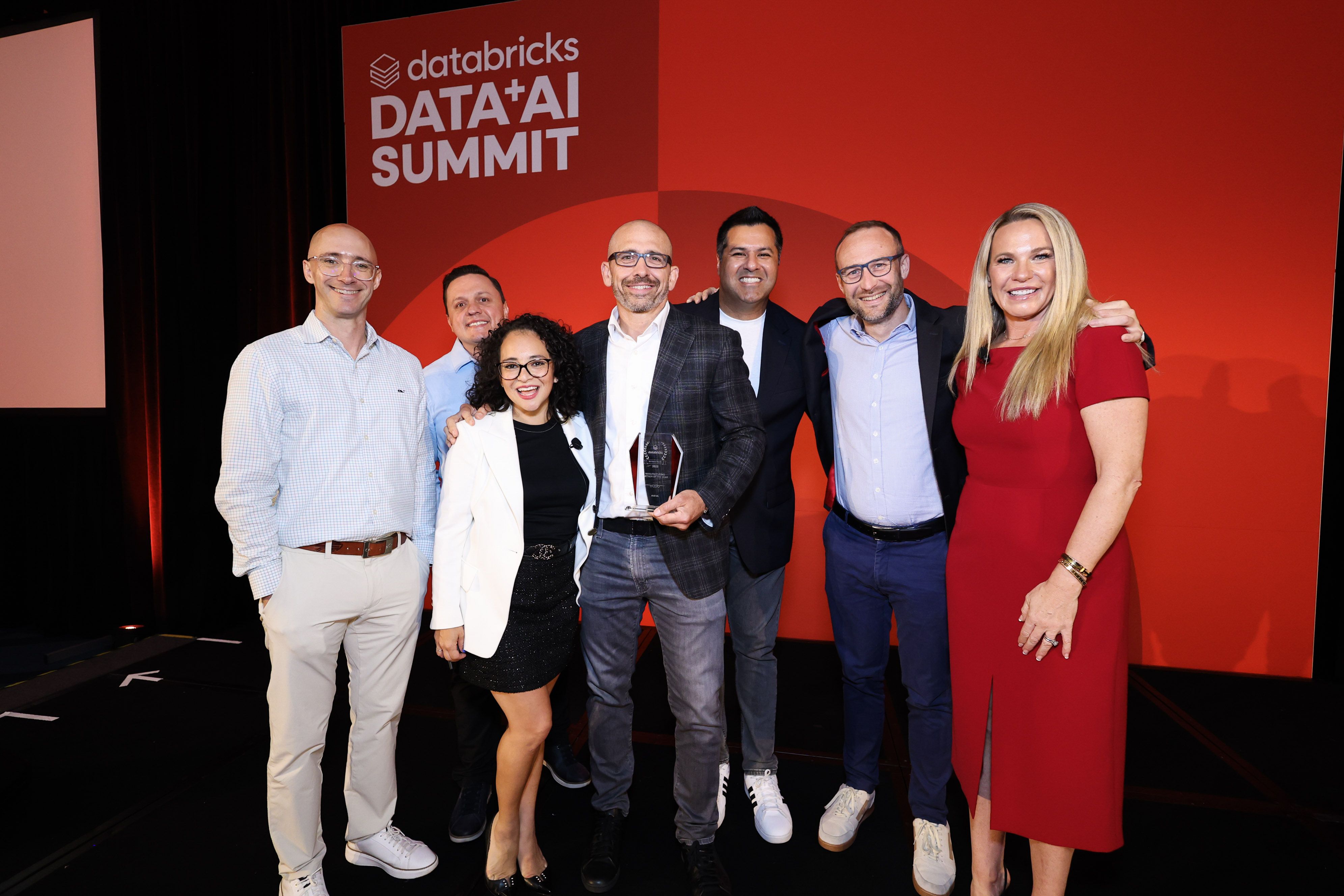
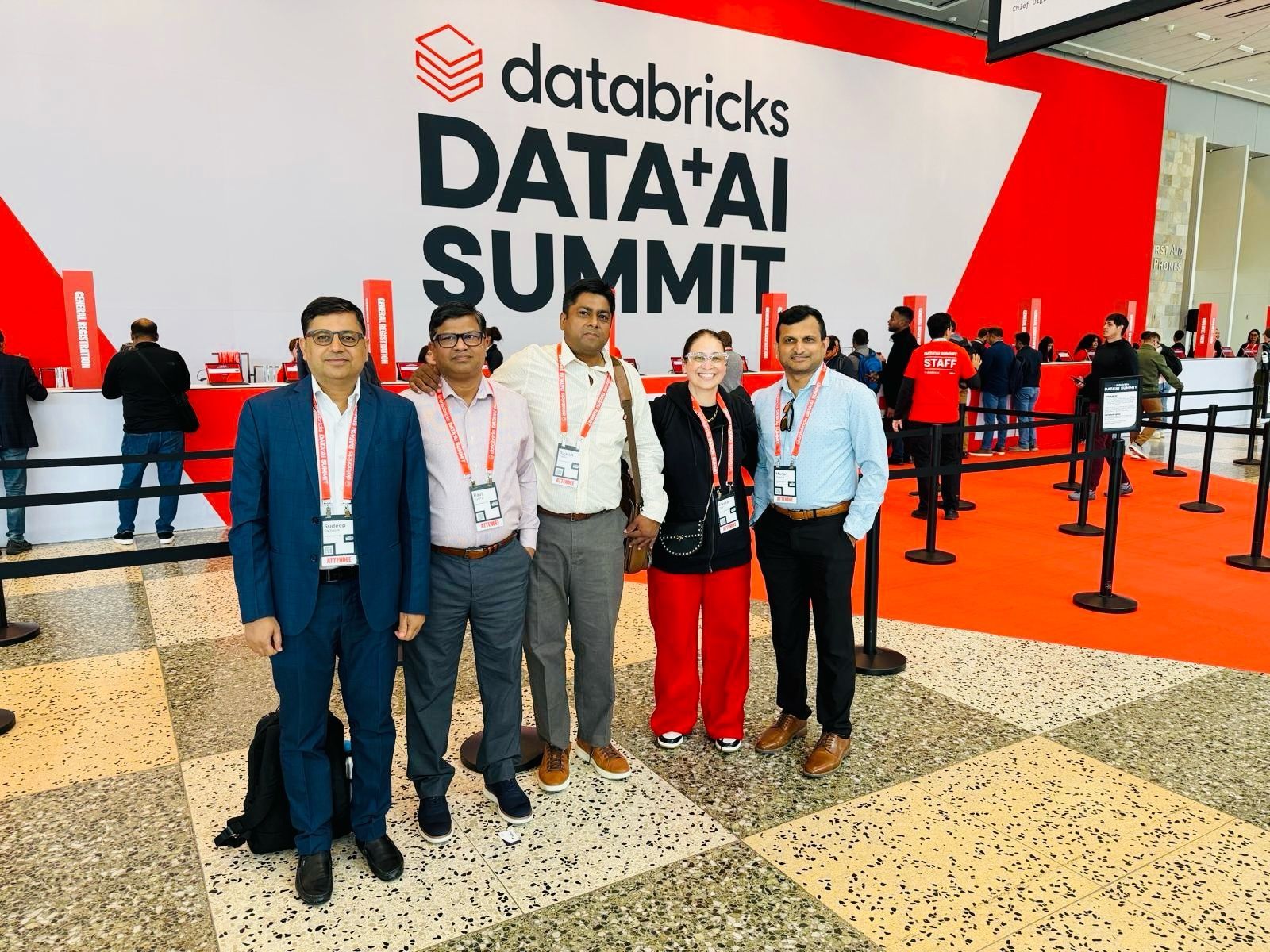
The Databricks Data + AI Summit 2025 established a pivotal transition in enterprise architecture, shifting the industry focus from isolated generative AI experimentation to production-grade Compound AI Systems powered by open data lakehouses. The event highlighted major advancements in serverless compute performance, automated data engineering via Databricks Lakeflow, universal governance through open-source Unity Catalog innovations, and standardized storage interoperability across Delta Lake and Apache Iceberg ecosystems.
Core Themes and Strategic Direction of the 2025 Summit
The overarching theme of the 2025 summit centered on Data Intelligence—the integration of artificial intelligence directly into the underlying storage, governance, and query execution layers of enterprise data architectures. Rather than treating artificial intelligence as an external application layer appended to static data warehouses, Databricks emphasized an architecture where generative models continuously optimize data engineering pipelines, refine query execution plans, and enforce semantic security protocols.
A central narrative of the conference was the enterprise transition from monolithic Large Language Models (LLMs) to Compound AI Systems. While early generative AI implementations relied on single, massive models attempting to handle complex business logic, the architectural consensus at the summit favored modular systems. These systems compose smaller, specialized language models, retrieval mechanisms, domain-specific logic tools, and real-time execution engines into unified agentic workflows.
Furthermore, the summit highlighted the absolute necessity of open data standards. As enterprise datasets scale into petabytes across hybrid and multi-cloud environments, proprietary data formats introduce prohibitive vendor lock-in and duplicate storage costs. Databricks doubled down on its commitment to open standards by deepening open-source governance frameworks and expanding zero-copy format compatibility layers.
Major Product and Platform Announcements
Databricks Lakeflow: Unified Data Engineering
Databricks Lakeflow introduced a unified, native solution for end-to-end data engineering, consolidating ingestion, transformation, and workflow orchestration into a single control plane. Historically, data platform teams assembled fragmented pipelines using disparate tools for data loading, transformation scripts, and third-party orchestrators.
Lakeflow simplifies this paradigm through three core components:
- Lakeflow Connect: Provides scalable, pre-built connectors for enterprise applications (such as Salesforce, Workday, and SAP) and relational databases (via change data capture), enabling automated data ingestion directly into the lakehouse without third-party ETL wrappers.
- Lakeflow Pipelines: Builds upon Delta Live Tables (DLT) to offer declarative pipeline development using standard SQL and Python. It automates operational complexities including target schema evolution, real-time data streaming execution, state handling, and automated data quality checks (expectations).
- Lakeflow Jobs: Expands native workflow orchestration with improved trigger controls, fine-grained event dependencies, dynamic task loops, and interactive debugging capabilities, reducing reliance on external scheduling tools.
Mosaic AI and Agentic Frameworks
The Mosaic AI suite received extensive updates designed to accelerate the development, testing, and operational management of complex Retrieval-Augmented Generation (RAG) applications and autonomous agent workflows.
- Mosaic AI Agent Framework: Offers software development kits (SDKs) and runtime environment abstractions that allow developers to build, evaluate, and deploy agentic workflows. Agents can securely execute code, call SQL endpoints, and run API functions directly within enterprise boundaries.
- Mosaic AI Agent Evaluation: Addresses the critical challenge of AI quality measurement. Using an automated, ground-truth evaluation harness, it grades RAG and agent responses against safety parameters, domain correctness, latency targets, and cost efficiency metrics.
- Vector Search & Compound Guardrails: Enhanced native vector indexes with dynamic filtering, lower operational query latencies, and inline guardrail enforcement to block prompt injections, toxic content output, and sensitive data leaks prior to payload delivery.
Unity Catalog Open-Source Expansion and Governance
Governance announced at the summit concentrated on unifying structured tabular data, unstructured text, media, metadata, and machine learning assets under a single operational authorization model.
Following the open-sourcing of Unity Catalog specifications, the platform expanded its cross-cloud, cross-platform interoperability. Key features include:
- Universal Governance across Query Engines: Unity Catalog now natively supports access control enforcement for queries originating from external, non-Databricks engines such as Apache Spark, Trino, Presto, and duckdb without requiring dedicated proxy middleware.
- Attribute-Based Access Control (ABAC): Simplifies security management by allowing data platform teams to assign security tags (such as PII, PHI, or Financial) to data columns and automatically enforce column-masking and row-filtering rules based on user identity context.
- System Tables & FinOps Intelligence: Expanded telemetry metrics within system tables allow fine-grained auditability, enabling platform architects to monitor resource consumption, model inference costs, and data lineage down to the individual column and API invocation level.
Serverless Engine & Compute Performance Advances
Databricks reinforced its serverless-first strategy, demonstrating significant execution latency reductions across data analytical queries and AI model inference workloads. The serverless compute layer decouples instance management, cluster sizing, and boot timeouts from end-user execution.
The underlying vectorized query processing engine, Photon, received architectural optimization for complex semi-structured JSON processing, direct vector indexing operations, and nested data array manipulations. Serverless SQL Warehouses gained predictive auto-scaling algorithms that dynamically allocate resources during sudden concurrency spikes, effectively preventing query queueing while scaling down infrastructure to zero when idle.
Comparative Breakdown of Key Announcements
To evaluate how these updates affect platform architecture and team workflows, the table below outlines the core pillars highlighted during the Data + AI Summit 2025.
| Platform Component / Feature | Core Architectural Capability | Primary Target Audience | Enterprise Operational Impact |
|---|---|---|---|
| Databricks Lakeflow | Unified ingestion (Connect), declarative transformations (Pipelines), and workflow orchestration (Jobs). | Data Engineers, Platform Engineers, Analytics Engineers | Replaces fragmented ETL/ELT toolchains; cuts maintenance overhead for complex data pipelines. |
| Mosaic AI Agent Framework | SDKs, evaluation tools, and runtime management for building RAG applications and multi-step agents. | AI Engineers, Data Scientists, ML System Developers | Reduces deployment timelines for agentic workflows from months to days; enforces enterprise safety guardrails. |
| Unity Catalog Open Standard | Universal, open-source metadata governance, lineage tracking, and attribute-based security (ABAC). | Security Officers, Data Governance Leads, Enterprise Architects | Eliminates vendor lock-in for metadata locks; provides unified compliance across multi-cloud query engines. |
| Delta Lake 4.0 & UniForm | Universal Format support providing seamless, zero-copy read/write capabilities for Delta Lake and Apache Iceberg. | Data Storage Engineers, Lakehouse Architects | Removes binary format splits between Delta and Iceberg; minimizes storage replication and storage costs. |
| Serverless Compute Engine | Zero-management, auto-scaling execution engine enhanced by optimized Photon vector processing. | Platform Administrators, Cloud FinOps Teams, BI Analysts | Eliminates manual cluster sizing, lowers compute idle costs, and stabilizes query concurrency performance. |
Deep-Dive into Technical Innovations
Compound AI Systems vs. Monolithic LLMs
A primary architectural insight from the summit is that performance gains in production environments stem from system design optimization rather than simply scaling base model parameter counts. Monolithic models suffer from high inference latencies, context window limitations, static knowledge cutoffs, and costly fine-tuning pipelines.
- Compound AI Infrastructure
- Model Layer (SLMs / LLMs)
- Retrieval Layer (Vector/Hybrid Search)
- Dynamic Guardrails & Execution (Unity Catalog / Tools API)
Compound AI Systems segregate responsibilities into dynamic operational blocks:
- Small, Specialized Language Models (SLMs): Efficient, targeted models process tasks like intent classification, entity extraction, or query re-writing at low latency and minimal cost.
- State-of-the-Art Retrieval Systems: Hybrid search mechanisms combine dense vector search with sparse keyword indexing (BM25) to surface up-to-date, domain-specific contextual data.
- Deterministic Tool Execution: The system leverages structured execution engines (such as SQL runtime environments, Python execution sandboxes, and enterprise APIs) to carry out precise computational steps.
- Operational Evaluation Loops: Real-time feedback networks evaluate output quality and dynamic guardrail policies block unverified responses or restricted system actions.
By organizing GenAI around this modular architecture, enterprise teams maintain precise access controls, lower system latency, decrease API spend, and keep outputs strictly tied to verified database records.
Open Data Formats & Universal Compatibility (UniForm)
Historically, enterprise data architectures faced fragmentation driven by open table format selection—specifically between Delta Lake and Apache Iceberg formats. Choosing one often meant locked-in ecosystem tools, complex data replication pipelines, or double storage costs.
Databricks addressed this challenge through advances in Universal Format (UniForm) within Delta Lake. UniForm automatically generates metadata for both Apache Iceberg and Apache Hudi alongside native Delta Lake log updates, without rewriting underlying Parquet storage files.
- Parquet Storage Files
- Delta Lake Log Metadata
- Databricks Engine / Spark Native
- Apache Iceberg Metadata
- Apache Trino / Snowflake Engines
- Apache Hudi Metadata
- Legacy Analytical Tools Engines
- Delta Lake Log Metadata
During the 2025 updates, UniForm expanded to support asynchronous metadata conversion, lower metadata overhead latencies, and bidirectional metadata translation. Consequently, downstream external query engines designed specifically around Iceberg catalogs (such as Apache Trino or Snowflake) read UniForm-enabled tables seamlessly as native Iceberg tables, eliminating redundant data copies.
Architectural Implementation Roadmap
For enterprise technology teams implementing the tools and patterns announced at the summit, the following phased approach establishes a robust production environment.
- Phase 1: Lakehouse Foundation
- Phase 2: Orchestration & Ingestion
- Phase 3: Compound AI Integration
Phase 1: Lakehouse Foundation & Open Governance Standardization
- Enable Unity Catalog: Centralize access control management across all workspaces, environments, and cloud regions. Transition legacy Hive Metastore definitions to Unity Catalog managed or external volumes.
- Configure Attribute-Based Access Controls (ABAC): Tag sensitive columns (e.g., PII data) at schema level and define system-wide row/column masking policies.
- Standardize Storage with UniForm: Enable UniForm across production Delta tables to ensure frictionless read access for external non-Spark compute engines.
Phase 2: Ingestion & Orchestration Modernization
- Migrate to Lakeflow Pipelines: Replace legacy custom ingestion scripts with declarative Lakeflow Connect pipelines for third-party enterprise platforms and database change-data-capture (CDC).
- Enforce Data Quality Expectations: Define automated expectations directly within pipeline declarative definitions (e.g.,
CONSTRAINT valid_id EXPECT (id IS NOT NULL) ON VIOLATION DROP ROW) to maintain target data cleanliness. - Consolidate Workflow Scheduling: Consolidate external cron jobs and orchestrators into Lakeflow Jobs to gain unified operational observability, native failure retry logic, and column-level execution lineage.
Phase 3: Compound AI Integration and Deployment
- Vector Indexing: Generate managed vector search indexes connected directly to core cataloged text columns, leveraging automated sync pipelines for dynamic index refreshes.
- Build Agentic Workflows with Mosaic AI: Construct agent workflows that leverage specialized models alongside structured tool calls to the Databricks SQL execution endpoints.
- Deploy Evaluation Frameworks: Establish automated evaluation harnesses using Mosaic AI Agent Evaluation to benchmark model safety, retrieval precision, and answer correctness prior to production release.
Frequently Asked Questions
What was the main focal point of the Databricks Data + AI Summit 2025?
The primary focus of the summit was the unification of data engineering and enterprise generative AI through open lakehouse architectures. Key emphasis was placed on Compound AI Systems, open governance via Unity Catalog, streamlined ETL using Databricks Lakeflow, and zero-copy storage interoperability between Delta Lake and Apache Iceberg.
How does Databricks Lakeflow differ from standard Delta Live Tables (DLT)?
Databricks Lakeflow expands upon Delta Live Tables. While DLT focuses primarily on data transformation logic within pipelines, Lakeflow incorporates Lakeflow Connect for native database/app ingestion and Lakeflow Jobs for comprehensive, enterprise-wide workflow orchestration, providing an end-to-end data engineering platform.
Can Unity Catalog manage external query engines outside of Databricks?
Yes. Following open-source governance updates, Unity Catalog functions as an open enterprise control plane. External execution engines, such as Apache Trino, Presto, and generic DuckDB implementations, can read metadata and enforce fine-grained access control policies directly using Unity Catalog APIs.
How does UniForm solve the choice between Delta Lake and Apache Iceberg?
UniForm (Universal Format) allows data to be written once as underlying Parquet files while generating metadata layers for Delta Lake, Apache Iceberg, and Apache Hudi simultaneously. This enables readers optimized for Iceberg to query the table without requiring physical data transformation or duplicated storage.
What is a Compound AI System, and why is it preferred over raw LLMs?
A Compound AI System combines multiple interacting components—such as smaller specialized language models, vector retrieval indexes, SQL execution sandboxes, and rule-based guardrails—to solve complex tasks. It is preferred over standalone LLMs because it improves output accuracy, reduces API costs, lowers latency, and mitigates hallucination risks.
Strategic Recommendations and Next Actions
To extract tangible business and operational value from the architecture paradigms highlighted at the 2025 summit, organization leaders and technical architects should execute the following strategy:
- Conduct a Storage and Governance Audit: Audit existing cloud storage layouts to identify duplicated datasets created to support distinct engine requirements (e.g., separate Iceberg and Delta copies). Enable Delta Lake UniForm to eliminate storage duplication and unify data catalogs under open Unity Catalog specifications.
- Consolidate Data Engineering Pipelines: Audit third-party ETL and scheduling platforms. Test native Databricks Lakeflow components—starting with Lakeflow Connect for core enterprise application ingestion—to evaluate infrastructure cost savings and reduce operational pipeline complexity.
- Transition AI Projects to Modular Architectures: Evaluate existing enterprise generative AI prototypes. Replace large, single-prompt LLM reliance with structured Compound AI workflows leveraging domain-specific vector search indexes, explicit tool interfaces, and Mosaic AI Agent Evaluation frameworks to ensure strict performance and security compliance.