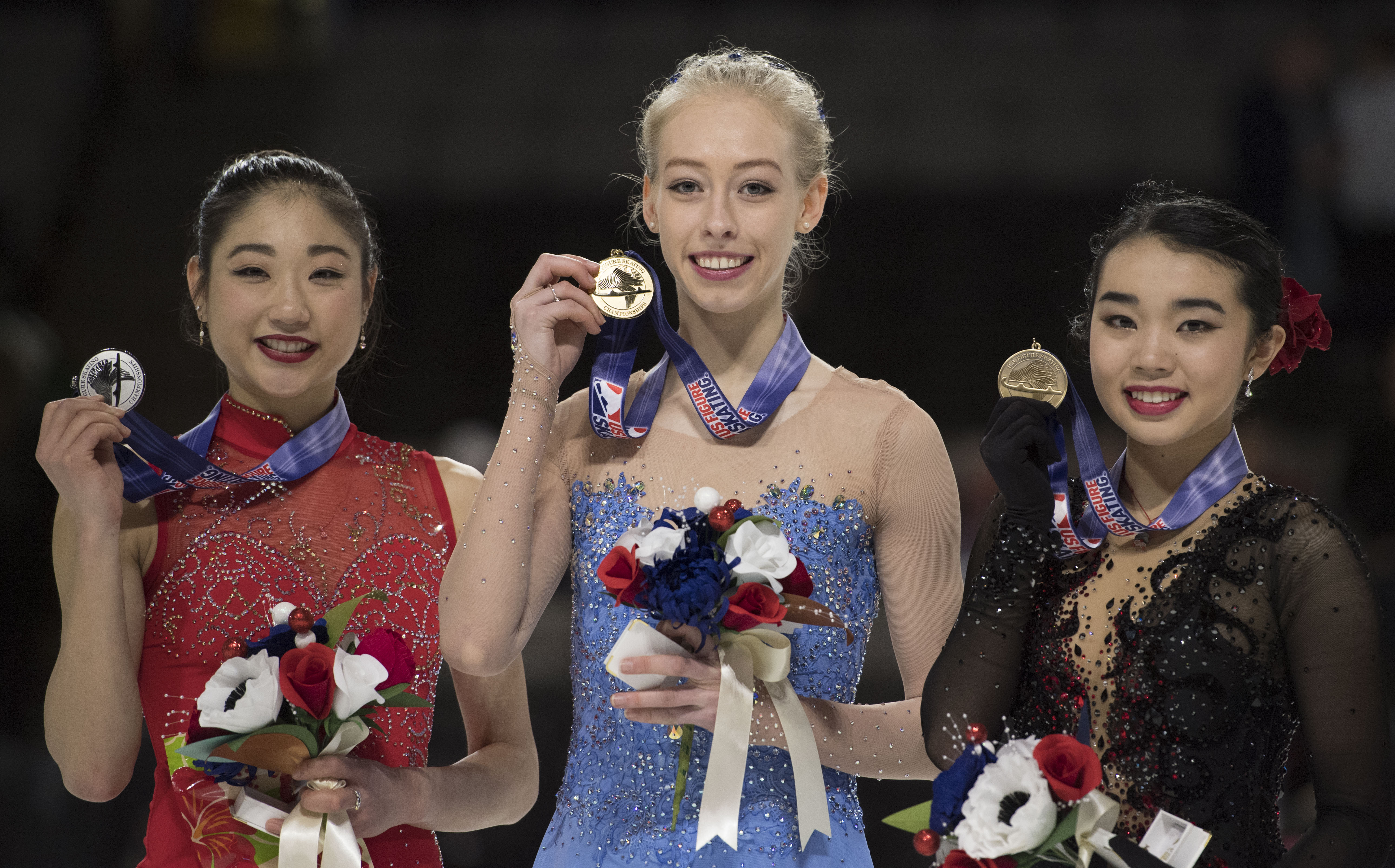
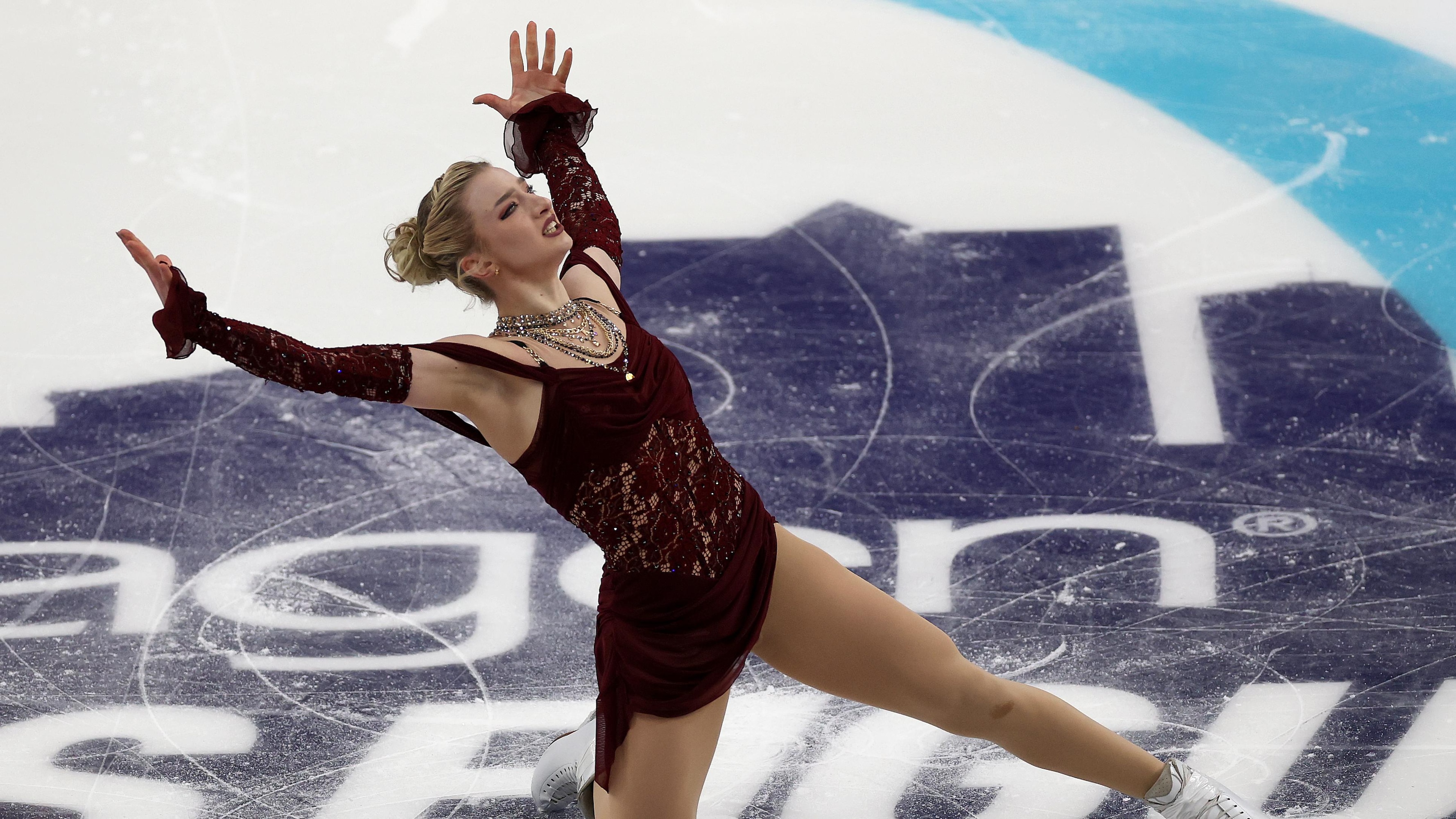
The 14-member 2018 U.S. Figure Skating Team was the official delegation sent to the PyeongChang Winter Olympics, consisting of three men, three women, one pair, and three ice dance couples. The roster featured Nathan Chen, Adam Rippon, and Vincent Zhou for the men; Bradie Tennell, Mirai Nagasu, and Karen Chen for the women; Alexa Scimeca Knierim and Chris Knierim for pairs; and ice dancers Maia Shibutani/Alex Shibutani, Madison Hubbell/Zachary Donohue, and Madison Chock/Evan Bates.
The 2018 team arrived at a pivotal moment for the sport, characterized by the "quad revolution" in the men’s discipline and a period of intense internal competition in ice dance. Looking back from 2026, the 2018 squad remains one of the most culturally significant and technically ambitious teams the United States has ever fielded, securing a team bronze medal and individual accolades that redefined American skating on the world stage.
The Men’s Singles: A Study in Technical Extremes and Artistry
The men’s contingent of the 14-member 2018 U.S. Figure Skating Team was arguably the most talked-about segment of the delegation. It featured a blend of unprecedented technical difficulty and veteran artistry, representing three distinct paths to Olympic qualification.
Nathan Chen: The Quad King’s Debut
In 2018, Nathan Chen was the gold medal favorite heading into PyeongChang. Having won the 2017 and 2018 U.S. Championships, he was the first skater to land five types of quadruple jumps in competition. However, his Olympic debut was a lesson in resilience. After a disastrous short program that left him in 17th place, Chen performed a historic free skate, landing six quadruple jumps—a feat never before seen in Olympic history. This performance vaulted him to 5th place overall and established the foundation for his eventual gold medal run in 2022.
Adam Rippon: The Veteran Presence
Adam Rippon’s inclusion in the team was both a triumph of longevity and a point of selection controversy. After missing the 2010 and 2014 games, Rippon qualified for the 2018 team at age 28. Although he finished fourth at the 2018 U.S. Championships behind Ross Miner, the selection committee chose Rippon based on his superior "body of work" in international competitions. Rippon became a global media sensation in PyeongChang, praised for his lyrical artistry, poise, and role as an advocate for LGBTQ+ athletes.
Vincent Zhou: Pushing Technical Boundaries
At just 17 years old, Vincent Zhou was the youngest member of the men’s team. Zhou made history in PyeongChang by becoming the first person to land a quadruple Lutz at the Olympics. His technical ceiling was incredibly high, though he struggled with under-rotation calls that occasionally suppressed his scores. His 6th-place finish, immediately behind Chen, signaled the depth of American men’s skating.
The Women’s Singles: Consistency and History-Making Jumps
The women’s side of the 14-member 2018 U.S. Figure Skating Team was defined by a mix of steady newcomers and seasoned veterans seeking redemption.
Bradie Tennell: The Meteoric Rise
Bradie Tennell entered the 2017-2018 season as a relative unknown but surged to the top of the U.S. ranks through sheer consistency. Her victory at the 2018 U.S. Championships was fueled by a "machine-like" ability to land jumps with technical precision. In PyeongChang, she served as the reliable anchor for the team event, though she finished 9th in the individual competition.
Mirai Nagasu: The Triple Axel Redemption
Mirai Nagasu provided one of the most iconic moments of the 2018 Games. After being controversially left off the 2014 Olympic team, Nagasu spent four years mastering the triple Axel. In the PyeongChang team event, she became the first American woman—and only the third woman in history—to land the three-and-a-half-revolution jump at the Olympics. This achievement was instrumental in the U.S. securing the team bronze medal.
Karen Chen: Artistic Excellence
Karen Chen, the 2017 U.S. Champion, secured the third spot. Known for her exquisite spirals and artistic sensitivity, Chen battled through boot issues and injuries leading up to the games. While she finished 11th in PyeongChang, her contributions during the 2017 World Championships were what originally earned the United States three spots for the 2018 Olympic team.
Ice Dance: The Deepest Field in U.S. History
In 2018, the United States was a global powerhouse in ice dance. The three teams selected were all legitimate podium contenders, creating one of the most competitive internal environments in the history of U.S. Figure Skating.
- Maia Shibutani and Alex Shibutani (The Shib Sibs): The siblings were known for their precision, intricate twizzles, and deep emotional connection to their programs. They won the individual bronze medal in PyeongChang, becoming the first ice dancers of Asian descent to medal at the Olympics. Their "Paradise" free dance remains a benchmark for synchronization.
- Madison Hubbell and Zachary Donohue: The 2018 U.S. Champions brought a powerful, athletic, and sensual style to the ice. They finished 4th in PyeongChang, narrowly missing the podium after a small mistake in their free dance.
- Madison Chock and Evan Bates: This team was lauded for their innovative choreography and Chock’s expressive performance quality. Despite a fall in the free dance that took them out of medal contention (finishing 9th), they remained a cornerstone of the U.S. program for years to come.
Pairs: The Lone Representatives
The United States struggled in the pairs discipline during the 2018 cycle, earning only one qualification spot for the PyeongChang Games. This spot was filled by the husband-and-wife duo of Alexa Scimeca Knierim and Chris Knierim.
The Knierims were the 2018 U.S. Champions and the only American pair capable of performing high-level technical elements like the quadruple twist. Their journey to the 2018 Olympics was deeply personal, as Alexa had recovered from a life-threatening gastrointestinal illness just a year prior. In PyeongChang, they performed creditably in the team event, contributing to the bronze medal, and finished 15th in the individual event.
2018 U.S. Figure Skating Olympic Team Roster & Results
| Discipline | Athlete(s) | 2018 U.S. Nationals Rank | Olympic Individual Rank | Notable Achievement |
|---|---|---|---|---|
| Men | Nathan Chen | 1st | 5th | Landed 6 quads in Free Skate |
| Men | Adam Rippon | 4th | 10th | Team Event Bronze Medalist |
| Men | Vincent Zhou | 3rd | 6th | First Olympic Quad Lutz |
| Women | Bradie Tennell | 1st | 9th | 2018 U.S. National Champion |
| Women | Mirai Nagasu | 2nd | 10th | First U.S. Woman to land 3A at Olympics |
| Women | Karen Chen | 3rd | 11th | 2017 U.S. National Champion |
| Ice Dance | Maia Shibutani / Alex Shibutani | 2nd | 3rd | Olympic Bronze Medalists |
| Ice Dance | Madison Hubbell / Zachary Donohue | 1st | 4th | 2018 U.S. National Champions |
| Ice Dance | Madison Chock / Evan Bates | 3rd | 9th | 3-time Olympic Team Members |
| Pairs | Alexa Scimeca / Chris Knierim | 1st | 15th | Team Event Bronze Medalists |
The Selection Process and "Body of Work" Controversy
The selection of the 14-member 2018 U.S. Figure Skating Team was governed by a complex set of criteria established by U.S. Figure Skating (USFS). Unlike the U.S. Olympic Trials for track and field, where the top finishers automatically qualify, figure skating utilizes a "Body of Work" evaluation.
The USFS selection committee looked at performances across several "tiers" of competitions:
- Tier 1: 2018 U.S. Championships, 2017 Grand Prix Final, 2017 World Championships.
- Tier 2: 2017 Grand Prix series events, 2017 Four Continents Championships.
- Tier 3: 2017 Challenger Series events.
The most controversial decision involved Ross Miner, who placed second at the 2018 U.S. Championships in San Jose. Under a strict "top three" rule, Miner would have gone to PyeongChang. However, the committee awarded the spot to Adam Rippon, who finished fourth. The rationale was that Rippon had a significantly stronger international record throughout the 2017 season, including a silver medal at the 2017 Grand Prix Final, whereas Miner had struggled in international assignments. This decision sparked a nationwide debate about the fairness of subjective selection versus objective results.
The Team Event: A Collective Triumph
The 2018 Winter Olympics marked the second time the Figure Skating Team Event was held. The 14-member U.S. team had to strategically assign skaters to the short and free segments to maximize points across the four disciplines.
The U.S. strategy relied heavily on the consistency of Bradie Tennell and the technical breakthrough of Mirai Nagasu. The Knierims provided a solid foundation in pairs, while Nathan Chen and Adam Rippon split the men’s duties. The Shibutani siblings anchored the ice dance portion. Ultimately, the United States finished with 62 points, securing the Bronze Medal behind the Olympic Athletes from Russia (Silver) and Canada (Gold). This medal was significant as it ensured that nearly the entire 14-member team left PyeongChang as Olympic medalists.
Technical Evolution: The 2018 "Quad Revolution"
The 2018 team represented the peak of the technical escalation in men's figure skating. Before 2018, most Olympic programs featured one or two quadruple jumps. The U.S. team, led by Nathan Chen and Vincent Zhou, pushed this to four, five, and eventually six quads in a single program.
This shift required a massive change in training, focusing on "off-ice" rotation and plyometrics to handle the immense physical force of these jumps. The 2018 games proved that while artistry remained vital—as evidenced by Adam Rippon’s high components—the path to the podium was now inextricably linked to high-difficulty technical elements.
Legacy of the 2018 Team in 2026
As of 2026, the 14-member 2018 U.S. Figure Skating Team is viewed as a bridge between the traditional era of the sport and the modern, data-driven era.
- Nathan Chen used the disappointment of 2018 to fuel a four-year period of dominance, culminating in his 2022 Olympic Gold. He is now a prominent figure in sports science and education.
- The Ice Dance contingent solidified the U.S. as the premier school for ice dance, a reputation that continues into the current 2026 season. Madison Chock and Evan Bates, in particular, showed remarkable longevity, continuing to compete at an elite level well into the 2020s.
- Alexa Knierim transitioned to a new partnership after Chris Knierim’s retirement, eventually winning the 2022 World Championship title with Brandon Frazier, further cementing the Knierim legacy.
- Mirai Nagasu and Adam Rippon transitioned into media and coaching, where they remain influential voices in the skating community.
The 2018 team was the last to compete under the older Grade of Execution (GOE) scale of -3 to +3, before the International Skating Union (ISU) expanded the scale to -5 to +5. This makes the scores from 2018 a historical artifact of a specific era in the International Judging System (IJS).
Frequently Asked Questions
Who were the 14 members of the 2018 U.S. Olympic Figure Skating Team?
The team consisted of Nathan Chen, Adam Rippon, Vincent Zhou (Men); Bradie Tennell, Mirai Nagasu, Karen Chen (Women); Alexa Scimeca Knierim and Chris Knierim (Pairs); and three ice dance duos: Maia/Alex Shibutani, Madison Hubbell/Zachary Donohue, and Madison Chock/Evan Bates.
Did the 2018 U.S. Figure Skating Team win any medals?
Yes. The team won the Bronze Medal in the overall Team Event. Additionally, Maia and Alex Shibutani won the Bronze Medal in the individual Ice Dance competition.
Why was Ross Miner left off the 2018 team despite finishing 2nd at Nationals?
U.S. Figure Skating uses a "Body of Work" criteria that considers international performance over the entire season. Adam Rippon, who finished 4th at Nationals, was selected over Miner because of his higher world ranking and consistent podium finishes in the Grand Prix series.
What was historic about Mirai Nagasu’s performance in 2018?
Mirai Nagasu became the first American woman to land a triple Axel at the Olympic Games. She performed the jump during the Team Event, helping the U.S. secure the bronze medal.
How did Nathan Chen perform at the 2018 Olympics?
Nathan Chen had a difficult short program, finishing 17th. However, he made history in the free skate by becoming the first person to land six quadruple jumps in a single program at the Olympics, finishing 5th overall.
Practical Recommendation for Fans and Historians
For those researching the 14-member 2018 U.S. Figure Skating Team, it is highly recommended to view the official U.S. Figure Skating Fan Zone archives for detailed score sheets and protocols. Understanding the "Body of Work" selection criteria is essential for any technical analysis of this specific Olympic cycle. If you are looking for video footage of the historic 2018 performances, the Olympic Channel maintains the official digital rights to the PyeongChang broadcasts. For current 2026 updates on these athletes, many have transitioned into roles with the United States Olympic & Paralympic Committee (USOPC), which provides resources on athlete career transitions.