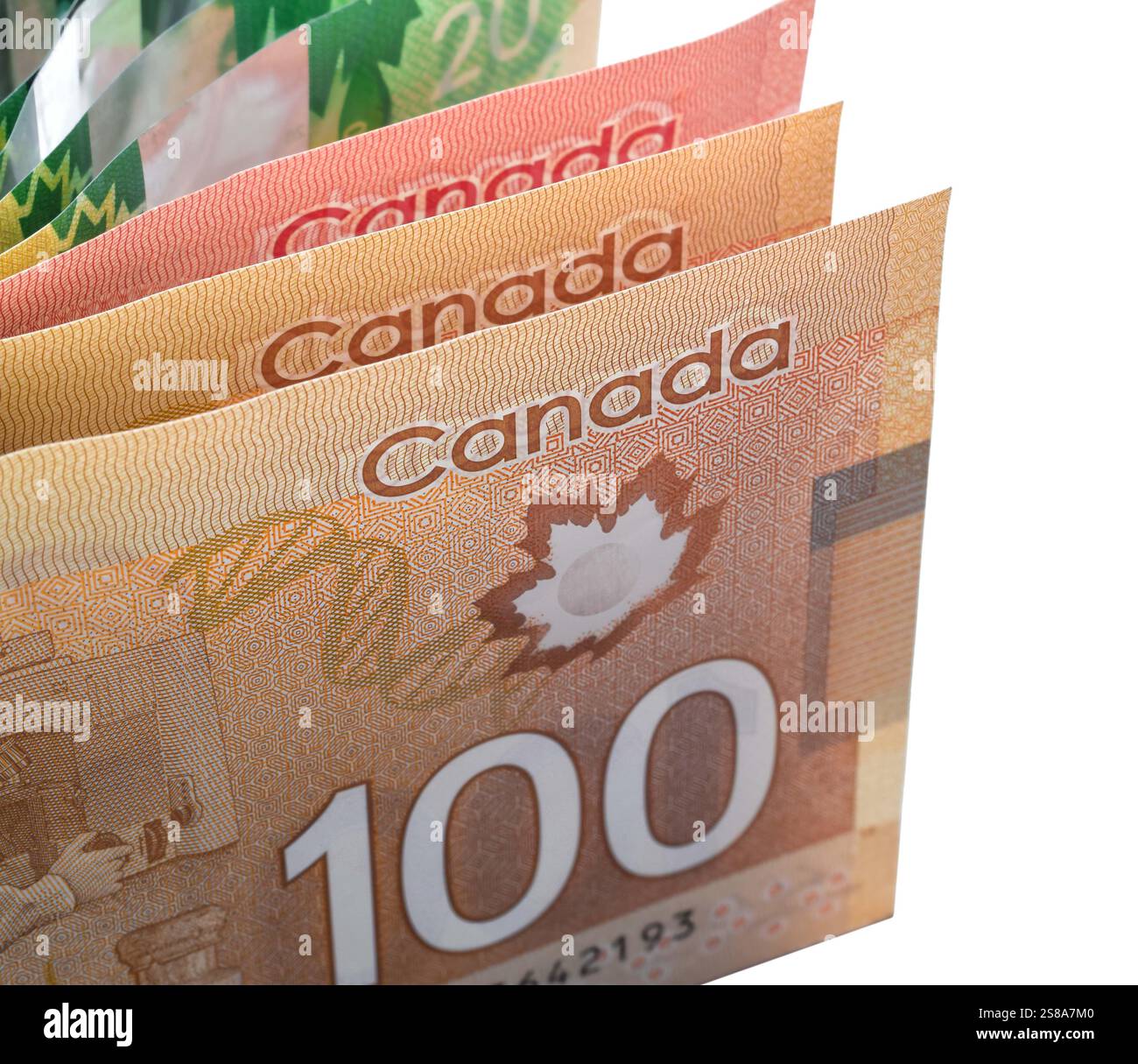
Converting 100 euros into Canadian dollars involves understanding live foreign exchange rates, intermediate processing fees, and the practical purchasing power of the resulting funds in Canada. Because the EUR to CAD pair floats continuously on global currency markets, a straightforward mathematical conversion is only the starting point for anyone traveling, relocating, shopping internationally, or managing cross-border transactions.
Understanding the EUR to CAD Exchange Mechanism
Foreign exchange rates represent the relative value of one currency against another, driven by macroeconomic factors such as central bank interest rates, inflation differentials, geopolitical stability, and trade balances between the Eurozone and Canada. The European Central Bank (ECB) and the Bank of Canada (BoC) set monetary policies that directly influence these currency valuations. When a consumer looks up a conversion rate for 100 euros to Canadian dollars, they are typically seeing the mid-market rate—the midpoint between the supply and demand forces in global currency trading.
However, retail consumers rarely receive the exact mid-market rate. Financial institutions, remittance companies, and payment processors incorporate a markup, often referred to as the foreign exchange spread or margin, to generate revenue. Recognizing the difference between the wholesale mid-market rate and the retail rate is essential for preventing unnecessary financial loss when exchanging a relatively modest sum like 100 euros. Even a small percentage variation can noticeably alter the final amount of Canadian dollars deposited into an account or handed over in cash.
The Role of Market Volatility
Currency pairs experience continuous fluctuations during market trading hours, which span from Sunday evening through Friday afternoon globally. A conversion calculation performed in the morning can differ significantly from one executed in the evening. While 100 euros represents a manageable sum where absolute variance in dollar terms is small, high volatility periods can still impact the exact purchasing power. Tracking historical trends can provide context, but executing a transaction requires evaluating the live rate at the exact moment of transfer.
Comparing Exchange Methods for 100 Euros
Different financial channels handle small-sum conversions with varying fee structures. Choosing the right method depends on whether the user needs physical banknotes, a digital transfer to a Canadian bank account, or an immediate online purchase.
The following table compares the typical cost efficiency, speed, and suitability of four common exchange methods for a 100 euro transaction:
| Exchange Method | Typical Exchange Rate Markup | Flat Fees or Commissions | Speed of Delivery | Best Suited For |
|---|---|---|---|---|
| Traditional High-Street Banks | High (2.5% to 5%) | Often high for small amounts | Instant (Cash) to 3 business days | Existing account holders needing physical cash |
| Specialized Money Transfer Services | Low to Moderate (0.5% to 1.5%) | Low or transparent tier | Minutes to 2 business days | Digital transfers and remittances |
| Multi-Currency Digital Wallets | Low (0.3% to 1%) | Minimal or free monthly tiers | Instant | Online shopping and multi-currency holding |
| Airport Currency Kiosks | Very High (6% to 12%+) | High fixed transaction fees | Instant | Emergency cash only |
Airport Kiosks Versus Digital Providers
Airport kiosks and high-street bureau de change booths frequently market themselves as convenient options for travelers, yet they impose the highest costs. For a transaction as small as 100 euros, fixed service charges combined with wide exchange spreads can erode 10% to 15% of the total value. Conversely, digital transfer providers and multi-currency accounts leverage batch processing and digital infrastructure to offer rates much closer to the mid-market benchmark, making them the mathematically superior choice for both digital and cash-to-digital conversions.
Practical Implications of 100 Euros in Canada
Having a converted sum of Canadian dollars requires understanding local purchasing power and transactional norms. Canada operates as a largely cashless society for everyday retail purchases, though cash remains accepted nearly everywhere except at specific automated parking facilities or transit kiosks that rely entirely on contactless payment cards.
Everyday Purchasing Power
To contextualize the value of 100 euros converted into Canadian dollars, it is helpful to look at typical consumer goods and services within Canadian metropolitan areas like Toronto, Vancouver, or Montreal:
- Dining Out: A casual mid-range restaurant meal for one person, including a non-alcoholic beverage, tax, and a standard tip, will generally consume a significant portion or entirety of the converted sum.
- Public Transit: A monthly public transit pass in major Canadian cities exceeds the value of 100 euros, though single-trip fares and multi-trip reloadable smart cards (such as Presto in Ontario or OPUS in Quebec) are well within budget.
- Groceries: A basic basket of staple household groceries can be purchased, though inflation in the Canadian food sector means budgeting requires careful selection of items.
- Telecommunications: A standard prepaid mobile phone plan with moderate data allowances typically costs around 30 to 50 Canadian dollars per month, making 100 euros sufficient for temporary or short-term communication needs.
Payment Methods and Acceptance
When spending foreign funds in Canada, travelers must navigate payment card networks. Using a European debit or credit card directly at Canadian point-of-sale terminals incurs foreign transaction fees, which typically range from 1.5% to 3% depending on the issuing bank, alongside potential currency conversion markups. Furthermore, Canadian merchants widely use chip-and-PIN and contactless (NFC) technologies, ensuring seamless compatibility with modern European Visa, Mastercard, and debit cards. However, American Express has lower acceptance rates at smaller independent retailers compared to major grocery chains and department stores.
Minimizing Fees and Optimizing Small-Sum Exchanges
When dealing with a fixed amount like 100 euros, minimizing administrative overhead is paramount because flat fees disproportionately impact smaller transactions. A 5-euro fixed fee on a 100-euro exchange instantly represents a 5% loss before accounting for exchange rate margins.
Actionable Steps for Cost Reduction
- Audit Bank Fees First: Check if an existing European bank account offers fee-free international ATM withdrawals or zero foreign transaction surcharges. Some premium or digital-first banking accounts eliminate these penalties entirely.
- Avoid Dynamic Currency Conversion (DCC): When using a European card at a Canadian point-of-sale terminal or ATM, the payment terminal may offer to charge the transaction in euros instead of Canadian dollars. Always decline DCC and choose to be billed in the local currency (CAD); the exchange rate applied by local merchant acquirers during DCC is almost universally unfavorable.
- Leverage Digital Platforms: For moving funds to a Canadian bank account, dedicated transfer platforms provide transparent fee breakdowns before execution, allowing for direct comparison of the net CAD output.
Frequently Asked Questions
How is the live EUR to CAD exchange rate determined?
The exchange rate is determined by global foreign exchange markets where international banks, institutional investors, and corporations trade currencies continuously. It fluctuates second by second based on global economic indicators, interest rate announcements, and market sentiment between the Eurozone and Canada.
Is it better to exchange euros for Canadian dollars before traveling or upon arrival?
It is generally more cost-effective to avoid exchanging currency at airport kiosks upon arrival. Utilizing digital multi-currency accounts, withdrawing cash from standard Canadian bank ATMs using a fee-optimized card, or utilizing digital transfer services yields better financial returns than airport bureaus.
What fees should I expect when converting 100 euros to Canadian dollars?
Fees typically include a markup on the exchange rate spread and potential flat-rate service fees charged by the payment processor, bank, or transfer provider. For small amounts, flat fees have a disproportionate impact, making percentage-fee digital providers more economical.
Can I use my European credit card directly in Canada without converting cash?
Yes, Canadian merchants widely accept major international credit and debit cards equipped with chip-and-PIN or contactless technology. Cardholders should verify whether their issuing bank charges foreign transaction fees for purchases processed outside the Eurozone.
What should I do if a Canadian ATM offers Dynamic Currency Conversion?
Always decline Dynamic Currency Conversion and choose to be billed in Canadian dollars. Accepting DCC allows the local ATM operator to apply an inflated proprietary exchange rate, resulting in higher overall costs for the cardholder.
Next Actions for Transacting or Traveling
To execute a conversion of 100 euros to Canadian dollars efficiently, check the live mid-market rate immediately prior to your transaction. Compare the net output across your primary bank and at least one reputable digital transfer or multi-currency account provider to ensure you secure the highest volume of Canadian dollars with minimal frictional costs. Always select local currency billing when prompted at retail terminals or ATMs across Canada.