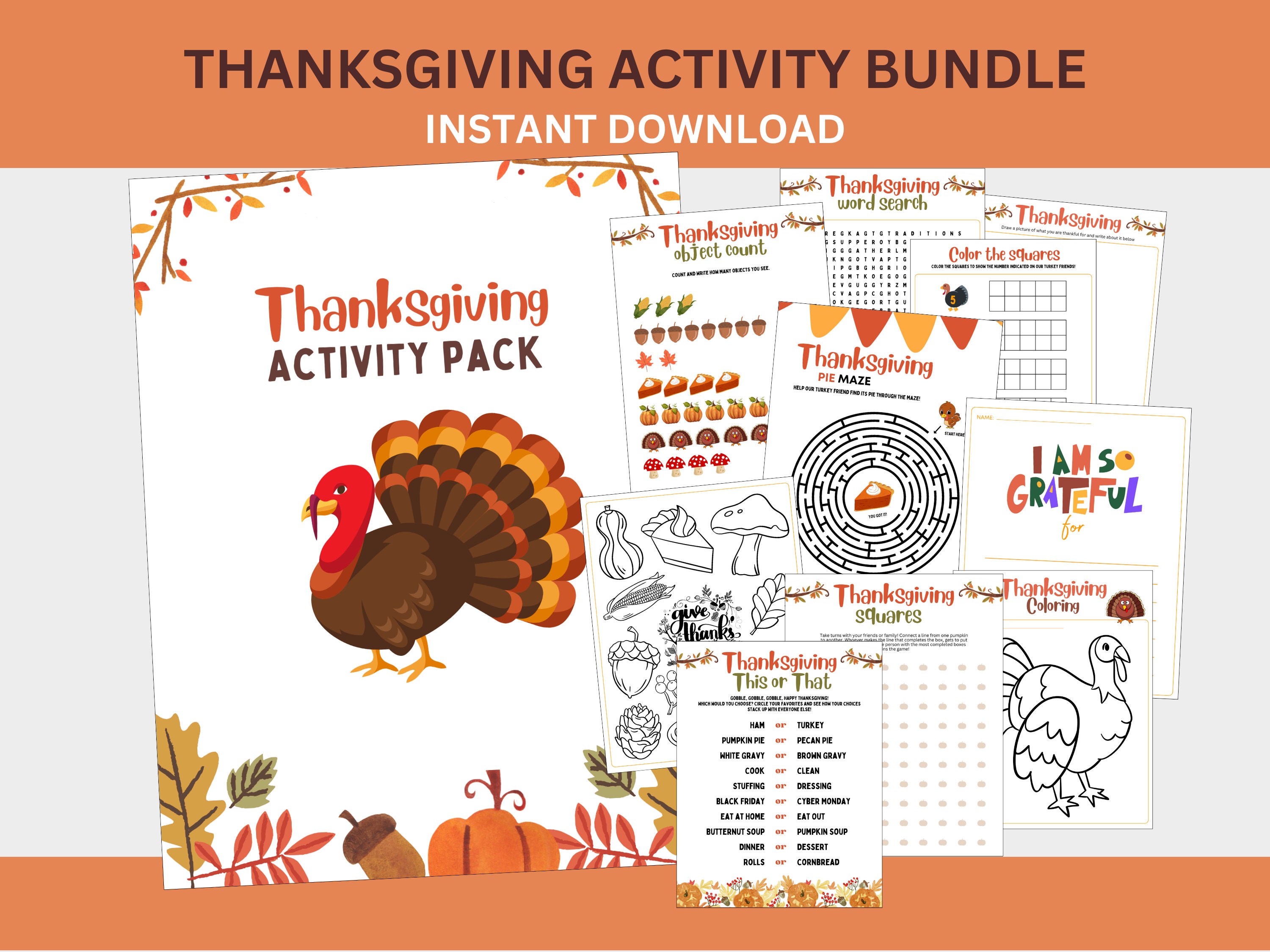
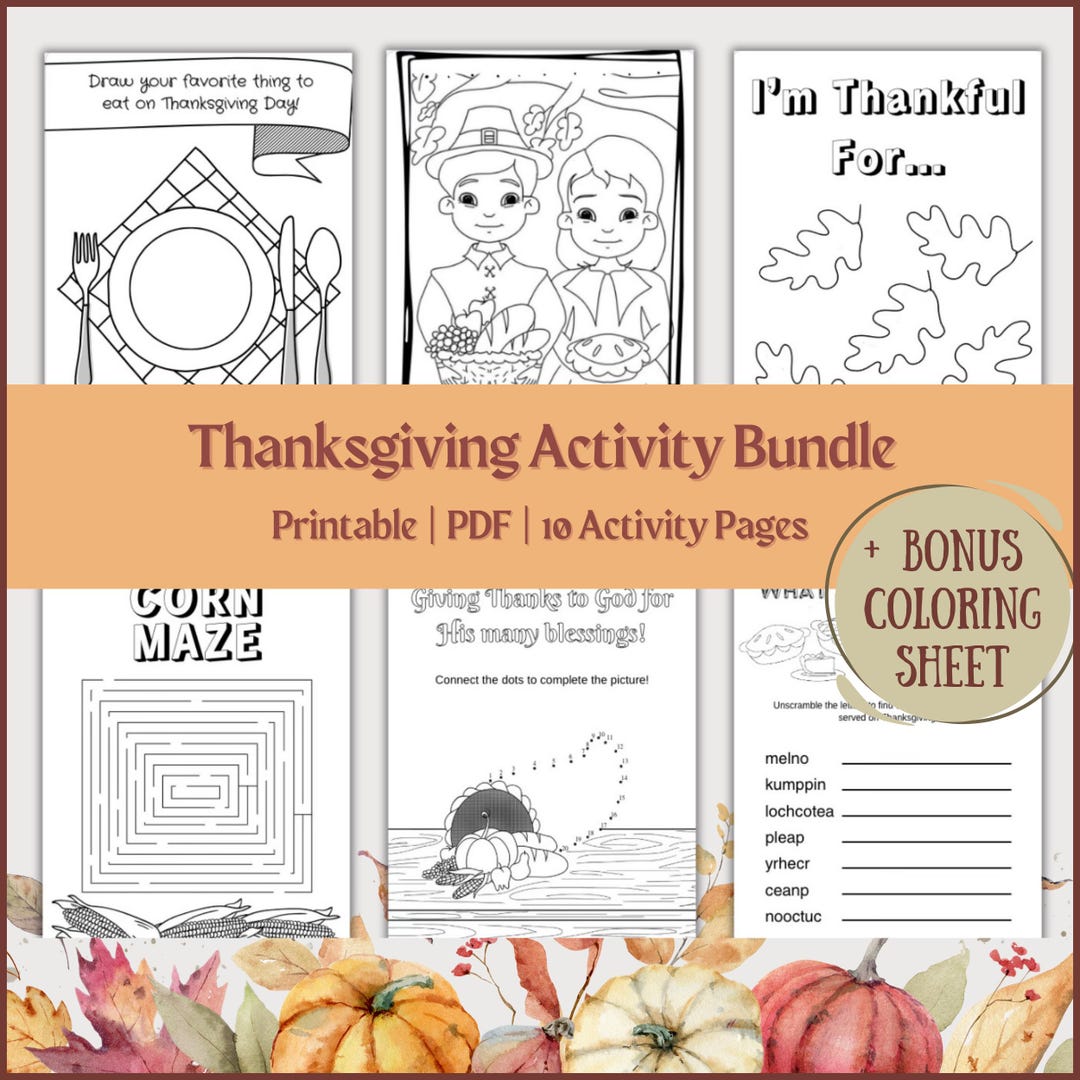
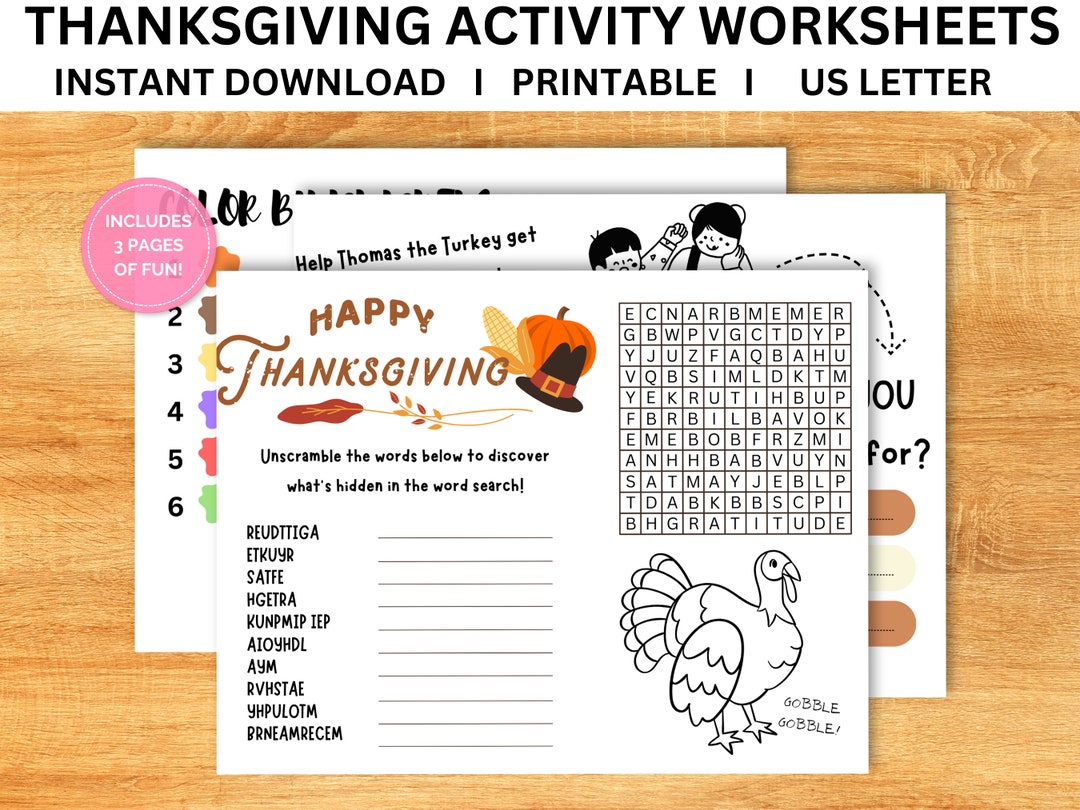
Thanksgiving activity worksheets are highly effective tools for bridging the gap between holiday excitement and meaningful learning. When designed with pedagogical intent, they reinforce core literacy and math skills, provide essential structure during busy seasonal transitions, and offer a platform for practicing social-emotional skills like gratitude and cultural empathy.
For decades, the simple "color-the-turkey" page was a staple of late November. However, as we move through 2026, the definition of what makes these resources "useful" has evolved. Modern educators and parents now look for materials that move beyond mere time-fillers, seeking worksheets that challenge a child’s critical thinking while respecting the complex historical narratives surrounding the holiday. Whether these tools are truly beneficial depends entirely on their design, the context of their use, and the specific learning objectives they aim to fulfill.
The Cognitive and Academic Benefits of Thematic Learning
Thematic learning—the practice of centering various subjects around a single topic like Thanksgiving—is supported by educational psychology as a way to improve information retention. Thanksgiving activity worksheets capitalize on the high level of student interest during the holiday season to sneak in rigorous academic work.
Literacy and Language Arts Development
Vocabulary expansion is one of the most direct benefits of Thanksgiving-themed worksheets. Words like "abundance," "gratitude," "harvest," and "heritage" are often introduced through word searches, crosswords, and fill-in-the-blank narratives. In 2026, many high-quality literacy worksheets focus on "mentor texts," asking students to read a short passage about the history of the 1621 harvest feast and then answer reading comprehension questions. This approach transforms a simple activity into a tool for evidence-based writing and critical analysis.
Mathematical Application in Real-World Contexts
Math-based Thanksgiving worksheets often use the holiday feast as a data set. For younger children, this might involve counting different types of vegetables or sorting "ingredients" by color. For older students, worksheets in 2026 frequently involve complex word problems related to budgeting for a large dinner, calculating the weight and cooking time of a turkey, or using fractions to adjust a recipe for a specific number of guests. These applications prove useful because they demonstrate the practical utility of mathematics in everyday life, making the abstract concepts of the classroom more tangible.
The Role of Worksheets in Social-Emotional Learning (SEL)
Beyond academic rigor, the most significant utility of Thanksgiving worksheets in the current educational climate is their capacity to foster social-emotional growth. Thanksgiving provides a natural framework for exploring concepts that are often difficult to teach in isolation.
Gratitude as a Skill
Gratitude is not just a feeling; it is a cognitive skill that can be practiced. Many modern worksheets are designed as "gratitude journals" or "reflection trees." These prompts ask children to identify specific people, opportunities, or comforts they are thankful for and, more importantly, to explain why. This depth of reflection helps develop empathy and self-awareness, which are core components of the 2026 SEL curricula found in many school districts.
Critical Thinking and Cultural Awareness
One of the most profound shifts in Thanksgiving materials over the last decade has been the move toward historical accuracy and inclusivity. The utility of a worksheet is now often measured by how it handles the history of the Wampanoag people and the English settlers. Useful worksheets in 2026 avoid stereotypical imagery and instead offer comparative perspectives, asking students to reflect on the meaning of community and survival from multiple viewpoints. This encourages high-level critical thinking and helps students navigate complex historical narratives.
Practical Utility for Parents and Educators
While the pedagogical benefits are clear, the practical utility of Thanksgiving worksheets for the adults managing the holiday should not be overlooked. Whether in a classroom setting or at home during the "chaos hour" of meal preparation, these tools provide a necessary anchor.
Classroom Management During High-Energy Weeks
Teachers often face a "pre-holiday slump" where student focus wanes. Worksheets provide a structured environment that allows teachers to maintain order while still acknowledging the festive atmosphere. In 2026, "early finisher" packets are a common use case; these allow students who complete their core curriculum work to engage in something thematic and enjoyable without disrupting the rest of the class.
At-Home Engagement and "The Busy Factor"
For parents, the utility of a well-designed worksheet is often found in its ability to keep children occupied during high-stress moments, such as traveling or cooking the Thanksgiving meal. Unlike digital entertainment, which can sometimes lead to passive consumption, a worksheet requires active participation—writing, drawing, or problem-solving. This keeps the child’s brain engaged and provides a sense of accomplishment that a movie or video game might not offer.
Identifying High-Quality vs. "Busy Work" Worksheets
Not all worksheets are created equal. The "usefulness" of a resource is frequently negated if the content is too easy, too repetitive, or lacks a clear objective. To determine if a Thanksgiving activity is worth the time and paper, consider the following criteria:
| Feature | Low-Utility (Busy Work) | High-Utility (Educational) |
|---|---|---|
| Objective | Keeping a child quiet. | Reinforcing a specific skill (e.g., multiplication, inference). |
| Cognitive Load | Passive coloring or simple rote memorization. | Problem-solving, creative writing, or data analysis. |
| Historical Accuracy | Relies on myths or outdated stereotypes. | Uses primary sources or verified historical facts. |
| Feedback Loop | No clear "correct" answer or way to check work. | Includes an answer key or a prompt for adult-child discussion. |
| Engagement Type | One-and-done; minimal thought required. | Scaffolding; builds on previous knowledge or requires research. |
The Transition to Digital and Hybrid Activity Formats
As of 2026, the traditional printed worksheet is being supplemented—and in some cases replaced—by interactive digital formats. These digital "worksheets" offer a different kind of utility.
Interactive PDF forms and educational apps allow for immediate feedback, which is crucial for learning. If a child solves a math problem correctly on a digital Thanksgiving worksheet, they might receive a digital "stamp" or unlock a piece of a virtual turkey puzzle. This gamification increases engagement and allows for more complex data collection for teachers tracking progress. However, the tactile benefit of paper—developing fine motor skills through handwriting and physical drawing—remains a strong argument for the continued use of traditional printed materials, especially for younger children (ages 4–8).
Sustainability and Environmental Considerations
A common critique of worksheets is the environmental impact of physical printing. In 2026, the utility of these tools is often balanced against their ecological footprint. To maximize utility while minimizing waste, many educators are adopting the following practices:
- Lamination and Reusability: Placing worksheets in plastic sleeves and using dry-erase markers allows the same page to be used by multiple children or throughout the week.
- Selective Printing: Only printing the pages that offer the highest educational value, rather than entire 30-page "holiday bundles."
- Digital-First Approach: Utilizing tablets for logic puzzles and word searches while saving paper for activities that require physical drawing or cutting (like "build-a-turkey" crafts that double as math manipulatives).
Common Mistakes to Avoid When Using Thanksgiving Worksheets
To ensure these tools remain useful, it is important to avoid several common pitfalls that can detract from the learning experience:
- Ignoring Age-Appropriateness: Giving a third-grader a coloring page designed for a preschooler will lead to boredom and disengagement. Conversely, a complex logic puzzle that is too difficult can lead to frustration.
- Over-Reliance on Worksheets: They should be a supplement to, not a replacement for, hands-on learning. A worksheet about cranberries is more useful if the child also gets to see, touch, and taste a cranberry.
- Neglecting the "Why": For a worksheet to be useful, the child needs to understand the purpose. Telling a student, "This will help you practice your descriptive adjectives for your next writing project," provides motivation that "Do this because it’s Thanksgiving" does not.
- Failing to Review the Content: Parents and teachers should always vet worksheets for cultural sensitivity and historical accuracy before distribution to ensure they are not inadvertently reinforcing misconceptions.
Frequently Asked Questions
Are Thanksgiving worksheets better than educational apps?
Neither is inherently "better," as they serve different purposes. Worksheets are superior for developing fine motor skills and providing a break from screen time, which is a major concern for many parents in 2026. Educational apps, however, provide instant feedback and can adapt in difficulty to the child's skill level. A balanced approach that uses both is usually the most effective.
What age group benefits most from these activities?
Children in the Pre-K through 5th-grade range (ages 4–11) typically see the most benefit. At this stage, thematic learning is highly effective for building foundational skills. Older students can still benefit, but their worksheets should focus more on historical analysis, complex mathematics, or creative writing rather than simple puzzles.
Where can I find high-quality, inclusive Thanksgiving worksheets in 2026?
Many educational platforms now prioritize "inclusive curriculum" filters. Websites like Teachers Pay Teachers, Education.com, and various museum-sponsored educational portals (such as those from the Smithsonian or the National Museum of the American Indian) offer vetted, high-quality materials that provide a balanced view of the holiday.
How do I make worksheets more engaging for a child who hates them?
Try to turn the worksheet into a scavenger hunt or a collaborative project. For example, if the worksheet has math problems, hide the problems around the room and have the child find them before solving them. Alternatively, let the child "be the teacher" and grade a worksheet that you have intentionally filled out with a few mistakes.
Can worksheets help with holiday stress?
Yes, for children who thrive on routine, the predictability of a worksheet can be comforting during the unpredictable schedule of a holiday week. It provides a quiet "reset" activity that can help prevent sensory overload during large family gatherings.
Should I force my child to finish a holiday worksheet?
In a home setting, it is usually better to keep the atmosphere light. If a child is frustrated, the "utility" of the activity is lost. In a classroom, completion may be required for credit, but teachers in 2026 are increasingly moving toward "choice boards" where students can choose which Thanksgiving activities they want to complete.
Strategic Recommendation
To maximize the utility of Thanksgiving activity worksheets, focus on quality over quantity. Select 2–3 high-impact pages that align with the child’s current academic goals or social-emotional needs. For a truly effective experience, pair the worksheet with a real-world activity: use a recipe worksheet before baking a pie, or use a gratitude worksheet before the family dinner where everyone shares what they are thankful for. By grounding these paper-based tasks in real-life experiences, you ensure that they are not just "busy work," but valuable stepping stones in a child’s development.