At its core, a blockchain is a digital, shared record-keeping system that stores information in a way that makes it nearly impossible to change or cheat. Instead of one central authority, like a bank, keeping a private ledger, a blockchain distributes identical copies of that ledger across a vast network of computers, ensuring transparency, security, and consensus among all participants.
The Foundation of Distributed Ledger Technology
To understand blockchain, one must first understand the traditional model of data management. In a standard database—like those used by social media companies or banks—data is stored on a centralized server. If that server is compromised, hacked, or manipulated by the administrator, the integrity of the entire record is at risk. Blockchain replaces this "single source of truth" with a "distributed source of truth."
A blockchain is essentially a database, but it is organized in a unique, linear structure. Data is bundled into groups known as "blocks." Each block has a specific storage capacity. Once a block is filled with data, it is cryptographically linked to the previous block, forming a chronological, permanent chain. Because every new block contains a mathematical reference to the one before it, altering any piece of data in an old block would break the chain, alerting the entire network to the tampering.
How Transactions Are Recorded and Verified
The process of adding information to a blockchain follows a strict set of protocols designed to ensure accuracy without the need for a trusted third party. This process typically involves several stages, beginning with a request.
- Request: A participant on the network initiates a transaction—such as transferring a digital asset or recording a contract.
- Broadcast: This request is transmitted to a peer-to-peer network consisting of computers, often referred to as "nodes."
- Validation: The nodes use specific algorithms (consensus mechanisms) to verify that the transaction is legitimate. This might involve checking digital signatures or ensuring that the asset being transferred actually exists and belongs to the sender.
- Block Creation: Once verified, the transaction is combined with others into a new block.
- Hashing: The system generates a "hash," which is a unique digital fingerprint for the block. This hash includes the fingerprint of the previous block, creating the "chain."
- Immutable Recording: The block is added to the ledger, and the updated version is distributed to all nodes. Once added, the data is permanent.
The Role of Decentralization and Consensus
Decentralization is the mechanism that gives blockchain its resilience. In a centralized system, you must trust the entity managing the server. In a decentralized blockchain, you do not need to trust any individual actor because you can rely on the underlying mathematics and the collective agreement of the network.
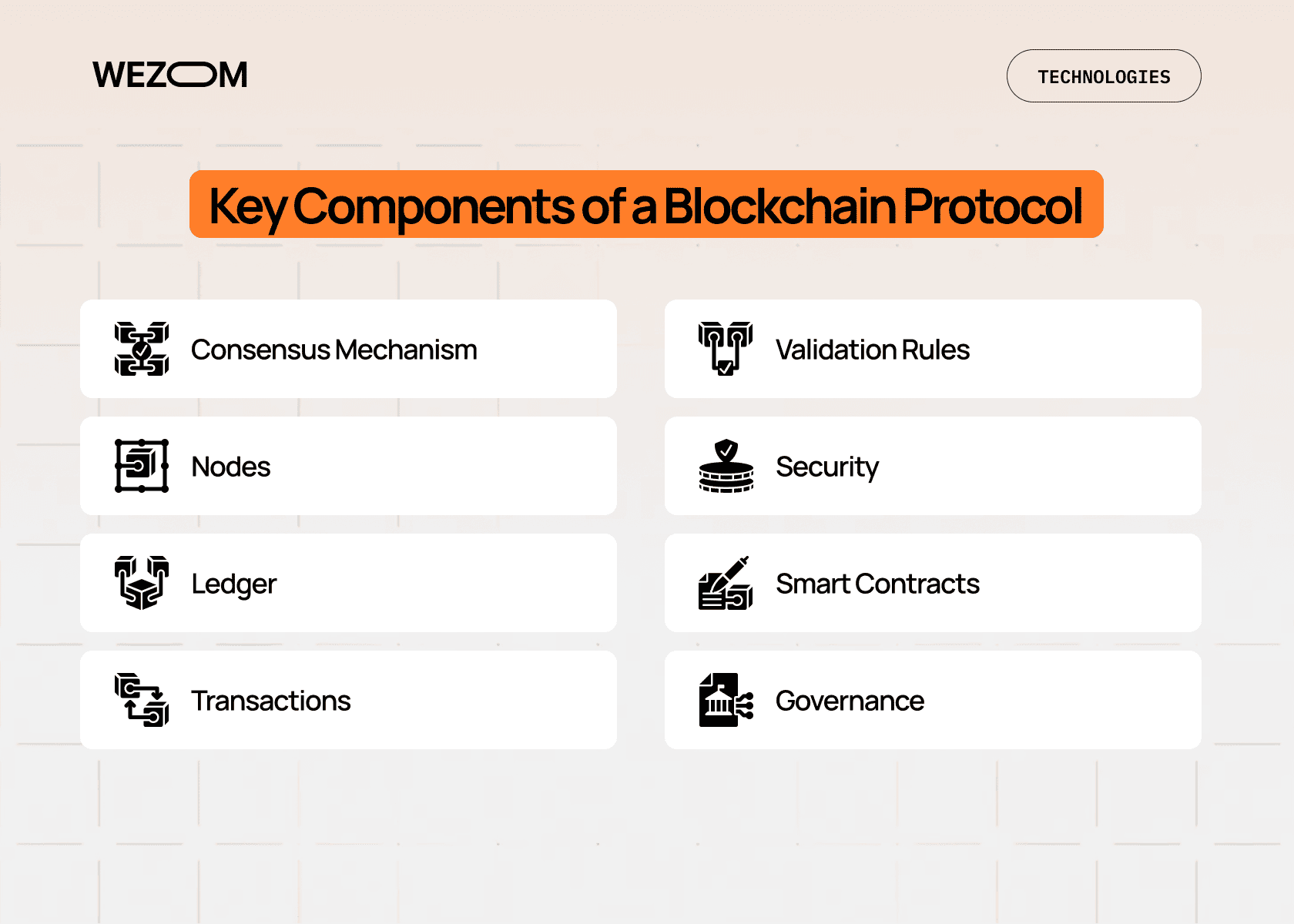
Consensus mechanisms are the rules that allow these nodes to agree on the state of the ledger. Common examples include:
- Proof of Work (PoW): Nodes compete to solve complex mathematical puzzles. The first to solve it gets the right to add the block. This requires significant computing power, which serves as a security barrier against bad actors.
- Proof of Stake (PoS): Participants "stake" their own digital assets as collateral for the right to validate transactions. The likelihood of being chosen to create a block is often proportional to the amount of assets held.
These mechanisms ensure that as long as the majority of the network is honest, the ledger remains accurate. If a malicious user attempts to add a fraudulent block, the rest of the network will see that it does not match the established cryptographic history and will reject it.
Comparing Traditional Databases and Blockchain
The following table outlines the fundamental differences between traditional centralized databases and blockchain technology to help clarify their distinct utility.
| Feature | Traditional Database | Blockchain |
|---|---|---|
| Authority | Centralized (admin control) | Decentralized (consensus) |
| Transparency | Restricted to owners | Public or restricted to participants |
| Data Immutability | Mutable (can be edited/deleted) | Immutable (write-once) |
| Trust Model | Trust in the service provider | Trust in code and math |
| Efficiency | Very high speed | Moderate (due to consensus time) |
| Failure Points | Single point of failure | Distributed; highly fault-tolerant |
Why Security and Immutability Matter
The term "immutable" is perhaps the most important concept in the blockchain ecosystem. In traditional record-keeping, errors can be corrected or malicious actors can erase their tracks. In a blockchain, because every block is linked via complex cryptography, changing a record requires altering every single block that came after it on every copy of the ledger held by nodes worldwide.
For most distributed networks, this is computationally impossible. This makes blockchain exceptionally well-suited for industries where verifying the history of an item or a transaction is critical, such as finance, supply chain tracking, and digital identity verification. When data is written to the chain, it functions as a "time-stamped" event that stands as an objective fact.
Understanding Practical Limitations
While the benefits are significant, blockchain is not a universal solution for all data storage needs. It comes with trade-offs that developers and organizations must weigh:
- Scalability: Because every node must verify every transaction, blockchains are often slower than centralized databases. Processing thousands of transactions per second remains a technical challenge.
- Irreversibility: If you make a mistake—such as sending a digital asset to the wrong address—there is no "help desk" to reverse the transaction. The finality of the blockchain means human error can be costly.
- Energy Consumption: Certain consensus models, specifically those based on Proof of Work, require immense amounts of electricity, leading to concerns regarding environmental impact.
- Complexity: Integrating blockchain into existing infrastructure is difficult and often requires specialized technical knowledge, making it a high-barrier-to-entry technology for small businesses.
Frequently Asked Questions
Is blockchain the same as cryptocurrency? No. Blockchain is the foundational technology that allows for secure, distributed record-keeping. Cryptocurrency is merely one application of this technology. Think of blockchain as the "internet" and cryptocurrency as an "email" application that runs on top of it.
Can anyone see the data on a blockchain? It depends on the type of blockchain. "Public" blockchains are transparent, allowing anyone to view the transaction history. "Private" or "permissioned" blockchains restrict access to authorized users only, which is common in corporate environments.
What happens if I lose my private key? In a blockchain system, your private key acts as your password and your signature. If you lose it, you lose the ability to authorize transactions or prove ownership of your assets. Because there is no central authority, there is no "password reset" function.
Is blockchain data truly impossible to hack? While the ledger itself is highly resistant to hacking, the applications built on top of it (such as user interfaces or digital wallets) can be vulnerable. The security of the chain does not necessarily protect the security of the user's personal device or storage practices.
What is a "smart contract" in this context? A smart contract is a program stored on a blockchain that runs automatically when predetermined conditions are met. They eliminate the need for an intermediary, as the contract executes itself exactly as written once the network validates the input data.
Next Steps for Engagement
To begin interacting with blockchain technology, you do not need to be a developer. You can start by setting up a digital wallet for an established, public network. This will allow you to see firsthand how transactions are broadcast, validated, and recorded in real-time. By monitoring a block explorer—a tool that allows you to view the live activity of a blockchain—you can observe the "chaining" process as new blocks are added, providing a concrete view of how this technology operates in the 2026 digital landscape.