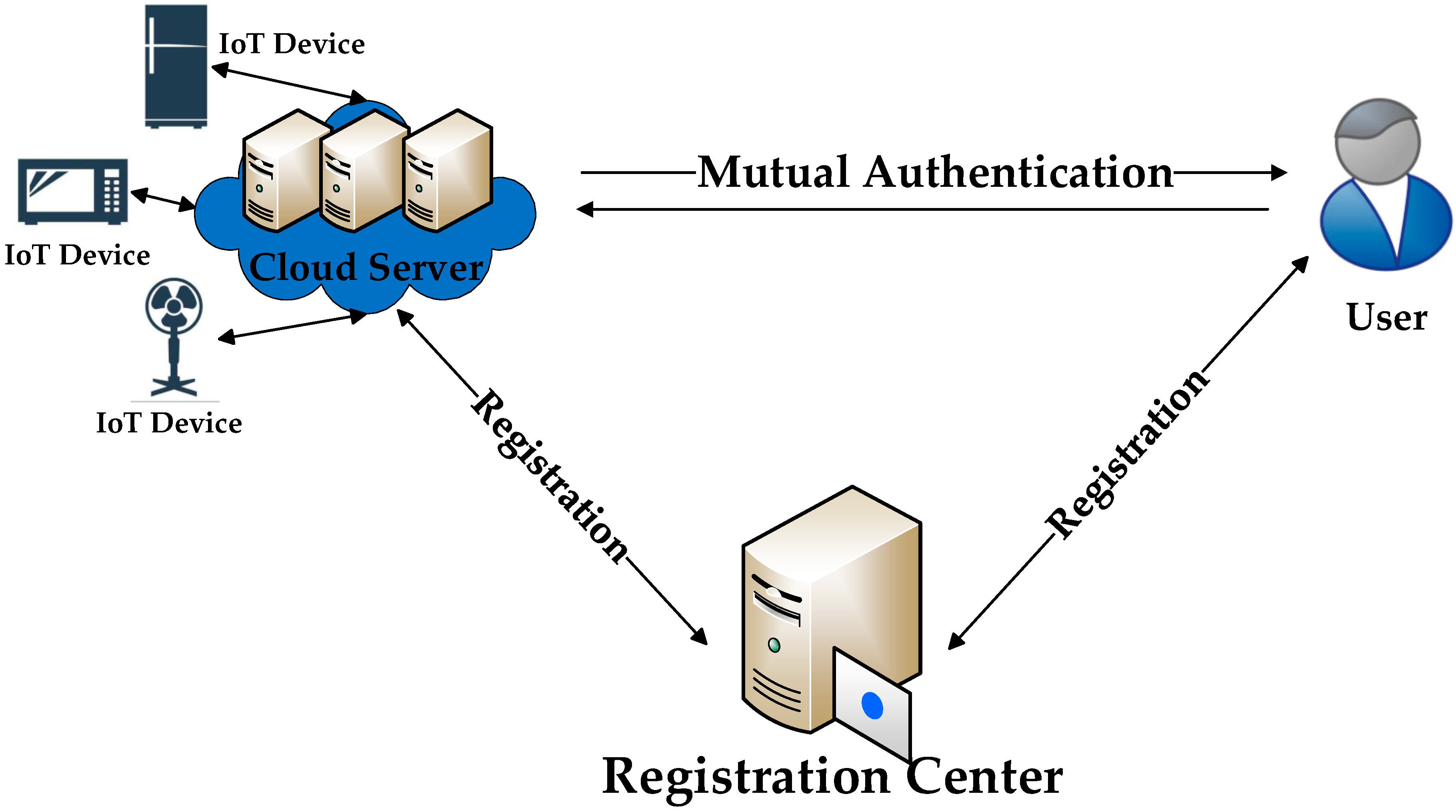
Designing a secure scheme for a smart house based on Cloud of Things (CoT) requires a multi-layered architecture that integrates end-to-end encryption, robust authentication protocols, and decentralized data management to mitigate vulnerabilities in interconnected IoT environments. By securing communication between edge devices and cloud infrastructure, homeowners and developers can protect sensitive metadata and physical home safety from unauthorized access.
Understanding the Cloud of Things Architecture
The Cloud of Things is an evolutionary paradigm where the traditional Internet of Things (IoT) is augmented by the massive computing power, storage, and analytical capabilities of cloud services. In a smart house context, this means that devices—such as smart locks, thermostats, security cameras, and lighting systems—do not operate in isolation. Instead, they act as endpoints that offload data processing, long-term storage, and complex logic execution to the cloud.
However, this convenience introduces a significant attack surface. Data traversing the network between the home and the server is susceptible to interception, while cloud-based interfaces become targets for distributed denial-of-service (DDoS) attacks and unauthorized credential harvesting. A secure scheme must therefore address three distinct zones: the Edge (sensors and actuators), the Fog (local gateways or routers), and the Cloud (the centralized management interface).
The Core Pillars of Smart House Security
To establish a resilient framework, architects must prioritize four specific technical pillars. Without these, even the most sophisticated smart home system remains fundamentally compromised.
- Mutual Authentication: Both the cloud server and the edge device must verify the identity of the other before any data exchange occurs. Using Public Key Infrastructure (PKI) and digital certificates ensures that an attacker cannot spoof a command to a smart lock or masquerade as a sensor to inject malicious data.
- End-to-End Encryption (E2EE): Data should be encrypted at the device level before it ever touches the local network. Utilizing protocols like AES-256 for data at rest and TLS 1.3 for data in transit ensures that if packets are intercepted, they remain indecipherable.
- Dynamic Access Control: Implementing Role-Based Access Control (RBAC) allows homeowners to define precisely what functions different users (or secondary devices) can perform. For example, a delivery service’s temporary access code should be cryptographically limited to a one-time entry window.
- Anomaly Detection: Because human patterns are predictable, the system should learn the baseline behavior of the smart house. If a thermostat starts sending encrypted packets to an unrecognized external IP address at 3:00 AM, the cloud security engine should trigger an automated isolation of that device.
Designing the Secure Protocol Workflow
A robust security scheme relies on a structured workflow that dictates how devices connect and communicate. The following sequence represents a standard secure handshake process for a CoT-enabled home:
- Provisioning: Upon installation, each device is assigned a unique hardware identifier and a private key stored in a Secure Element (SE) or Trusted Execution Environment (TEE).
- Mutual Handshake: The device initiates a request to the cloud provider. The cloud sends a challenge; the device signs this challenge with its private key. If the cloud verifies the signature against the registered public key, the tunnel is established.
- Command Execution: Commands issued from the user’s mobile application are cryptographically signed by the user's mobile device, verified by the cloud, and passed to the home gateway. The gateway decrypts the command and relays it to the endpoint device, which confirms receipt.
- Logging and Audit: All actions are logged in an immutable, append-only audit trail. This ensures that if a security breach occurs, the sequence of events can be reconstructed for forensic analysis.
Comparison of Security Mechanisms in Cloud-Integrated Homes
| Mechanism | Primary Benefit | Implementation Difficulty | Target Threat |
|---|---|---|---|
| PKI/Certificates | High assurance of identity | High | Man-in-the-Middle (MitM) |
| AES-256 Encryption | Unbreakable data privacy | Medium | Data sniffing/theft |
| Edge Gateways | Reduces cloud dependency | Medium | Network latency/DDoS |
| Multi-Factor Auth | Prevents credential theft | Low | Unauthorized account access |
| Hardware TEE | Protects keys from tampering | High | Physical device hacking |
Addressing Challenges in Implementation
One of the most persistent issues in smart house security is the "heterogeneity problem." Smart homes often consist of devices from dozens of different manufacturers, each with varying security standards. Integrating these into a unified secure scheme requires the use of middleware or a centralized "Smart Home Controller" that acts as a secure proxy. This controller aggregates the traffic from disparate devices, translates it into a uniform security protocol, and manages the encrypted tunnel to the cloud.
Another challenge is battery life. Constant encryption and decryption cycles consume significant power for small IoT sensors. To address this, designers often use lightweight cryptographic algorithms like ChaCha20 or ECC (Elliptic Curve Cryptography), which provide high security with significantly lower computational overhead compared to traditional RSA methods.
Legal and Privacy Considerations
As of 2026, data protection regulations such as the GDPR in Europe and similar privacy laws globally impose strict requirements on how cloud providers handle smart home data. Homeowners must be granted the "right to be forgotten," meaning that any cloud-stored history—such as camera footage or usage patterns—must be permanently and verifiably deletable upon request. A secure scheme must include a data management interface that provides the user with granular control over what data is stored, for how long, and who has access to it.
Frequently Asked Questions
What is the role of an edge gateway in a secure smart house? The edge gateway serves as a bridge between your local sensors and the cloud. It is critical for security because it can inspect traffic locally, block unauthorized outgoing connections, and store sensitive keys that are too large for simple temperature or light sensors to handle.
Can I achieve high security without using a cloud service? While you can achieve high security locally, you lose many CoT benefits like remote access and sophisticated AI-driven automation. Most secure schemes use "Hybrid Fog-Cloud" architectures, where critical automation runs locally on a gateway, while non-critical analytical data is offloaded to the cloud.
How often should I update my smart device firmware? You should enable automatic updates for all devices. Many security breaches in 2026 occur because homeowners neglect to patch known vulnerabilities in their IoT devices. If a device no longer receives security updates from the manufacturer, it should be isolated from the main network or replaced.
What happens if the internet goes down? A well-designed secure scheme uses local failover. If the cloud link is severed, the home gateway should still permit basic operations (like manual light control or local lock access) while queuing audit logs to be synchronized once the connection is restored.
How do I prevent my voice assistant from being used as an entry point? Voice assistants should be segmented on a separate Virtual Local Area Network (VLAN). This ensures that even if an attacker compromises the assistant, they cannot pivot to move laterally across your network to access security cameras or smart locks.
Next Steps for Implementation
To start building a secure scheme for your smart house, begin by conducting a hardware audit. Identify every device currently connected to your network and verify which ones support modern encryption standards like TLS 1.3. Replace or isolate any devices that transmit data in plain text or rely on hard-coded, non-changeable credentials. Once your hardware is vetted, prioritize the installation of a secure, dedicated gateway that supports VPN-level encryption for all outbound cloud traffic. Finally, ensure that all administrative accounts are secured with hardware-based two-factor authentication, providing a final layer of defense against remote credential theft.